Boeing vs SpaceX
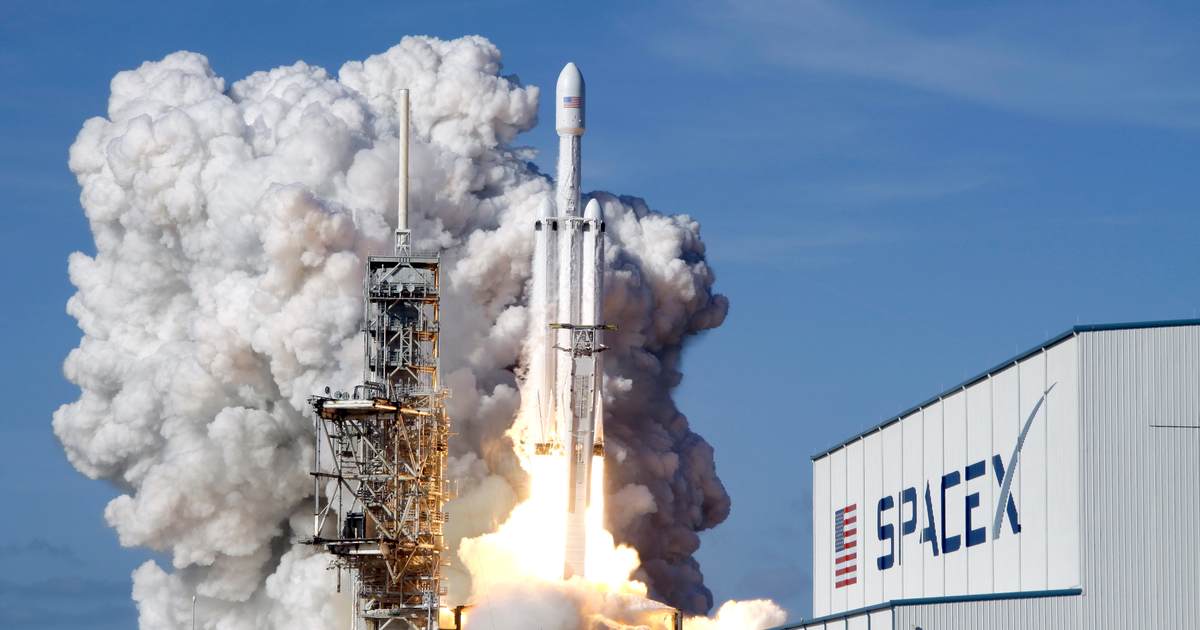
It’s not even a competition.
SpaceX is set to go public this week. The company is seeking $75 billion from the offering, while demand has already hit $150 billion. The firm's expected value after the formal public offering is $1.5 trillion or higher. People with very straight faces talk about future valuations of the company in the tens of trillions of dollars.
Advertisement
It’s hard to believe that the first (Neil Armstrong, Apollo 11) and last (Gene Cernan, Apollo 17) men to set foot on the Moon attacked NASA’s reliance on smaller firms for getting things into space. While I am sure they both would today praise SpaceX for its incredible performance, in 2011, their view was that NASA and the big boys like Boeing should be left to do a man’s job. The others were too small and thus potentially too dangerous.
Let’s take a look at some of SpaceX’s accomplishments:
SpaceX has put up more satellites than all other players combined. It has made rocket launches routine, something that NASA promised with the Space Shuttle but never delivered. The upright and caught landings are revolutionary. I remember the character of Calculus in Herge’s Tintin landing his rocket on the Moon upright and thinking that it was so silly: The big boosters are jettisoned into the ocean, and nobody lands like he took off. But Elon Musk, and later Jeff Bezos’ Blue Origin, do just that. It saves tens of millions of dollars by requiring the refurbishment of an existing rocket rather than a whole new rocket to begin with. NASA always lost its boosters, but Musk has made them reusable. SpaceX makes its patents available to other firms, and the recent explosion of a Blue Origin rocket on a NASA launch pad led Musk to send his regrets and wish his competitor success in the future.
RecommendedAdvertisement
Now let’s take a look at Boeing, one of America’s iconic brands. Boeing sent up its first satellite in 1963 (Syncom 1), eight years before Elon Musk was born and nearly 40 years before SpaceX was incorporated. Musk, Bezos and many others from that era grew up watching Apollo launches and astronauts tooling around the Moon on their Lunar Rovers. The inspiration came from the early days of space travel, but what Musk has accomplished is extraordinary, especially in light of Boeing’s performance over a far longer period of time. And as for Boeing:
You might remember when astronauts were stuck in the International Space Station because their Boeing vehicle had thruster and helium leak issues. Elon Musk offered to retrieve the stranded scientists, but the Biden administration delayed so as not to give Musk a victory. So they left the astronauts up there for a few additional months.
What is Boeing’s market capitalization? $170 Billion. The company does much more than rockets, being the major US producer of commercial aircraft. Yet, its market capitalization across all of its commercial, space, and defense units will be around 10 percent of that of SpaceX when it launches later this week on the NASDAQ. And this latter statistic is the conundrum of modern business. A company like Boeing that has been around for over 100 years and literally invented many of the air and space technologies that we enjoy can watch a 25-year-old company clobber it in performance and value. If one were to visit the headquarters of trillion-dollar companies, one might expect to see relaxed and confident executives. But he would probably experience the opposite: each company is petrified that its competition will figure out something that will make it marginal or even irrelevant.
Advertisement
I read an interview with a then-executive at Research in Motion (RIM), the maker of the BlackBerry smartphones. I assume that most of the readers remember when those phones were ubiquitous, and everyone and anyone had to have one. They had 50 percent of the smartphone market in the mid-2000s. He said that Steve Jobs’ announcement that Apple would release a phone on AT&T that would have a color screen and a full internet experience was not considered a real threat up at the Waterloo, Canada offices of RIM. Nobody can do that! One can only have a gray screen with minimal images, as anything more is too much for the processor! Then they bought three iPhone 1 units. The executives sat around their boardroom table speechless. They could read the New York Times exactly as it appeared on a computer. Jobs had delivered what they could not: a full-color internet experience. For a while, Blackberry devices remained the tool of choice for lawyers and government types. Then Apple improved its security, and it became clear that an executive would want the same type of phone that his or her kids were using at home. Apple and Android devices finished off BlackBerry. The last time I saw one of their phones was around 10 years ago. The company still exists as BlackBerry Limited and works on cybersecurity and the Internet of Things (IoT)—but not smartphones.
We often assume that experience and expertise are critical features in entrepreneurs and corporate executives. But oftentimes it is the newcomer, the guy from left field, who makes the most revolutionary adjustments to a market. Elon Musk taught himself the engineering behind Tesla and SpaceX. He had zero experience in either the automotive or aeronautical world. Instead of that being to his disadvantage, it allowed him to ignore convention and start from scratch. When I first drove a Tesla in Las Vegas a few years back, my thought was that I was driving a car made by people who began the process with a blank piece of paper. From there, they started to add everything that a car needs. The major car manufacturers start with last year’s model and think about what to slightly change for next year. The problem is that said process has been going on for seventy years. There is no room for revolution, only for slight improvements around the edges. It takes a Musk or Jobs who has no experience in the fields they bravely enter to completely upend them. Landing rockets upright! Over a hundred launches a year! Full internet on a tiny little phone! A high-quality color screen in your pocket! Balderdash! Until it became real. And a lot of people had to eat a lot of hat.
Advertisement
Famously, back in the Dot Com bubble, Yahoo, was worth more than Ford with its physical plant and production facilities. Yet, the current crop of trillion-dollar companies is no bubble. It is the outcome of entrepreneurs providing what consumers and governments want or need in the best manner possible. The massive valuation for SpaceX—the first company to start at over $1 trillion on a public market—is earned. Elon Musk is a generational figure, and he is transforming market after market. If he had one success, that would have been incredible. His efforts in Tesla, SpaceX, the Boring Company, Starlink, and more make him a unique figure in the history of technology and business.
Editor’s Note: Do you enjoy Townhall’s conservative reporting that takes on the radical Left and woke media? Support our work so that we can continue to bring you the truth.
Join Townhall VIP and use promo code FIGHT to receive 60% off your membership.