The Real Reason Some Families Survived the Great Depression and Others Didn't
This article pulls together real stories from readers whose parents and grandparents actually lived through the Great Depression. How were rural families far better off than city dwellers? How did those years affect people for the rest of their lives, what did people do to earn money when there was almost none to be had, and why did neighbors mattered more than almost anything else? There’s also some hard truth about what happened when the banks closed, what food actually cost relative to wages, and why so many Depression survivors spent the rest of their lives hiding cash under dresser drawers and keeping their pantries stocked. It’s a good read if you’ve ever wondered whether you’d actually know what to do if the bottom fell out.
This article has been completely rewritten with new, personal stories. June, 2026.
There’s a woman I know of, she’s been gone for years now, who always kept a needle threaded with white thread and another with black thread sitting ready in her sewing box at all times. She knew eventually she’d have to sew on a button or mend something really quick, and this would save her time. A small detail, but she planned ahead, and that was her mindset for the rest of her life, and that small habit was noticed by her young granddaughter, Lisa D.
She also watched her grandmother pull a loose thread from a scrap of old sheeting and use it to sew on a button. “I was shocked,” she wrote, “to see how she went right to the source to get what she needed to solve a problem.” She didn’t have to drop everything for a quick trip to Walmart for thread. What she didn’t have but needed, she found a solution for on her own.
That’s what this article is about. The women who lived through the Great Depression and what they figured out.
This article completely rewritten with new, personal stories and data. June 2026.
Table of contents They Were Already Living This WayOne thing that gets missed in most Depression-era memories is that, for a lot of families, 1929 didn’t change that much for them. The crash that devastated city-dwelling professionals and bank investors was just another bad year for people who’d never had much to begin with.
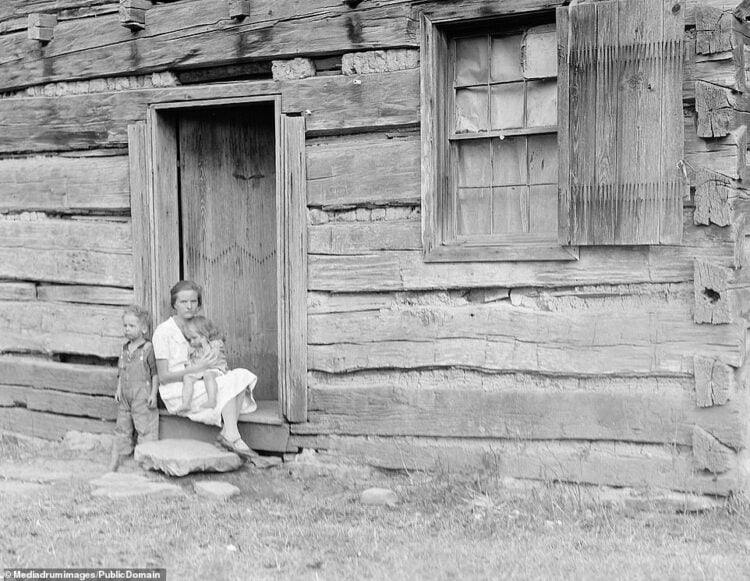
Earl Nelson heard it straight from a great-uncle who farmed through the whole thing. “All those pictures of long lines of starving people were in the cities,” he wrote. “Most of my people lived in the country. They had always been putting up canned goods for a long time when the Depression hit, so it was nothing new to them. They were already prepared for hard times.”
His uncle had families camping in his fields under tarps and cooking meals over campfires. He let them cut wood off his property and carry rocks to clear land. He paid them in vegetables. Some of the houses they built out of gathered stones are still standing.
Susan Heggestad’s mother grew up on a prosperous New England farm and barely noticed the Depression had happened. Her family switched from selling wool to being paid in blankets by the mill that couldn’t afford cash. They reinstalled the old wood stove they’d replaced with “modern” equipment, and, thankfully, hadn’t thrown away, because you didn’t throw away something you might need. Single family members were sent back to live on the family farm to help, and when they couldn’t sell their milk, they pivoted and made cheese.
“She was a child at the time,” Heggestad wrote, “and never realized there was a Depression.”
Country people usually fared better because they had the means to grow much of their food and were less reliant on modern conveniences. Ask how people survived the Great Depression and even though many of these rural family suffered plenty, still survival was easier with land, skills, and the knowledge of what to do when cash disappeared.
The families who struggled most were almost always city dwellers, people who had moved into large towns and cities for more opportunities and conveniences, but when The Crash happened, they didn’t have much to fall back on. They didn’t have a large garden, perhaps they had forgotten how to preserve food or keep animals, and may not have had a lot of those hand-man, jack-of-all-trades skills to bring in some extra money. In a lot of cases, the bread lines and soup kitchens were the answer.
Food Was the Center of EverythingWhen cash dried up, food became a central survival focus. What you could grow, raise, catch, or preserve determined whether your family ate that week. Once a family went through their savings, there was no other safety net. Government assistance came much later. So, for most families, survival came down to, what are we going to eat?
Howard Lisech’s grandmother made butter by shaking cream in a gallon jar until it thickened and became fresh butter and kept milk cold in a spring some distance from the house. Her community butchered hogs together, salted and smoked the pork in a smokehouse, and that meat was exchanged with each other — no cash payments involved.
“Everyone in that rural community helped each other,” Lisech wrote, “with putting up hay and butchering hogs and cattle.”
Carme Turner’s grandmother in Detroit pooled her family’s meat rations and occasionally came home with a “roast”. Nobody asked questions. They were just happy to have meat for a change. Her daughter Carme’s mother, took a bite, found the taste odd, and asked what it was. Horse tongue. Cheaper than beef, and there was more of it. Her grandmother had stretched the ration as far as it would go. Turner’s mother was grossed out. That was one thing she just couldn’t stomach.
Pat Miraldi’s family made tuna salad with dampened white bread mixed in with the tuna. Her mother did it because her grandmother did it — that was just how tuna salad was always made. Turns out it stretched the tuna to feed more mouths. Flavor-wise, the bread also cut the oily taste of oil-packed tuna. By the time they figured out it was a Depression trick, they didn’t care because now they preferred it that way.
Dan Vest’s family had a family meal-time ritual his grandfather called “depression food”. Once a month, they gathered together for a meal of seasoned brown beans, wild rabbit or squirrel, small potatoes, chicory coffee, oak leaf tea, and either milk custard or a mock lemon pie made with vinegar. His grandfather would open with prayer before it and close with “may we never forget.” Then the family talked about how their family had survived the Great Depression years.
“Learn now how to do with less,” Vest wrote, paraphrasing his grandfather’s whole philosophy. “Practice these lessons. Then if those times come again, you can shift gears and never miss a beat.”
Especially prized were the hardened ends on a slab of bacon. They sold for almost nothing, yet they seasoned just about everything in the kitchen! A pot of beans, some chopped onion, and a bit of that bacon was all anyone could ask for at the end of a hard day. Moms in the kitchen came to rely on their own ingenuity, sometimes coming up with things like lard gravy or lettuce sandwiches, anything to keep the family fed, and their pantry was filled with the cheapest basics they could find.
Codfish gravy, bean sandwiches, vinegar pie — the Great Depression is proof that most people will eat just about anything if they’re hungry enough.
You might expect that food prices were cheap, but in reality, they were pretty high when compared with wages. For example, a general laborer made $2 per day, that would be about $40 in today’s dollars, and the Works Progress Administration (WPA), a new government agency that put people to work on projects like building roads and parks, paid just $1 per day. But bread was 10 cents a loaf, milk 8 cents a quart, and eggs 7 cents/dozen.
If you went grocery shopping and just those three things, bread, milk, and eggs, it was almost 13% of that day’s wages. Factor in things like rent, and the margin got even tighter.
There were churches, missions, and charities that provided whatever help they could. Over time, between the rising level of demand and their own financial difficulties, a lot of these ended up shutting down.
Again and again, people have told me how grateful they are for the lessons passed on to them by parents and grandparents who had no choice but to learn them first-hand. “I feel very blessed to have grown up with a mom, and later a stepfather who knew how to do repairs, teach me to sew, iron, preserve food work hard and become a responsible adult,” Lynn Ferraccio said.
The Garden Was Not OptionalAlmost everyone who made it had a garden. If it started out as a hobby garden or just growing a few things for the kitchen, it didn’t stay that way for long. Even in cities, families found a way to grow as much food as possible.
Leslie’s grandfather had a half-acre plot that fed him and his wife, their four children with spouses, and twelve grandchildren. He was such a skilled gardener, they had enough for all the families to put some up for winter and even then, he had some to sell and give away. “His garden was always lush and abundant,” she wrote. She still can’t eat a store-bought tomato without thinking about the lunches her grandmother and she used to go pick straight from the garden out back — tomatoes, cantaloupe, fried okra, fried cabbage with biscuits, homemade apple pie.
Linda Morgan’s father gardened until he died. One of her earliest memories is watching him pull a carrot from the ground, wash the mud off with the hose, and hand it to her. “I will never forget looking past that carrot at my father’s smiling eyes.”
He also spent an entire summer canning food with her one year. They put up around 500 quarts. By fall, she knew how to can anything, and he’d found and refurbished every kind of canner and pressure cooker he could locate, and then gave them all to her to keep.
Lisa D.’s grandmother in North Texas did all of it herself. She hand-tilled with a donkey plow, saved seeds, got manure from farms she trusted, pulled weeds and picked what was ripe every single day. Her younger siblings, after marrying, moved in when times got tough. There were multiple couples sleeping on pallets in a 600-square-foot house, eating when they came in from working.
Now, how much food you could grow depended on where you lived. If you lived in the panhandle of Texas, you lived in Dust Bowl country. Some women became so desperate to feed their families, they home-canned tumbleweed so, at least, they would have that to keep from starving.
Skills Were CurrencyFood kept people alive, but ultimately, skills were what kept people afloat year after year. In an economy where cash had all but disappeared, what you could do with your hands was worth more than anything sitting in a bank account, assuming the bank was even still open.
Carme Turner’s grandfather knew how to sharpen knives and tools and would show up at wealthy houses and traded sharpening work for whatever they had to trade — money, food, even furniture. He had five children and six boarders at home. He took in men who could find work in Detroit but had traveled from out of town and needed a place to stay. So when he was sharpening knives and tools, it wasn’t just for his own family but for others he felt responsible for.
Gary Scarborough’s grandfather was a blacksmith and horseshoer. His grandmother was a seamstress who made shirts out of feed sacks. He still has them, and he still wears them. “Hey,” he wrote, “don’t waste nothin’.”
Linda Morgan’s father-in-law had no education past eighth grade and could build furniture, weld, engineer, farm, and garden. He was known for saying, “There’s a mindset for tackling things and doing them, and either you have it or you don’t.” He thought most people today don’t as lives have become more and more comfortable with every convenience just an Amazon click away.
The skill that showed up most often in these stories wasn’t any one thing. It was the ability to look at a problem and ask: what do I have that could solve this? Not, what do I need to buy?
Everyone Found a Way to EarnThere was no sitting around waiting for things to improve after the stock market crash. After a while, people began to realize this was their new normal. Entire families packed up — thousands and thousands of them — and followed the work, sometimes hundreds of miles, picking crops from one harvest to the next, moving on when the season ended. Staying together as a family mattered more than anything else, and everyone in the family was expected to contribute.
Jay’s family ran on that model from top to bottom. When it snowed, somebody grabbed one of their three shovels and started knocking on doors. In his family, the oldest boy finished concrete for almost nothing, and a younger brother got hired at a lock shop at fourteen for cheap wages, but the family was grateful. The girls took in washing, ironing, and sewing and did whatever odd jobs came their way. Every person in that household had a role, finding a way to bring in some money.
Susan Heggestad’s father, a poor immigrant outside Boston, apprenticed as a silversmith as he got older. His sisters danced, sang, and performed in live productions for pay. The family used what they had, in their case, talent, and turned it into income the only way they could.
Lindy Bryant’s father grew up in an Appalachian holler so poor he wore old tires laced around his feet for shoes. He and his father mined slate from a cave on their own property and sold it for chalkboards. When he was old enough, he worked the railroads. There was always something, if you were willing to do it, and many people were willing to do just about anything to help keep their families from starving.
It’s said that “necessity is the mother of invention,” and you can see that in some of the innovative ways some women started their own businesses. Some got up before dawn and spent their early morning hours cooking dozens of meals to sell to workers heading out for the day. Delene Cornell’s mother and aunt made fried pies in the Houston Heights and sold them door to door.
And in a truly low-effort family business, Gina Gould’s family left fresh eggs at the mailbox, and people driving by would stop, leave a dollar, and take a dozen. It was the chickens who did most of the work!
Very touchingly, in some communities, the people who had just a little more than others managed to find ways to create work for their neighbors, like odd jobs on the property, tasks that needed doing, small wages that meant everything to a family with nothing coming in — the kind of work that preserves a man’s pride. Nobody called it charity. It was just what you did for your neighbors, if you could.
If you were lucky enough to be a jack-of-all-trades, you rarely went hungry. The man who could plumb, carpenter, paint, and fix things had something to offer almost any day of the week.
The Neighborhood Held Things TogetherNo family survived the Depression entirely on their own. The ones who made it through usually had a network around them. If it wasn’t nearby family, it was neighbors who showed up to help, communities that organized when a farm, business, or family was threatened with bankruptcy and eviction, and sometimes even a town council who quietly kept track of needs. The individual family unit mattered, but so did all the families around you. That was often the difference between a hard year and a catastrophic one.
Marjie Cleveland’s grandparents in Cape Cod fished and dug clams, grew vegetables and berries, and baked enough bread for their family and others. They swapped with their neighbors, whatever you caught, grew, made, or outgrew. “Bartering was very common,” she wrote, “and depending on what skills people had, they would help each other. Communities were much more generous. They took time to know each other and went out of their way to help anybody in need.”
Carol’s grandmother in Painesville, Ohio turned ninety-two and said the Depression was the best years of her life because nobody was better than anyone else. They had block dinners where every family brought what they could — a vegetable, a covered dish, a loaf of bread, a cake — and made sure every family in the block had food. They ate together, watched the children play, and talked about the day. When someone was sick or having a baby, the women showed up, and in families where the men had left to find work, the neighbors watched out for the wives and kids left behind.
Many kindhearted farmers kept workers on the payroll as long as they possibly could, even if it meant paying them with produce, and some towns had “welfare budgets”. The town loaned money to individuals, but there was a strict keeping of books. Some towns even published in their newspapers how much each person owed and expected repayment.
But not everyone would, or could, be generous. A landlord might give a break on rent for a while, but ultimately, that couldn’t last forever. A store owner who started out by offering credit and accepting things for barter, eventually had to pay his own creditors. And that’s when times got even tougher for families and communities.
Free For The TakingSometimes a family got by with what they could grow or repurpose, but often, they went looking for the freebies — anything they could get for free to stay warm and fed one more day.
Paul Thuneman grew up hearing his father tell the story of kids lining the railroad tracks in winter. The train engineers knew they were there. They’d slow down just enough and start tossing coal over the side, chunk by chunk, so the kids waiting below would have something to bring home to heat the house. The engineers saw a need among people they’d likely never see again, and did the one thing they could do to help
That kind of resourcefulness, looking at what was freely available and figuring out how to use it, ran through nearly every family that got through the Depression intact. Carol Jackson’s father learned to find the specific weed that caterpillars loved, because wherever you found that weed, you’d find a worm in the stem, and wherever you found a worm, you had fishing bait. He foraged dandelion greens, chickweed, and other wild plants his mother cooked like spinach. He walked the railroad tracks picking up stray pieces of coal that had fallen from passing cars. Nothing that could be used was left unused.
Families who lived near water had a significant advantage. Marjie Cleveland’s grandparents dug clams on Indian Mound Beach and fished regularly, swapping whatever they caught with neighbors for whatever the neighbors had. Jay’s father fished with a cane pole from age five, not for sport, but because that was how the family got protein for their dinners. He fished for carp — anything. Whatever was in the water.
And if you lived near a beach or large lake, driftwood could be gathered and sold for firewood. There’s no overhead in that kind of business!
Some towns organized shared garden plots on empty lots, where families could grow whatever they needed in their own small patch of ground. Smart moms quickly learned to show up at the market on Saturday night, when vendors were about to close for the weekend and would rather sell their food for cheap rather than haul it home to spoil.
The Depression taught people to see their environment differently. The ditch alongside the road, the creek behind the property, the wild asparagus growing along a fence line — everything around them had to potential to provide for one need or another.
Use It Up, Wear It Out, Make It Do, or Do WithoutWhen I think of this saying, my mind immediately goes to the Great Depression years, but it didn’t originate then. It actually dates back to World War I, but it was the Depression generation who made it a way of life.
You can see it in every story in this article. Linda Morgan’s father refurbishing old canners and giving them to his daughter. Gary Scarborough still wearing the feed-sack shirts his grandmother sewed decades ago. Shirley’s mother washing and reusing plastic bags until they fell apart, and my own Nana saving rubber bands, margarine bowls, and aluminum foil like her life depended on it. It was just how things were done.
If you’re curious how your own habits stack up against Depression-era thinking, I put together a free printable worksheet that walks you through all four parts of the saying — use it up, wear it out, make it do, and do without — to help you take an honest look at where your money and resources actually go. It’s a good reality check, and maybe a little humbling. You can request that free worksheet here.
When The Money Was Gone, It Was GoneFor all the ingenuity and camaraderie that are embedded in these memories, beneath it all was the constant awareness that the money was gone.
Nobody saw it coming, that Black Thursday on October 29, 1929. You went to bed one night with money in the bank and woke up to find the bank had closed while you were sleeping and there were only zeroes in your bank balance. There was no advance notice or explanation — just a locked door and, if you were lucky enough, a sign on the locked door saying, “Closed.”
Even though the Depression began in late 1929, there was virtually no assistance from the government. That meant that every individual and family were on their own. No food stamps, no unemployment money, no subsidized housing — families had to rely on their own ingenuity, family, friends, and community. The New Deal work programs starting in 1933 gave people jobs, not handouts, and many Americans were too proud to take even those. Direct assistance programs like unemployment insurance and Social Security didn’t exist until 1935, six years into the crisis, and there was no such thing as “retirement”. Everyone worked until they became physically unable to continue.
In desperation, some families cashed in life insurance policies just to survive a few months longer, and homes were refinanced in hopes a family could ride out the wave with that extra bit of money. They were trying to live in “normal times” when times were anything but.
Linda Morgan’s father never trusted a bank again after that. When he died, his family rifled through the pages of every single book in the house, pulled every drawer out and flipped it over, because he’d taped cash and precious metals to the undersides. They found small amounts hidden in several places throughout the home. He’d spent decades spreading his resources around so that no single failure could wipe him out. It wasn’t paranoia. It made perfect sense for someone who learned the hard way and never unlearned.
Carol Jackson’s grandfather lost his job and couldn’t pay for groceries. The local grocer let the family run a tab, but wrote it down and kept the books. In this high-trust community, the grocer trusted that things would eventually turn around and he would be repaid. When her grandfather found work again, her grandmother paid back every penny. “People were so kind back then,” Jackson wrote. The grocer could have said no, but he didn’t.
Harold Thompson’s father walked to work every day rather than spend the nickel on bus fare. That’s how tight the margin was — a nickel. Five cents could be the difference between eating and not eating, so you walked and you saved it.
One woman tells the story of a notions salesman who visited their home every few months. He looked very dapper and wore expensive-looking clothing, even as a door-to-door salesman. Even in the bleakest times, for many, appearances were important even if shoes needed to be repaired and clothes were nearly threadbare.
The lesson these families carried for the rest of their lives wasn’t just frugality. It was a deep understanding that the physical money you can see and hold in your hand is the only money you actually have, thus the legendary coffee cans full of cash that, I’m certain, remain buried to this day. Somewhere.
Some Old Habits Never DieYears later, just because the economy recovered and people were earning money again, the Great Depression was never really left behind for most people. They buried jars of money out back because they didn’t trust banks, ever again. Every spring they planted the biggest garden they could because they remembered the hunger.
Harold Thompson’s parents met just before the crash. His mother owned one dress, and she washed it at night and wore it the next day. They ate mostly fried potatoes on five dollars a week for food after paying rent. Eventually they moved to family farms in Iowa, where there was enough to eat. The Depression was technically over, eventually. But “the experience profoundly changed all of them,” Thompson wrote, “and most continued the habit of simple fare the rest of their lives. They couldn’t move beyond that mindset of lack.”
Shirley’s mother washed and reused plastic bags. Kept every glass jar. Kept her pantry stocked with flour and grease and cornmeal until she couldn’t live alone anymore. Not because she was afraid, exactly. It was just the only way she knew to live.
Gina Gould grew up with two families who had lived through it and calls herself somewhat of a hoarder. “You never know when you might need something.”
“Back then,” Vest wrote, “life was hard and life was fun and life did continue. You are proof of this.”
What Would You Do?Reading through these stories, it’s hard not to stop and ask yourself, if the bottom dropped out tomorrow, what would you actually have and how would you and your family survive? If your investments, retirement account, and money in the bank zeroed out, what skills and knowledge would help see you through? Do you have the mindset, like Linda’s father-in-law, “…for tackling things and doing them, and either you have it or you don’t.”
Related Great Depression Content Check Yourself: Could YOU Wear It Out? Use It Up? Make It Do? Do Without? #drip-ef-714660733 { font: .875rem/1.5rem sans-serif; width: 100%; border: 1px solid #8B7355; border-radius: 6px; padding: 1.25rem; box-sizing: border-box; background-color: #f5f0e8; } #drip-ef-714660733 h3 { font-size: 1.125rem; margin: 0 0 .375rem; } #drip-ef-714660733 > div { margin-bottom: .75rem; } #drip-ef-714660733 fieldset { border: none; margin: 0; padding: 0; } #drip-ef-714660733 legend { margin: 0; padding: 0; } #drip-ef-714660733 input[type="email"], #drip-ef-714660733 input[type="number"], #drip-ef-714660733 input[type="tel"], #drip-ef-714660733 input[type="text"] { margin: 0; padding: .375rem .5625rem; width: 100%; background-color: #fff; border: 1px solid #8B7355; border-radius: 4px; } #drip-ef-714660733 input[type="checkbox"], #drip-ef-714660733 input[type="radio"] { margin: .1875rem .1875rem 0 0; padding: 0; } #drip-ef-714660733 input[type="submit"] { margin: 0; padding: .375rem .5625rem; background-color: #8B7355; color: #fff; border: none; border-radius: 4px; cursor: pointer; } #drip-ef-714660733 input[type="submit"]:hover { background-color: #6b5a42; }This post was originally published on September 16, 2016, and has been updated.
shares