Could Enough Vitamin C Help Protect The Aging Brain? Study Offers New Evidence
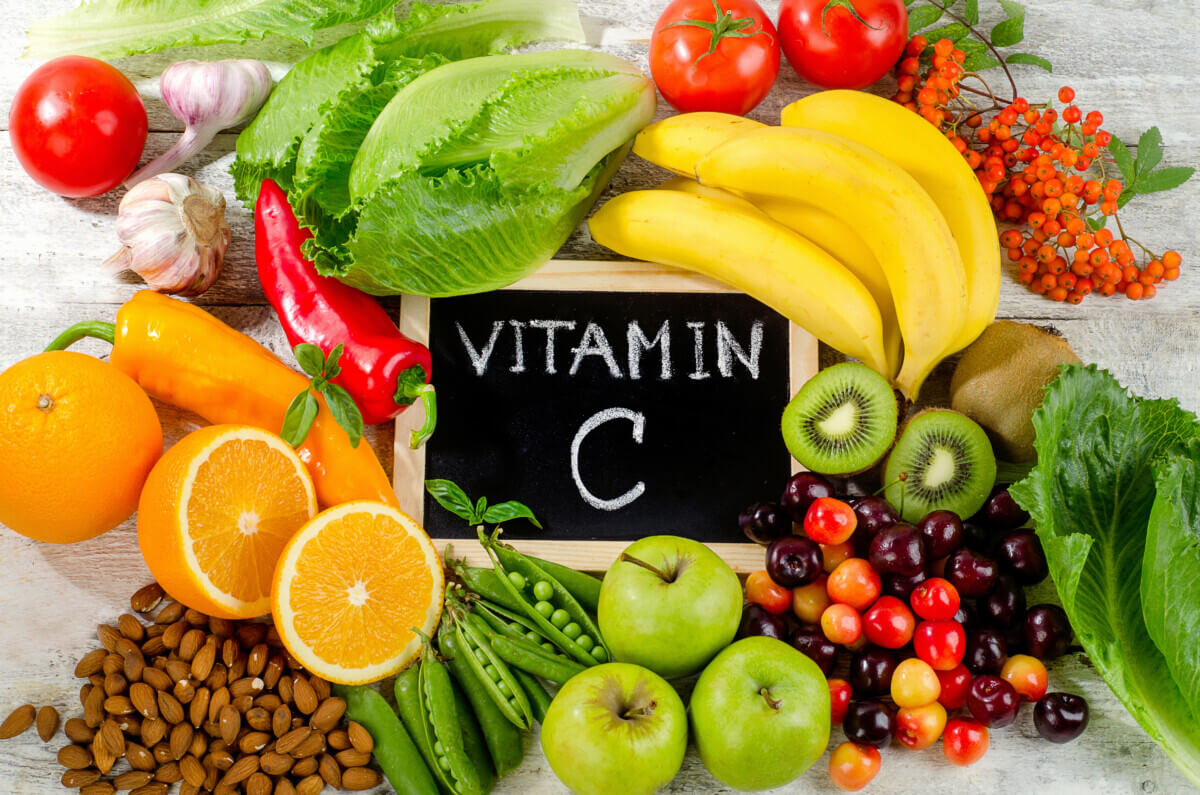
(© bit24 - stock.adobe.com)
Low Vitamin C in the Blood Is Tied to Less Brain Tissue, Study of 2,000 Older Adults Finds In A NutshellMost people think of vitamin C as something to reach for at the first sign of a cold. But a large new study out of Japan suggests this everyday nutrient may be linked to measurable differences in the aging brain’s structure and network patterns, well beyond anything most people would associate with a glass of orange juice.
Researchers scanned the brains of more than 2,000 older adults and found that those with lower vitamin C levels had measurably less brain tissue and differences in structural network patterns tied to the default mode network, a set of brain regions linked to memory and self-awareness. Results, published in PLOS ONE, added weight to what scientists have long suspected: that vitamin C may be one factor involved in maintaining brain health as people age.
What sets this study apart is its size and rigor. Researchers didn’t rely on dietary surveys. They measured actual vitamin C concentrations in participants’ blood and matched those numbers against detailed brain scans, then carefully ruled out other factors like age, diabetes, smoking, drinking, and physical activity. Even after all of that, the connection held firm.
A 2,000-Person Brain Scan Study on Vitamin C LevelsResearchers drew on data from the Iki-Iki Health Promotion Project, a health study of older adults in Hirosaki City, Japan, focused on risks for dementia and heart disease. Of roughly 2,390 residents who participated, just over 2,000 met all requirements for the analysis. Participants had a median age of 69 years, and about 61% were women.
Each participant had blood drawn after fasting overnight and underwent a brain MRI scan using the same high-powered scanner. Vitamin C was measured directly from the blood, not estimated from dietary questionnaires. Researchers then calculated gray matter volume, the brain’s outermost layer packed with nerve cells for thinking and processing, and white matter, the deeper tissue that acts like communication cables between brain regions.
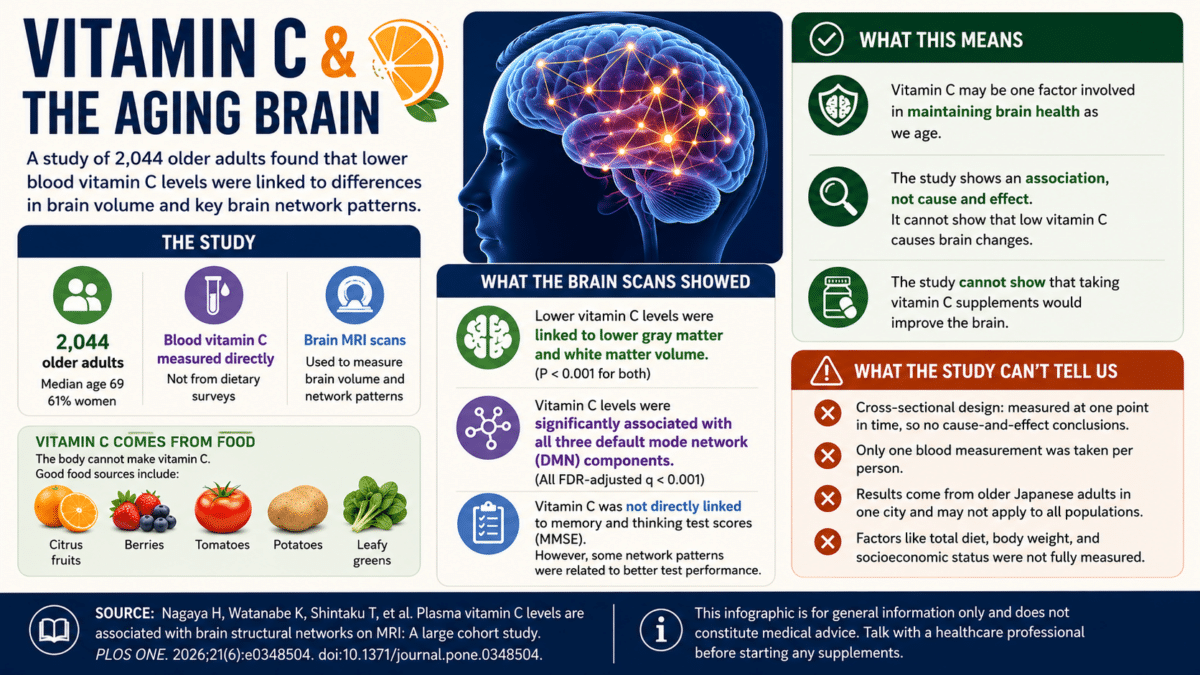 New research finds older adults with lower vitamin C levels show measurable differences in brain structure and key neural networks. (Image by StudyFinds)
Vitamin C Levels Were Linked to All Three Brain Network Clusters
New research finds older adults with lower vitamin C levels show measurable differences in brain structure and key neural networks. (Image by StudyFinds)
Vitamin C Levels Were Linked to All Three Brain Network Clusters
Beyond measuring brain tissue volume, researchers examined the default mode network, a set of brain regions active when the mind is at rest, daydreaming, recalling the past, or imagining the future. Scientists study this network closely because changes in it have been linked to Alzheimer’s disease, mild cognitive impairment, depression, and schizophrenia.
Using a method that groups brain regions based on shared structural patterns, the team identified three distinct clusters within the default mode network. After adjusting for age, sex, diabetes, high blood pressure, high cholesterol, cognitive test scores, education, smoking, drinking, and physical activity, vitamin C blood levels were significantly linked to all three, but not in the same direction.
Two clusters showed positive associations, while the third showed a negative association that the authors interpreted as a good sign: higher vitamin C appeared linked to less of the abnormal structural change that tends to accumulate in the aging brain. Researchers also identified specific regions where higher vitamin C correlated with more preserved tissue, particularly near the back-center of the brain, a core hub of the default mode network.
What Vitamin C May Actually Be Doing Inside the BrainPrior research cited in the paper found vitamin C concentrations in the fluid surrounding the brain are more than twice those in the bloodstream, and the brain appears to actively pull vitamin C in and hold onto it, acting as an antioxidant, helping regulate certain chemical reactions, and potentially influencing how brain cells communicate.
Vitamin C levels were not directly linked to scores on a standard memory and thinking test. However, the brain network patterns associated with higher vitamin C were linked to better cognitive test performance. Whatever vitamin C is doing to the brain’s architecture may show up structurally before it registers on a test.
That said, the association is modest in size, comparable to well-established risk factors like high blood pressure and blood sugar in large-scale brain imaging studies, including UK Biobank research involving more than 9,000 people. Vitamin C is not the single dominant force shaping brain health, but it may be one meaningful piece of a larger picture.
What This Vitamin C and Brain Study Can and Cannot Tell UsBecause this is a snapshot study, researchers cannot say that low vitamin C causes brain changes, only that the two are associated. People with healthier brains may simply eat better and therefore have higher vitamin C levels. Nor can the study show whether raising vitamin C levels would reverse any brain changes.
All participants were older Japanese residents from one city, and the authors acknowledge the results may not apply directly to people from different ethnic backgrounds or socioeconomic situations. Only a single blood measurement was taken per person, and factors like body weight and diet quality were not fully accounted for.
For now, the study adds to growing evidence that vitamins from fruits and vegetables may help maintain the brain’s physical architecture well into old age. Vitamin C cannot be made by the human body and must come from foods like citrus fruits, berries, tomatoes, potatoes, and leafy greens. For older adults especially, keeping vitamin C levels up through diet could turn out to be one of the more accessible factors in how well the brain holds up over time.
Disclaimer: This article is based on published scientific research and is intended for informational purposes only. It is not intended as medical advice. Consult a qualified healthcare provider before making any changes to your diet or health routine.
Paper Notes LimitationsThe study’s cross-sectional design means it captures data from a single moment in time and cannot establish cause and effect between vitamin C levels and brain structure. Only one blood vitamin C measurement was taken per participant, limiting the ability to account for natural day-to-day or seasonal variation. The study population was drawn exclusively from older Japanese residents in one city, which may limit how broadly the findings apply. Additionally, several potentially important variables were not measured, including body mass index, total dietary intake, and broader socioeconomic factors beyond education level. The authors acknowledge these unmeasured variables could act as confounders.
Funding and DisclosuresThis research was supported by the Japan Agency for Medical Research and Development (AMED) under grant numbers JP16dk0207025 and JP21dk0207053. KAGOME CO., LTD., a company engaged in health-promoting business, provided support in the form of salaries for two of the study’s authors, Daichi Kokubu and Yusuke Ushida, who are employees of that company. Two other authors hold stock in the company. The funders did not have any role in study design, data collection, analysis, the decision to publish, or preparation of the manuscript. The authors state that this study reflects the views of the scientists, not the company.
Publication DetailsPaper Title: Plasma vitamin C levels are associated with brain structural networks on MRI: A large cohort study | Authors: Haruka Nagaya, Keita Watanabe, Tomohiro Shintaku, Miho Sasaki, Jusei Kudo, Sera Kasai, Yuka Ishimoto, Kana Saito, Shuichi Matsuhashi, Taiki Koshiishi, Mizuki Imura, Amo Ozawa, Saaya Mori, Daisuke Watanabe, Shin Shukunobe, Tatsuro Sasaki, Soichiro Tatsuo, Shinya Kakehata, Tatsuya Mikami, Daichi Kokubu, Yusuke Ushida, Shingo Kakeda | Institutions: Department of Radiology, Graduate School of Medicine, Hirosaki University, Hirosaki, Japan; Department of Radiology, Kyoto Prefectural University of Medicine, Kyoto, Japan; Innovation Center for Health Promotion, Hirosaki University, Hirosaki, Japan; Diet & Well-being Research Institute, KAGOME CO., LTD., Nasushiobara, Japan | Journal: PLOS ONE | Published: June 10, 2026 | DOI: https://doi.org/10.1371/journal.pone.0348504