The Soul of Man Under Socialism, Revisited – The American Spectator | USA News and Politics
Conventional wisdom holds that communism fell with the Berlin Wall. Results from the recent primaries in New York City suggest that, as Mark Twain might say, reports of communism’s death were greatly exaggerated. (I follow the great Alexander Solzhenitsyn here in making no distinction between “democratic socialism” and communism.)
People vote for socialism for all kinds of reasons: envy of the rich, personal greed, a vulnerability to social contagion, or just being young. The more sophisticated socialists (and socialist-adjacent politicians such as Elizabeth Warren and Barack Obama) make a moral case for socialism that on its face seems compelling.
But the secret which Dostoevsky well understood was that all assumptions of responsibility for others must be voluntary.
The argument goes like this: We are all in this together. Whatever you have acquired or built came partly from the labors of society as a whole, and as a member of this society you owe a certain debt to your fellow humans and a responsibility to “pay your fare share.” This responsibility requires you to give up certain rights, say the right to private property, or to own guns, in order to benefit the collective. The good of the many is more important than the peevishly-held rights of any individual. I say this seems compelling because there is a grain of truth here. The most persuasive arguments I know for it actually come not from moral philosophers (and certainly not economists) but from literature.
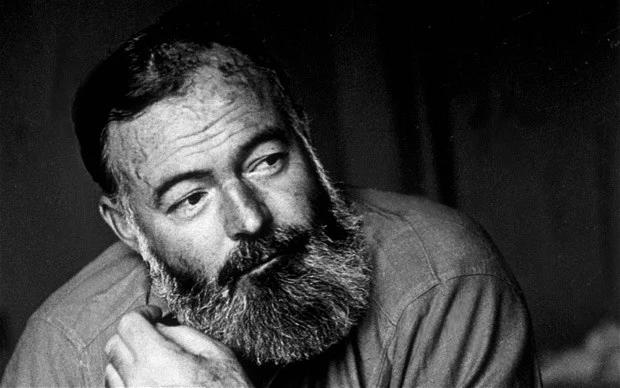
In Ernest Hemingway’s For Whom the Bell Tolls we follow lone-wolf saboteur Robert Jordan as he is assigned the mission of blowing up a strategic bridge to aid the communist-led cause in the Spanish Civil War. Along the way, Jordan finds he cannot complete the mission without the cooperation of an often unreliable and self-interested group of communist guerillas in which he has been embedded. For the socialist Hemingway (who would go on to openly support Fidel Castro), this was the illustration of a great moral truth. “No man is an island, entire of itself” goes the book’s epigraph by the poet John Donne. Like it or not, we are intricately involved with all mankind.
Likewise in a famous essay titled “The Soul of Man Under Socialism,” Oscar Wilde argues that private property is a “nuisance” and impediment to human flourishing. In his trademark wittily ironic and elegant style, Wilde states that “Socialism, Communism, or whatever one chooses to call it” will free us from the tedious obligations that come with owning things as well as the perennially troubling questions of what to do about the poor. Wilde believes that once freed from these obligations, “nobody will waste his life in accumulating things, and the symbols for things. “One will live.” He adds the eminently quotable line: “To live is the rarest thing in the world. Most people exist, that is all.”
Let us say that we conservatives, who are compassionate people with a strong instinct for civilizational flourishing, are persuaded by these arguments. Let us say also that we have decided to ignore the fact that Mr. Hemingway was a man of substantial wealth, an extremely zealous guardian of his own intellectual property rights, and a shrewd investor in both stocks and well-to-do wives. Likewise, let us ignore the fact that when Mr. Wilde found himself penniless at the end of his life and dependent on friends for support he regarded it as anything but ennobling. Further let us also overlook the fact that Mr. Wilde could be said to have gotten a taste of late-stage socialism as he served a sentence of hard labor at Wandsworth prison and was reduced, as he tells us in De Profundis, to begging for extra breadcrumbs because there was never enough to eat.
If this is indeed our guiding principle — that individual rights should yield whenever doing so benefits the collective — then the next question is obvious: Which rights are the left willing to give up for the common good? Fortunately, we have an abundance of data on what makes a healthy, prosperous society. Therefore, be it resolved that henceforth:
Everyone shall be required to work a steady job, to be married and monogamous, and to bring forth many children. (This shall include homosexuals, playboys, and strong, independent women who don’t need a man.)
No one is allowed to smoke marijuana or play more than one hour a week of approved video games.
As there is robust evidence that it causes depression, social media will be banned. Say goodbye to your profanity-laced tirades against ICE, your hysterical screeds warning of impending fascism, your mindless reposts of Heather Cox Richardson, and showing off your anti-Elon tattoos.
Everyone is required to exercise regularly and eat their veggies at every meal. Since it leads to nutritional deficiencies, vegetarianism is strictly forbidden. (Vegans shall be jailed and force-fed a diet of brisket and barbecued ribs.)
Since loneliness shortens life expectancy, the state shall assign companions to the chronically single. (Incels, rejoice!)
As happiness correlates strongly with religious participation and volunteering in many studies, you will be required to attend an approved church and participate in service work. Attendance records will be maintained.
And finally, as the right to life is no more sacred than any other right, and the diseased and disabled are a burden to society, the state shall euthanize the weaklings among us. At the end they will have eternal comfort in knowing they did their part for the greater good.
The modest proposal I’ve laid out is not some theoretical reductio ad absurdum. Elements of these policies have been realized historically in nearly every Communist society, as they are in China today, with the “social credit score.”
So what then of our literary argument, which so many people find persuasive, even if they’ve never read Hemingway or Wilde, and which I said contains a grain of truth.
The final answer comes from another work of literature, Dostoevsky’s The Brothers Karamazov. Dostoevsky accepts Hemingway’s argument that we are responsible for the lives of our fellows. In fact he pictures a form of maximal responsibility, as when the gentle, saintly Father Zosima bows to the violent, lustful Dmitri, touching his head to the sinful man’s feet, and rising, says, “Forgive me, all of you.”
But the secret which Dostoevsky well understood was that all assumptions of responsibility for others must be voluntary. They are convictions of conscience, not coercion. It is only in their free choices that men and women have an opportunity to be virtuous, to be kind, to be charitable, to offer forgiveness or obtain redemption. The “soul of man under socialism” is no soul at all. For this reason, our rights to life, liberty, and the pursuit of happiness, messy as they are, must remain unalienable. We need no arguments from literature for this: We hold these truths to be self-evident.
READ MORE from Chris Jansen:
READ MORE:
The Moronic Idiocy of ‘Municipal Socialism’
Chris Jansen is a translator, essayist, and poet. His books include Hamlet Decoded, We Can Be Heroes: A Rehab Memoir, The Last Mayan, and The Lost Poems of Juan Ramón Jiménez. He lives in Athens, Georgia.