The Anti-Communist Counterattack Begins on Screen – The American Spectator | USA News and Politics
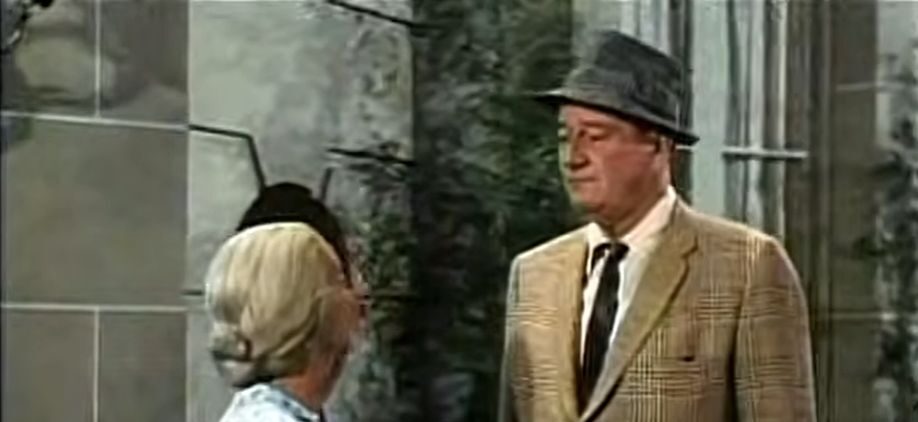
Last week, conservative writer Mark Judge officially announced the first annual Anti-Communist Film Festival — October 1-4 at the Victims of Communism Museum in Washington D.C.. With open or quasi communists taking over the Democratic Party and several American blue cities and states, the festival’s timing is perfect. I know which movie would win the top prize if it had been made already — Operation Cowboy: The Assassination of John Wayne, my Day of the Jackal-style thriller about a real 1950 Stalin plot to murder John Wayne because of his success flushing out Hollywood communists. For as more genuine historical sources rip through the cobweb of leftist media lies, two commie-exposing heroes have found new respect as framed victims — Joseph McCarthy and Richard Nixon. To requote The Daily Wire star Matt Walsh in his recent X post, “McCarthy was right and fully justified.”
But it’s not the artistry of these films that counts for Hollywood. It’s the propaganda value, even on a small audience.
For over 60 years, progressive filmmakers have depicted the communist investigations as the Hollywood Holocaust, wherein fascist officials and their studio-mogul acolytes silenced and persecuted Socratic screen artists. It began subtly enough in blacklisted genius screenwriter Carl Foreman’s High Noon. The classic 1952 Western depicted ex-Marshall Gary Cooper forsaken by the townspeople he protected ahead of four outlaws coming to kill him. It was clearly Foreman’s analogy for his abandonment by his peers during the blacklist.
But when the Democrats took control of Congress in Eisenhower’s second term, and as studio power waned, liberal Hollywood filmmakers and the media got their revenge. They used all their propagandic powers to demean the anti-communist patriots inside and outside the entertainment industry. This included then congressman Richard Nixon, whom they never forgave for exposing FDR State Department darling Alger Hiss as a Soviet spy.
And Hollywood led the charge. Every decade since 1956, Hollywood has made at least one film about the blacklist, so the public will “never forget” the obscure time that has little bearing on their lives, or — as non-woke historians are increasingly citing — the truth. There were one and a half exceptions — the James Bond 60s, when suave capitalist superspies outclassed drab Soviet mopes, and the Reagan 80s, when the American people and even auteurs like Clint Eastwood went all in on the Evil Empire vibe. But between the two and post-Reagan, the pro-communist arts flourished, another cultural decline you can partially blame on a Bush.
Here are X films most likely to play at an Anti Anti-Communist Film Festival:
Storm Center (1956). Bette Davis’s All About Eve comeback didn’t last long without a major studio contract, so an indie production company was happy to get her. Bette plays a liberal librarian who defies community pressure to ban the book The Communist Dream from the library. “Liberal” was as close to commie as you could commercially get in the Cold War fifties.
The Way We Were (1973). Protagonist Barbra Streisand portrays an outright outspoken commie who spends two decades trying to sway more people to the cause. She goes ape over the Hollywood blacklist, which — to give director Sidney Lumet credit — proves too much for her writer lover — later husband Robert Redford. Redford’s putdowns of Streisand save the picture (see my article here The Way They Weren’t)
The Front (1976). Both director Martin Ritt and screenwriter Walter Bernstein were blacklisted, but they couldn’t make a compelling film about it. Woody Allen is a bookie who agrees to hire out his name as a “front” for blacklisted writers. Fellow comedian Zero Mostel also plays it straight as a once star comic languishing after the witch hunts. Dull stuff.
The House on Carroll Street (1988). Walter Bernstein went back to the blacklist well with a conspiracy thriller and worse results. Blacklisted magazine editor Kelly McGillis uncovers a government plot to import ex-Nazi scientists to work on anti-Soviet military technology. It’s actually a smart plan depicted as the depth of depravity — Russian weaponry being a good thing to challenge the evil United States. One of the biggest bombs of the 80s and the death blow to McGillis’s career.
Guilty by Suspicion (1991). Director Robert De Niro gets blacklisted and loses his career and contact with his estranged wife and son. His only hope for a comeback is in naming his pro-commie comrades to HUAC. Instead, he defiantly lets them have it at the hearing and wins back Annette Benning. Too bad De Niro today has no problem naming one name as the source of all evil — Donald Trump. Another flop.
The Majestic (2001). Jim Carrey plays a blacklisted Hollywood screenwriter with amnesia. I saw the film when it came out and it must have given me amnesia because I can’t remember anything about it.
Trumbo (2015). Dalton Trumbo was a mediocre screenwriter, hence the subject of a mediocre film. Bryan Cranston does a fine job playing him. In one scene, he shares half a sandwich with his young daughter to explain communism. He should have given her a quarter of the sandwich then thrown away half of it for a more accurate explanation.
But it’s not the artistry of these films that counts for Hollywood. It’s the propaganda value, even on a small audience. Joseph Stalin understood the mind-influencing power of cinema, as did his two main nemeses in Hollywood, John Wayne and Ronald Reagan, which is why he wanted John Wayne dead. In my script Operation Cowboy, Stalin explains the revelation he got watching Sergei Eisenstein’s Battleship Potemkin.
“I’d spent many sleepless nights pouring over the writings of Marx and Engels — hoping to persuade more allies to my side. Yet just two hours in a darkened theater put both those philosophers to shame. Giving me the spark I needed to destroy my rivals, Trotsky, Zinoviev, Kamenev.”
Let’s hope anti-communist films can undo the damage his ideology is still wreaking in America.
READ MORE from Lou Aguilar:
Another Nail in the Hollywood Coffin: George Washington Beats ‘Supergirl’