Eastwood: The Last Man Standing – The American Spectator | USA News and Politics
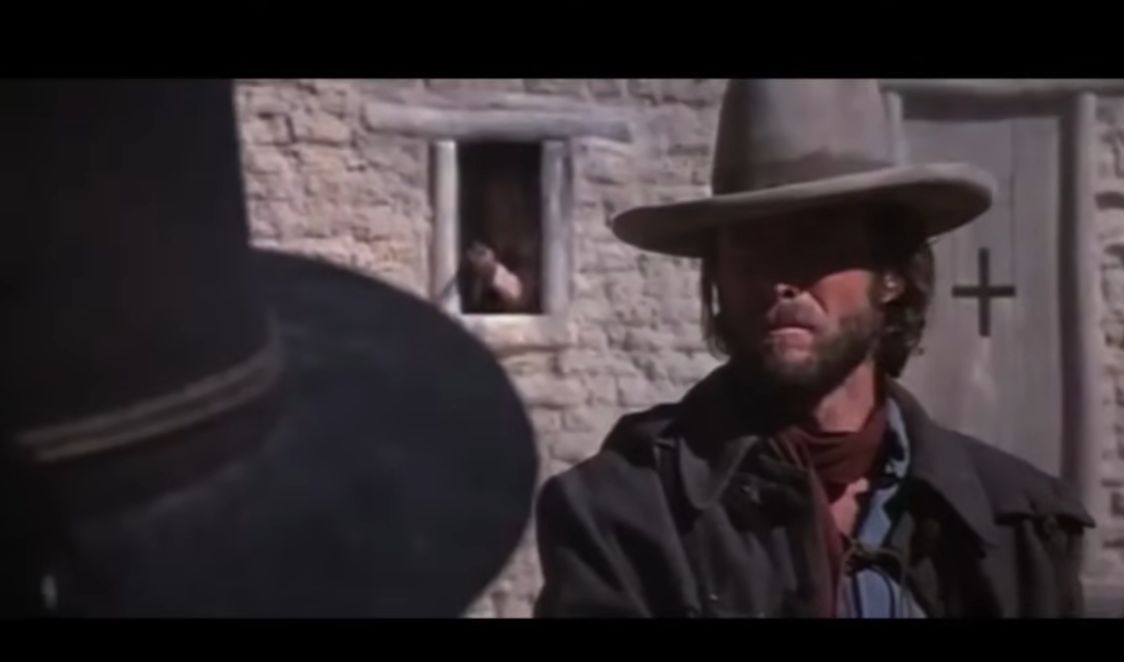
Clint Eastwood turned 96 last month. A few words from his son, Kyle, fueled speculation that the film icon has retired from both sides of the camera after 70 years in front of it. This is not sad news. Clint (he’s one of the few people whose Christian name makes you think of him first) would be quitting while on top, having outlasted up there every one of his few peers. He inspired and reinspired three generations of boys to men, and gave women a consistent view of real manhood despite feminism’s endless drive to diminish it. And now, unlike his fellow legends — Wayne, Bogart, Gable, McQueen — he’ll have time to retrospectively enjoy his contribution to the screen and the culture.
Clint would have none of this perversion with our soldiers in harm’s way. He directed his War on Terror film, American Sniper, based on the true story of Navy SEAL Chris Kyle.
Like millions in the late Sixties, I came to know Clint as the murky hero of Sergio Leone’s classic Western trilogy (A Fistful of Dollars, For a Few Dollars More, The Good, The Bad, and the Ugly). I was too young to have watched his stint as a popular TV cowboy on the long-running series Rawhide (1959-1965). Yet on reviewing a few episodes, I could easily see how supporting actor Clint totally outshone the nominal star (Eric Fleming) in an early example of his screen domination.
It was on summer hiatus from Rawhide in 1964 that Clint flew to Rome to star in Leone’s low-budget tradition-breaking Western A Fistful of Dollars, with no idea of how it would change his life and cinema itself. The movie became an international sensation, and the duo followed it with two more classics in the next two years. Movie theaters got full playing double bills of the first two, and lone showings of the epic high-budget third film featuring scenes of the Civil War.
Clint’s protagonist in the trilogy, phenomenally yet incorrectly promoted as the Man with No Name (he has a name in two of them), is the opposite of the classic Western hero he himself portrayed on television, a morally suspect unwashed gunfighter. But Leone, who later made the mythic masterpiece Once Upon a Time in the West, knew enough to still make him the hero, with subtle noble acts and a moral code amid truly despicable wretches. Which is how, why, and when the character Clint played cut through the darkness, and thrilled me.
In A Fistful of Dollars, he risks his life rescuing a woman from the villain’s possession to reunite her with her son and husband, with little explanation as to why (“I knew someone like you once. There was no one there to help.”) In For a Few Dollars More, he takes the badge off a corrupt sheriff (“Tell me, isn’t the sheriff supposed to be courageous, loyal, and above all honest? … I think you people need a new sheriff.”) And in The Good, the Bad, and the Ugly, he gives a dying young Confederate soldier a last drag of his cigarette, in a beautiful display of unspoken sublime acting. Probably no one lucky enough to be making films today would have a clue or the talent to come up with such great gallant touches.
Clint returned to Hollywood a major movie star in the late Sixties. By then, the counterculture was running the show, and mostly mucking up the industry. Clint didn’t care, and neither did his audience. He made three successful pictures, a good traditional Western, Hang ‘Em High, a fine modern police Western Coogan’s Bluff in which he kicks a lot of hippie butt, and one of the most exciting war adventure movies of all time, Where Eagles Dare. In Eagles, Clint lets co-star Richard Burton delightfully ham it up for the entire film while remaining a laconic Army Ranger killer.
But if Clint irritated the liberals in the 60s, it was nothing to what he did to them in 1971 as Dirty Harry. His San Francisco Inspector Harry Callahan mocks and breaks every bleeding-heart rule imposed by the Left, as in the famous early scene where he shoots up a gang of black bank robbers and taunts the lone survivor. “I know what you’re thinking: ‘Did he fire all six shots or only five?’ … You’ve got to ask yourself one question: ‘Do I feel lucky?’ Well, do ya, punk?” The taunt would make every Democrat in Congress today — and many in the British police forces and Parliament — kneel in either protest or dread.
Clint directed and starred in a great Western in the Seventies, The Outlaw Josey Wales, and a good one in the Eighties, Pale Rider. But it was his 1992 contribution to the genre, Unforgiven, that electrified the industry and invigorated Clint’s later career, winning four Oscars, including Best Picture and Best Director. He made some fine films over the rest of the decade, like In the Line of Fire, Space Cowboys, and Midnight in the Garden of Good and Evil. But it wasn’t till the 21st century that he triggered the Left one last time.
It was during the War on Terror, when every Hollywood filmmaker was trashing the military in their movies. They included Redacted (Brian De Palma), In the Valley of Elah (Paul Haggis), Rendition (Gavin Hood), Stop-Loss (Kimberly Peirce), and Lions for Lambs, directed by Clint’s liberal actor contemporary Robert Redford. Every one of these films bombed spectacularly, because progressives never understood American patriotism.
Clint would have none of this perversion with our soldiers in harm’s way. He directed his War on Terror film, American Sniper, based on the true story of Navy SEAL Chris Kyle, the most lethal sniper in U.S. military history. The picture made more than half a billion dollars worldwide. Which explains why Clint never ended his career as a Marvel Comics Universe villain like Redford did.
From now on, he can relax in front of a screen, pop open a bottle of Newcastle Brown Ale (his favorite beer since Where Eagles Dare), and watch modern Hollywood weenies try to imitate his tough guy cool, and say, “Go ahead. Make my day.”
READ MORE from Lou Aguilar: