Chaos and allegations of physical assault engulf SF’s historic South End Rowing Club
Known as one hell of a deckhand and boat pilot, Jim Bock, 63, has the weathered face and hair of an older Ernest Hemingway. For 18 years, he has been a great favorite at the historic South End Rowing Club, which has been moored on San Francisco’s Aquatic Cove for the past century and a half. He’s the kind of magnanimous, salty character who is synonymous with the Bay Area’s harbor clubs, a man credited with creating the club’s piloting curriculum, overseeing major swim events, and spearheading improvement projects like adding long-overdue disability access to the men’s locker room.
But Bock allegedly has a darker side, having been repeatedly accused of physically assaulting club members over the last eight years, according to two internal investigations, court documents, and interviews with 10 current and former members.
In 2020, former member Tibor Szabo filed a lawsuit accusing Bock of body-slamming him in the club’s kitchen. This year, two women filed complaints with the South End board alleging that Bock had slapped them on club property. Another woman filed a complaint alleging that Bock berated and pushed her while the two were alone on a boat. And in 2022, one longtime member in an email to the president of the club alleged that Bock had “said ‘penis bump’ and pushed his pelvis into mine” — contact she did not welcome.
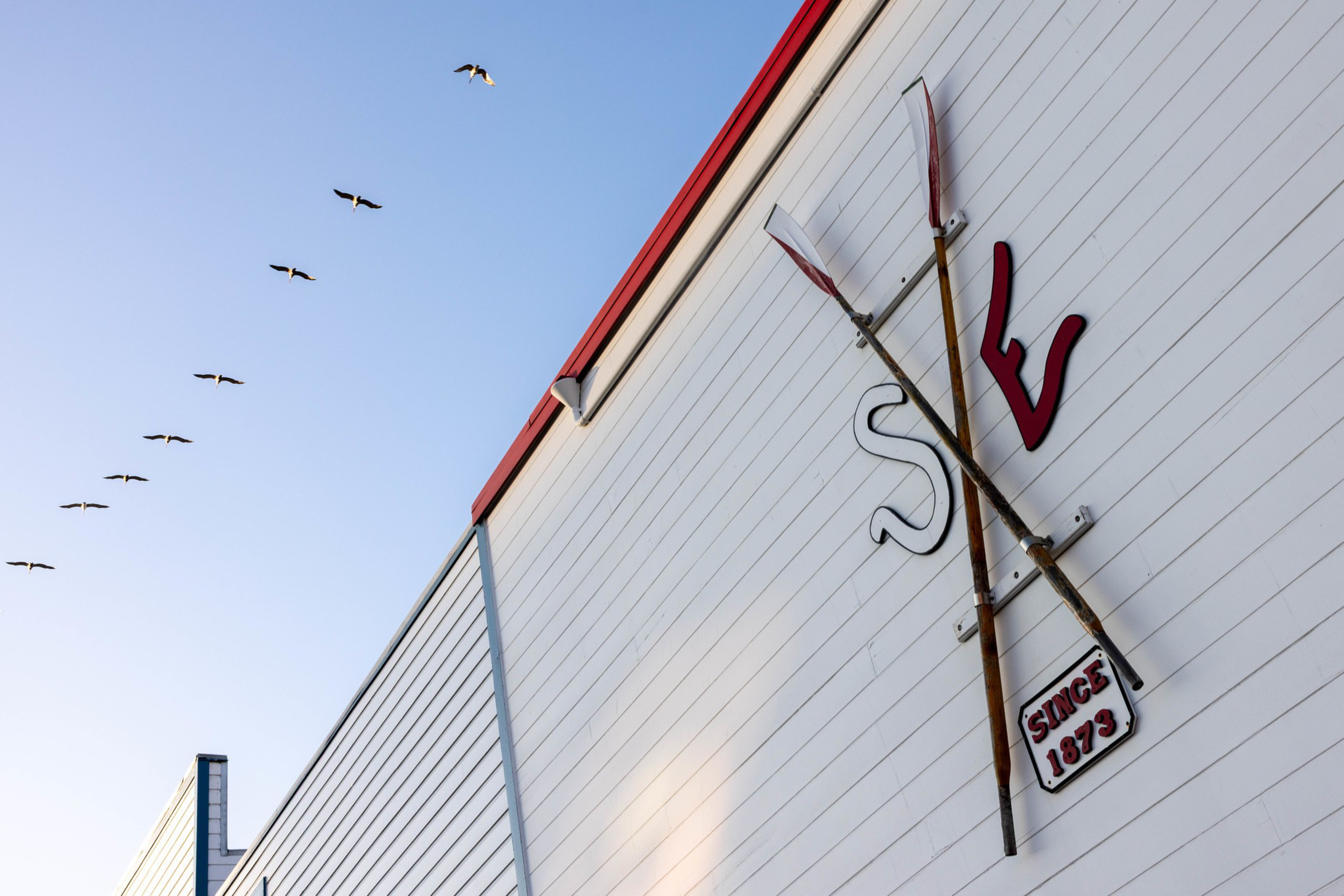 At the oldest rowing club on the West Coast, allegations of physical assault aimed at one longtime member have splintered membership. | Source: Amanda Andrade-Rhoades/The Standard
Three of the women agreed to speak with The Standard under the condition of anonymity, citing fears of retribution. The other declined to comment.
South End in June initiated an investigation into Bock, determining that he had slapped two women, according to the club’s lawyer, Don Margolis. The club then expelled Bock.
Bock hired a lawyer to defend him against the accusations and contest the investigation’s procedural process. This prompted the club to hire Adam Shearer, a San Francisco attorney specializing in internal investigations at nonprofits, to conduct another probe. The second investigation cost the club $18,000 and resulted in a 68-page report upholding the expulsion and concluding that Bock had slapped both women with enough force to make their faces “sting and feel tingly and hot.”
“The board knew about this fucking predator, and they’re letting his allies run the conversation,” said the woman who alleged Bock grabbed her hips, who has been a member of the club since the early 2000s. “That’s not how this thing works — sometimes your friends get disciplined. The club has not been able to deal with disciplinary measures without also hurting the victims.”
Not everyone at the club agrees that Bock deserved to be expelled. Members of South End and its board have provided support for Bock through letters, online fundraisers, and a party on club grounds.
“If Jim were an abuser of any kind, it would have come to light long before now,” said a letter of support from member Cecil Marie, which was included in Shearer’s report. She is one of six women who sued South End in the 1970s for the right to use what were at the time male-only facilities. In total, 14 members and friends penned letters of support for Bock, describing him as “gregarious” and “respectful” and highlighting his contributions to the club, from organizing annual events to providing emotional support to members in need.
In recent weeks, many of the allegations against Bock have been debated in an email group that includes more than 2,000 South End members. The back-and-forth emails have turned an internal investigation into a club-wide fracas, splintering membership into warring factions and reopening long-simmering tensions.
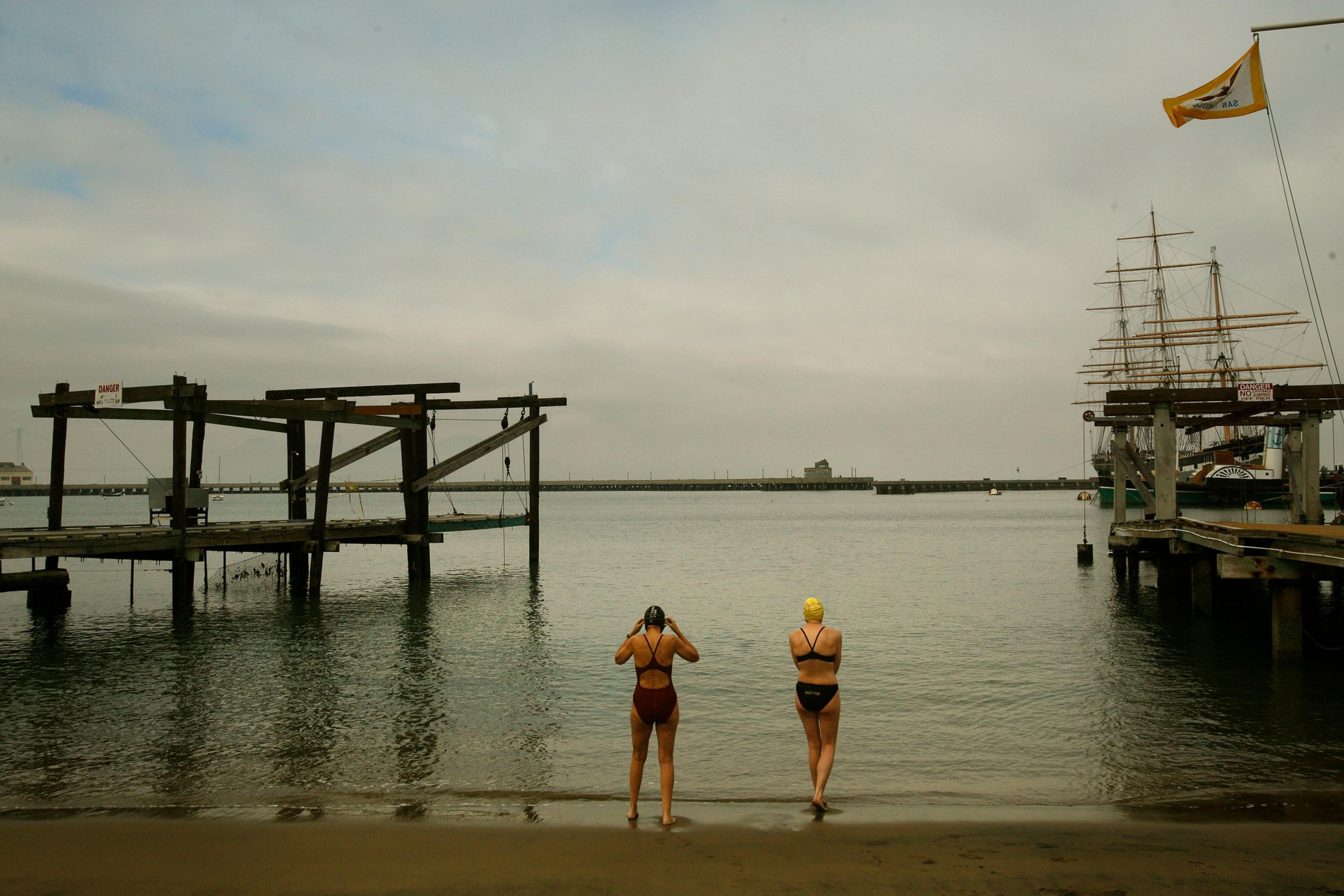 South End Rowing Club shares a fenced-off beach with the Dolphin Club, its longtime rival. | Source: Michael Macor/SF Chronicle/Getty Images
Josh Sale, the club’s president, said in a statement on behalf of the South End board that the email group is operated independently and does not represent the club in an official capacity.
The Standard spoke with more than two dozen South Enders. Many derided Bock, raising concerns about club leadership and its response to the allegations against him, especially since the city of San Francisco owns the property where the club is based and many of the alleged incidents took place. Several members who have provided support for him in the past declined to comment.
“This Jim Bock thing that’s been happening is a symptom of a bigger diagnosis of there not being great leadership at this establishment,” said one former board member. “It functions like an old boys club. … This guy needed to go, like, a long time ago.”
Bock declined to comment, citing the advice of his attorney.
In court filings in response to Szabo’s lawsuit, Bock denied the allegations of body-slamming. In emails sent to the club’s group thread and statements submitted to the club by his lawyer, Bock said he does not recall slapping either of the women who complained and denies that he would ever have touched them in a way that wasn’t friendly.
In a statement he provided for Shearer’s report, Bock cast doubt on the credibility of his alleged victims, saying they had political and financial motivations for having him removed from the club. About one he alleged, “My best guess is that she got recruited to fabricate a complaint … having been told that she is fighting the good fight for women.”
 Source: Michael Macor/SF Chronicle/Getty Images
After allegedly berating a woman in a boat in May 2024, Bock was suspended for 30 days, his return contingent on him writing an apology letter. In a letter informing him of the suspension, Sale, speaking on behalf of the board, began by acknowledging Bock’s role at South End.
“Every one of us recognizes your extensive history of contributing your time and talents to the Club,” Sale wrote. “You’ve made the Club a better place.”
When Bock refused to apologize, his suspension dragged on for nearly a year. Ultimately, he wrote an apology letter to the woman and was welcomed with open arms by several club members with a “Return of the Bock” party featuring cocktails, tacos, and balloons beside a chalkboard that read, “Bock is fuckin’ back!!!”
A club as old as Levi’sFounded in 1873, the South End Rowing Club is the same age as Levi’s jeans, San Francisco’s streetcars, and, perhaps most notably to its members, four years older than its next-door neighbor, the Dolphin Club, with which it shares a fenced-off beach and a storied rivalry.
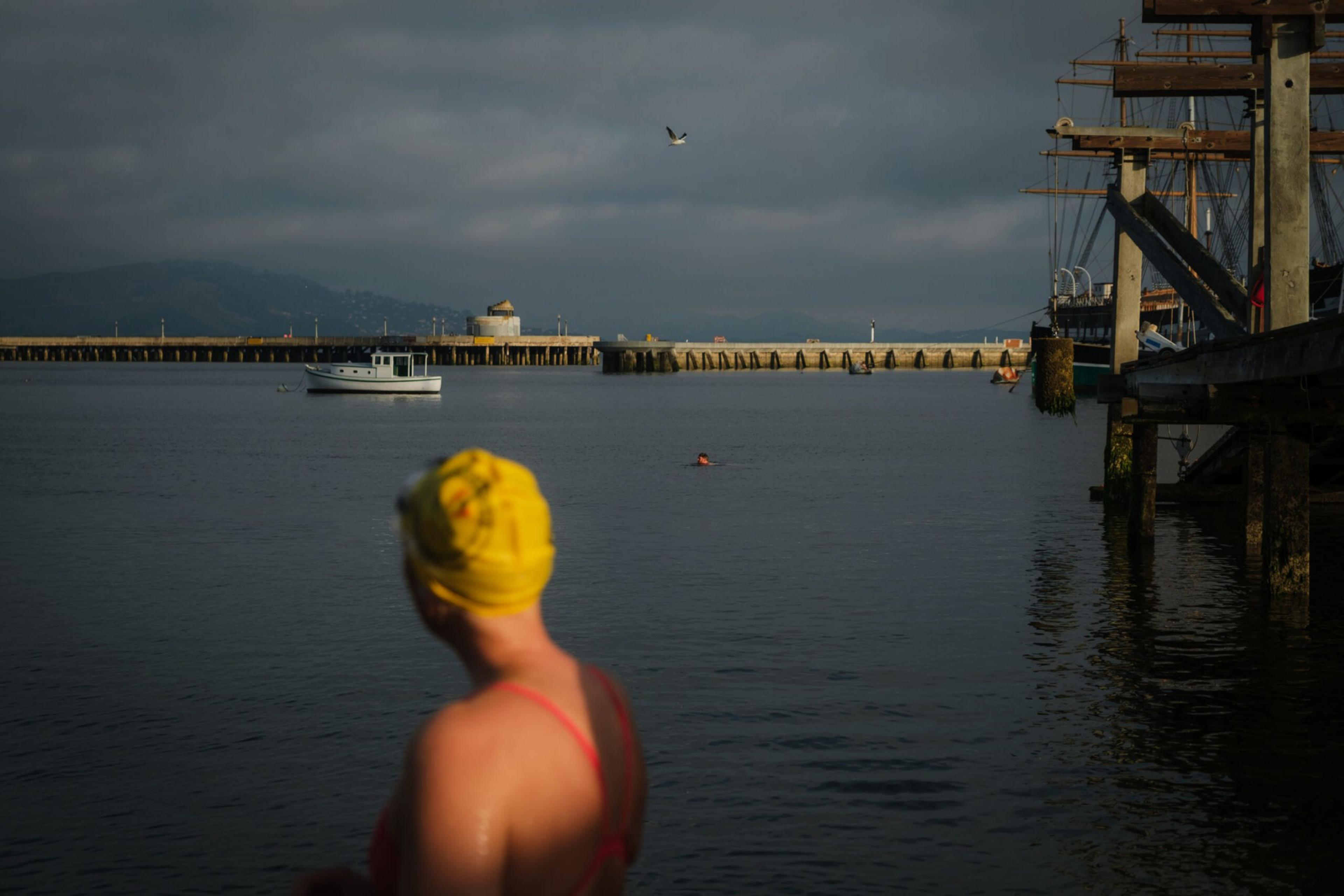
Past the tourist-crazed streets of Fisherman’s Wharf, the red-trimmed building of South End Rowing Club is steeped in briny nostalgia. Inside its timeworn walls, the scent of neoprene and old wood lingers over creaking floors, meticulously kept wooden shells, and a cozy wood-paneled bar. The club’s bay doors open to the beach, with postcard views of historic ships bobbing in the water.
 Founded in 1873, South End Rowing Club is one of San Francisco’s oldest institutions. | Source: Michael Macor/SF Chronicle/Getty Images
“It is a pretty good collection of swimmers and rowers and runners and handball players that has sustained its edifice and has a beautiful thing called a hot sauna for anyone crazy enough to swim in the bay,” said Aaron Peskin, whose unusually long career in San Francisco politics is dwarfed only by his membership (opens in new tab) at South End. (He’s been a member since 1992, nearly twice as long as the amount of time he spent as a district supervisor.)
Though Ivy League athletes have passed through its ranks, South End has never shed its scrappy, bohemian identity. Artists, journalists, and blue-collar workers have always been part of the club’s membership — which, for most of its history, was exclusively a brotherhood.
Throughout the 1970s, a group of women filed a series of lawsuits against the Dolphin Club, South End, and the Ariel Club, claiming that, because the land was owned by the city and operated on behalf of the Recreation and Parks Department, they could not bar women from joining. Those women, including renowned artist Joan Brown (opens in new tab), became known as South End Rowing Club’s “founding women. (opens in new tab)” (opens in new tab)
Yet gender integration did not ease transgressions. In 2012, after complaints from members — including one who described encountering unclothed men near public handball courts — the city attorney “suggested” that the club restrict access to certain locker areas, according to Kim Howard, a member who spoke with the city attorney’s office at the time.
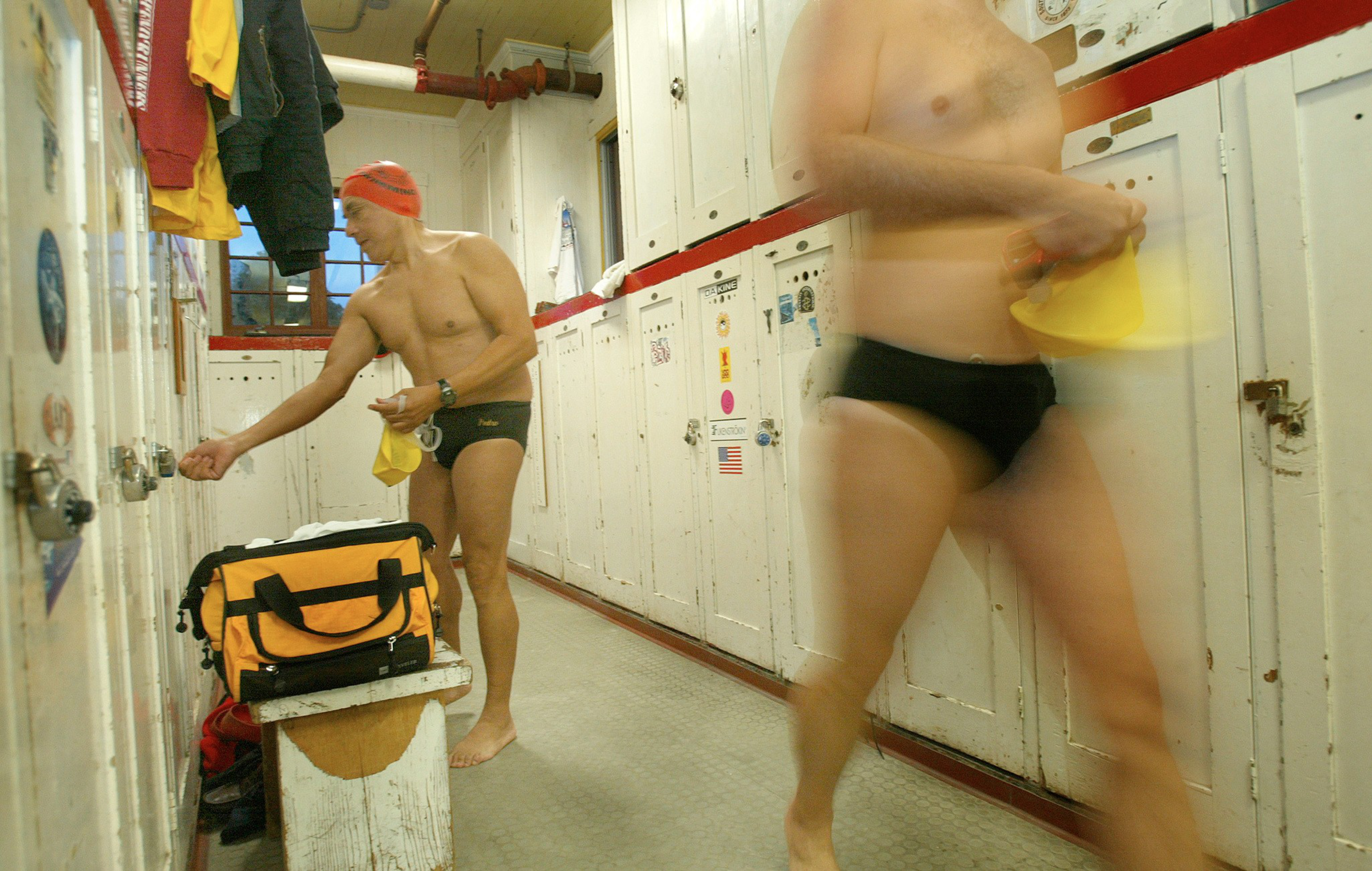 South End has long attracted a scrappy, eccentric crowd of tough swimmers and convivial athletes. | Source: Michael Macor/SF Chronicle/Getty Images
“The Board acknowledged that some men had been hostile,” a member wrote to the city attorney’s office at the time, “and that the inappropriate behavior was continuing.”
Until the pandemic, membership at South End hovered around 500, according to tax filings, but now stands at 2,250, with a waitlist nearly as long. Because the club had a relatively small number of members for so long, its culture can be seen as a vestige of an earlier time.
“You know the nostalgia of the 1950s? That’s what it reminds me of,” said one longtime member.
‘Misused and abused’Over the last five years, South End’s leadership has spent considerable resources and money to handle legal matters, investigations, and internal conflict stemming from accusations against Bock.
Szabo’s 2020 lawsuit, filed in San Francisco Superior Court, sought damages against the club and Bock of $100,000. In a response, Bock flatly denied the allegations and asserted that any injuries were the result of “reasonable and justified acts in self-defense” in response to Szabo’s “aggressive acts.” The case was settled later that year out of court, in Szabo’s favor, according to two sources who were directly involved in the confidential settlement. In 2020, South End spent $20,260 on legal fees, according to tax documents.
“[South End] is an amazing thing that’s been totally misused and abused, and there is a small group taking advantage of a wonderful situation there,” Szabo told The Standard. “Part of the settlement was that I wouldn’t go back there, but I might sign up at the Dolphin Club.”
Still, many members continue to side with Bock, including in the instances in which he’s accused of slapping women. “[They] had this interaction, where he pretend-slapped her, but it was one of those uncomfortable moments,” said a witness statement in Shearer’s report, in regard to the 2024 incident. “But it seemed like he really slapped her. Everyone laughed it off.”
The Shearer investigation also details an incident from the following day, when a woman alleged that Bock berated and pushed her while they were alone in a small inflatable boat.
“Jim stood up in the boat and screamed at me. ‘I’M A SENIOR PILOT. I’M NOT A CO-PILOT. YOU DO WHAT I SAY.’ He was red in the face and he lunged at me. I flinched. He pushed me, grabbed the tiller and ripped it out of my hand,” says a statement from the woman that was included in Shearer’s report.
In a response to the complaint, Bock admitted to yelling at the woman but denied that he had physical contact with or intimidated her.
“So after pouring my heart and soul into the club that I deeply love for the better part of two decades, and hopefully putting the club first, this is heartbreaking to be accused of such reprehensible things,” Bock wrote.
Though details of the boat incident were included in the Shearer report, the investigation offered no conclusions about its veracity.
Earlier this year, the two women who were allegedly slapped filed complaints against Bock to the South End board, outraged by the Return of the Bock party, according to the Shearer report. One accused board member Alan Lapp of confronting her to ask if anyone had “coached” her into submitting a complaint.
Two weeks after the complaints were submitted, in June, Bock was officially expelled. But his exile only fueled more controversy. Over the summer, senior members and other board members wrote letters of support for Bock and raised funds to cover his legal fees.
 Source: Amanda Andrade-Rhoades/The Standard
Even in exile, Bock wields unusual power at South End, and he remains a member of the club’s email group, according to a moderator. In Shearer’s report, Bock authored his own response, which was paired with 14 "positive witness statements,” many of which were written by women, including Judy Irving, director of the 2003 documentary “The Wild Parrots of Telegraph Hill.”
“Jim is one of the gentlest men I know,” says a letter from Char Sachson, who works as a supervising deputy attorney general for the California attorney general. “He is considerate and compassionate. He is also a barrel of monkeys. Jim does bring the fun, and he has no end of enthusiasm. I have never seen any of Jim’s high energy channelled into physical violence. Boisterous? Yes! But always gentle and considerate.”
Despite these entreaties, the South End board decided to expel Bock.
“The investigator determined that violations of the Club’s Code of Conduct had occurred and recommended expulsion,” Sale wrote to The Standard in a statement on behalf of the board. “The Board voted to adopt this recommendation, and the member has been expelled from the Club.”
A ‘pivotal’ decisionFar from being over, however, the controversy over Bock still roils Aquatic Cove. This month, as the club prepared to elect a new president, the email group erupted, with Bock continuing to plead his case. Lengthy missives flooded members’ inboxes, laced with hearsay, name-calling, and electioneering during what one board member called a “pivotal” Dec. 15 vote for the South End presidency.
A disclaimer at the bottom of each email urged members to maintain a sense of decency and decorum: “Anyone here could be sitting next to you in the sauna tomorrow morning.”
According to the Shearer report, Bock argued that the alleged victims were “weaponizing their gender in an attack and bullying” him, “in order that I leave the club.” He further claimed that one accuser has a record of decrying “mansplaining,” adding, “Other women in our community are appalled that they are misusing this, and thereby cheapening the voice of actual victims of violence.”
 An email thread for club members has been thrown into chaos after allegations of physical assault were laid bare. | Source: Kori Suzuki for The Standard
Among the club’s most revered and essential members are the senior pilots, a small group of experienced navigators who drive safety dinghies alongside swimmers during jaunts to Alcatraz. When six of the club’s senior pilots resigned last month in solidarity with Bock and in response to what they called poor governance, it sent shockwaves through the membership. Two of the six told The Standard they regret signing the resignation letter, stating that they did not have all the facts about the allegations against Bock.
Individual donors have also stepped up for Bock. Two GoFundMe campaigns were started to provide him with monetary support, one organized (opens in new tab) by Bock himself and the other (opens in new tab) by Jenn Lawson, who led the pilot resignation effort. Together, the crowdfunding efforts have raised $6,900 from dozens of anonymous donors.
“Maybe this will send a message that unconventional and quirky is how we like the club,” Bock said in the description of his fundraiser.
Bock remains expelled. On Election Day last Monday, the majority of voting club members cast their ballots for Vanessa Marlin, who was not one of Bock’s supporters. The losing candidate was Erika Gliebe, a staunch ally of Bock. Among the planks of her platform: “Fewer rules, more fun.”