SCOTUS Hands Trump Major Separation-of-Powers Victory, Buries Humphrey's Executor
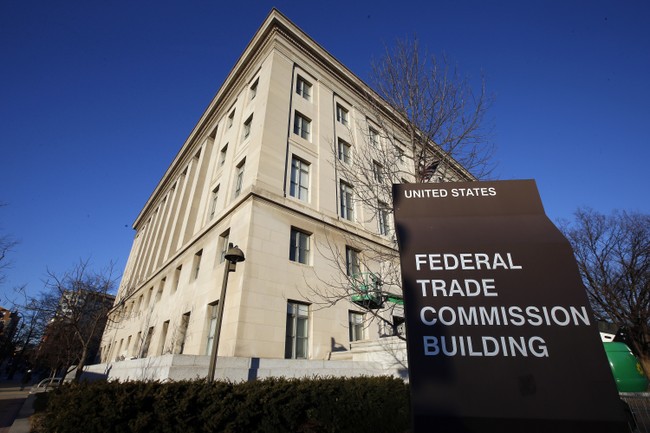
The Supreme Court on Monday issued its decision in Trump v. Slaughter, holding that the "for-cause" removal provision for the Federal Trade Commission (FTC) is contrary to the Constitution's separation of powers. The ruling upholds the Trump administration's position and effectively overrules what remained of Humphrey's Executor, the 1935 case in which SCOTUS held that the removal statute only permitted the president to fire FTC commissioners “for inefficiency, neglect of duty, or malfeasance in office.”
Advertisement
Here's a bit of background on the Slaughter case: In March of 2025, Trump fired Commissioner Rebecca Kelly Slaughter, whom he had originally nominated and appointed to the FTC in 2018. In 2023, President Joe Biden renominated her to serve a second term, scheduled to end in 2029.
So the obvious question is: If the president can appoint a commissioner, shouldn't he/she be able to remove that commissioner? The catch is that the FTC Act allows removal only "for cause."
After Trump fired her, Slaughter sued, and lower courts reinstated her. The administration petitioned the Supreme Court for certiorari and asked it to revisit Humphrey's.
RELATED: Dismantle the Deep State, Now? Yes, Please!
New: Supreme Court Sides With Trump on Removal of FTC Commissioner
Monday's decision, authored by Chief Justice John Roberts, was 6-3, with Justice Sonia Sotomayor penning the dissent, in which Justices Elena Kagan and Ketanji Brown Jackson joined. Justice Neil Gorsuch authored a concurring opinion, in which he urged an even stronger return to Article II principles.
The opinion builds around the "unitary executive theory," holding that the FTC's statutory removal protection violates Article II because FTC commissioners exercise substantial executive power and therefore must remain removable by the President.
The Court says Humphrey's rested on the notion that the FTC exercised only "quasi-legislative" and "quasi-judicial" functions, but points out that modern FTC powers are overwhelmingly executive.
Advertisement
While this is a significant ruling, it's important to note that the opinion does not address, e.g., Federal Reserve protections or every other independent agency, nor does it define the outer boundary of executive power. Indeed, the Court issued a companion opinion in Trump v. Cook today as well (which we'll have more on shortly), preserving the Federal Reserve's unique removal protections because of its distinct historical role. Instead, Roberts says today's holding applies to officers exercising executive power like FTC commissioners.
This is a developing story. RedState will have additional analysis shortly.
Editor's Note: Do you enjoy RedState's conservative reporting that takes on the radical Left and woke media? Support our work so that we can continue to bring you the truth.
Join RedState VIP and use promo code FIGHT to receive 60% off your membership.