In Wolford Decision Supreme Court Tosses Hawaii's Sweeping Concealed-Carry Restrictions
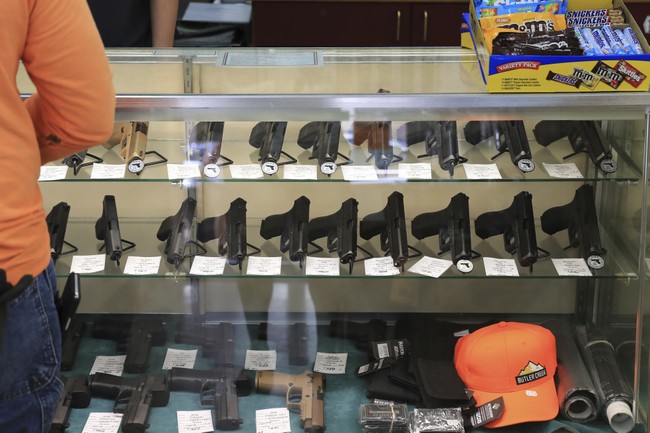
The Supreme Court struck down Hawaii's sweeping gun-carry restriction on June 25, 2026, ruling 6–3 in Wolford v. Lopez that the state's law barring licensed concealed-carry holders from bringing firearms onto private property open to the public absent explicit permission violates the Second and Fourteenth Amendments.
Advertisement
Hawaii's Act 52, enacted in 2023 in direct response to the Court's landmark ruling in New York State Rifle & Pistol Association v. Bruen, flipped the traditional common-law default on private property. Rather than allowing anyone, including lawful gun carriers, to enter property open to the public unless specifically told otherwise, the law required gun owners to obtain express permission before entering any such property. Challengers argued the law effectively banned carry on roughly 96 percent of publicly accessible land in Hawaii.
NEW — The Supreme Court rules that a Hawaii law which barred gun owners with concealed carry permits from carrying firearms onto private property without express permission from property owners is unconstitutional.
The vote was 6-3.
— Townhall.com (@townhallcom) June 25, 2026
Read More: The 5th Circuit Just Lit the Fuse on the Next Big Second Amendment Fight
Writing for the majority, Justice Alito called the practical effect of the law staggering, describing how an ordinary day of errands, a gas station, a grocery store, a dry cleaner, could leave a licensed carrier a "criminal at least six times over" without ever intending to break the law.
This regime hobbles what the Second Amendment protects: the right of Americans to carry arms for self-defense as they go about their daily lives.
Advertisement
The majority was joined by Chief Justice Roberts and Justices Thomas, Gorsuch, Kavanaugh, and Barrett. Justice Barrett filed a concurrence joined in part by Thomas and Gorsuch.
The Court rejected Hawaii's historical analogues as insufficient. It dismissed colonial-era anti-poaching laws as too narrow, targeted at preventing hunting on private land, not self-defense carry in everyday commercial settings, and flatly rejected Hawaii's reliance on an 1865 Louisiana statute enacted as part of the Black Codes to disarm newly freed slaves.
During January oral arguments, Justice Alito had already signaled where the majority was headed:
"[W]asn't the purpose of the laws in the post-Reconstruction South that disarmed black people precisely to prevent them from doing what the Second Amendment is designed to protect?... So, is it not the height of irony to cite a law that was enacted for exactly the purpose of preventing someone from exercising the Second Amendment rights?"
The Court also unanimously rejected Hawaii's argument that its unique culture and centuries-long tradition of restricting firearms justified a different constitutional standard. The Second Amendment, the majority wrote, cannot give way to the "spirit of Aloha" any more than it yielded to the "spirit of the Big Apple" in Bruen or the "Windy City" in McDonald v. Chicago.
Advertisement
Justices Kagan, Jackson, and Sotomayor dissented. Kagan argued Hawaii's law was consistent with founding-era property-rights principles. Jackson, joined by Sotomayor, contended the majority misapplied Bruen and that the case was fundamentally about property law, not the Second Amendment.
The ruling puts California, New Jersey, Maryland, and New York, all of which adopted similar post-Bruen default rules, squarely in the crosshairs of follow-on litigation. It also reinforces that no state's local custom, however deeply held, can shrink the Second Amendment's uniform national guarantee.
Editor’s Note: The radical Left will stop at nothing to enact their radical gun control agenda and strip us of our Second Amendment rights.
Help us continue to report on and expose the Democrats’ gun control policies and schemes. Join RedState VIP and use promo code FIGHT to receive 60% off your membership.