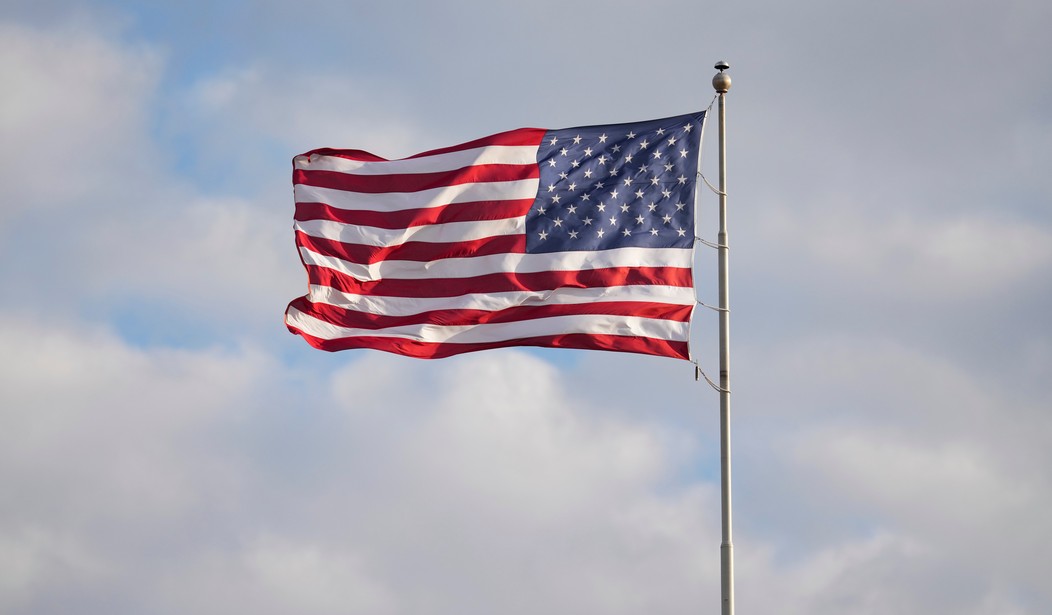
It was the first day at the Battle of Gettysburg, July 1, 1864, and things were not going well for Abe Lincoln's boys in blue. Robert E. Lee's Johnny Rebs had arrived on the battlefield almost behind General Oliver Otis Howard's 11th Corps, which panicked the "Dutchmen" and sent them flying towards the town of Gettysburg.
This left General John Reynolds ' 1st Corps all alone to face most of the Confederate Army. Surrounded on three sides, the "Black Hats" were taking a terrible beating. In the 143rd Pennsylvania, the color bearer, Sergeant Benjamin Crippin, stood in full view of the enemy, waving the flag vigorously, trying to rally the troops to hold their ground and keep fighting.
But the inexorable logic of superior numbers ground down Reynold's men, and eventually they, too, broke and ran. As they retreated, Sergeant Crippin, still carrying the flag which now featured 23 bullet holes shredding the precious fabric, turned toward the enemy and, in an act of defiance memorialized in legend and statue, shook his fist at the oncoming Rebels, daring his foes to take the flag from him. It is reported he did this several times, even eliciting sympathy from Confederate General Ambrose Hill when his troops, enraged at the taunting figure, shot him down in a hail of bullets.
There was no more deadly job in the Union Army than color bearer, and none more honored. Carrying the flag into battle made one an instant target, the enemy believing quite correctly that killing the color bearer would sap the will to fight in their opponents. It became a point of honor for a regiment that if the standard-bearer fell, another would immediately pick up the fallen flag and take his place. There was a reverence for the flag then, a feeling of personal responsibility for upholding what it represented. It was a tangible way for these men to express something inexpressible that lived in their breasts and enabled them to march into almost certain death and remain while their comrades fell around them. The flag gave them courage while reminding them of what they were fighting for.
What is it about the flag that brings such overpowering emotion and devotion to the surface? Grown men weep at its passing. And thank God there are still men and women willing to die protecting what it represents. But as a symbol, why does it take up such a large corner of our hearts?
There are so few things that actually unite Americans in a traditional sense that make us a nation. Other countries have hundreds even thousands of years of cultural touchstones and myth that are almost hard wired into their brains to make them a "nation." The United States, on the other hand, is too young for myth-making. Instant legends like Davey Crockett or George Custer exist alongside their more unattractive, and definitely human, historical selves, taking the luster off some of their accomplishments. Other symbols of nationhood found elsewhere, such as castles, palaces, or ancient battlefields, are absent here.
For Americans, it is in the flag that we infuse all of our feelings of love and respect for country, for home, for each other. Each of us is reminded of something different as the flag passes. This is what makes it a personal icon, a talisman to be touched and stroked so that the longing in our hearts to belong to something greater than ourselves is fulfilled. The flag is home. And no matter where home might be, we, the most mobile of modern societies, carry that feeling of home with us in our travels. We see the flag as an anchor, a permanent standard representing all the good and decent things in ourselves and our country.
This love for our national standard, shared by tens of millions of Americans, has lately been belittled, sneered at, and even thought of as "evil" in some quarters. The flag itself has taken something of a beating in recent decades, used and abused by both commercial enterprises and thoughtless dissidents who shamelessly appropriate the feelings Americans have for our national emblem to sell everything from soap to cars. Or, in the case of the haters of liberty, to deliberately incite rage by burning it. There are even some who wish to supplant the nobility of what the flag represents by injecting all the sins (both real and imagined) committed by American governments over 250 years into our national symbol, in order to mold it into an emblem of shame.
In this, they and all the haters will fail. As long as there are men willing to pick up the standard when it falls, the flag will continue to represent all of the good and noble things about this country, forcing us to wipe a tear from our eye whenever we see it pass, remembering all that it means to be an American.
Please fly a flag today to honor both the emblem itself and all those who have served it in the past and continue to serve it today.
Editor’s Note: Every single day, here at PJ Media, we will stand up and FIGHT, FIGHT, FIGHT against the radical Left and deliver the conservative reporting our readers deserve.
Help us continue to tell the truth about the Trump administration and its successes. Join PJ Media VIP and use promo code FIGHT to receive 60% off your membership.
Recommended
Trending on PJ Media Videos
From Tehran to Capitol Hill: Iran Negotiations, Government Funding Fights, and America's Cultural Crossroads