There's one reason why after-action reports exist: everybody involved sits in the same room, where rank is set aside and mistakes are aired while the details still sting.
Paperwork doesn't arrive until later, but when someone skips the room and sends memos instead, there's no explanation behind the message.
The Accusation That Sparked It
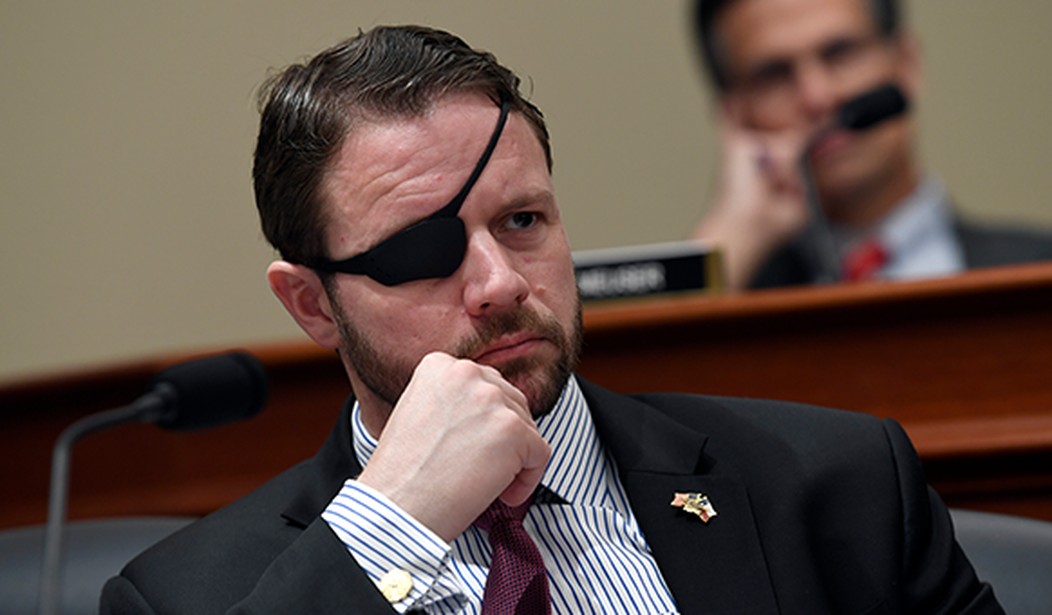
Former Navy SEAL and host of The Shawn Ryan Show, Shawn Ryan, accused Rep. Dan Crenshaw (R-Texas), also a former Navy SEAL, of profiting from insider trading.
Ryan was sure to say this wasn't anything personal, but framed the charge as a question of public trust tied to the office.
Crenshaw outright denied the allegation.
It didn't end there; things quickly escalated. Crenshaw's attorney sent Ryan a cease-and-desist letter demanding a retraction and warning of legal action. He moved to elevate a disagreement into a legal posture before any public exchange took place.
Ryan's response was reasoned: He extended an invitation to Crenshaw to be a guest on the podcast and directly address the accusation, saying the issue deserved an open conversation, not threats delivered through counsel, an invitation that remained open for days.
When Lawyers Replace Conversation
Crenshaw declined to appear on Ryan's podcast, with statements appearing online again denying wrongdoing and reiterating potential legal consequences.
Ryan then released a video explaining his side of the situation entirely.
He is a public official. He makes decisions that affect all of us. He trades stocks while having access to classified and non-public information. The public has a right to ask how he’s getting rich while he’s in office.
I asked questions about Congressman Crenshaw’s wealth. Those questions are fair game. After I made those comments, Congressman Crenshaw sent me an Instagram message.
They want me to remove content, issue a public apology, and stop talking about him. I’m not going to do any of that.
Ryan accused Crenshaw of applying legal pressure rather than honestly engaging, describing the approach as bullying and poisoning the possibility of a fair exchange. Once attorneys became the primary voice, the microphone ceased to be considered neutral ground.
Crenshaw pushed back, calling the accusation false and irresponsible, hardening the exchange to the point where no conversation followed.
Insider Trading and Public Confidence
Members of Congress operate under the STOCK Act, a federal law meant to prevent insider trading and require disclosure of stock transactions.
There are penalties for violations and long-term reputational harm, even when proof never materializes, and public suspicion lingers.
Crenshaw supporters point to disclosure filings and insist there are no violations, but critics argue that paperwork that's been buried doesn't reassure a public already convinced elected officials live by a different rulebook, something magnified by each allegation and by punishing evasive responses.
Ryan's accusations landed inside that environment with a demand that wasn't complicated: Answer the charge publicly or explain why the public discussion wasn't appropriate.
Why the Podcast Invitation Mattered
Ryan slowly built his audience through long-form conversation, where guests speak without being ambushed, subjected to selective editing or subjected to cheap shots.
Yes, there are disagreements, but respect holds. Veterans, intelligence professionals, and political figures have all faced uncomfortable questions using the same terms.
When he entered Congress, Crenshaw had a reputation for blunt honesty and direct language. Now, however, it looks like that posture softened into caution and message control. A public conversation with Ryan offered a chance to reinforce or correct that perception.
Crenshaw's declining the invitation sends a different signal: Legal threats suggest insulation rather than confidence, and for many observers, the refusal spoke louder than any denial.
Character Under Pressure
Maintaining a steady tone throughout the exchange, Ryan avoided personal attacks and stayed focused on the accusation and the refusal to address it openly. Crenshaw's camp emphasized legal exposure and reputation management, with each response revealing priorities.
As they should, public figures regularly face accusations, and how they respond often matters as much as the facts themselves. Facing questions always carries risk, but avoiding them carries consequences.
Trust rarely survives distance.
Final Thoughts
After-action reviews only work when everybody shows up. Ryan took a seat at the table.
And waited.
Crenshaw sent paperwork instead.
Teams remember who stayed for the challenging conversation and who chose the perimeter.
Sometimes, some lessons never need to be explained.
PJ Media's YUGE Christmas and New Year's sale is on — now at our lowest rate of the year! This huge sale on our VIP Memberships ends on January 1, so make sure you join the club to get our special behind-the-scenes look at the news. Receive 74% off by following this link and using our promo code MERRY74.

David Manney writes for PJ Media with the outlook of someone who has spent nearly sixty years watching the world with both eyes open. He leans on plain language, lived experience, and a stubborn belief that character still matters, even when no one is paying attention. A former graphic designer, marketing content specialist, marketing professional, journalist, and technical writer, he tries to sort truth from noise and share what he sees without theatrics.
He lives in the Midwest with his wife, who is smarter than he is and far more graceful about it, along with their two dogs, Watson and Mabel. Manney often jokes that he has never faked sarcasm in his life, and most days his columns prove it.
Recommended
Trending on PJ Media Videos

Peace in the Middle East, Charter Schools, and Faith in Politics