They Never Stood Trial. So Why Are They Serving Hard Time?
By Cynthia Hughes, Founder of Weaponization Watch
Before I begin, I want to be very clear about something.
This Substack is reader-supported. To receive new posts and support my work, consider becoming a free or paid subscriber.
This isn’t an argument that people who commit crimes should never face consequences. It’s also not an argument that every person in prison is innocent. And it’s certainly not an argument that violent offenders, predators, or people who cause serious harm should escape accountability.
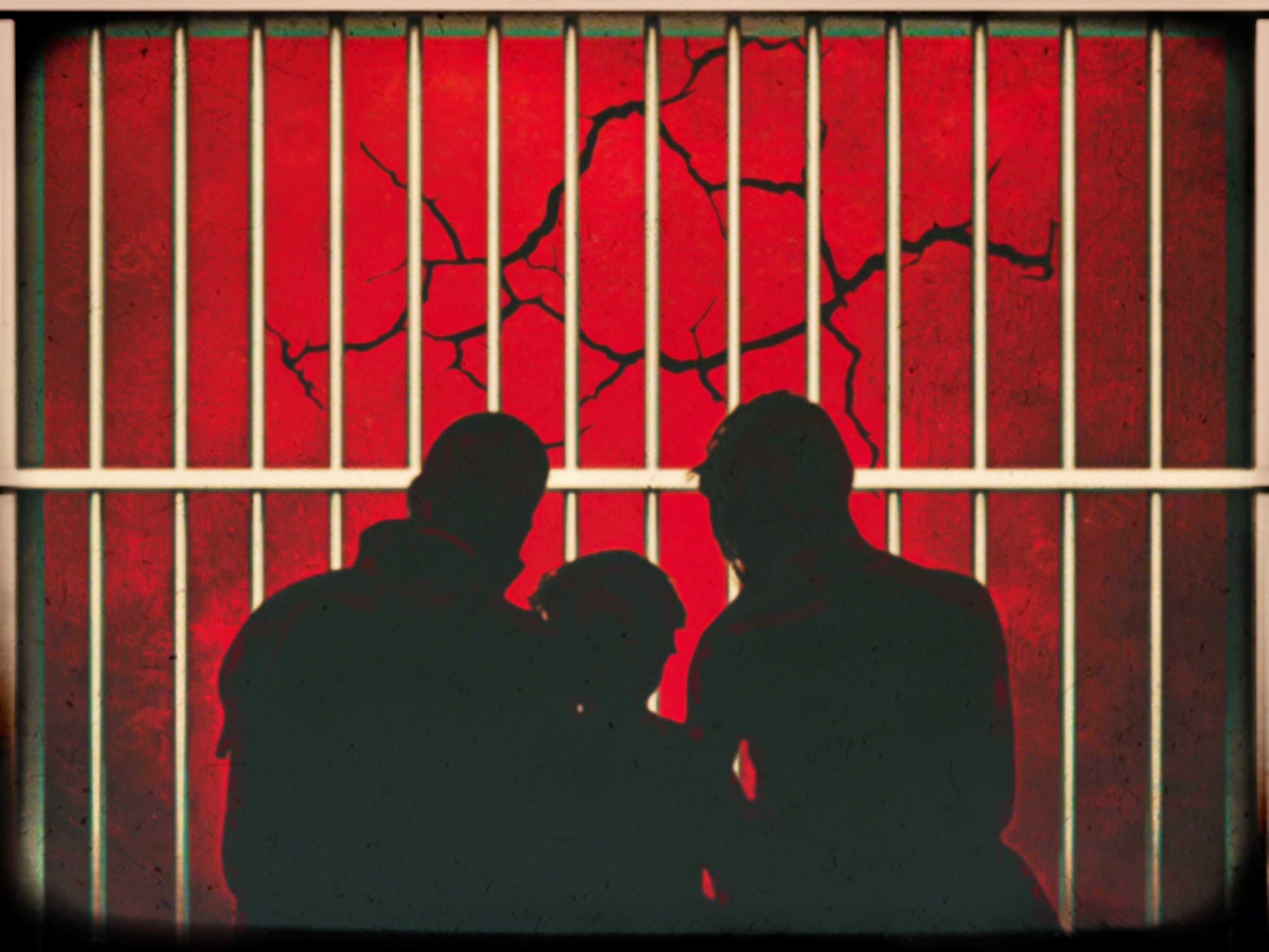
This is about something our justice system, media, and many elected officials refuse to talk about honestly… the human impact of lawfare prosecutions, excessive sentences, and a system that forgets about the families of the accused.
Those people have names and identities.
They’re mothers, fathers, wives, husbands, grandparents, and children.
I’ve watched the justice system up close, and I understand what it’s built to do. It focuses on defendants, trials, convictions, sentencing, and prison terms. But the families left behind aren’t part of that conversation, even though they often live with the consequences for years.
That’s where Weaponization Watch comes in. We don’t just look at lawfare as a political or legal issue. We look at the human fallout, too. We tell the stories of the wives, husbands, parents, grandparents, and children left behind when a prosecution tears through a family. They weren’t the ones charged, tried, or sentenced, yet in many cases, they’re the ones left carrying the damage.
Through my work at Patriot Freedom Project and Weaponization Watch, I’ve seen the human side of these cases up close. I’ve sat with wives who don’t know how they’re going to pay the mortgage, husbands trying to raise children alone while their wives sit behind prison walls, elderly parents wondering if they’ll live long enough to see their son or daughter come home, and children struggling to understand why Mommy or Daddy is suddenly gone.
These are the forgotten people nobody talks about.
That’s why proportionality matters. Accountability is important, of course, but the punishment should still fit the crime, and the system should be able to recognize the difference between justice and excess. When a sentence goes beyond what’s fair or necessary, the damage doesn’t stop with the defendant. It hits spouses, children, parents, and entire families who had no role in the case but are left dealing with the consequences.
The public should be able to trust that punishment is based on facts, law, and fairness, not politics, pressure, personal feelings, activism, or the desire to make an “example” out of someone. A judge’s job is to apply the law. A prosecutor’s job is to seek justice, not just rack up wins. I’ve seen what happens when that line blurs, when personal beliefs, media pressure, anger, or raw ambition begin to reshape the process. In those moments, the system stops feeling like a search for justice and starts feeling like a machine built to seek and destroy.
Of course, emotion has a place in how people react to crime. Some cases are truly horrifying, and nobody should minimize the pain of victims or their families. But a violent crime is not the same as a conspiracy charge, a white-collar offense, a regulatory violation, or a case where the harm is limited and restitution has already been made. When vastly different cases are treated as with the same moral weight, punishment drifts into excess.
That may not be a popular thing to say, but it needs to be said.
Once a person has been convicted, the next question should be whether the punishment actually serves justice. In violent cases, long prison sentences are necessary to protect the public and provide accountability. But in nonviolent cases, especially where restitution has been made or the person isn’t a continuing threat, years behind bars deserve a harder look. At some point, it’s worth asking whether punishment has stopped being accountability and started becoming excess, especially in America’s already overcrowded prison system.
Take the case of Elizabeth Holmes, for example.
People have strong opinions about her, and reasonable people can disagree about the outcome. I’m not asking anyone to ignore the facts of her case or excuse wrongdoing. But one thing matters: her daughter was just a baby when she entered prison.
That child didn’t commit a crime.
Yet, her child lives with the consequences.
Birthdays, holidays, bedtime stories, and ordinary childhood moments are all lost behind prison walls. Those are consequences carried by an innocent child.
Now compare that to someone like Bernie Madoff.
Madoff destroyed lives. He devastated families, wiped out life savings, and betrayed countless victims who trusted him. His crimes caused enormous harm, and his sentence reflected that.
The point isn’t that white-collar defendants deserve endless sympathy. It’s that vastly different cases shouldn’t be treated as if they carry the same moral weight. Punishment should reflect the harm, the risk, and the purpose it actually serves.
That’s why Weaponization Watch exists. We look at what the system often leaves out: the families, the fallout, and the damage that doesn’t show up in a verdict or sentencing order.
A few stories continue to weigh heavily on me.
One example is the OneTaste case involving Nicole Daedone and Rachel Cherwitz. Daedone founded OneTaste, an unconventional sexual wellness company built around the practice of “orgasmic meditation,” and Cherwitz served as the company’s former head of sales. Both women were convicted in federal court on a forced labor conspiracy charge after prosecutors argued that OneTaste crossed the line from unusual wellness culture into coercion and exploitation.
That case bothered me from the beginning because the charge itself was sketchy, members weren’t “forced” to be there, facts were messy, and the whole case raised serious questions about how far the government was willing to stretch a forced labor theory. People can think whatever they want about OneTaste. But strange stuff isn’t supposed to be criminal, and unconventional isn’t supposed to make someone easier to prosecute.
What troubled me most was the tone of the proceedings and the way the judge spoke about these women from the bench. At times, her words and demeanor seemed to go beyond courtroom control and into something that felt deeply personal. When a judge gives even the appearance of hostility toward a defendant before the jury even reaches a verdict, it raises serious questions about whether the process is fair.
The concern is whether an unconventional group became an easier target because people found it strange, uncomfortable, or socially unacceptable. If that’s what happened, then the justice system starts moving into dangerous territory, where people are punished not only for what the government can prove, but for who they are, what they believe, or how uncomfortable they make others feel.
The OneTaste case shows how easily an “unusual” defendant can become a target when culture, discomfort, and prosecution collide. But the human impact of these cases doesn’t end with the verdict. In some situations, the deepest damage shows up later, inside the families left trying to survive the sentence.
The Mazzei case raises a different kind of concern.
Erin and Chris Mazzei are a married couple with two young sons who were prosecuted in connection with a COVID-era business relief loan through the Paycheck Protection Program. Erin has served her 27-month prison sentence, and now Chris is preparing to self-surrender for his own 35-month sentence, even though the loan money was repaid and the family has already spent years under legal pressure, public scrutiny, and separation. That raises the question Weaponization Watch keeps coming back to: what public good is served by sending a second parent to prison when two young boys are left to absorb another round of loss?
The Mazzei case isn’t about asking the system to ignore consequences or accountability. It’s about asking whether the punishment still makes sense once repayment, prison time, and years of disruption have already taken their toll. That is the harder conversation to have, and it’s the one our justice system avoids.
These are the kinds of cases that bring us back to clemency.
Clemency doesn’t mean pretending every defendant is innocent or wiping away accountability. It means being willing to look at the full picture after the sentence has been handed down. Has the person served enough time? Has restitution been made? Has the punishment become excessive? Are there changed circumstances, rehabilitation, or family hardships that deserve serious review?
Sadly, this debate often gets framed as a choice between a full pardon and nothing. But that’s not the only option.
Clemency recognizes that justice and mercy can coexist. It allows a president or governor to consider factors the courts often ignore: rehabilitation, family hardship, excessive sentences, changed circumstances, and questionable prosecutions.
Sometimes a pardon is appropriate, and sometimes it isn’t. A conviction may still stand, while a sentence may deserve to be reduced. That’s exactly why commutations are so important.
Clemency exists because the justice system is run by human beings, and human beings will get things wrong. Facts can be missed, sentences can become disproportionate, and political pressure can shape outcomes. That’s why there has to be a constitutional lifeline when the system goes too far.
Clemency is not weakness. It’s a safeguard against injustice.
President Trump understands this reality better than most. He’s experienced firsthand how courts, prosecutors, and political operatives can use our justice system as a weapon. Because of that, he’s shown a willingness to see the human being beyond all the paperwork and case files.
Trump’s personal experience is important because he understands why clemency matters.
And that’s truly the heart of this entire conversation. A serious justice system needs accountability, public safety, and consequences. But things go off the rails when punishment doesn’t serve a clear purpose.
I’m asking America to remember that a justice system strong enough to punish must also be strong enough to show mercy when mercy is warranted.
For the families still carrying the weight of weaponization, that conversation can’t wait.
The mission continues, and we need your support to keep fighting for the families who cannot be forgotten. Click here to help us continue the fight.
Weaponization Watch is a project of The Hughes Foundation, a 501(c)(3) nonprofit organization. All donations are tax-deductible to the fullest extent allowed by law.
Thank you for your support of due process and accountability.
Stay connected and follow the fight for justice on social media.
[ X ] [ TRUTH SOCIAL ] [ GETTR ] [ INSTAGRAM ] [ FACEBOOK ] [CYNTHIA HUGHES]
This Substack is reader-supported. To receive new posts and support my work, consider becoming a free or paid subscriber.