Why America Needs Clemency, Mercy, and Second Chances

Every time a president grants a pardon, the same political back-and-forth starts up.
The media headlines roll out, critics cry foul, and supporters defend the decision. Cable news argues over who deserved mercy, who didn’t, and what it all means politically.
But that conversation goes in pointless circles.
The real talk shouldn’t be about pardons. It should be about clemency, and why it exists.
Clemency is bigger than a pardon. A pardon can forgive a federal offense. A commutation can reduce or end a prison sentence without wiping away the conviction.
This Substack is reader-supported. To receive new posts and support our work, consider becoming a free or paid subscriber.
But sometimes a pardon isn’t the right answer, and sometimes a conviction should still stand. In other cases, a person has paid enough, served enough time, suffered enough consequences, and deserves another chance.
That’s where mercy comes in.
Today, there’s this big controversy surrounding President Trump’s use of his pardon power. Critics call it political. Supporters see it as a correction. The media focuses on the names, cases, and arguments over who should or shouldn’t receive mercy.
Weaponization Watch believes there’s a much bigger, more impactful story to tell.
President Trump isn’t just a president exercising his constitutional power. He’s a president who understands what it feels like to be targeted by a system that has lost its way.
Whether someone supports him politically or not, there’s no honest way to ignore what he’s faced. There have been years of investigations, prosecutions, courtroom battles, political attacks, media pressure, and legal warfare that have engulfed him in a way this country hasn’t seen before.
President Trump knows what weaponization looks like up close and personal. He knows what happens when prosecutors, judges, political opponents, and media all move in the same direction. He also knows what it feels like when the potential loss of freedom becomes real.
This real-life experience gives President Trump a unique understanding of why mercy matters, especially for people and families crushed by a process that may be technically legal but still deeply unjust.
Clemency exists because the founders understood something about power: no system that’s created and run by human beings will ever be perfect. Yes, courts fail, prosecutors overreach, judges make mistakes, jurors can be tainted, and our government can be too harsh and too political.
The pardon power was placed in the Constitution for a very good reason. Article II gives the president the authority to grant reprieves and pardons for federal offenses because sometimes justice requires correction. This is a constitutional safeguard that brings humanity into the justice system when the system has gone too far.
And it’s not new.
Presidents from both parties have used clemency throughout American history. George Washington used it after the Whiskey Rebellion. Abraham Lincoln used amnesty as part of the effort to reunite the country. Andrew Johnson granted sweeping amnesty after the Civil War. Gerald Ford pardoned Richard Nixon after Watergate. Jimmy Carter pardoned Vietnam War draft evaders. Barack Obama commuted the sentences of more than 1,700 federal inmates, most tied to drug offenses. Joe Biden pardoned his son, Hunter Biden. President Trump granted pardons and commutations related to January 6.
Some of those decisions were praised. Others were condemned. Many were controversial the moment they happened, and that’s okay, because the debate over clemency didn’t begin with Donald Trump, and it won’t end with him either. Controversy has always been a part of presidential mercy because mercy can be messy. Someone will always disagree and believe the punishment should go on and on. Someone will always argue that the second chance was undeserved.
That’s okay. Let the debates rage on, because the alternative is so much worse.
Imagine a justice system with zero room for mercy. That’s a scary machine, with no “off” switch.
And this is the conversation Weaponization Watch brought to Washington, D.C. on June 11 at our Strength of America Dinner & Discussion.
The evening was incredibly powerful because it focused on the forgotten people: the families. Because behind every case file is a wife, husband, parent, a child, or an entire family trying to survive the consequences of government overreach. These are the people who carry the burden after the cameras leave and the headlines fade.
Weaponization Watch was honored to host independent journalist Nick Shirley, U.S. Pardon Attorney Ed Martin, Governor Rod Blagojevich, UFC stars Colby Covington and Merab Dvalishvili, Douglass Mackey, and so many others who understand that this issue isn’t just political. It’s deeply human.


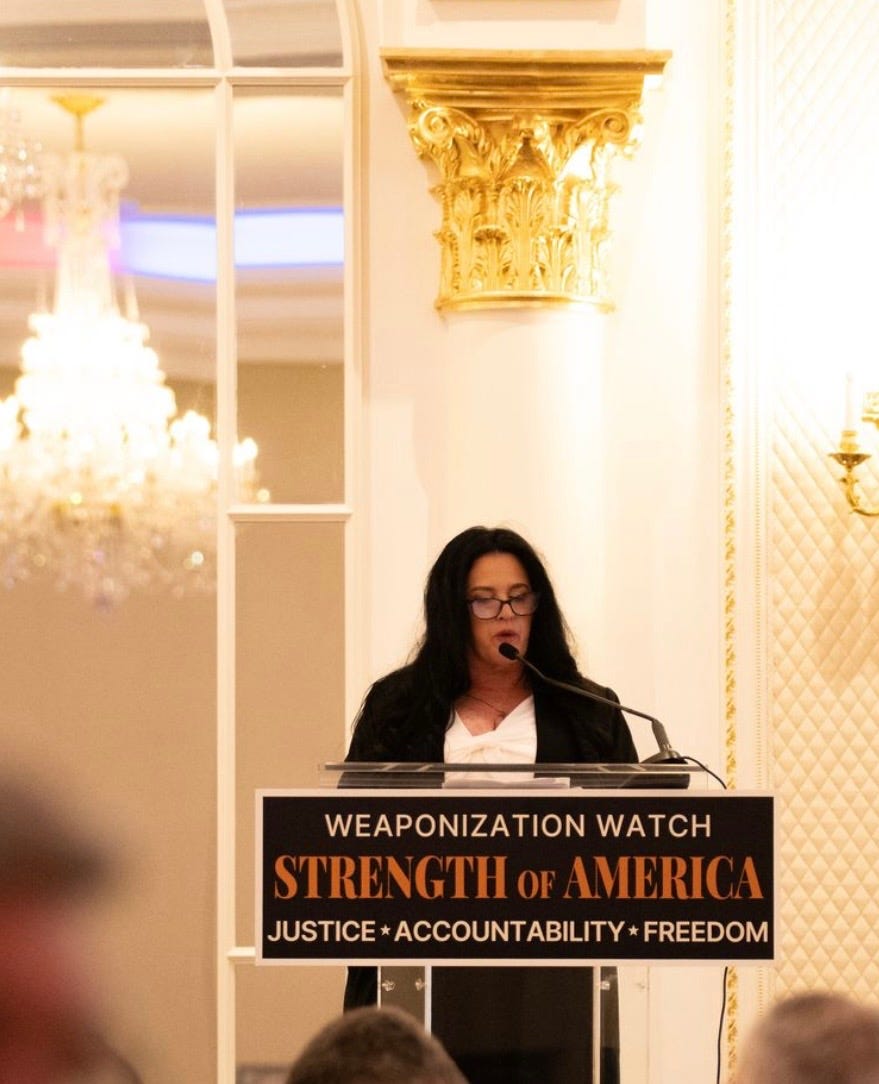
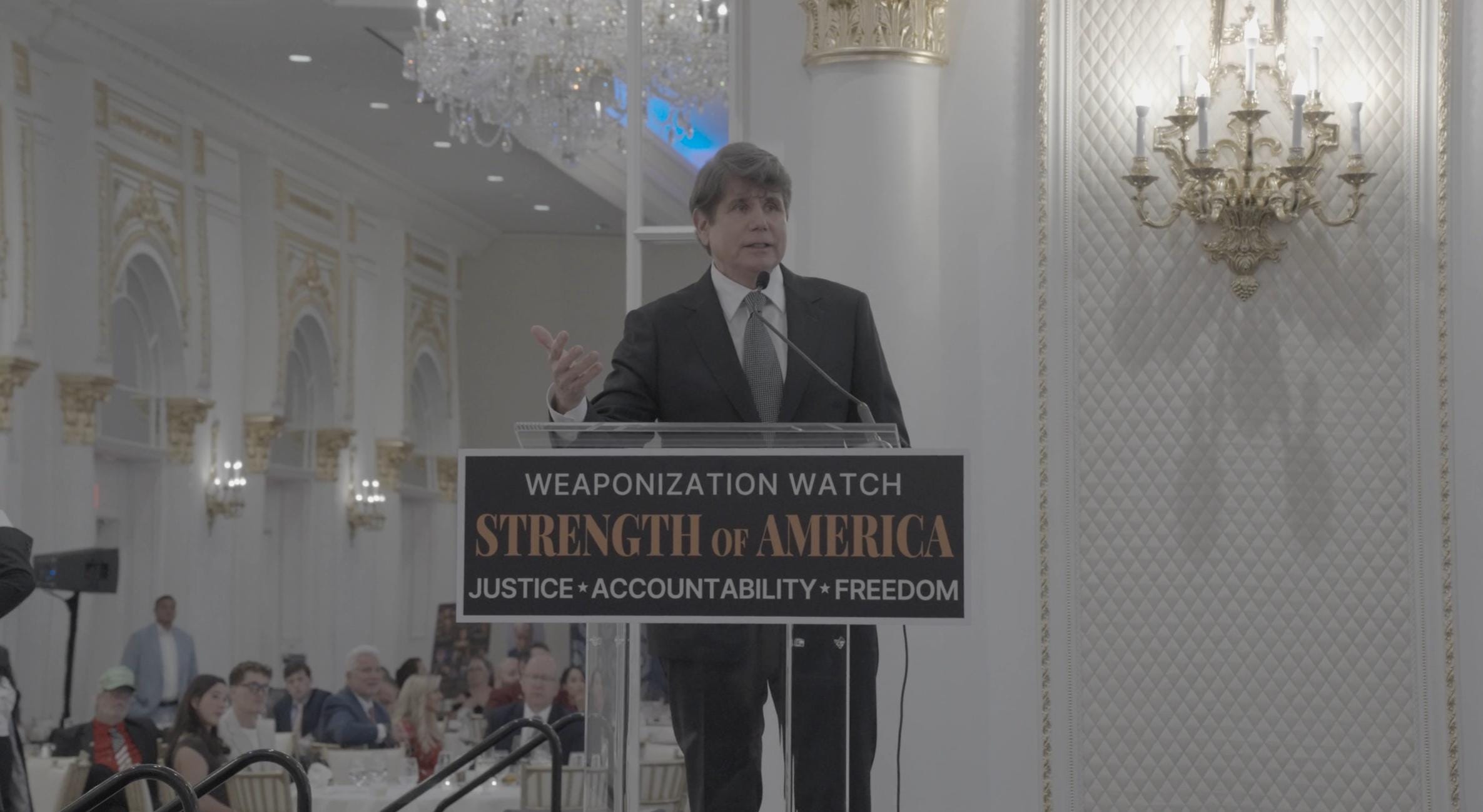

Ed Martin offered a prayer and read a meaningful letter from President Trump. Governor Blagojevich brought firsthand experience to the conversation. Nick Shirley listened directly to families impacted by weaponization. Colby and Merab gave their time generously, stayed with guests, took photos, and showed genuine support for the people in that room.
This wasn’t just some typical D.C. event. It was proof that Americans are ready to have this conversation about clemency and justice.
You can read about the event by clicking here:
Weaponization Watch Hosts One of the Most Powerful Nights in Washington, D.C.
As we stated earlier, one of the most important parts of the conversation is the difference between a pardon and a commutation.
Sometimes we focus so heavily on the word “pardon” that we don’t see the more urgent need. There are people in federal prison today whose cases are complicated, and not everyone will agree on whether they’re innocent. But that doesn’t mean their sentences are fair, reasonable, or still necessary.
A commutation can change everything.
It can bring a parent home, reunite a family. It can also recognize that punishment has served its purpose, and restore hope without saying every detail of the past disappears.
Mercy doesn’t erase accountability. It recognizes humanity.
Mr. President, as your administration continues reviewing cases, clemency should remain the epicenter of the conversation.
There are incarcerated Americans who’ve paid enough. There are families who have suffered enough, and people who were caught in unfair systems, over-prosecutions, disproportionate punishments, and politically charged environments where the pursuit of justice lost its way.
Some cases may call for pardons. Others may call for commutations. But many deserve serious review.
Mr. President, you understand better than anyone what happens when political pressure, media attention, and personal agendas get tangled up with the justice system. And it’s that understanding that puts you in such a rare position to extend mercy where it’s warranted.
America is fortunate to have leaders willing to look past the splashy headlines and examine the human beings behind the case files. For countless families, hope is still alive today because this administration is willing to take clemency seriously.
Let’s be real: pardons will never be universally popular. Clemency will always draw criticism, and mercy will always make some people uncomfortable.
But America has never been just about “the punishment.”
This country is also about redemption, correction, and second chances. The Constitution recognizes that, and our history proves it. Every generation has had to wrestle with the balance between justice and mercy, and that conversation is still going on today.
A nation strong enough to punish wrongdoing must also be strong enough to show mercy.
That is why clemency exists.
Weaponization Watch will continue telling these stories, standing with families, and shining a light on the human cost of weaponized government power.
The mission continues, and we need your support to keep fighting for the forgotten families. Click here to help us continue the fight.
Weaponization Watch is a project of The Hughes Foundation, a 501(c)(3) nonprofit organization. All donations are tax-deductible to the fullest extent allowed by law.
Thank you for your support of due process and accountability.
Stay connected and follow the fight for justice on social media.
[ X ] [ TRUTH SOCIAL ] [ GETTR ] [ INSTAGRAM ] [ FACEBOOK ] [CYNTHIA HUGHES]