Iran war latest: US hits Iran with strikes which are 'punishment, not proportional'

news.sky.com

Sort by:

Iran's president leaves Iraq to travel back to Tehran after strikes

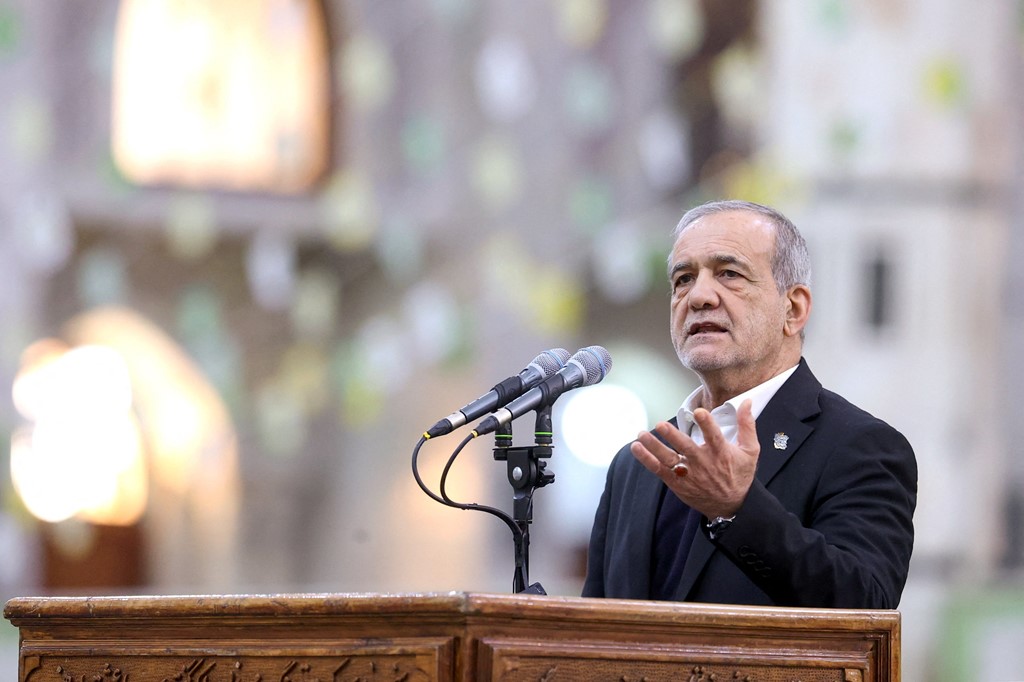
Masoud Pezeshkian, the Iranian president, is heading back to the country from Iraq following US strikes, according to state broadcaster IRIB. 

Pezeshkian had travelled to the Iraqi city of Najaf as part of the multi-day funeral of former Iranian Supreme Leader Ayatollah Ali Khamenei, whose body arrived in the city on Tuesday.

State news outlet IRNA said Iran's president had left Najaf in the early hours of Wednesday local time. 

Masoud Pezeshkian

It comes after the US said it had launched "a series of powerful strikes against Iran" in response to reported attacks on three tankers in the Strait of Hormuz.

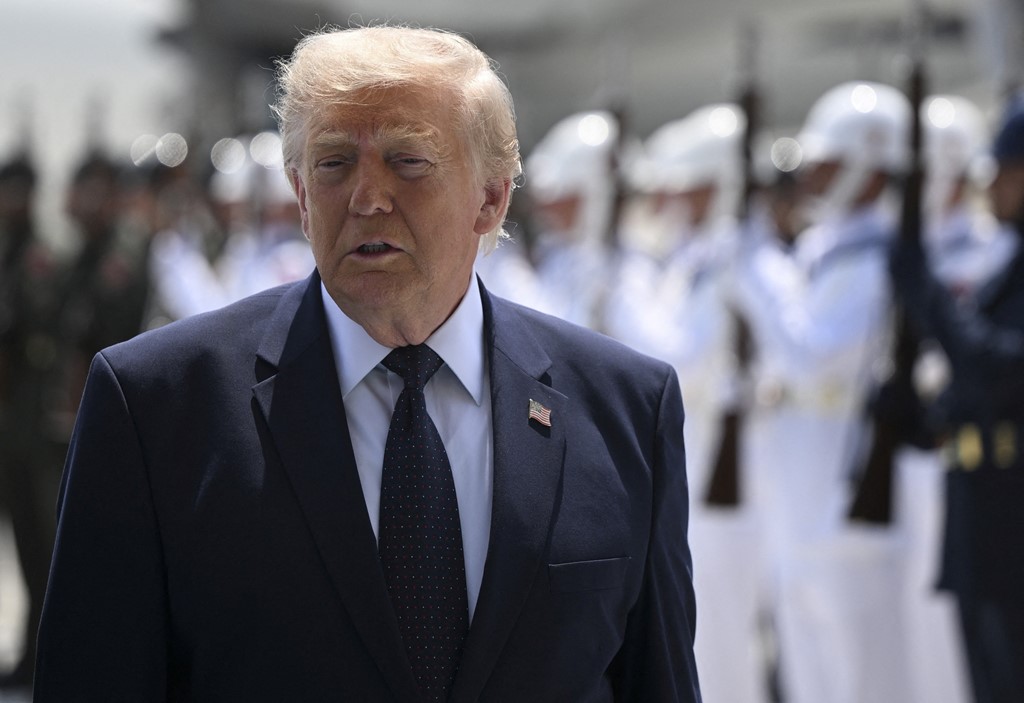
Meanwhile, Donald Trump, who has not yet publicly addressed the attacks, is currently in Turkey attending a NATO summit. 

Trump arriving in Ankara

Oil prices rise after US revokes licence for Iranian oil sales

Oil prices rose after the US revoked the temporary licence allowing for the limited sale of Iranian oil.

The decision came in response to reports that three tankers were attacked in the Strait of Hormuz. 

A barrel of Brent crude, the global benchmark, surged to more than $76 a barrel, while US crude figures, following the US strikes on Iran late on Tuesday,  jumped to more than $72. 

More explosions reported by Iranian state media

Earlier, we reported claims by Iranian state media that several areas in the southern part of Iran had experienced explosions and had been hit by projectiles (see 22.33 post). 

Mehr News Agency is now reporting that further explosions have been heard near Qeshm Island and Sirik, suggesting that attacks are still ongoing. 

It added that explosions were mainly heard in the vicinity of the port of Sirik and Tahrovieh port, but so far no official, military or security body has confirmed or denied the nature or source of these explosions.

Explained: Why the Strait of Hormuz matters so much

While ship traffic through the Strait of Hormuz has increased since the US and Iran signed an interim deal to try and permanently end the conflict, it has not returned to anywhere near pre-war levels.

Iran's effective closure of the vital waterway, through which around a fifth of oil and liquefied natural gas travelled before the war, has choked global oil supplies and spiked inflation.

The economic effects of this have been felt globally and it remains to be seen whether vessels will be charged tolls to cross the strait, which lies between Iran and Oman, or if and when traffic will reach pre-war levels.

The main central route through the strait is mined and remains closed, with ships using the smaller northern route, which goes through Iranian waters, and the southern route through Omani waters.

Agreements around strait

The previous memorandum of understanding allows Iran to manage the strait during the 60-day negotiating period between the US and Tehran.

While passage was previously free, Iran established a new governmental authority earlier this year to collect money from ships and has said it expects them to register with the so-called Persian Gulf Strait Authority.

It has agreed not to charge transiting vessels tolls for the 60 days.

Donald Trump has suggested the US might impose its own tolls on strait crossings if a final deal is not reached within those 60 days.

As part of the framework, Iran has said it will conduct demining work within 30 days.

With the latest strikes taking place, a lot of that remains up in the air.

Will it ever return to normal?

The situation in the Strait of Hormuz will be permanently changed due to the Iran war, a global affairs expert has said (watch video above).

Asked how the Strait of Hormuz would reopen under these conditions, Jared Cohen, president of global affairs and co-head of the Goldman Sachs Global Institute, said: 

"My view is the Strait of Hormuz is never going to reopen in the way that it did before the war.

"What I mean by that is the Iranians have discovered that they have something more valuable than a nuclear weapon, which is essentially the unilateral control over the strait.

"And unlike a nuclear programme, you can't attack it and you can't ignore it."
Missile launch sites and air defences among targets of US attacks

Iranian launch sites for missiles and drones were among the targets of the US strikes, Reuters is reporting. 

Citing a US official, the outlet claims the attacks, which reportedly hit several areas in the south of the country, near the Strait of Hormuz, also targeted Iran's air defence and coastal surveillance systems. 

In a statement, US Central Command said the attacks were "to impose heavy costs for targeting and attacking commercial shipping crewed by innocent civilians in an international waterway". 

Earlier, three ships were reportedly targeted in the key waterway. In response, Washington revoked its 60-day waiver on sanctions on Iranian oil. 

US launched strikes on Iran after three ships were hit in Strait of Hormuz

The US strikes on Iran came after several key developments regarding the Strait of Hormuz and Iranian oil on Tuesday. 

First, the British military claimed that three tankers in the key waterway had been struck, while a US official said Washington had revoked a 60-day waiver on sanctions on Iranian oil because Tehran's actions were "unacceptable and needed to be met with consequences". 

One vessel was travelling off the coast of Oman when it was hit and caught fire, the United Kingdom Maritime Trade Operations centre said. 

Iranian state media said the liquefied natural gas tanker came under attack after ignoring warnings, but that Tehran had not  directly claimed the assault. 

The other two ships sustained some damage, but no one was injured, and both continued on their way, the UK maritime agency said. 

Iran has repeatedly declared that only its approved route through the strait is safe, but has previously been accused of attacking other ships that have used another route close to the Omani shore.

US attacks are 'blatant violation' of framework peace deal, says Iranian official

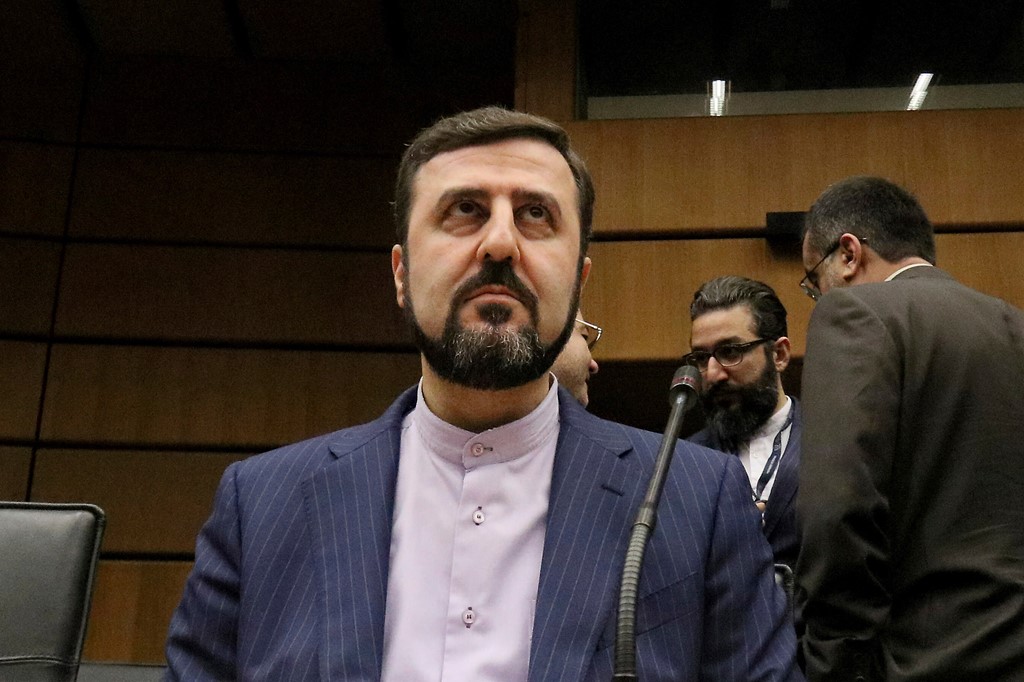
Kazem Gharibabadi, Iran's deputy foreign minister for legal and international affairs, has released a statement on social media following the US attacks on the country. 

Gharibabadi claimed that Washington's decision to revoke a license that had authorised the sale of Iranian oil, as a "blatant violation" of Article 10 of the Islamabad Memorandum of Understanding. 

He also said that the subsequent strikes "constitute a serious violation" of Articles 1 and 2 of the agreement, which was signed last month in a bid to end the war. 

He insisted Iran would "take decisive actions to safeguard its national interests and security". 

Kazem Gharibabadi

Analysis: 'This feels different from previous tit-for-tat strikes'

We've just heard from our US correspondent Mark Stone, on the latest attack from Washington on Iran.

Speaking on The Wrap, he explains:

"The vibe I'm getting already is that this feels a bit different from the tit-for-tat strikes that we've seen on previous occasions that have come since that memorandum of understanding was signed. This feels a bit different, like it could be a more sustained attack by the Americans."

A US official also told Stone that the latest strikes are "punishment, not proportional" - a response to Iranian attacks on commercial shipping in the Strait of Hormuz.

Watch his analysis here:

Iranian foreign ministry 'strongly condemns' strikes and accuses US of violating agreement

Iran's foreign ministry says it "strongly condemns" the US strikes on the country, accusing Washington of "major violations" of the Islamabad Understanding.

This was the framework agreement signed by the two sides last month in a bid to bring about the end of the war.

In a statement, the ministry vowed to "take whatever measures it deems necessary to safeguard its national interests and security". 

It said: 

"The Ministry of Foreign Affairs of the Islamic Republic of Iran strongly condemns the treacherous action of the United States in revoking the suspension of sanctions on Iranian oil sales, which constitutes a violation of Paragraph 10 of the ceasefire understanding dated 28 Khordad 1405 (18 June 2026), and holds the US government responsible for the consequences of this breach of commitment.

"Over the past 20 days, the United States has repeatedly committed both minor and major violations of various provisions of the understanding, either directly or through the actions of the Zionist regime against Lebanon.

"The Ministry of Foreign Affairs of the Islamic Republic of Iran, while warning against the consequences of the United States’ breaches of commitment, declares that it will take whatever measures it deems necessary to safeguard its national interests and security."

Explosions reported across parts of southern Iran - report

Iranian media is claiming that there have been explosions in several areas in the south of the country, after the US military said it had launched "a series of powerful strikes against Iran". 

Several explosions have been reported in the southern Iranian port city of Sirik, near the Strait of Hormuz, while six projectiles reportedly struck the area of Taheroui Pier. 

Explosions were also heard in Qeshm Island and Bandar Abbas. 

Attacks come after funeral for late supreme leader begins in Tehran

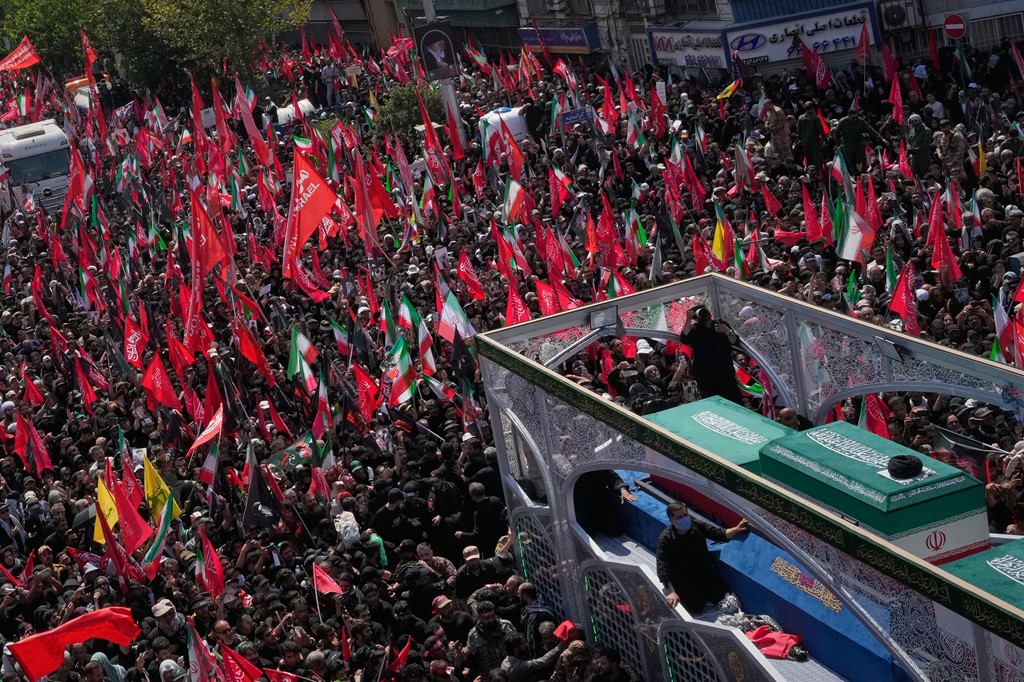
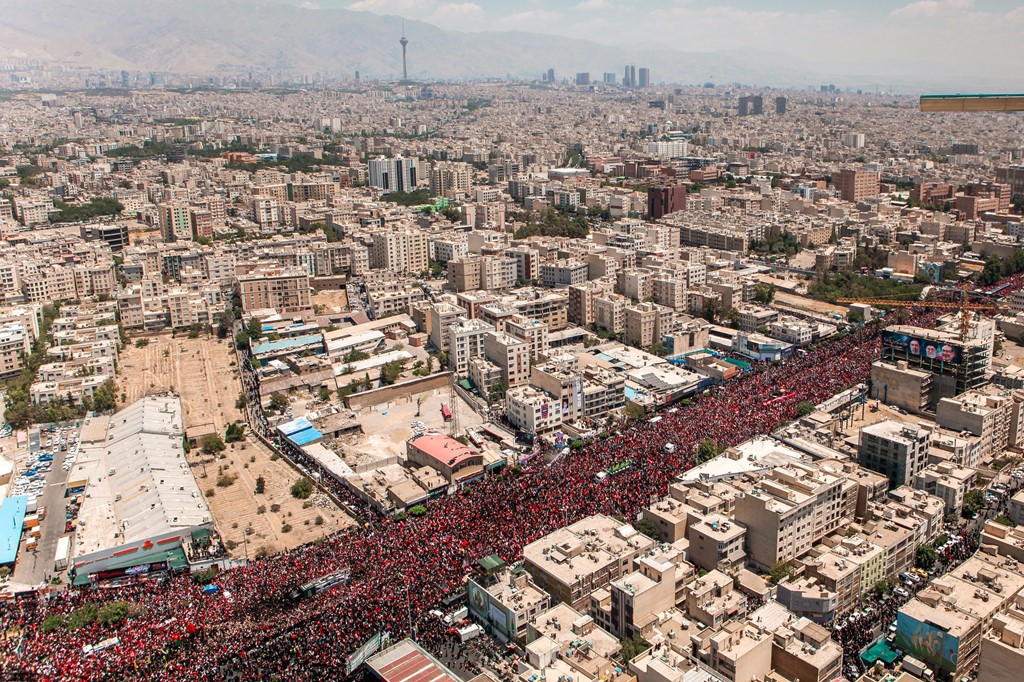
Tonight's strikes by the US come after millions of Iranians took to the streets as the funeral of the late supreme leader got under way.

Iran previously warned the US and Israel not to attack during this.

Catch up on that here:

  • Supporters of the late Iranian supreme leader filled the streets in Tehran as his state funeral procession got under way;
  • The procession followed a two-day public mourning ceremony over the weekend;
  • A vehicle carrying Khamenei's coffin and those of some of his family members also killed in US-Israeli strikes on 28 February slowly made its way through the Iranian capital, surrounded by black-clad mourners;
  • Crowds waved flags and carried placards, some of which were branded with threats against Donald Trump and Benjamin Netanyahu;
  • After the day-long procession, the vehicle carrying Khamenei's coffin arrived at Tehran's Mehrabad airport for transfer to the holy city of Qom.
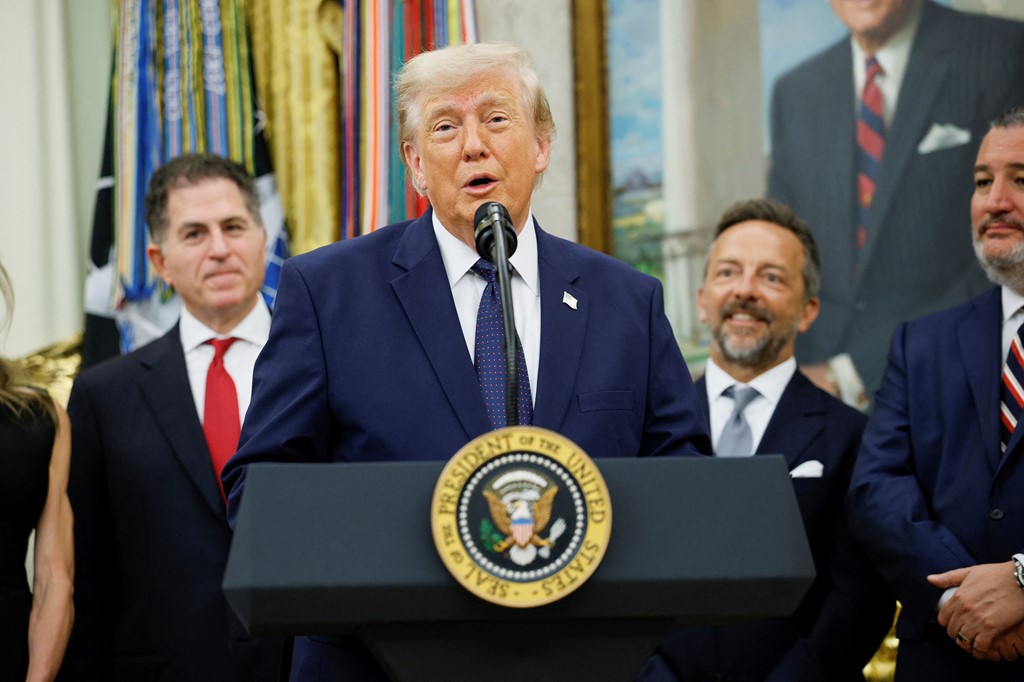
  • Away from the procession, Donald Trump spoke from a White House event where he said the US would make a deal with Iran or "finish the job", adding that the latter "wouldn't be tough". However, the US president said he would "rather make a deal" so as not to affect Iran's population of 91 million;
  • During that event, Trump also said the US had "eviscerated" Iran militarily and reiterated that Tehran can "never have a nuclear weapon".
  • And in Lebanon, four people were reportedly killed in an Israeli strike on the southern Lebanese city of Nabatieh, according to Lebanese state media, despite a shaky ceasefire aimed at reducing hostilities near the border.

Our international affairs editor Dominic Waghorn was in Iran for the event. Watch his latest here:

US launches 'powerful strikes' on Iran

The US has started launching "a series of powerful strikes against Iran," US Central Command has said.

It said the attacks were against Iran "to impose heavy costs for targeting and attacking commercial shipping crewed by innocent civilians in an international waterway."

Read the full statement here:

Funeral procession for late supreme leader begins in Tehran - catch up

That brings an end to our coverage of the funeral procession in Tehran and the wider aftermath of the US-Israeli war on Iran.

Scroll through the blog to catch up on the day's events after hundreds of thousands of people turned out to say their final goodbyes to Ayatollah Ali Khamenei - or read a brief rundown below:

  • Supporters of the late Iranian supreme leader filled the streets in Tehran as his state funeral procession got under way;
  • The procession followed a two-day public mourning ceremony over the weekend;
  • A vehicle carrying Khamenei's coffin and those of some of his family members also killed in US-Israeli strikes on 28 February slowly made its way through the Iranian capital surrounded by black-clad mourners;
  • Crowds waved flags and carried placards, some of which were branded with threats against Donald Trump and Benjamin Netanyahu;
  • After the day-long procession, the vehicle carrying Khamenei's coffin arrived at Tehran's Mehrabad airport for transfer to the holy city of Qom.

AP

  • Away from the procession, Donald Trump spoke from a White House event where he said the US would make a deal with Iran or "finish the job", adding that the latter "wouldn't be tough". However, the US president said he would "rather make a deal" so as not to affect Iran's population of 91 million;
  • During that event, Trump also said the US had "eviscerated" Iran militarily and reiterated that Tehran can "never have a nuclear weapon".
  • And in Lebanon, four people were reportedly killed in an Israeli strike on the southern Lebanese city of Nabatieh, according to Lebanese state media, despite a shaky ceasefire aimed at reducing hostilities near the border.

Watch: Hundreds of thousands take to Tehran streets for 'biggest funeral of modern times'

Expert explains 'unusual' delay to supreme leader's funeral

The long delay between Ali Khamenei's death and his funeral is "unusual", but has been caused by several factors, according to an expert.

Rowena Abdul Razak, a lecturer in the history of the Middle East and Africa, told CNN that Muslim burials typically take place very soon after death.

But she said the US-Israeli war on Iran caused "a lot of displacement, destruction and bombings", which "made it hard to have the funeral".

Iranian leaders may also have decided not to attend while fighting between the two sides was ongoing, she added.

Abdul Razak said the funeral is happening during the Islamic month of Muharram, "a deeply meaningful and very important month" in the Shiite calendar.

"Having the funeral during this month holds significant symbolism of sacrifice and martyrdom," she told the US news outlet.

Khamenei's coffin arrives at airport for transfer to holy city

The vehicle carrying Ayatollah Ali Khamenei's coffin has arrived at Tehran's Mehrabad airport.

Video published by the late supreme leader's website showed mourners crowding outside the airport, from where Khamenei's body will be transferred to the holy city of Qom.

It brought to an end three days of public mourning in the Iranian capital.

From Qom, Khamenei's body will be flown to Iraq for more funeral ceremonies in the Shi'ite holy shrine cities of Najaf and Kerbala on Wednesday, and will return to Iran on Thursday for burial in his birthplace, Mashhad.

Iranian authorities have not confirmed how many people are estimated to have turned out to bid farewell to Khamenei today, but it's estimated to be in the hundreds of thousands at the least.

Trump: We're going to make a deal with Iran or finish the job

We've just heard a little more from Donald Trump, who is answering questions from journalists on a range of subjects at a White House event.

On Iran, Trump says the US is going to "win one way or another".

"We're either going to make a deal or we're going to finish the job," he says, adding: "And it won't be tough to finish the job."

The US president said he would rather make a deal than "affect 91 million people".

War not over until supreme leader's death avenged, IRGC member claims

A member of Iran's Islamic Revolutionary Guard Corps (IRGC) has told our US partner NBC News that the war would not be "over for us" until the late Ayatollah Ali Khamenei's death had been avenged.

The IRGC member was speaking at the funeral procession in Tehran, in a rare direct comment to journalists.

Negotiations between the US and Iran on a peace deal to end the war are on pause while Khamenei's funeral events continue.

Donald Trump said on Friday that Iran was "dying to settle", as he acknowledged the week of mourning taking place in the country. 

"We gave [Iran] a week off for a funeral because we're nice," he told crowds at a 4 July celebration event.

Trump says US has 'eviscerated Iran militarily'

Donald Trump says the US has "eviscerated" Iran militarily, as he delivers remarks from the White House.

The US has the "greatest military anywhere in the world", he says.

He then reiterates that Iran "can never have a nuclear weapon".

"We can never let that happen," he says.

Seemingly making a reference to negative reactions to Washington's provisional deal with Iran to end the war, Trump says: "[With] Iran were doing actually equally as well. We're just not getting the kind of coverage that we should, but we have eviscerated them militarily."

Reuters

Watch live as Trump speaks from Oval Office

Over to the White House now, where we're hearing from Donald Trump.

He's expected to ring the New York Stock Exchange opening bell from the Oval Office, but could take questions from reporters afterwards.

Watch along here, and we'll let you know if he's asked about Iran.

YouTube This content is provided by YouTube, which may be using cookies and other technologies. To show you this content, we need your permission to use cookies. You can use the buttons below to amend your preferences to enable YouTube cookies or to allow those cookies just once. You can change your settings at any time via the Privacy Options. Unfortunately we have been unable to verify if you have consented to YouTube cookies. To view this content you can use the button below to allow YouTube cookies for this session only.

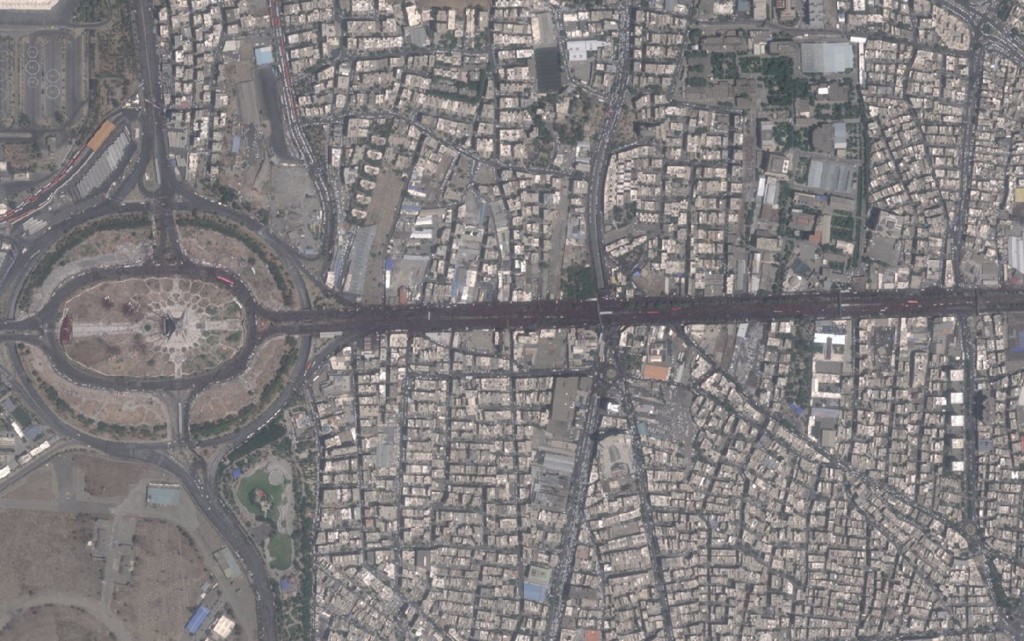
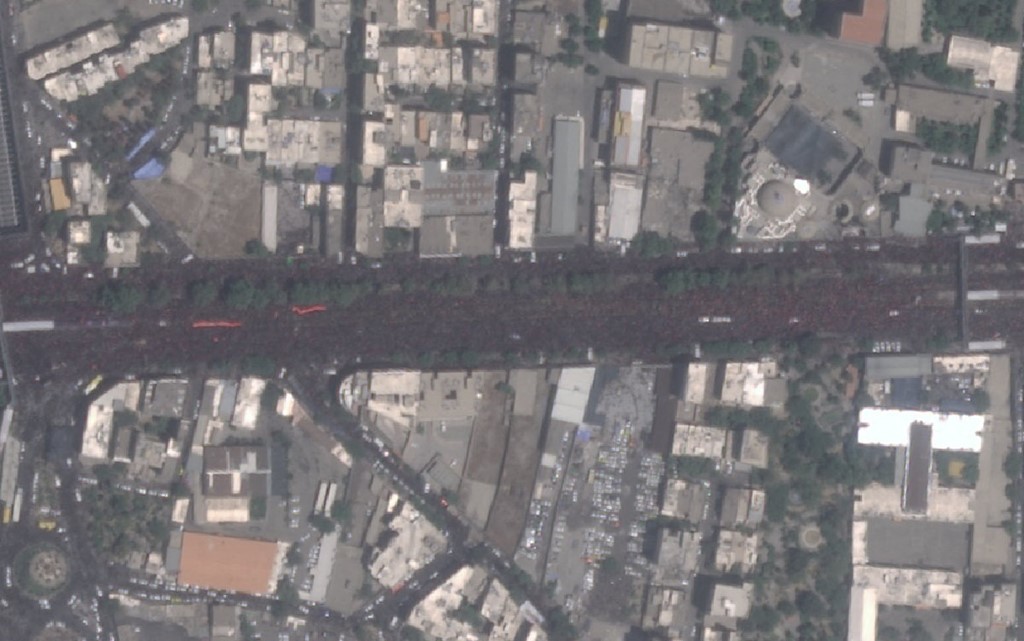
Huge crowd of mourners seen in satellite images

The enormous crowd of mourners who have turned out for the funeral procession of the late supreme leader can be seen in new satellite images.

Crowds filled out Tehran's Azadi (Freedom) Square, seen on the left of the first picture, as well as the adjoining street of the same name.

There has been no official crowd count from Iranian authorities, but international affairs editor Dominic Waghorn said "hundreds of thousands" have certainly turned out to bid farewell to Ayatollah Ali Khamenei.

Planet Labs PBC/Reuters

Planet Labs PBC/Reuters

Pictures have been flooding in from Tehran throughout the day showing the sea of mourners following the procession through the city:

Reuters