Why “Good Money” Always Disappears When “Bad Money” Is Circulated
For years, the United States has held an advantage over much of the world because the dollar serves as the world’s reserve currency. This has given the United States the ability to run large deficits and even weaponize its currency against other countries. As a result, there has been growing speculation that other nations, such as the BRICS countries, will begin trading in a currency backed by gold.
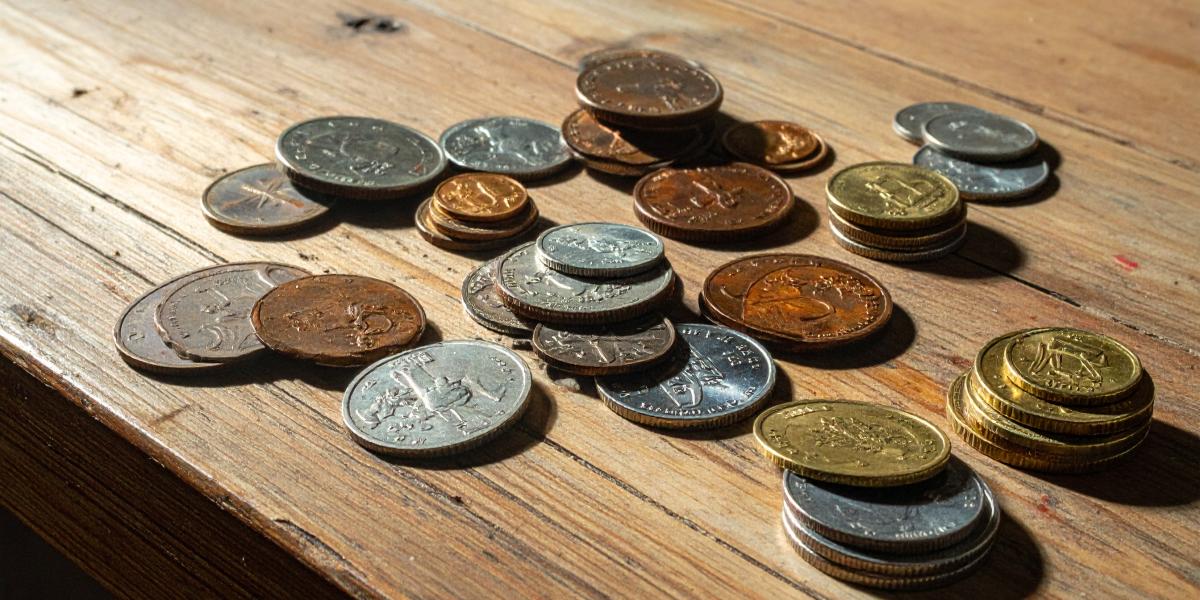
The theory—albeit a flawed one—claims that a gold standard would break the world’s reliance on the dollar and financially cripple the United States. This idea overlooks a basic economic principle known as Gresham’s Law. Gresham’s Law states that bad money drives good money out of circulation. Take United States dimes and quarters, for example. All dimes and quarters minted in or before 1964 were made with 90 percent silver. Starting in 1965, they were minted with other metals of little intrinsic value. Once this change occurred, people understood that the older silver coins were worth more for their metal content than their face value over time. As a result, whenever someone received a coin minted in 1964 or earlier, they hoarded it and used 1965 or newer coins to make purchases instead.
Gresham’s Law isn’t about greed or bad behavior. It describes rational decision-making under fixed rules. When people are given the option to spend weaker money or save stronger money, they do what makes sense. The outcome isn’t a flaw in character—it’s a predictable response to incentives built into the system.
Gresham’s Law would have the same effect on a gold-backed currency that it did on United States dimes and quarters. Using the BRICS countries as an example, let’s say they began trading under a gold standard. At first, the system might run smoothly. However, the most industrialized country within the trading bloc would produce the most goods and sell the most exports to other member countries.
By doing so, it would accumulate a surplus of the shared BRICS currency needed for trade. Unlike today’s system, where excess currency is often recycled back into the United States through Treasury purchases, a gold standard would offer a different option. That country could take its surplus currency to the gold redemption window and exchange it for physical gold. Over time, this would drain gold reserves from the countries backing the currency, while the industrialized country would increasingly hoard the gold. Rational actors would spend the paper currency and save the gold—this is human nature.
This dynamic becomes even more pronounced during periods of economic stress. When confidence weakens, people don’t want flexibility; they want safety. In those moments, gold becomes more valuable precisely because trust in paper claims begins to fade.
During wars, recessions, and financial panics, demand for gold rises while governments face higher spending needs and falling revenues. This places immediate pressure on gold reserves. If convertibility is strictly maintained, gold drains rapidly from the system. If it is suspended, the gold standard itself effectively ends.
History shows that gold standards don’t fail because policymakers lack discipline, but because rigid systems cannot absorb shocks. Credit tightens, unemployment rises, and political pressure forces intervention. Faced with sharp economic contraction or abandoning the gold peg, governments consistently choose abandonment. This outcome isn’t a moral failure, it’s a structural one built into how people and institutions behave under stress.
This is why modern proposals for gold-backed currencies struggle to move beyond theory. The problem isn’t technical feasibility—it’s behavior. Any system that treats paper claims and physical gold as equal will eventually see gold disappear from circulation. The rules may change, but incentives do not.
While, in theory, a gold standard meant to offset the United States’ global currency dominance may sound appealing, it fails to acknowledge a basic reality: human nature is to hoard valuable assets. The quarter and dime example is just one illustration of this behavior throughout history.
When the Roman Empire debased its currency and later tried to regulate the use of silver and gold coins, people hoarded them anyway. No system can function if it depends on people acting against their own incentives.