Towards a Less-Anxious Age – Emina Melonic
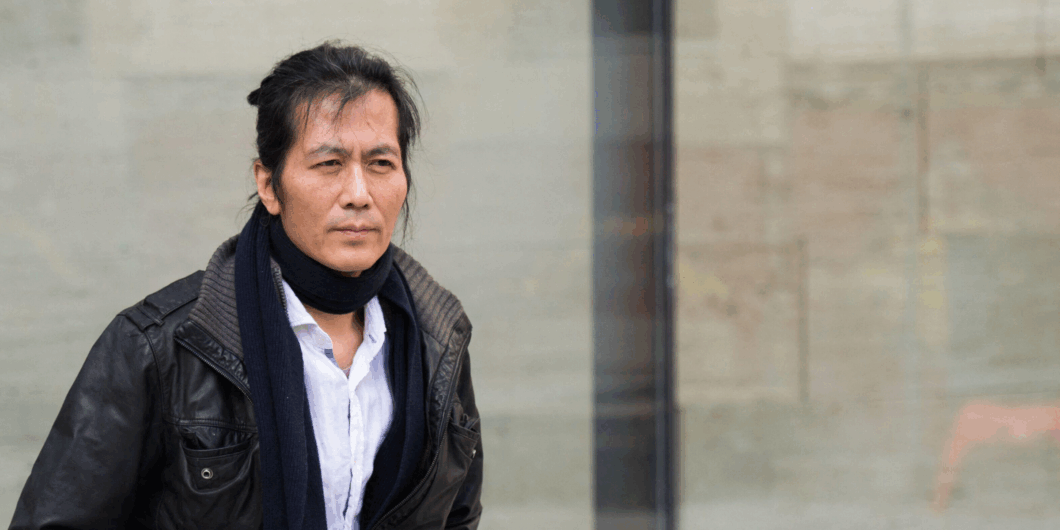
“When he has lost all hope, all object in life, man often becomes a monster in his misery,” wrote Dostoyevsky in The House of the Dead (1862). Hope is often seen as a form of inaction, a passivity on the part of a person. It may even imply an avoidance of personal or collective responsibility. Korean-German philosopher Byung-Chul Han is known for going against the grain, and he does that by elevating hope to its rightful place in his book, The Spirit of Hope.
Han has built a reputation as a contemporary philosopher who offers a pleasing bridge between philosophy (particularly phenomenology) and critiques of our disordered society. Technology and the post-Covid physical and psychological shift have brought new challenges to our lives. This is especially true when it comes to our spiritual or interior lives.
Han is especially interested in silence, which is vanishingly rare but also unacceptable in our society. Reflecting on one’s life has become a public event, which renders all reflection or personal epiphany highly untrustworthy and suspicious. This endless loop of fakery and public display of emotion is yet another contributing factor to the emptiness of life. Beyond that, news and current events keep us perpetually thinking about impending doom and the end of the world, leaving us feeling that there isn’t much to hope for.
Without a doubt, there is plenty of reason to worry. The threat and uncertainty of AI is one of the latest fears to cause understandable anxiety. But should we conduct our lives based solely on fear? For Han, the answer is a resounding no.
Consuming the Future
Whether we want to admit it or not, we have become consumers of everything. Whatever the vice, it leads us away from the meaning in and of life. Han writes, “Without ideas, without a horizon of meaning, life withers and becomes survival, or—as we see today—the pure immanence of consumption. Consumers have no hope. All they have are wishes or needs. Nor do they need a future.”
Han continues this trajectory of thought with his critique of capitalism. Here, his assessment seems too simplistic. In today’s age, consumption can be represented through a variety of paths. Some people buy actual objects, some consume daily doses of ideology and politics, some consume too much food or drink, or weight loss drugs. Certainly, capitalism at its core allows for a free-flowing consumption, but Han is not taking into account that we live in a time of oligarchical capitalism, in which only a few monopolies have taken hold of our society through, paradoxically, Marxist means.
Han is correct that those who do not hope have no concept of time, or are utterly uninterested in a past, present, or future. To hope is to dream, according to Han, and a “dreamless present does not create anything new. It lacks a passion for the new, for possibility, for new beginnings. There can be no future without passion.” This means that hope is active and dynamic. To those who see hope as passivity, Han argues the exact opposite. “Hope springs eternal” is not just a famous phrase by Alexander Pope; it actually springs us into action.
But are these hopeful dreams Han describes mere illusions and a series of absurdity? Some might say yes. Slovenian rock-star philosopher, Slavoj Žižek is on the complete opposite spectrum. In his recent book, Too Late to Awaken: What Lies Ahead When There Is No Future, Žižek tells us (in his typical pessimistic fashion) that we shouldn’t even try to awaken, and by implication, hope.
Žižek writes, “What if, in our historical moment, it’s rather too late to awaken? We hear all the time, that it’s five minutes (or one minute, or even ten seconds) to noon, to global doomsday, so now is our last chance to avert disaster. But if the only way to prevent catastrophe is to assume that it has already happened—that we’re already five minutes past zero hour?”
In a way, Žižek is advocating for Viktor Frankl’s “paradoxical intention,” in which we wish for the worst possible outcome in relation to our specific phobia. Can this embrace of pessimism be the key to a happy and hopeful life? Han doesn’t think so. He rejects Camus’ seeming resignation that qualifies hope only as a “form of longing.” Han is concerned with creation and action, and hope is the first step toward such newness.
Is Hope Irrational?
It would seem that to hope is to go against rational thought. If we live solely guided by reason, should we not conclude then that to hope is to enter the realm of the supernatural, of something beyond our knowledge and reach? This is the usual form of criticism of hope, but Han writes, “Hope goes far beyond passive expectations and wishes.” In order to strengthen his argument, he makes a distinction between “two kinds of hope: passive, inactive and weak sort and an active, acting and strong one.”
While weak and passive hope is just mere wishing and goes inward, strong and active hope leads us outside of ourselves and into the world. Active hope creates a “momentum” that moves contemplation into action. The unique part of Han’s argument is that unlike a wish, hope has a “narrative” structure. In other words, when we hope, we become guided by the notion of tomorrow, and this is when the story, as it were, of our life is created. Future exists in this mode of being. Reason plays a significant part too because it allows us to move into action. Passivity becomes an unrealized state of mind. Does this mean then that we are willing hope? For Han, the answer is no. We cannot will it because it exists on its own, outside of ourselves. Perhaps hope stands on the edge of reason, and works in concert with our minds more than we are able to see or admit.
For Havel, hope is a “state of mind,” but more importantly, “a dimension of the soul.” This implies that we are more than our bodies and minds.
For those who might raise credible and understandable objections to the suggestion that hope is something we can will, Han provides an excellent counter-argument. Hope is inextricably connected to time. He writes that “hope presupposes an open future, which also implies unintended and unforeseeable events that cannot be controlled in advance.” In a way, to say that we are willing hope would be akin to saying that we are willing God, which is impossible unless we are engaging in bizarre, pagan rituals which are not sacred anyway.
In this case, hope moves forward and never looks back. This does not mean that the past is forgotten, but that in order to live a life of meaning, we cannot be stuck in a loop of the way things used to be. If we do this, we enter into nostalgia, which leads us away from both the present and the future. This is not meant to be some New Age pseudo-spiritual exercise of cleansing ourselves of the traumatic past. Rather, it is about a life that is whole, that moves the being forward toward the future and great human potential.
For instance, the American Founders didn’t merely use reason to separate themselves and the union from a monarchical tyrant. The journey to “Life, Liberty, and the Pursuit of Happiness” was a long one, and the Founders had to have hope that they would succeed. Hope and reason were in concert, not tense enemies. As Han writes, “Absolute hope arises in the face of the negativity of absolute despair. It germinates close to the abyss. The negativity of absolute despair characterizes a situation in which action seems no longer possible. It germinates in the moment of the total collapse of the narrative that constitutes our life.”
Metaphysics of Hope
Given Han’s arguments for the necessity of hope, as well as its connection to being and becoming, we can conclude that hope is a metaphysical condition. To be sure, it is outside of ourselves, as something which cannot be willed or controlled, but it does imply a mode of being. It plays a part in our perpetual becoming, and if we go back to Dostoyevsky’s maxim mentioned earlier, it is one of the things that make us human.
Han’s gift of bringing phenomenology and its linguistic expression into the public square can sometimes feel like a burden and even a distraction. The language of Husserl, Heidegger, and Levinas is very deep, meaningful, even poetic, but at times, its beautiful transcendence cannot (ironically) transcend the layers of meaning.
Yet, this is also one of the places where the metaphysics of hope is perfectly expressed. At some point in his book, Han gestures towards the work of Václav Havel, who provides linguistic clarity while still maintaining a phenomenological perspective. A prisoner of the Communist regime and later the president of the newly formed Czech Republic, Havel embodied the spirit of hope.
For Havel, hope is a “state of mind,” but more importantly, “a dimension of the soul.” This implies that we are more than our bodies and minds. Even if we are driven to starvation and torture, the soul cannot be extinguished unless we give in to despair. Havel continues, “It [hope] is an orientation of the spirit, and orientation of the heart; it transcends the world that is immediately experienced, and is anchored somewhere beyond its horizons. … I feel that its deepest roots are in the transcendental.”
Havel’s implicit rejection of utilitarianism and especially, relativism, points to the idea that hope exists in a “place” that is beyond the human construct of time. Although neither Han nor Havel in this particular work and passage focus on God, the mere mention of the transcendental is enough to consider hope as a sacred reality. As human beings, we have an innate movement toward the sacred, the spiritual, the theological. We cannot but reach toward the skies because we know subconsciously and unconsciously that there must be something beyond our finite selves. The perennial philosophical question “Why is there something rather than nothing?” is an entrance into the path of curiosity and exploration. It is the question that examines human relationship to hope.
Havel’s description of hope as “an orientation” clearly signals that hope is essentially about movement. We orient ourselves in order to see, hear, and ultimately move out of the depths of despair. The answer to the question whether life is worth living is then a resounding yes!
The Great Triad: Hope, Faith, and Love
There doesn’t seem to be one epoch in human history in which people no longer sought to find and affirm the order of things. Our perspective is always rooted in the present, and perhaps even in unintentional narcissism, convinced that ours is the worst age in the history of humanity. This is not to minimize the difficulties, threats, and dangers that our society is indeed facing, but can we truly think of any time in history where fear reigned supreme, and our faith was not tested?
This is all part of the human struggle and toil, yet, as Han points out, “The substance of hope is a deep conviction that something is meaningful, independent of any concern for whatever actual results are achieved. Hope is located in the transcendent, beyond the innerwordly course of events. As faith, it makes it possible to act amid absolute despair.”
Hope offers an entrance into a personal reflection; a life examined, if you will. There is an existential component to hope because it begins in a human interior. At the same time, hope that remains inside, as it were, is nothing more than a wish or fantasy. We do not live in a vacuum and are connected to a community. “Hope, faith and love are related,” writes Han. The movement of this triad is outward—outside of the world of introspection, reflection, or contemplation. As Han clarifies, “All three are turned towards the other. Those who hope, love, or believe devote themselves to the other; they transcend the immanence of the self.”
We are not simply moving towards death, as Heidegger would have us think. We are entering an encounter, and the order of things does depend upon this recognition. In this encounter, we recognize each other as human beings with dignity, and only within this framework can love flourish. Hope is the element of human life that goes beyond the body and human appetites. It affirms the reason why we must keep going, for if we don’t, we lose the last bit of our humanity, and as Dostoyevsky writes, we become “monsters in [our] misery.”