El Salvador touts La Esperanza prison's 'Zero Leisure Plan,' points to drop in crime, gang activity
You may have seen the viral video: suspected illegal immigrant gang members rounded up in the U.S. and deported to El Salvador's infamous mega-prison. But there’s a much larger story in the Central American nation.
It has to do with a radical prison overhaul that supporters call revolutionary; detractors criticize as oppressive.
Full Measure recently visited the sprawling La Esperanza (also called Mariona), El Salvador’s largest prison. It’s striking to know that not long ago, it was one of the most dangerous places, in the murder capital of the world.
Today, it’s transformed into a remarkable model that's drawing attention around the globe.
Juan José Montano commands the helm at La Esperanza. He gave Full Measure a tour that included some places unseen by the media before we were invited. Montano has worked there for 19 years but admits El Salvador’s gangs ran the prison for most of that time – until radical reforms under President Bukele.
“So what is needed basically to keep this program going is that the order come directly from the president,” Montano said. “The president is the one giving directions on how to do this. And then we here in the prisons, we can execute all of the indications that come from the president.”
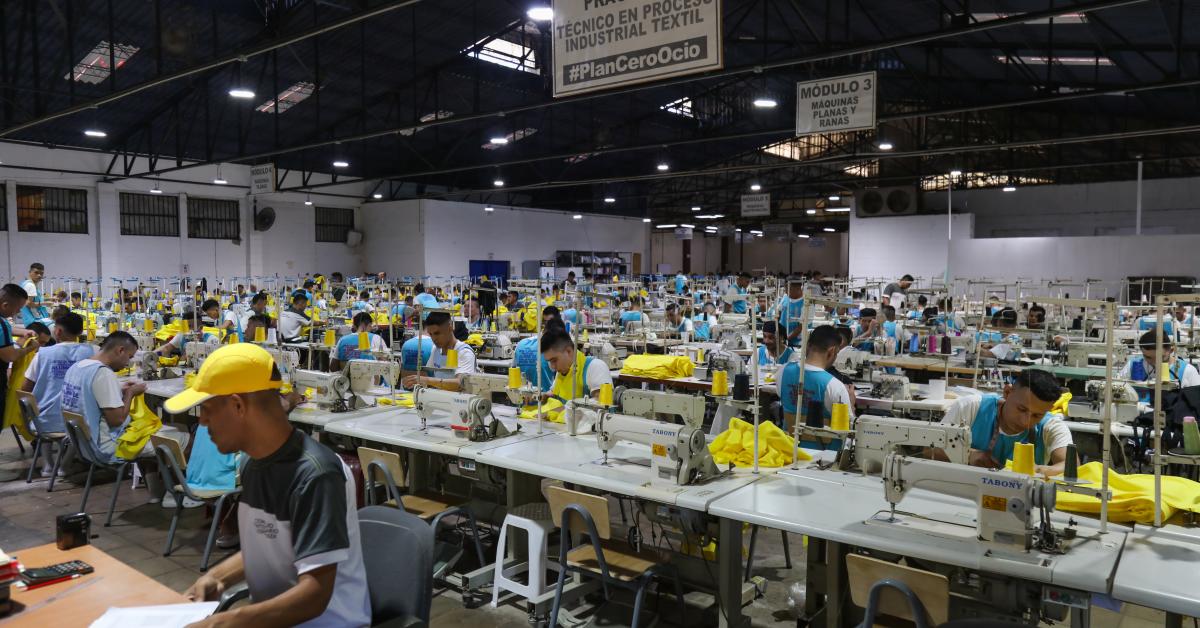
In 2021, Bukele initiated a sweeping crackdown on gangs and crime. In a matter of weeks, 87,000 people were arrested. La Esperanza’s prison population quickly surged from 6,000 to nearly 30,000. Now, the inmates are enrolled in 24/7 around-the-clock shifts of training – and labor that boosts the bottom line. It’s called the “Zero Leisure Plan.”
As part of Zero Leisure, inmates are making shoes for soldiers and soon, public school children. They’re learning first response skills. They’re handcrafting lamps and creating art for government buildings. They gain skills to repair federal buildings, fix police cars and build hospitals and stadiums. They’re even growing their own food in the field.
We asked Montano: “Can you describe the contrast between what we see today and what this prison looked like five, 10 years ago?”
He replied: “Ten years ago, you could see a lot of graffiti in all the alleys inside the prison. And there were a lot of illegal weapons inside. And also there was a lot of trash inside. It was very much dirty. And there was a lot of traffic of forbidden objects and substances inside the prison.”
There are critics. Human rights advocates say El Salvador’s tough-on-crime sweeps have left some deprived of their civil rights and facing brutal conditions in prison unseen by the public.
El Salvador Defense Minister Reme Merino told Full Measure it’s true that prisoners may not be told of their charges within the 72 hours called for under the Constitution. The legislature suspended those rules to enable the mass prosecutions.
“It was impossible” to give all of the new inmates the right to speedy processes, says Merino, because of “the corruption of the system … because we captured the guys and in 72 hours, they were free again. And they continued making crimes. So it was necessary to amend our law in order to have the necessary time to present the charge of those guys. So it's not because we want to violate anything. But everything is legal because we went to the Congress. The Congress requested the change, and it was approved.”
Meantime, El Salvador’s self-sufficiency prison model is wildly popular among its citizens. So are the mass imprisonments, credited in part for plummeting crime rates.
Homicides peaked at 6,656 in 2015, then fell to record lows in 2024, 114, and are on track for even fewer this year.
Now some other countries are looking to El Salvador’s model to address organized crime in their own cities – while teaching prisoners skills, and having them earn their keep. That includes Argentina, Chile, Costa Rica, Ecuador and Peru.
For more on this story, watch "Full Measure with Sharyl Attkisson” Sunday. Attkisson's most recent bestseller is "Follow the $cience: How Big Pharma Misleads, Obscures, and Prevails."