Hawaii Voters File Petition with the Supreme Court Asking How State Can Certify Elections Without Completing Required Certification First - Joe Hoft
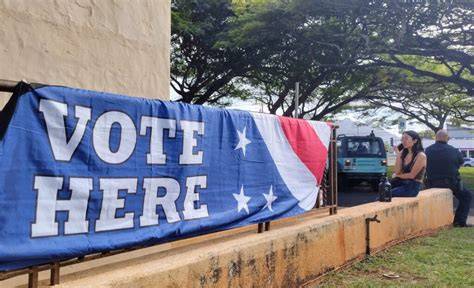
Hawaii Voters, Candidate, and Elections Commissioner File Emergency Petition at Hawaii Supreme Court questioning whether Hawaii Can Certify Elections Without Completing Reconciliation Required by HRS 11-155.
ADVERTISEMENTCase No. SCPW-26-0000424 — Filed June 9, 2026
HONOLULU, HAWAII — A Hawaii Elections Commissioner, a candidate for state office, and a registered Hawaii voter filed an emergency Petition for Writ of Mandamus with the Hawaii Supreme Court on June 9, 2026, questioning whether Hawaii can certify elections without completing reconciliation required by HRS §11-155.
The case — Cushnie, Gregory & Pasnik v. Scott T. Nago and Hawaii Elections Commission, Case No. SCPW-26-0000424 — asks the Hawaii Supreme Court to compel the Chief Election Officer and the Hawaii Elections Commission to complete the reconciliation required by Hawaii Revised Statutes §11-155 before the 2026 statewide election is certified.
What the Law Requires
ADVERTISEMENTHRS §11-155 requires statewide election certification to be based on the comparison and reconciliation of canvass records, audit records, overage and underage reports, recount results, tally sheets, logs, and other election documents generated during the election process.
HAR §3-177-453 requires county clerks to maintain a complete and current count of all ballots issued, spoiled, and received. These records establish how many ballots were received by each county and are among the records that should be available for reconciliation before statewide election results are certified.
The Elections Commission has documented that records demonstrating compliance with HAR §3-177-453 were not provided for the 2024 General Election. Petitioners are asking the Hawaii Supreme Court whether election results can be certified under HRS §11-155 when records necessary to reconcile the number of ballots received have not been produced.
What the Evidence Shows
The petition is supported by a documented administrative record spanning multiple election cycles and including findings from the Elections Commission’s own investigative proceedings:
What Petitioners Are Asking
ADVERTISEMENTPetitioners are seeking prospective relief only. They are not asking the Court to:
They are asking only that the Hawaii Supreme Court declare and compel compliance with Hawaii’s existing mandatory reconciliation requirements before the 2026 statewide election is certified — while there is still time to do so.
Who Filed the Petition
Ralph S. Cushnie is a duly appointed member of the Hawaii Elections Commission, petitioning in his individual capacity. He has participated personally in Elections Commission proceedings, investigative reviews, and oversight actions concerning ballot-accounting records and reconciliation compliance over multiple election cycles. Commissioner Cushnie voted in favor of the April 1, 2026 Commission motion formally documenting the HAR §3-177-453 failure.
Tara Malia Gregory is a candidate for elective office in the 2026 statewide election cycle. She has a direct and legally cognizable interest in competing in an election whose certification satisfies the mandatory statutory prerequisites the Legislature prescribed. The United States Supreme Court confirmed in Bost v. Illinois State Board of Elections, 607 U.S. ___ (2026), that candidates have standing to challenge election rules regardless of whether those rules affect their electoral prospects.
Douglas W. Pasnik, a retired Marine Colonel is a registered Hawaii voter and resident who has participated directly in administrative complaints, Elections Commission petitions, and oversight proceedings concerning ballot-accounting and reconciliation compliance over multiple election cycles.
Legal Authority
The petition is supported by a framework of Hawaii Supreme Court precedent:
Why Now
The 2026 election cycle is underway. Candidate filing has closed. Ballots will soon be prepared and distributed. If the Court does not act before certification occurs, the Deputy Attorney General’s own written opinion confirms that the legal mechanisms for post-certification review are uncertain and contested — meaning the window for meaningful correction closes the moment certification happens.
As Iwasa v. Nago demonstrated, once election materials are commingled after an unlawful process, the only available remedy may be invalidation — a drastic outcome that prospective enforcement now could prevent entirely.
A Note on Partisanship
This petition is not about party politics. The petitioners include individuals of different political backgrounds united by a single concern: that Hawaii’s elections be certified in compliance with the laws the Legislature enacted. The April 1, 2026 Elections Commission vote that formally documented the statutory failure was a bipartisan finding by a Commission whose members are appointed by both Democratic and Republican legislative leadership.
Hawaii voters of every political affiliation deserve elections whose certification they can trust — and that trust begins with following the law.
Court Information
The petition has been filed and docketed at the Hawaii Supreme Court as Case No. SCPW-26-0000424. The public may access court filings through the Hawaii State Judiciary’s online portal at www.courts.state.hi.us.