"BIG Cheating by the Dumocrats": Trump Launches California Probe as They Try to Steal LA and Governor Races
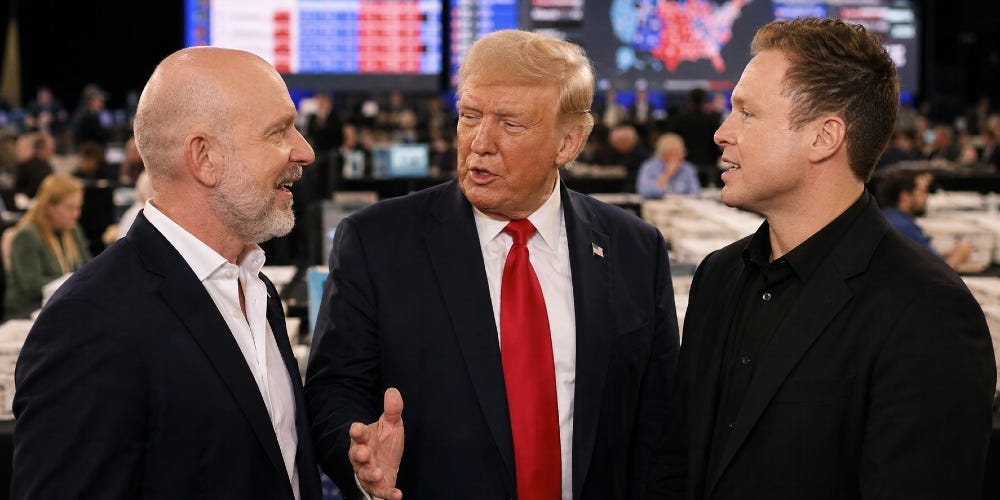
President Donald Trump is once again sounding the alarm on election integrity, this time zeroing in on California’s notoriously sluggish primary results. As votes continue to trickle in days after polls closed, the president has directed federal investigators to examine what he calls blatant attempts by Democrats to “steal” key races, including the gubernatorial contest and the Los Angeles mayoral primary. The slow pace is no accident in a state engineered for maximum mail-in ballot reliance, where late-counted votes reliably tilt leftward.
This isn’t about procedural inefficiency. It’s a feature of a system that rewards delay and opacity, allowing establishment forces to adjust outcomes long after Election Day enthusiasm has faded. Republican contenders Steve Hilton for governor and Spencer Pratt for Los Angeles mayor surged in early returns, yet the full picture remains murky. In a state that prides itself on “progressive” voting reforms, such opacity breeds precisely the distrust Democrats then decry as conspiracy theory.
The President took to Truth Social to lay it out the way he normally does, declaring the problem they created and the solution he’s launching.
“There’s BIG cheating by the Dumocrats in California. Votes are all tied up. May not be in for weeks. Under investigation by the U.S. Attorney’s Office in Los Angeles. Why the vote counting DELAY???”
He followed up by accusing the opposition of flooding the process with late mail-in ballots to reverse early conservative gains.
“The Dumocrats are at it again! They are trying to STEAL THE GOVERNOR OF CALIFORNIA PRIMARY, AND THE MAYOR OF LOS ANGELES, PRIMARY, AWAY FROM TWO GREAT REPUBLICAN CANDIDATES.”
California’s jungle primary system, which advances the top two regardless of party, was supposed to foster competition. Instead, it has become another tool for Democrat dominance. Hilton, a former Fox News commentator, held a lead with partial results, while Pratt, the reality television personality, sat in strong position for a runoff against incumbent Karen Bass. Yet counties warn results could take weeks, a pattern repeated in every recent cycle.
The Structural Problem with All-Mail ElectionsCalifornia’s embrace of universal mail-in voting, solidified in recent years, creates the foundation for prolonged counting. I’ve long said an election in California is never over until Democrats manufacture enough ballots to win.
The sad part is they mask it all with measures that are supposed to make the elections more secure. Ballots require signature verification, curing processes, and manual handling far beyond in-person scans. Drop boxes and post-Election Day arrivals create natural bottlenecks. While defenders call this “access,” critics rightly note that it disproportionately advantages the party with superior organizational machinery for harvesting and delivering ballots.
Compare this to Florida, which reports near-complete results within a day. The contrast exposes how California’s system invites righteous skepticism. Early votes often favor Republicans and independents motivated enough to vote on Election Day. Late mail ballots, frequently from urban and low-propensity voters (not to mentioned deceased, illegal, or manufactured “voters”) mobilized by Democratic operations, shift the totals. This “blue shift” isn’t hidden. Political analysts openly discuss it as a predictable feature.
One might think legacy media acts to pre-condition their viewers to expect election reversals from the mail-ins.
Trump’s call for a federal probe through the Los Angeles U.S. Attorney’s Office represents a necessary check against entrenched power. For too long, blue states have operated under the assumption that federal oversight ends at their borders when it comes to elections. The Constitution grants states primary authority, but it does not bless deliberate obfuscation or the weaponization of administrative delays.
History’s Warning on Corrupted ProcessesAmerica’s founders designed a republic wary of concentrated power precisely because they understood human nature’s tendency toward self-dealing. When institutions prioritize process over transparency, they echo the very tyrannies the Revolution rejected.
California’s one-party grip, sustained through favorable rules and demographic engineering, has produced failing schools, sky-high taxes, rampant homelessness, and middle-class exodus. Yet the political machine clings tighter amid growing discontent.
Steve Hilton and Spencer Pratt represent something threatening to that machine: outsiders willing to challenge the status quo without the usual deference. Hilton’s background as a policy thinker and Pratt’s everyman appeal from reality television both tap into voter frustration with career politicians like Karen Bass, whose tenure has been marred by visible urban decay.
The irony abounds. Democrats who spent years insisting mail-in expansions posed no risk to integrity now face accusations of exploiting those very expansions. Their reflexive dismissal of concerns as “baseless” only deepens public cynicism. When a system consistently produces results that defy initial trends in one direction, skepticism is not paranoia but pattern recognition.
California’s history with late ballot counting is well-documented. In past cycles, substantial portions remained uncounted for weeks, often flipping closer races. The state’s postmark deadline and expansive curing procedures amplify this effect. While no widespread fraud has been conclusively proven in these specific contests yet, the appearance of impropriety itself erodes confidence in self-government.
Restoring Trust Requires Confronting Inconvenient RealitiesThe deeper issue transcends California. Across the nation, Democrats have fought voter ID, citizenship verification, and same-day counting with ferocious intensity. Their resistance reveals more about their coalition’s reliance on marginal and unverifiable votes than any principled stand for democracy. True electoral integrity demands simplicity, speed, and security—principles that threaten those who benefit from complexity.
As this saga unfolds, Americans should watch closely. If late votes conveniently rescue establishment Democrats while sidelining reformers, the case for federal intervention and sweeping reform grows stronger. States cannot be allowed to become laboratories for undermining the republic under the guise of convenience.
The only positive that could come from Hilton and Pratt being robbed is that this could (SHOULD) put a fire under every patriot’s bottoms to vehemently demand Senate Republicans get the SAVE America Act passed immediately. We’re already pressuring them with complaints, but it clearly isn’t working because John Thune and his cronies refuse to act.
In the midst of these procedural battles, Scripture reminds us of the eternal stakes of justice in governance. “When the righteous are in authority, the people rejoice: but when the wicked beareth rule, the people mourn,” (Proverbs 29:2).
Though California’s leaders may dismiss such concerns, the yearning for honest processes reflects a deeper moral hunger for leadership that fears God and loves truth.
The coming days and weeks of counting will test more than these specific candidates. They will test whether America still possesses the will to demand elections worthy of a free people. Trump’s willingness to investigate rather than accept the narrative offers a model of accountability too often missing in Washington. For the sake of the republic, may it bear fruit.
Please remember to visit my hand-curated Christian and conservative news aggregator at jdrucker.com — the best way you can help keep the content flowing is to get this built up with me.