Minnesota Fraud Scandal Collides With Ilhan Omar’s Somalia Advocacy
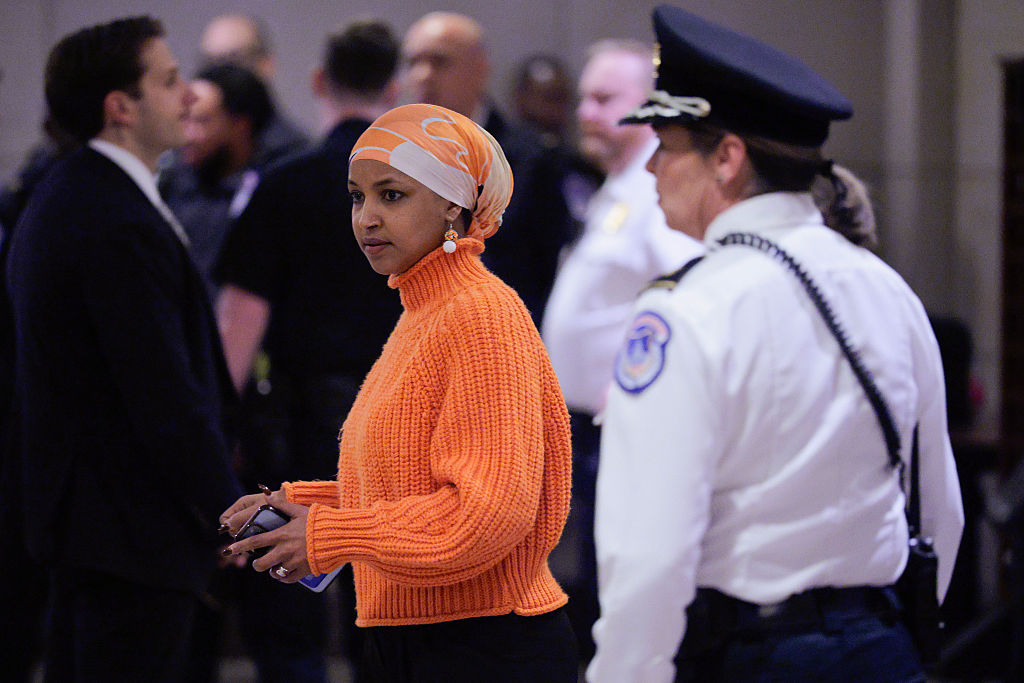
A widening fraud investigation in Minnesota is putting fresh attention on Rep. Ilhan Omar’s political priorities — both at home and abroad.
According to Fox News, as federal authorities continue probing alleged large-scale abuse of public funds in the state, critics are revisiting Omar’s vocal defense of Somalia’s territorial claims and her opposition to recognizing Somaliland, a self-governing region in the Horn of Africa.
Some analysts argue the timing has intensified scrutiny of how governance failures abroad compare with those now under investigation in Minnesota.
Michael Rubin, a senior fellow at the American Enterprise Institute, said the contrast between Somalia and Somaliland is especially relevant as details of the fraud cases emerge.
“The corruption exposed in Minnesota mirrors the governance failures that have plagued Somalia for decades,” Rubin told Fox News Digital.
“Somaliland has charted a different course entirely, relying on internal accountability rather than international assistance and that distinction matters right now,” he added.
Minnesota has been engulfed in controversy following reports that fraud losses across several government programs since 2018 could reach into the billions, according to The Wall Street Journal.
Federal prosecutors have already dismantled one major operation — the $250 million “Feeding Our Future” scheme — which resulted in 78 indictments and dozens of convictions.
FBI Director Kash Patel described the case as “the tip of a very large iceberg.”
Public interest surged again over the weekend after independent commentator Nick Shirley posted a viral video showing daycare facilities that had billed the government millions of dollars while appearing to serve few, if any, children.
Should the U.S. recognize Somaliland as an independent state?
Support: 0% (0 Votes)
Oppose: 0% (0 Votes)
Omar has defended her support for the MEALS Act, legislation that critics say weakened oversight safeguards that were later exploited by fraudulent actors.
Rubin said Omar’s broader perspective on Somalia raises questions beyond the Minnesota scandal.
“Ilhan Omar left Somalia, but Somalia never left her,” Rubin said. “In her Somali-language speeches, she refers to Somalia as her home, not America and so it is clear she appears to seek to advance Somalia’s interests on the global stage.”
He argued that Omar’s opposition to recognizing Somaliland is shaped more by internal Somali political dynamics than by U.S. strategic interests.
“Clan dynamics shape Somali politics, and that same lens appears to inform her position on Somaliland,” Rubin said. “American interests don’t appear to factor prominently into that calculation.”
While Somalia continues to struggle with instability, Somaliland has drawn increasing international attention for maintaining internal security and building democratic institutions after more than three decades of de facto independence.
The region has also pursued closer diplomatic ties with Israel and has expressed interest in joining the Abraham Accords, positioning itself as a potential regional partner for the United States.
Israeli Prime Minister Benjamin Netanyahu recently announced that Israel had established full diplomatic relations with Somaliland, making it the first UN member state to recognize the territory.
Rubin said the development could add momentum to discussions in Washington, particularly as President Donald Trump has previously said he was “looking into” recognizing Somaliland.
“The case for Somaliland does align with Trump’s broader foreign policy approach,” Rubin said. “It is business-friendly, security-focused, and takes responsibility for its own territory. It wants partnerships, not perpetual aid. By any reasonable metric, recognizing Somaliland makes sense.”