California Blocks Federal Vote Audit
California is resisting a federal effort to audit its voter rolls, setting up another fight between state officials and the Trump administration over election oversight and voter confidence.
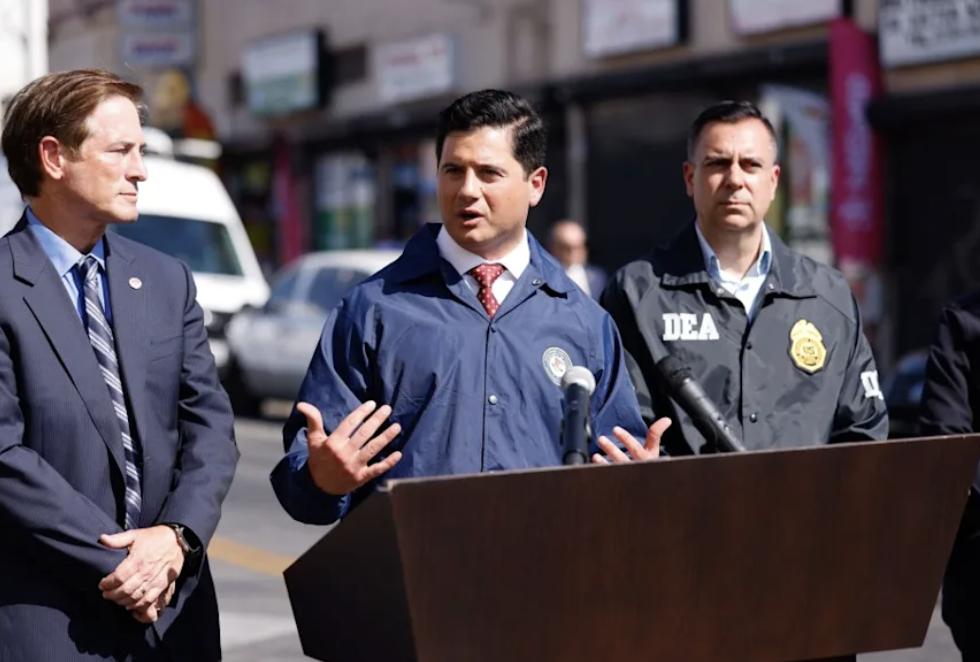
Bill Essayli, the top federal prosecutor in Los Angeles, said Sunday that his office wants a closer look at California’s election system, especially after critics raised questions about late-counted ballots that helped Democratic candidates in several races.
In a post on X, Essayli pointed to California’s rules for first-time voters, saying the state allows some people to register using forms of identification that “most Americans would find surprising.” He listed health club membership cards, employee identification cards, credit or debit cards, prescription drug labels and insurance cards as examples.
Those forms of ID are allowed under California regulations in limited situations, mainly when a voter does not provide a driver’s license number or Social Security number during registration.
“Our office believes this policy deserves a closer look,” Essayli wrote. “If California genuinely wants voters to trust its elections, it should open its records, not fight to keep them closed. What are they afraid of?”
Essayli also questioned whether California is properly maintaining its voter rolls by removing people who have died, moved out of state or been convicted of disqualifying felonies. He raised concerns about ballot collection, often called ballot harvesting, which allows third parties to collect and submit ballots on behalf of voters.
“California allows third parties to collect and turn in ballots on voters’ behalf with few restrictions,” Essayli wrote. “This makes it difficult to track who actually received, completed, and submitted each ballot.”
The federal government has been trying for more than a year to obtain California’s statewide voter registration list as part of a review of the state’s compliance with federal election laws.
Essayli shared an August 2025 letter from the Justice Department’s Civil Rights Division to California Secretary of State Shirley Weber. In that letter, federal officials requested access to the state’s voter registration records, saying they were reviewing California’s compliance with the National Voter Registration Act and the Help America Vote Act.
The department argued that federal law gives the attorney general authority to inspect election records and conduct an independent review of voter registration systems.
“California cannot limit the Justice Department’s access to mere inspection of the requested voter registration records,” the letter said. “The Justice Department is entitled to a full and complete copy of those records in the form in which California maintains them.”
Federal officials also requested copies of all voter registration applications submitted between Dec. 1, 2023, and July 1, 2025. They argued that federal election laws override the state privacy restrictions California has cited in refusing to hand over the records.
Essayli said the dispute is now before the Ninth Circuit Court of Appeals.
California law requires voters to provide a driver’s license number, state identification number or the last four digits of a Social Security number when registering. If an applicant does not have those forms of identification, election officials may assign a unique identifying number to validate the registration.
The state’s rules also include a broad list of acceptable identification documents for certain first-time federal election voters who must verify their identity under the Help America Vote Act. State regulations instruct election officials to interpret those requirements broadly and resolve doubts in favor of allowing eligible voters to cast regular ballots.
Should California allow a federal audit of its voter rolls for election oversight?
Support: 100% (1 Votes)
Oppose: 0% (0 Votes)
Paul Mitchell, a pollster and Democratic election expert, defended California’s handling of the issue and said it is appropriate for state officials to push back against what he views as a federal attack on state-run elections.
“I think it’s right for the state attorney general — if it’s a Democrat or Republican — to push back on the federal administration to try to attack their elections in that way,” Mitchell told The Post.
Critics of the fraud allegations argue that California has multiple safeguards to prevent ineligible voting. Mitchell said claims about noncitizens voting often misrepresent how the state’s driver’s license and voter registration systems work.
“The conspiracy theorists like to conflate that everybody in California, non-citizens can get a driver’s license,” Mitchell said. “But there’s a different driver’s license for a non-citizen than for a citizen. And the DMV knows whether you’re a citizen or not.”
He also pointed to provisional ballots as a key safeguard. When there is a question about a voter’s eligibility, the ballot is set aside until election officials verify the person’s registration and confirm they have not voted elsewhere. The ballot is counted only after that review is complete.
Mitchell said anyone who falsely claims to be a U.S. citizen to vote would be committing a crime and could face serious consequences, including prison time and immigration penalties.
The debate has intensified as ballots from the June 2 primary continue to be counted, with several high-profile races still unsettled. In some contests, Republican or conservative candidates who were ahead on election night have seen their leads shrink as mail-in and provisional ballots were processed. That has fueled new claims from critics who distrust California’s slower vote-counting process.
Mitchell said late shifts in California results are not unusual. Republican voters often return ballots earlier, while later-counted ballots from heavily Democratic areas, including Los Angeles County, can change the margins.
Los Angeles County Registrar-Recorder/County Clerk Dean Logan also rejected allegations of fraud.
“No evidence,” Logan said when asked about claims of cheating.
He said attacks on the counting process often begin before the count is finished, especially when one side wants to prepare voters to doubt an unfavorable result.
“The reality is this is the way elections have been designed in California,” Logan said.
Logan said California’s voting patterns and registration numbers help explain why later-counted ballots can favor Democrats. He also said voter behavior shows confidence in the system, noting that many Los Angeles County voters use official drop boxes to return their ballots.