Special Counsel Referred For Criminal Prosecution
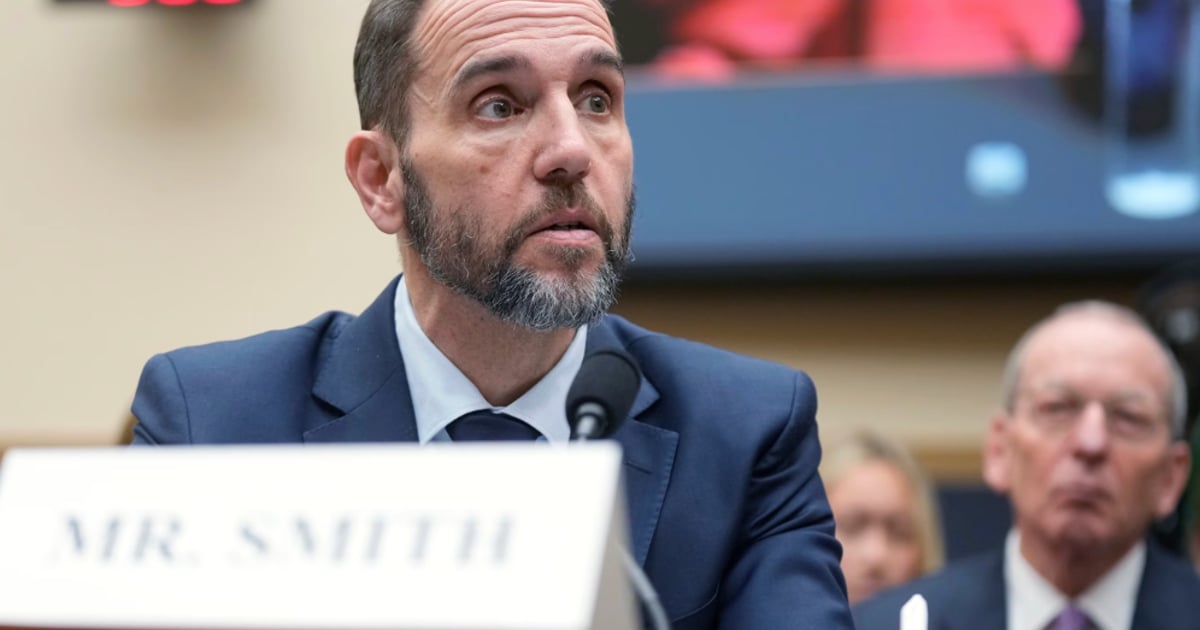
House Judiciary Committee Chairman Jim Jordan has referred former special counsel Jack Smith to the Justice Department for possible criminal prosecution, accusing Smith of making false statements during congressional testimony in December 2025. Jordan, an Ohio Republican, announced the referral Wednesday. President Donald Trump responded on Truth Social with the brief message, “Justice at last???” […]
House Judiciary Committee Chairman Jim Jordan has referred former special counsel Jack Smith to the Justice Department for possible criminal prosecution, accusing Smith of making false statements during congressional testimony in December 2025.
Jordan, an Ohio Republican, announced the referral Wednesday. President Donald Trump responded on Truth Social with the brief message, “Justice at last???”
A criminal referral is a request for the Justice Department to investigate possible wrongdoing. It does not amount to a criminal charge, establish guilt, or require federal prosecutors to open a case. The department has acknowledged receiving the referral, but the decision about whether to investigate or prosecute Smith remains with Justice Department officials.
The disagreement centers on records collected during Smith’s investigation of Trump’s efforts to challenge the results of the 2020 presidential election. Smith also led a separate prosecution concerning Trump’s handling of classified government documents.
During his December 17, 2025, deposition, Smith was questioned about records obtained from members of Congress. He said investigators had sought “toll records,” which provide information such as the telephone numbers involved in a call, the date and time of the call, and its duration. Smith explained that those records did not contain the substance of calls or messages.
Jordan argues that later disclosures show Smith’s team also reviewed the contents of text messages involving lawmakers and White House personnel. Documents released through congressional investigations reportedly indicate that prosecutors obtained communications involving more than 40 members of Congress from both political parties. Those messages were obtained through presidential records held by the National Archives, rather than through the telephone toll records discussed in Smith’s answer.
That distinction is at the center of the controversy.
Advertisement
Jordan contends that Smith’s denial was misleading because his investigative team had, through a separate source, received the contents of some communications involving lawmakers. In his referral letter to Acting Attorney General Todd Blanche, Jordan accused Smith of intentionally giving false testimony to interfere with the Judiciary Committee’s oversight.
“All individuals have an obligation to comply with a duly authorized congressional inquiry,” Jordan wrote. He argued that Smith’s testimony included statements designed to obstruct the committee’s work.
Jordan has also raised constitutional concerns about investigators obtaining lawmakers’ communications. He cited the Constitution’s Speech or Debate Clause, which provides certain protections for members of Congress performing legitimate legislative work. According to Jordan, Smith’s team should have used a screening process to separate protected legislative communications from other material collected during the investigation.
Smith’s attorneys strongly dispute Jordan’s interpretation. They maintain that Smith answered the specific questions he was asked and accurately explained that toll records do not reveal the content of calls or text messages. They argue that the committee is attempting to treat Smith’s failure to volunteer information about a different category of records as a deliberate false statement.
Rep. Jamie Raskin of Maryland, the Judiciary Committee’s ranking Democrat, has also defended Smith. Raskin said Smith truthfully answered questions about the subpoenas for toll records. According to Raskin, Smith was not asked whether investigators had encountered lawmakers’ messages within presidential records obtained from the National Archives.
Raskin argued that committee members cannot accuse a witness of lying simply because they later decided they should have asked a broader or differently worded question. Smith’s attorneys similarly characterized the referral as legally unfounded and politically motivated.
The dispute therefore does not appear to be about whether investigators obtained any text messages involving lawmakers. Instead, it concerns what Smith was specifically asked, what he understood the question to cover, and whether his answer was knowingly false.
Advertisement
For a false-statement prosecution to succeed, investigators would generally need evidence that the statement was materially false and that Smith made it knowingly and intentionally. A disagreement over the scope or wording of a question would not automatically satisfy that standard.
Jordan believes the newly released documents provide enough evidence to justify a criminal investigation. Smith’s defenders argue that the documents do not contradict his testimony because toll records and messages found in presidential records are two separate things.
The Justice Department will now decide whether Jordan’s referral warrants further investigation. Until that decision is made, the referral remains an allegation from a congressional committee, not a finding that Smith committed a crime.