Secret Service Threat Investigations Surge
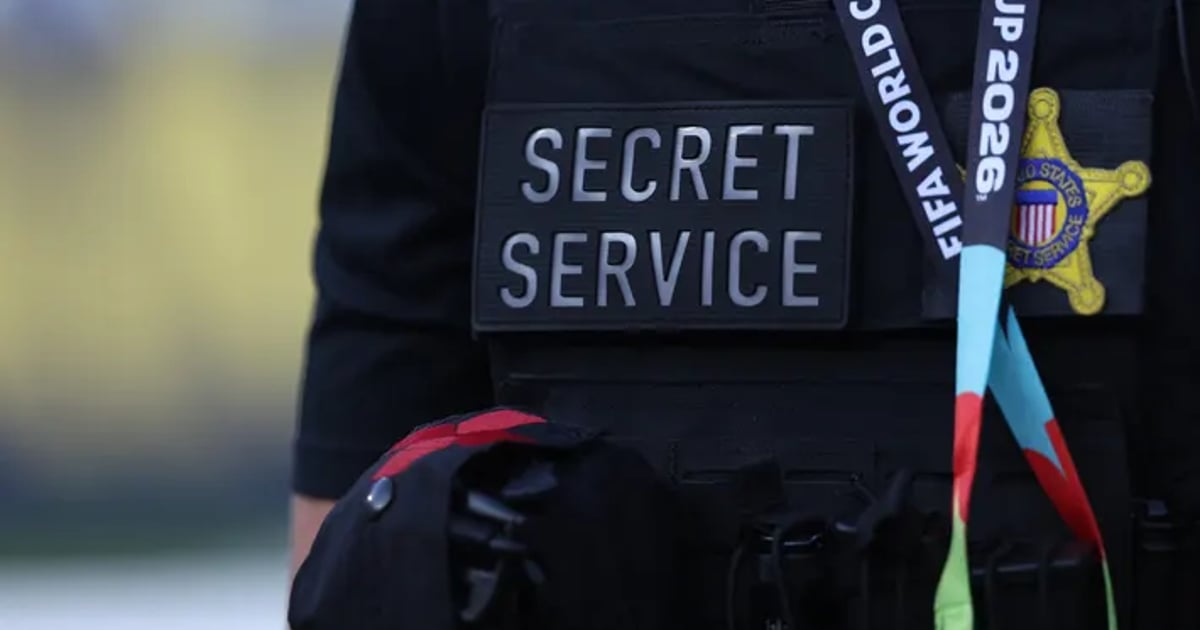
There are moments in politics that you would think would force everyone to stop, look around, and ask whether the country has gone too far. The attempted assassination of Donald Trump in Butler, Pennsylvania, should have been one of those moments. A bullet clipped Trump’s ear after narrowly missing his head during a campaign rally. […]
There are moments in politics that you would think would force everyone to stop, look around, and ask whether the country has gone too far. The attempted assassination of Donald Trump in Butler, Pennsylvania, should have been one of those moments.
A bullet clipped Trump’s ear after narrowly missing his head during a campaign rally. For a brief period, there were calls for lowering the temperature of political discourse. But those appeals proved short-lived. Since then, the security picture surrounding the president has only become more serious.
Stay with me, because the timeline matters.
Just weeks after the Butler attack, another alleged assassination attempt unfolded in September 2024 at Trump International Golf Club in West Palm Beach, Florida. Authorities arrested a suspect before any shots were fired at the president.
Then came another alarming episode in April. Authorities announced the arrest of a man accused of plotting to assassinate Trump during events surrounding the White House Correspondents’ Dinner in Washington, D.C. Law enforcement officials said the alleged plan was disrupted before it could be carried out.
Three separate incidents. One president. That’s the backdrop the Secret Service is dealing with today.
And the numbers suggest the agency’s workload has exploded.
Advertisement
According to CBS News, the Secret Service has opened roughly 10,000 protective intelligence cases since January, representing about a 40 percent increase over the same point the previous year.
That is not a small jump.
The agency says those investigations stem from a mix of online threats, foreign actors, individuals experiencing mental health crises, lone offenders, and ideologically motivated cases. Not every investigation begins with someone making a direct threat. The Secret Service also evaluates warning signs such as obsessive fixation, stalking, harassment, paranoia, delusional thinking, expressed interest in violence, and suicidal behavior when determining whether someone poses a potential danger.
Secret Service Director Sean Curran offered a stark assessment of the current environment.
“The numbers are numbers that this agency and certainly I have never seen in my 24-year career,” Curran said.
“The environment has become very volatile, and that’s just across the board. The threat picture and environment is as large as I’ve ever seen it.”
Those comments raise an obvious question: what is fueling such an intense threat environment?
Advertisement
Supporters of Trump frequently point to years of harsh political rhetoric directed at the president. During recent election cycles, opponents have described him with labels including “fascist,” “authoritarian,” “white supremacist,” and “a threat to democracy.” Critics of that rhetoric argue that while many people hear those descriptions as political attacks, unstable individuals may interpret them far more literally.
One of the most widely discussed examples came during the 2024 presidential campaign.
After former President Joe Biden withdrew from the race, then-Vice President Kamala Harris became the Democratic nominee. During a CNN town hall that October, moderator Anderson Cooper asked Harris directly whether she believed Trump was a fascist.
“Yes, I do,” Harris replied. “Yes, I do.”
Supporters of Harris have argued that she was expressing her assessment of Trump’s conduct and not encouraging violence. Trump’s supporters, meanwhile, contend that repeatedly portraying a political opponent as an existential threat risks contributing to an already volatile atmosphere.
Meanwhile, the Secret Service continues confronting a record number of investigations.
The agency’s mission is straightforward: identify potential attackers before they act. But as the number of cases climbs and officials warn that the threat environment is unlike anything they’ve seen before, the broader debate over political rhetoric and its consequences shows no sign of fading.