Gay Professionals Flag Trend Shift In Corporate America
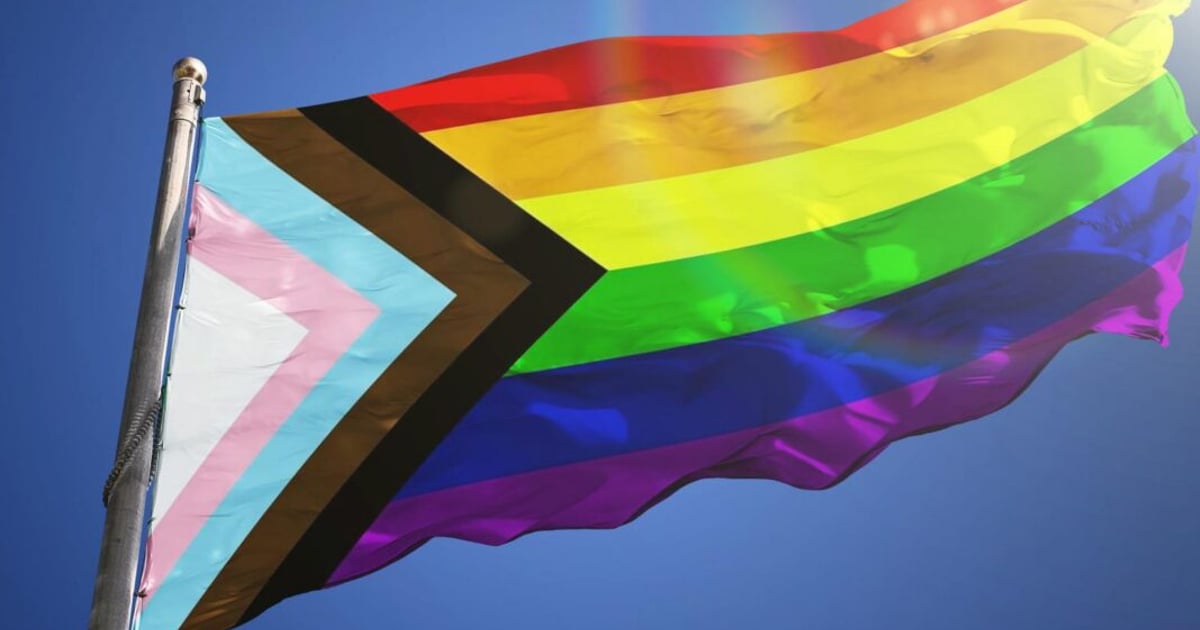
For years, corporate America seemed convinced that DEI initiatives were the future. Companies rolled out diversity programs, promoted inclusion campaigns, and made LGBTQ representation a centerpiece of workplace culture. But here’s the thing: a new survey suggests that one of the assumptions behind those efforts may be changing—and changing fast. According to new research from […]
For years, corporate America seemed convinced that DEI initiatives were the future. Companies rolled out diversity programs, promoted inclusion campaigns, and made LGBTQ representation a centerpiece of workplace culture. But here’s the thing: a new survey suggests that one of the assumptions behind those efforts may be changing—and changing fast.
According to new research from Out Leadership, the number of LGBTQ professionals who believe being openly out at work actually helps their careers has dropped dramatically. In 2023, 78 percent of respondents said their openness gave them a professional advantage. Today? That figure has fallen to just 49 percent.
Now, stay with me, because there’s an interesting twist.
At the exact same time that perceived career benefits have fallen, workplace comfort has reached a record high. A full 88 percent of respondents said they feel comfortable being themselves on the job. So this isn’t a story about people suddenly feeling unsafe. It’s a story about people wondering whether authenticity still translates into promotions, leadership opportunities, or career advancement.
Todd Sears, the founder and CEO of Out Leadership, says that’s the real headline.
“To me, the most striking finding is the divergence, not just the decline,” Sears told the Daily Caller News Foundation. In his view, LGBTQ employees aren’t rushing back into the closet. Instead, they’re asking a different question: Does being visible actually help anymore?
What’s especially notable is that this wasn’t confined to one country or one generation. Out Leadership surveyed professionals across the United States, Europe, Asia-Pacific, Australia and Oceania, and South America. According to Sears, every region showed the same pattern. Every generation did as well, with Gen Z reporting the sharpest decline.
Advertisement
That consistency, Sears argued, points to something bigger than politics or a single news cycle.
For years, supporters of corporate DEI argued that encouraging employees to bring their whole selves to work wasn’t simply about fairness. They maintained it was good business. Sears said workers who spend energy hiding part of their identity naturally have less energy available for their jobs. Companies that fostered openness, he argued, saw stronger engagement, better retention, higher productivity, and ultimately better financial performance.
His argument is that the talent hasn’t changed.
The companies have.
Sears believes many businesses have quietly stepped away from programs that once identified and developed LGBTQ employees for leadership. Sponsorship opportunities, mentoring, and visible pathways to advancement have become less common, he said. When companies stop signaling that different perspectives are valued, employees naturally conclude those differences are no longer viewed as leadership strengths.
But not everyone sees the survey through that lens.
Greg Scott, executive vice president of the nonprofit 1792 Exchange, interpreted the findings very differently.
Advertisement
“It’s interesting to see activist groups openly confess to exploiting sexual and gender identity to get ahead in the workplace,” Scott told the Daily Caller News Foundation. “But even more interesting is that the most radical ideologues are now admitting that the spell is wearing off.”
Scott argues that many corporations have simply decided the culture wars aren’t worth the business risk anymore. Public fights over politics, he says, have produced more controversy than value, prompting companies to return their focus to customers rather than activism.
He also pointed to several developments that he believes support that conclusion. According to Scott, roughly 65 percent of Fortune 500 companies stopped participating in the Human Rights Campaign’s Corporate Equality Index survey within a year. He also noted that the Human Rights Campaign reportedly lost half of the sponsors for its annual fundraising dinner over the same period.
To Scott, those aren’t isolated events. They’re signs that corporations are recalibrating.
Consumers’ Research Executive Director Will Hild offered a similar assessment. He argued that many businesses spent years pursuing political and social causes—including DEI initiatives, transgender policies, and climate activism—rather than concentrating on products and customers.
“America’s companies spent years chasing woke agendas like DEI, transgender ideology, and climate activism instead of staying focused on their customers,” Hild said. He credited the Trump administration’s opposition to certain DEI policies with accelerating what he sees as a broader corporate shift away from identity-based initiatives.
So where does that leave corporate America?
That’s the unanswered question.
Employees continue reporting that they feel comfortable being themselves at work. That part of the equation hasn’t disappeared. But far fewer now believe openness offers any meaningful career advantage. Whether that’s evidence of companies abandoning DEI, simply changing how they approach hiring and promotions, or settling into a more neutral posture is likely to remain part of a much larger debate.