Former AG Gives Adam Schiff A Lesson In The Law
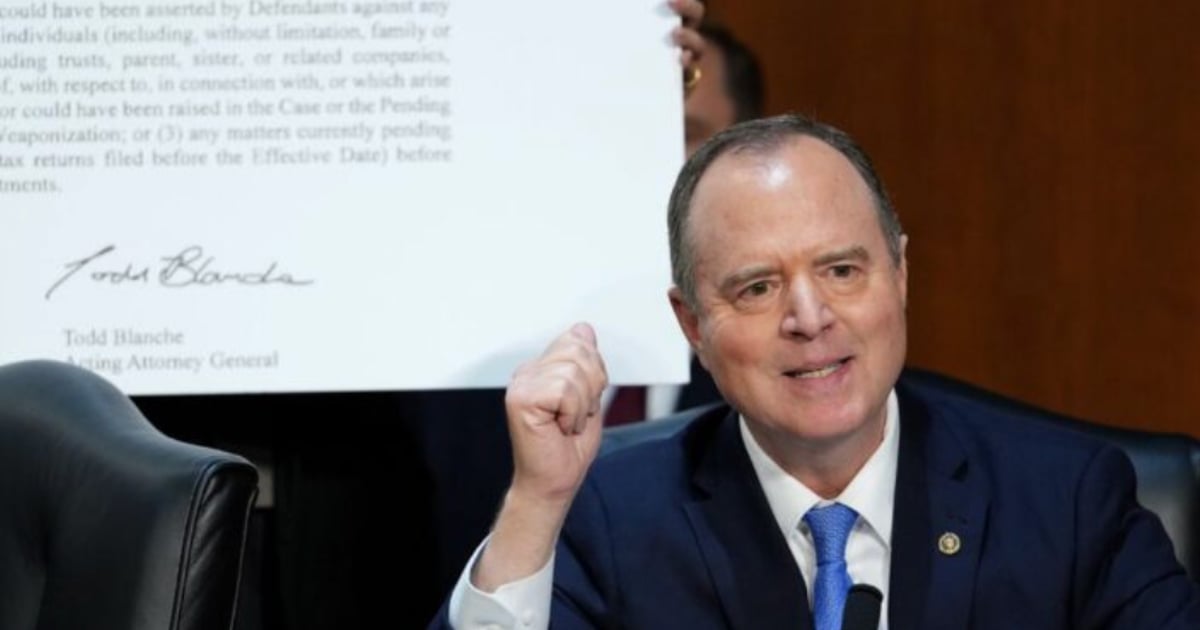
Sen. Adam Schiff appears to be arguing that when a president publicly criticizes someone, any later investigation of that person automatically becomes politically suspect. That is a dangerous standard. Political hostility does not place anyone beyond the reach of the law, just as it should not be used as a substitute for evidence of wrongdoing. […]
Sen. Adam Schiff appears to be arguing that when a president publicly criticizes someone, any later investigation of that person automatically becomes politically suspect.
That is a dangerous standard. Political hostility does not place anyone beyond the reach of the law, just as it should not be used as a substitute for evidence of wrongdoing.
The issue came up Thursday while former Attorney General John Ashcroft testified in support of attorney general nominee Todd Blanche. Schiff, a California Democrat and longtime critic of President Donald Trump, questioned Ashcroft about whether a president should ask the attorney general to investigate or prosecute political opponents.
Schiff asked whether it was appropriate for a president to call on the Justice Department to prosecute one of his enemies. Ashcroft responded that federal law should be enforced without regard to the political views of either the accused or the officials overseeing the investigation.
That should be the basic principle. A president should not direct prosecutions simply to punish critics. At the same time, being a critic of the president cannot provide immunity from investigation when there is legitimate evidence that a law may have been broken.
Schiff suggested that Ashcroft was accepting the idea that presidents may freely demand prosecutions of their enemies. Ashcroft pushed back, arguing that a president may properly encourage law enforcement to respond to possible crimes, even when the person involved happens to be a political opponent.
“If an enemy of the president goes out and conducts a violent crime,” Ashcroft said, there would be nothing inherently wrong with the president urging the attorney general to address it.
Advertisement
Schiff then raised two examples that were clearly intended to make the administration’s concerns sound trivial. He referred to a political opponent taking a photograph of seashells and to senators posting a video reminding military personnel that they may disobey illegal orders.
The first reference concerned former FBI Director James Comey, who posted a photograph showing seashells arranged to read “86 47.” Critics interpreted the message as a threat against Trump, the 47th president. Comey said there was no violent intent behind the image and later removed it.
The second example involved a video from Democratic lawmakers with military or intelligence backgrounds. They reminded service members that they are not required to follow unlawful orders. That statement, in isolation, reflects a longstanding legal principle. Critics, however, argued that the video was deliberately vague and could encourage military personnel to second-guess lawful commands based on partisan disagreement.
Arizona Sen. Mark Kelly later said service members could discover “down the road” that an order they followed was illegal. Opponents seized on that remark, arguing that it sounded less like a warning about clearly unlawful conduct and more like a suggestion that today’s lawful orders might later be reinterpreted by a different administration.
That is where the dispute becomes more complicated than Schiff’s framing suggests.
There is a major difference between prosecuting someone for political speech and investigating whether specific conduct crossed a legal line. The Justice Department should not treat criticism, satire or provocative rhetoric as criminal merely because the president dislikes it. It also should not refuse to examine possible threats, incitement or unlawful interference simply because the person involved is a prominent political opponent.
Ashcroft made that distinction clearly.
Advertisement
He said the attorney general has a responsibility to enforce the law uniformly. If one of the president’s enemies breaks the law, that person does not become exempt from accountability because of the political relationship involved.
That is correct as a general rule. The difficult part is ensuring that the rule is applied honestly.
A president’s public demand for prosecution can create legitimate concerns about pressure on the Justice Department. Prosecutors must still rely on evidence, established law and ordinary procedures. They cannot begin with a desired political outcome and work backward.
But Schiff’s position risks creating the opposite problem. Under his logic, once a person becomes a recognized opponent of the president, almost any investigation involving that individual can be dismissed as retaliation before the facts are considered.
That cannot be the standard either.
Political enemies have the same constitutional protections as everyone else. They also have the same legal obligations. Neither support for a president nor opposition to one should determine whether a person is investigated, charged or left alone.
The question should be simple: Is there credible evidence that a law may have been violated?
If the answer is no, the matter should end. If the answer is yes, the person’s political identity should not prevent investigators from doing their jobs.
Schiff is right to be wary of presidents using federal prosecutors as weapons against their critics. Recent American history offers plenty of reasons to take that danger seriously. But concern about political abuse should not become a blanket exemption for anyone who has publicly opposed the president.
Ashcroft’s answer was the more defensible one. The law must be enforced consistently, including when the people under scrutiny are politically powerful, well connected or openly hostile to the administration.