DHS Drops Voter Registration Findings
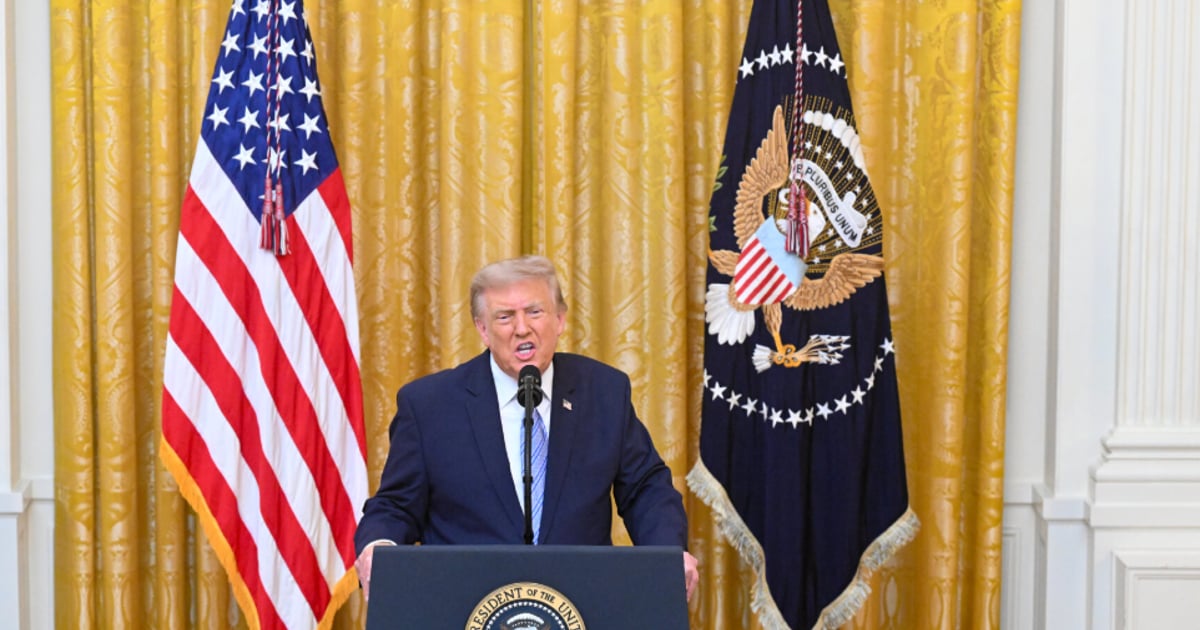
During a prime-time address on election integrity Thursday night, President Donald Trump announced that the Department of Homeland Security had identified approximately 278,000 non-U.S. citizens who were allegedly registered to vote in federal elections. Trump organized the speech around what he described as five major threats to election security. His central concern involved possible Chinese […]
During a prime-time address on election integrity Thursday night, President Donald Trump announced that the Department of Homeland Security had identified approximately 278,000 non-U.S. citizens who were allegedly registered to vote in federal elections.
Trump organized the speech around what he described as five major threats to election security. His central concern involved possible Chinese access to or collection of American election data. But one of the most striking claims of the night involved the large number of non-citizens allegedly found on voter rolls.
“We are releasing the results of a stunning investigation by the Department of Homeland Security,” Trump said.
According to the president, DHS compared state voter rolls with public records and identified about 278,000 people who were not U.S. citizens but were still registered to participate in federal elections.
“According to the DHS review, state voter rolls and public records, they identified approximately 278,000 non-citizens who are registered to vote in federal elections,” Trump said.
He argued that the true number could be even higher because some Democratic-led states declined to provide their voter files to federal investigators.
“Since Democrat states refused to share their voter files, the real number is actually much higher than that,” Trump added.
Advertisement
Trump’s remarks did not make clear how many of the identified individuals had actually cast ballots. Registration and voting are separate issues, and the speech focused primarily on names appearing on voter rolls rather than confirmed cases of illegal votes being counted.
Federal law prohibits non-citizens from voting in federal elections. A limited number of local jurisdictions in three states, along with the District of Columbia, allow some non-citizens to participate in certain municipal elections. Those local rules do not permit them to vote for president, Congress, or other federal offices.
Many Republican-led states have gone further by adopting laws or constitutional amendments that prohibit non-citizen voting at every level, including local elections.
Trump said the DHS findings were especially troubling because the review was incomplete.
“Even this limited analysis found more than a quarter of a million foreigners illegally registered to vote,” he said.
He presented the figure as part of a broader case that the country’s election system contains serious weaknesses that must be addressed before future elections.
“Put together, these disclosures reveal a system so broken and vulnerable that nobody can possibly defend it,” Trump said.
Advertisement
Later in the address, the president said he had instructed DHS to contact every state, provide information about suspected non-citizens appearing on voter rolls, and urge election officials to remove anyone who is not legally eligible to vote.
Trump also called on Congress to pass the Safeguard American Voter Eligibility Act, commonly known as the SAVE Act. The proposal would establish stricter nationwide requirements for proving citizenship when registering to vote in federal elections. Supporters have also connected the measure to broader voter-identification requirements.
Republican Sen. Mike Lee of Utah responded during the speech, saying the reported findings demonstrated the need to prevent foreign interference and strengthen election safeguards.
Lee argued that the disclosure made it more urgent for Congress to pass the legislation.
The bill has faced strong opposition from Senate Democrats, who have repeatedly prevented it from advancing. Critics argue that requiring documentary proof of citizenship could make registration more difficult for eligible voters who do not have immediate access to documents such as a passport or birth certificate.
The proposal has also encountered resistance from at least one Republican. Sen. Thom Tillis of North Carolina, an outspoken Trump critic who is not seeking another term, indicated Wednesday that he would oppose efforts to attach the measure to a broader reconciliation package.
“If I see a reconciliation bill come from the House with another failed attempt to confuse this election, I will use every device I have available to slow down the wheels of government until people cop a clue and do the math,” Tillis said.
His threat creates another obstacle for Republicans seeking to move the SAVE Act through a closely divided Senate.
Trump’s announcement is likely to intensify the national debate over voter eligibility, election administration, and the role of the federal government in maintaining state voter rolls. The next major question will be whether DHS releases additional details supporting the 278,000 figure, including how the individuals were identified, which states were involved, and whether any of those registrations resulted in illegal ballots being cast.