Democratic Socialist Governor Candidate Berates Hospitals
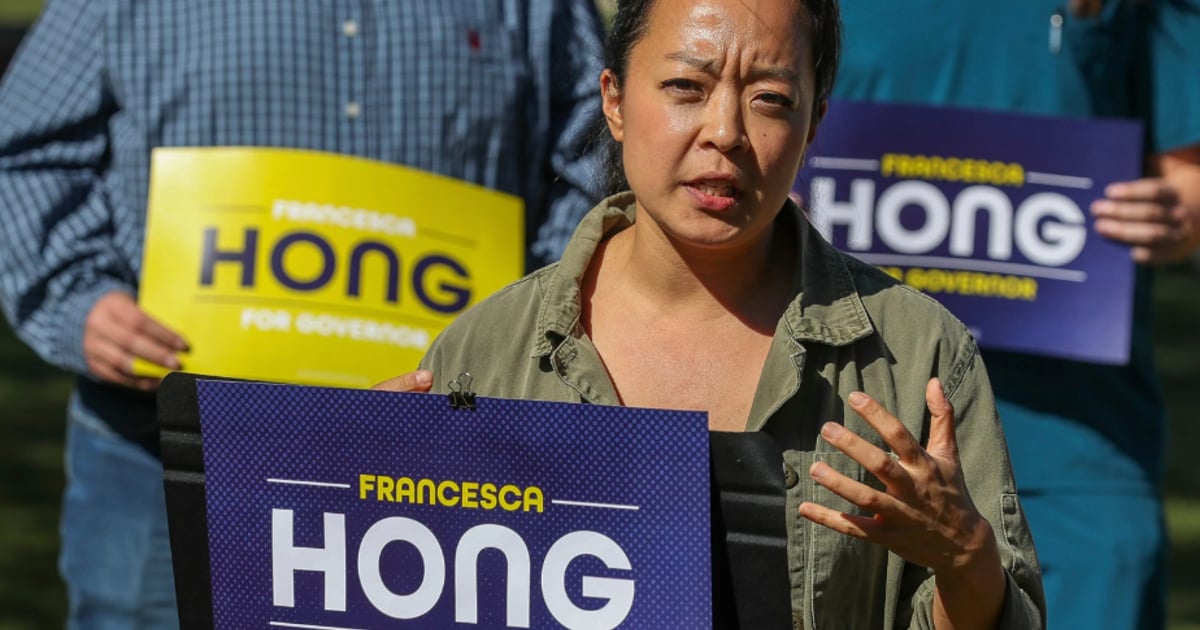
Francesca Hong, a DSA-backed candidate seeking the Democratic nomination for governor, recently offered a clear indication of how far left she is prepared to go on one of the country’s most divisive cultural issues. Hong is not merely a fringe activist with no realistic path to office. She is already an elected state lawmaker, and […]
Francesca Hong, a DSA-backed candidate seeking the Democratic nomination for governor, recently offered a clear indication of how far left she is prepared to go on one of the country’s most divisive cultural issues. Hong is not merely a fringe activist with no realistic path to office. She is already an elected state lawmaker, and she appears to have a genuine chance of winning her party’s nomination.
During a Sunday appearance on “Community Conversations with Brix Cider,” a podcast associated with the Southwest Wisconsin Area Progressives, Hong strongly defended the provision of so-called gender-affirming medical treatment for minors. She also criticized hospitals that have stopped offering such services, calling their decisions “cowardly.”
“This attack on our trans kids, especially, you know, to see what’s happening with healthcare — gender-affirming care, that is healthcare — coming down from our hospitals,” Hong said.
“It’s cowardly what’s happening, and it’s important that elected officials and folks with the platform speak up and speak out to ensure that all of our students feel safe, can be themselves, and know that they have a governor that’s in their corner.”
Hong was referring to decisions made in January by two major Wisconsin hospital systems, Children’s Wisconsin and UW Health University Hospital, to stop providing certain medical transition treatments to pediatric patients.
The hospitals’ decisions do not appear to have been driven primarily by a sudden change in their medical or ethical views. Wisconsin Public Radio reported that the changes followed an announcement from President Donald Trump’s administration threatening to withhold federal Medicaid and Medicare funding from institutions that continued providing such treatments to minors.
In other words, the hospitals were responding to financial and regulatory pressure from the federal government. Whatever one thinks of the policy itself, their decision was understandable from a practical standpoint. Hospitals depend heavily on federal funding, and losing access to Medicare or Medicaid money could have serious consequences for patients, employees, and the institutions as a whole.
Advertisement
Hong’s criticism therefore raises a broader issue. Trump won the 2024 presidential election, and elections have policy consequences. His administration used federal authority to change the incentives surrounding medical transition procedures for minors. The hospitals adjusted their policies in response.
Calling that response “cowardly” ignores the reality that medical systems must operate within the rules established by elected governments. Administrators may have personal objections to the policy, but they are also responsible for protecting the financial stability of their organizations.
What makes Hong’s position politically important is that she is not an irrelevant protest candidate. She represents part of Madison in the Wisconsin State Assembly and has developed a meaningful base of support within the Democratic Party.
According to reports about the crowded gubernatorial primary, Hong has performed well enough to be considered a serious contender. She also finished second in a straw poll conducted among delegates at the Wisconsin Democratic Party’s June convention.
That does not guarantee she will win the nomination, but it shows that her campaign has real support among party activists. Wisconsin is also a closely divided battleground state. Democrats currently hold the governor’s office, while Republicans control the state legislature. Trump carried Wisconsin in the 2024 presidential election, demonstrating again how competitive the state remains.
The debate over medical transition treatments for minors is likely to become a major issue if Hong advances. Critics argue that teenagers are not equipped to make decisions involving treatments that may produce permanent physical consequences. They point to puberty blockers, hormone treatments, and surgeries involving breasts or reproductive organs as procedures that deserve a far higher level of caution when minors are involved.
Adolescence is often marked by uncertainty, emotional instability, and changes in personal identity. From that perspective, making irreversible medical decisions based on feelings that may later change carries serious ethical risks.
Advertisement
Supporters of these treatments argue that they can reduce psychological distress and help young people who experience persistent gender dysphoria. However, even some major medical organizations have called for caution regarding surgical procedures for minors.
The American Medical Association and the American Society of Plastic Surgeons have generally supported delaying certain surgeries until adulthood. The American Academy of Pediatrics has taken a less categorical approach, maintaining that treatment decisions should be considered individually rather than governed by a universal rule.
The issue is therefore more complicated than Hong’s remarks suggest. Describing all restrictions as attacks on transgender children leaves little room for legitimate concerns about consent, medical uncertainty and the long-term consequences of treatment.
Hong’s campaign also reflects a larger political trend. The Democratic Socialists of America has made gains in several Democratic strongholds, supporting candidates who challenge the party’s traditional establishment. Victories and strong performances by DSA-aligned politicians in places such as New York City and Denver have demonstrated the organization’s growing influence.
Wisconsin’s Democratic primary, scheduled for Aug. 11, could become another test of that influence. Should Hong win the nomination, it would signal that positions once associated with the party’s activist left are moving closer to the Democratic mainstream.
Her comments about Wisconsin hospitals offer voters a revealing preview of the kind of governor she intends to be. They also show how sharply the Democratic Party’s position on youth gender medicine has shifted. The primary will determine whether Wisconsin Democrats are ready to follow that movement even further to the left.