Survival of the Richest: Hollywood's Broken Talent Pipeline
As the discussion of the new Youtube horror sensations continues, I thought it might be interesting to see what the current Hollywood talent pipeline has become, and why it’s so profoundly broken.
Contemporary prestige filmmaking is routed through elite institutional pipelines (top MFA programs + festival labs), which require significant socioeconomic advantage, select heavily for diversity, and shape who gets early visibility.
Those pipelines have a tendency to select among the already wealthy, who often present their films through budget figures and origin stories that omit substantial resources and institutional support.
I like to call this “poorface” - performing a hardscrabble origin you didn’t have. The problem becomes when actual poor people, who do not have huge amounts of resources, try to imitate the path of people who do poorface. Hollywood’s talent pipeline increasingly rewards narratives of marginalization while paying less attention to class, creating incentives for affluent artists to emphasize hardship and understate resources.
This essay is part exposé, part cultural critique, part film finance lesson, and a masterclass in Hollywood publicity.
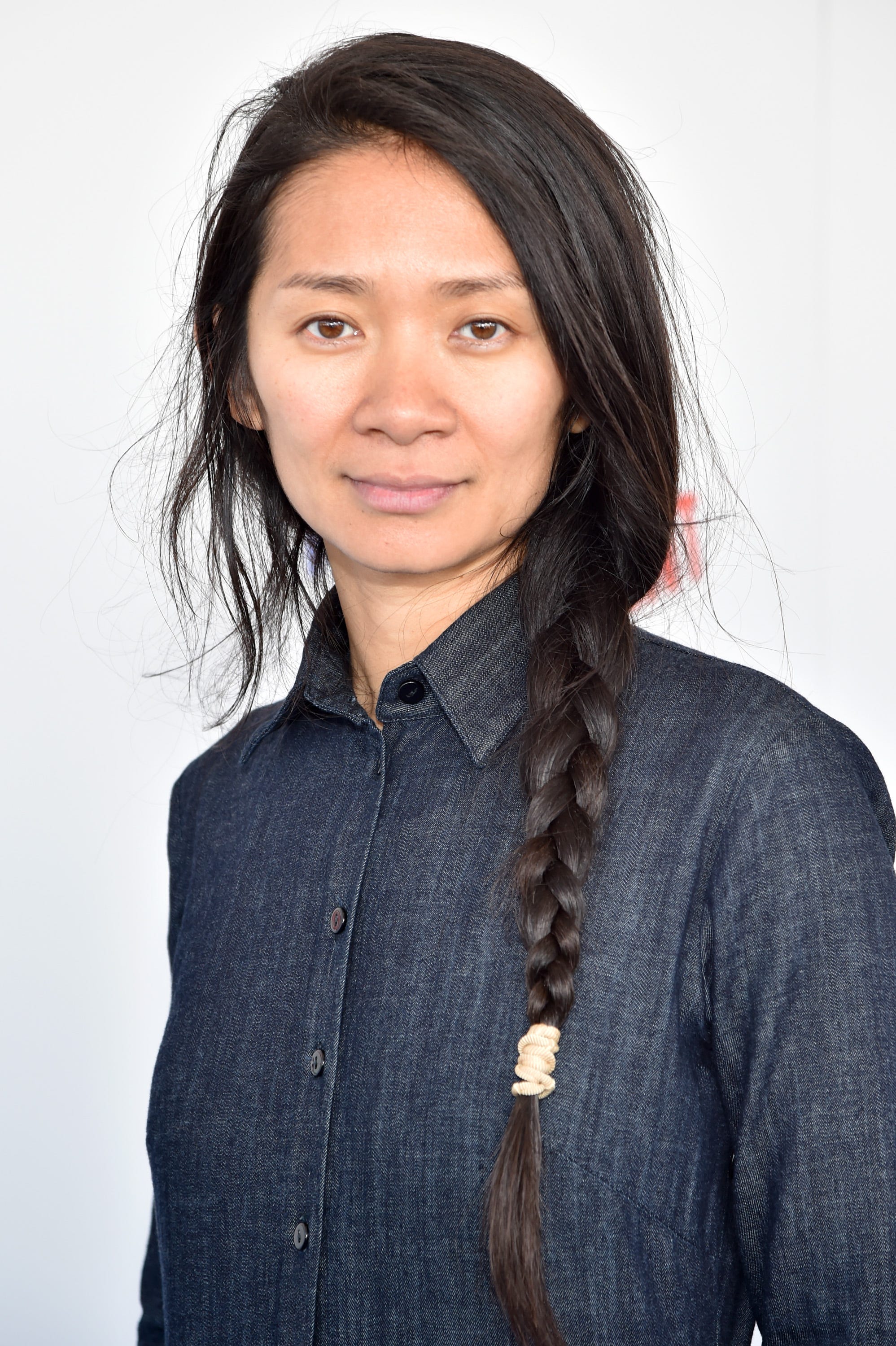 Chloé Zhao, recently on the Cannes Competition Jury, is, alongside Ryan Coogler, probably the greatest millennial success story of the new Hollywood.
So let’s look at how the pipeline works in 2026, and how much it cost, for Chloé Zhao, one of the most lauded and successful filmmakers of my generation. She has won the Oscar (the first woman of color to do so), Venice’s Golden Lion, and Toronto’s People’s Choice Award. Her films have screened at Cannes, twice, and she recently served on the competition jury.
In this post, I’m going to follow Chloé Zhao’s path to prominence, then calculate how much it would cost if you were to try and repeat it. Along the way, we’ll ask a key question:
What happens when aspiring filmmakers model themselves on financial narratives that are incomplete or misleading?
EducationChloé Zhao was born Zhao Ting in Beijing in 1982. She’s the only child of Zhao Yuji, a wealthy executive, who made his fortune first at a steel company. After amassing significant personal wealth, he moved on to real-estate development and equity investment. Song Dandan, her stepmother, is a well-known Chinese actress who was in various sitcoms and was recently described by the New Yorker as the Roseanne of China.
She claimed in the same recent New Yorker article that she did not grow up wealthy:
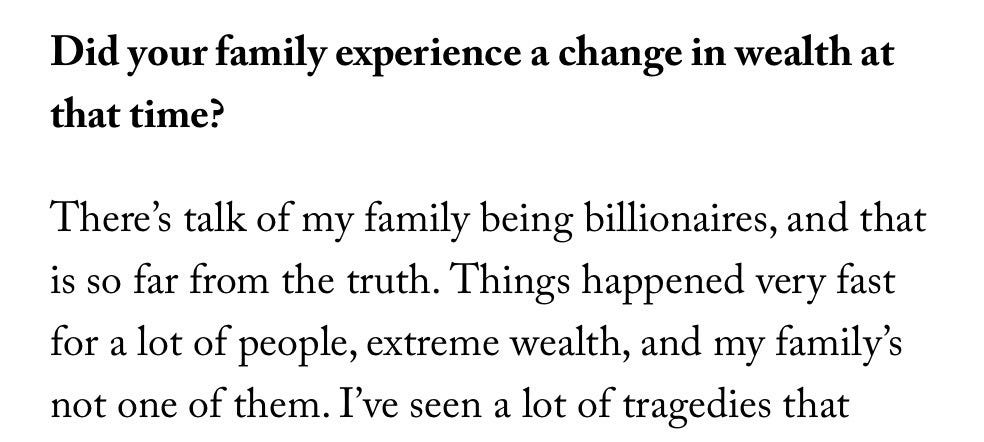
Later the interviewer presses on the family background, which garners pushback:
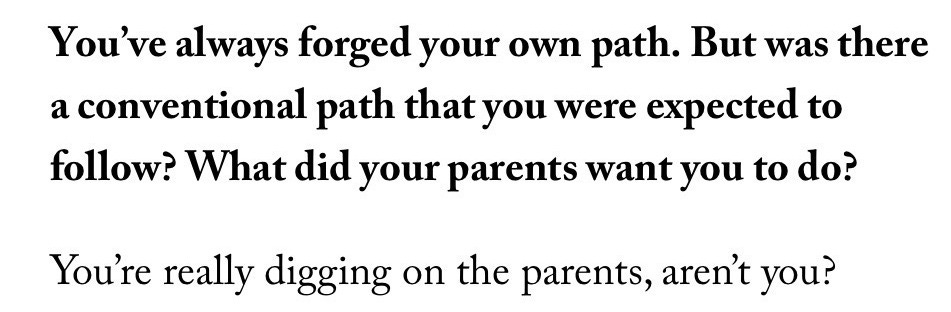
Family background is central to understanding the economic context of Zhao’s career, so it deserves close examination.
Growing up middle class seems a bit stretched. When she was 15, her parents sent her to Brighton College, a private boarding school in London, then, possibly to two years of public high school in Los Angeles.
Two years at Brighton college would currently cost £73,440 or $98,851 at today’s exchange rate. I’ll be generous and not include tuition inflation at any of her schools, and assume she only spent two years there.
Nota Bene: For the sake of simplicity, I’m not going to go into complex tuition and general inflation calculations to hit the exact numbers. It’s also highly possible that she got some sort of scholarships, although need-based seems unlikely. This number will be admittedly imperfect, but still informative.
Total Cost: $98,851.
She then did her undergraduate work at Mount Holyoke, one of the elite “seven sisters” colleges.
Mount Holyoke Tuition and Boarding for four years: $93,046 x4 = $372,184
Total Cost High School and Undergraduate: $471,035
This also of course doesn’t include any additional expenses, just tuition, room and board.
Afterwards she completed her MFA at New York University’s Tisch School of the Arts. Again without tuition inflation, this currently costs $107,748 a year. Let’s be really cheap and say her films only cost $10,000 a film and she made three.
NYU Film School Tuition: $107,748 x 3 = $323,244. + Student Film Prices: $30k.
NYU: $353,244
Total Cost High School, Undergraduate, and Grad School: $824,279.
So a little over three quarters of a million dollars in education right there.
But wait, we still have a lot of work to do before she wins the Oscar.
First Indie Feature: The Reported Budget and the Actual OneAfter making her short films, one of which premiered at Clermont-Ferrand and won a prize at the Palm Springs Shortsfest, Zhao then went on to the next step of the pipeline: the Sundance Screenwriters Lab, which she attended in 2012. The Sundance Film Festival has long pulled a significant portion of its selected filmmakers from the labs (14% of feature projects in 2026), which skew heavily towards diverse applicants from elite film schools.
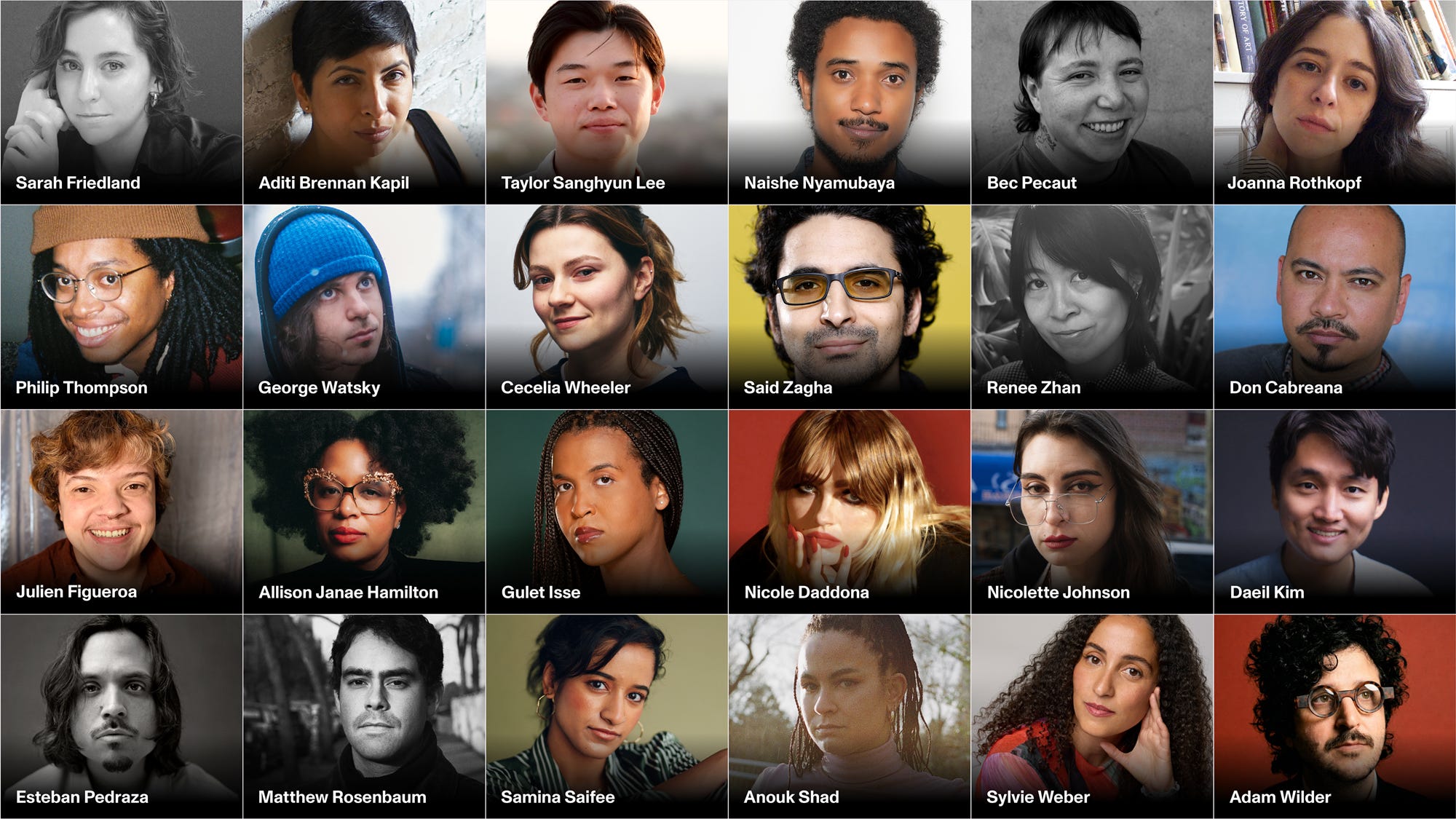 The most recent cohort of Sundance screenwriting fellows included 30% graduates from elite private schools.
Songs My Brothers Taught Me received NYU’s Columbus/Vague Production Grant of $100,000, which she received in 2011. Zhao stated in a Film Independent Interview in 2016 that the budget was $100,000.
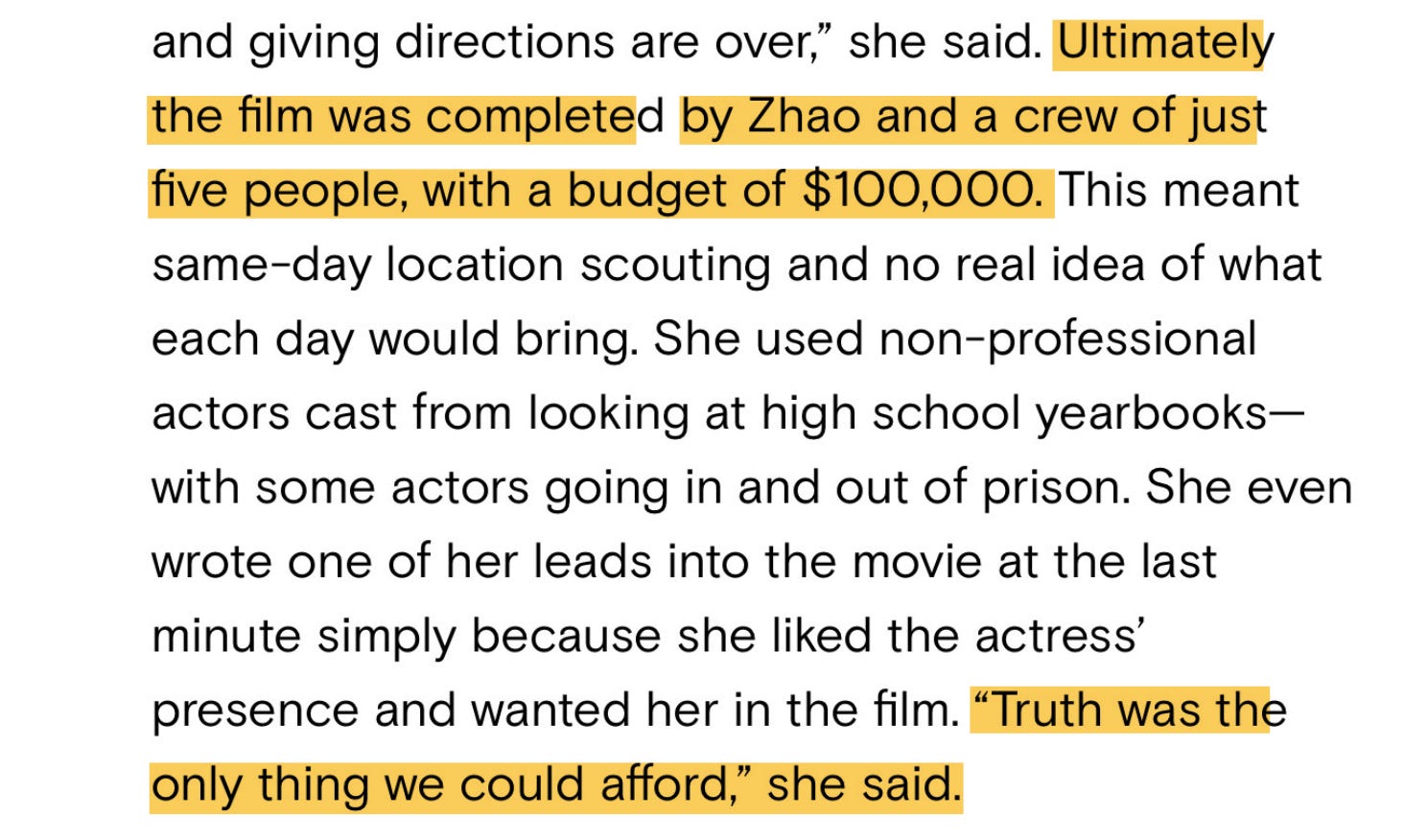
There are many, many problems to unveil in this narrative.
Filmmakers on lower budget, less commercial films are often incentivized to cite only portions of a project’s financing or production costs, creating budget figures that can be difficult to reconcile with the total resources that supported the film.
Lowering their films’ reported budgets gives them the aura of semi-mythical achievements, and sound amazing in the press. They do so through a variety of means, often by excluding postproduction, distribution, marketing, and their own cost of living.
The public narrative around these films often emphasizes hardship while understating the full network of grants, institutional support, and financial resources behind them. Zhao, from what I can find, has never mentioned a real day job in this period, which is very common among independent filmmakers early in their careers.
Songs My Brothers Taught me seems to have been shot in pieces over several years, with different levels of funding coming in, starting with the Columbus Vague Production Grant of $100,000. Signifiant additional funding has never been included in the film’s narrative, heightening its aura.
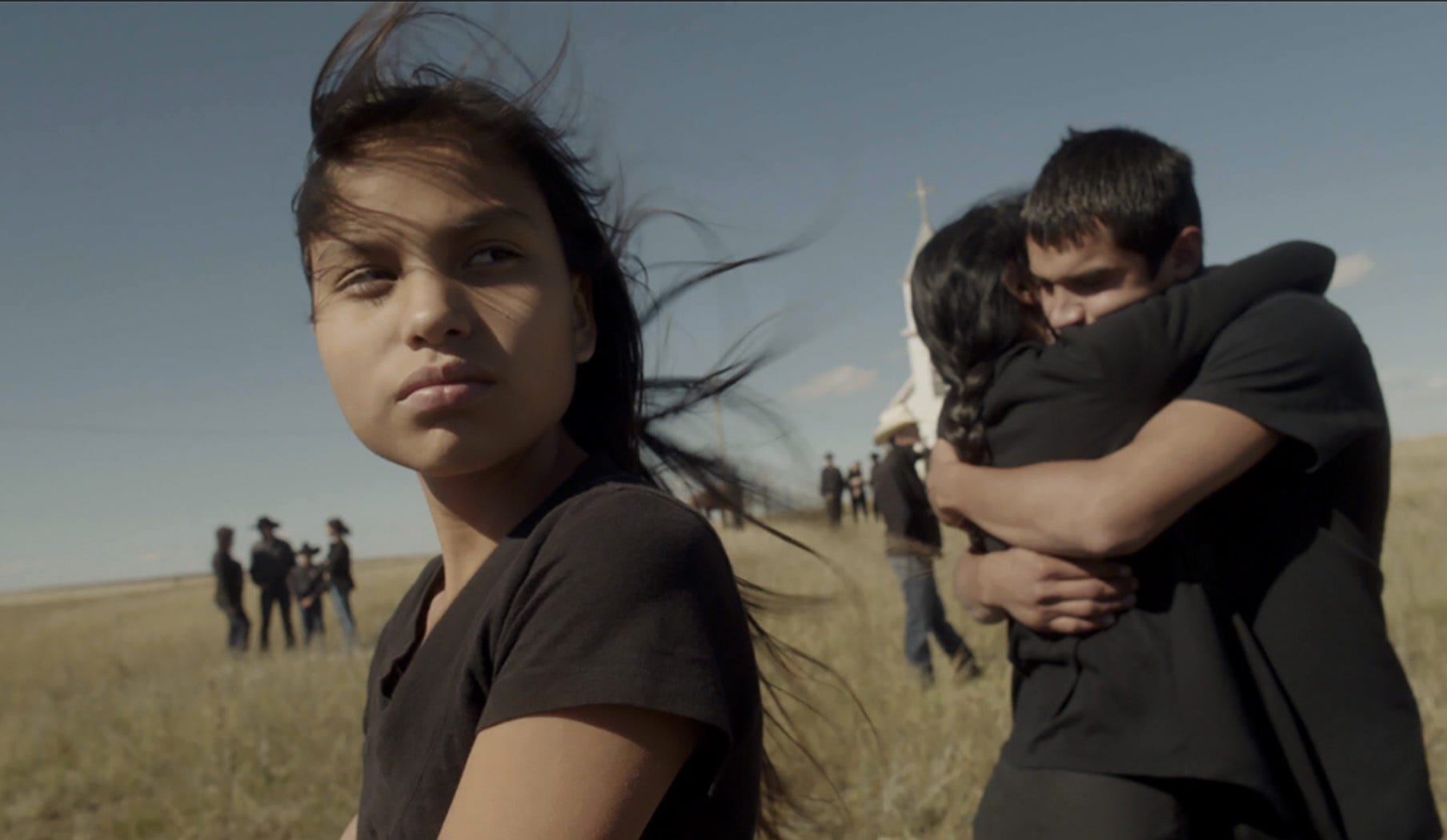 Songs My Brothers Taught Me cost much more than its reported $100k budget.
When people name numbers like $100k, at the very least they usually do not include postproduction. The film also has five listed executive producers, including Oscar winner Forest Whitaker (with a full producer credit), and Porsche Enthusiast Wang Zhao Chun.
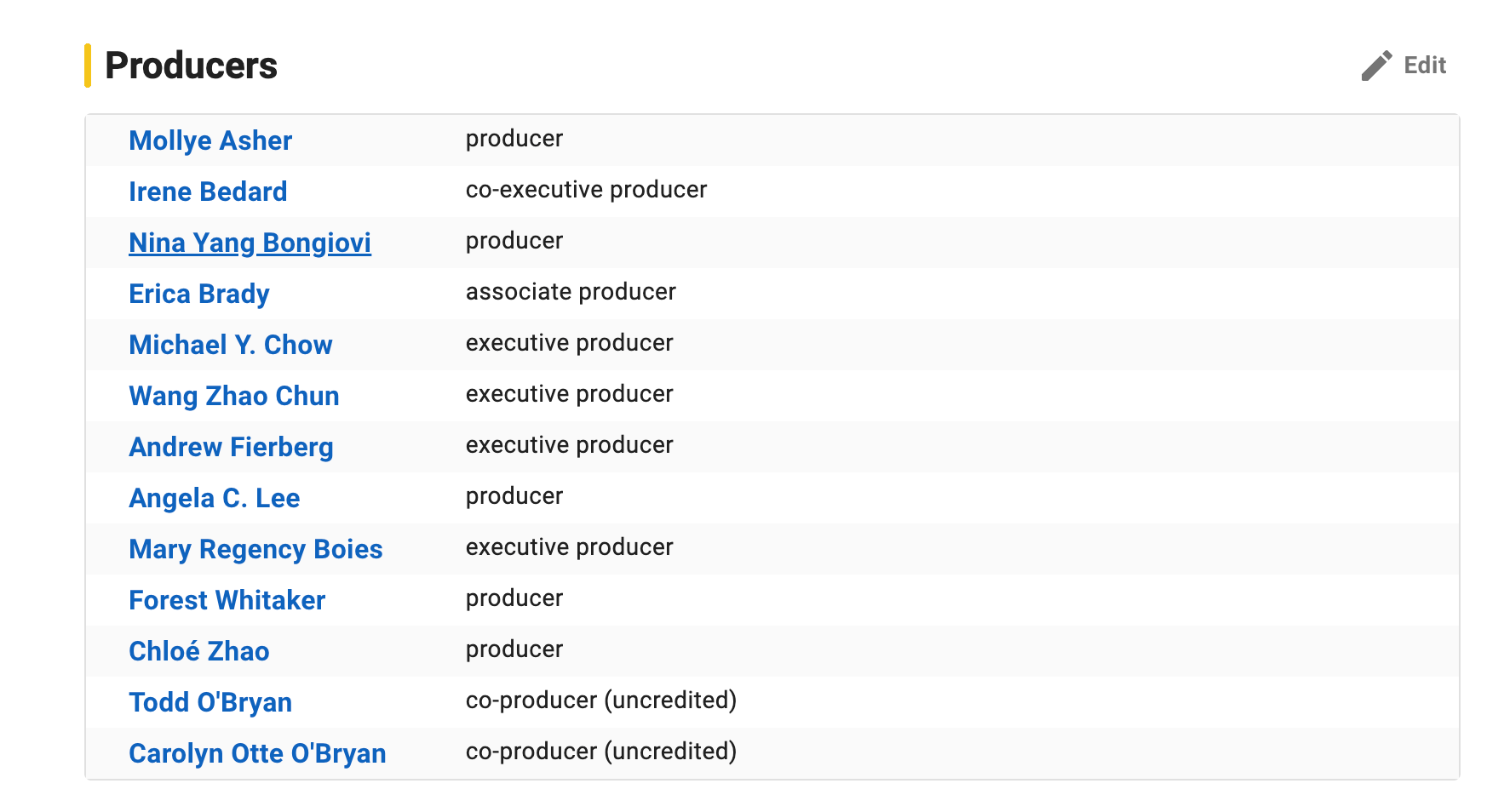 The credited producers on Songs My Brothers Taught Me.
 These executive producers were not running bait and tackle shops: Michael Chow (born Zhōu Yīnghuá) is a Chinese restauranteur born into a wealthy family who recently launched a film fund. Mary Regency Boies is an attorney whose husband David Boies is an iconic attorney who has represented clients including Harvey Weinstein, Theranos, and Al Gore in the contested 2000 presidential election. Andrew Fierberg is an indie producer.
Zhao again mentions generous individual support in another interview:
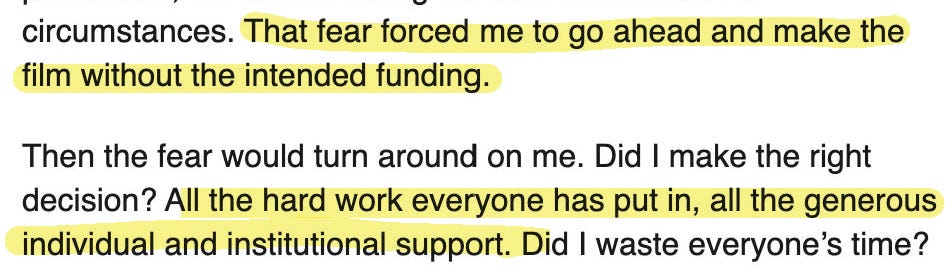
We can’t know for sure how much individual support the film had, but let’s untangle what we can find.
In Search of the Actual Budget:
There are obvious sources showing the film cost more than $100k: Songs My Brothers Taught Me received the San Francisco Film Society’s Rainin Grant in November 2014 for $60,000. Which means the budget was at least $160,000.
A 2021 Vulture Magazine Profile mentions she raised another $30,000 from investors:
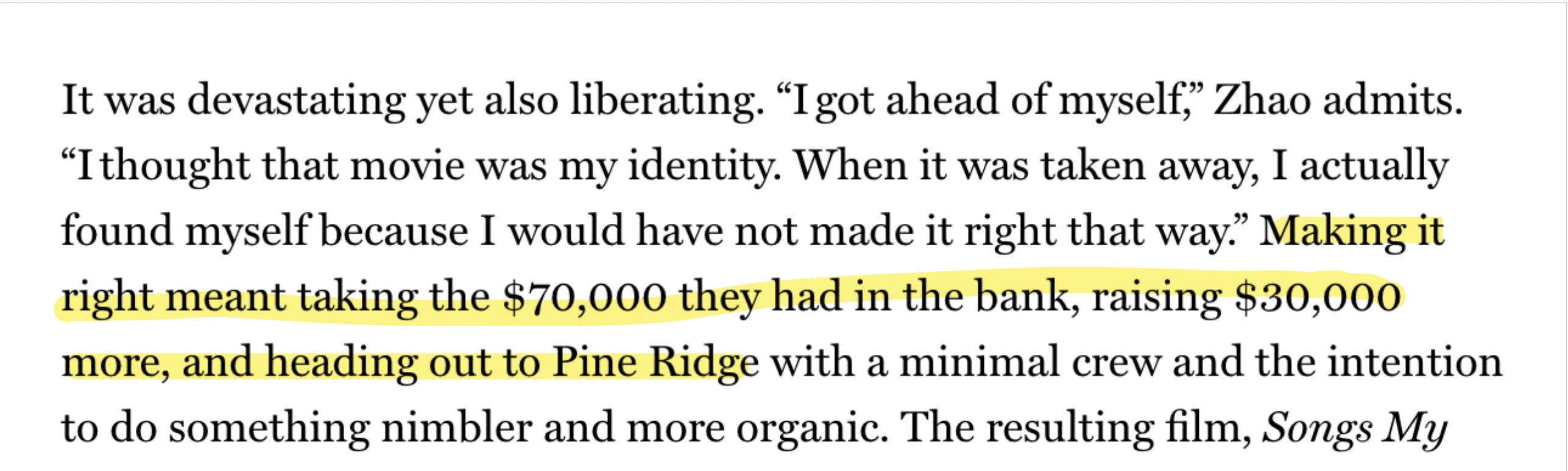
There’s that hundred thousand number again, straight from her. It seems unlikely that all of the executive producer credits were awarded without financial or other substantial support, though the exact contributions are not publicly documented. Since it’s explicitly referenced in this interview, and that sum only appears here, we can add at least that $30k.
The film’s NYU Page lists a half dozen funding and granting organizations, including Cinereach (a financier), the Time Warner foundation, and IFP.
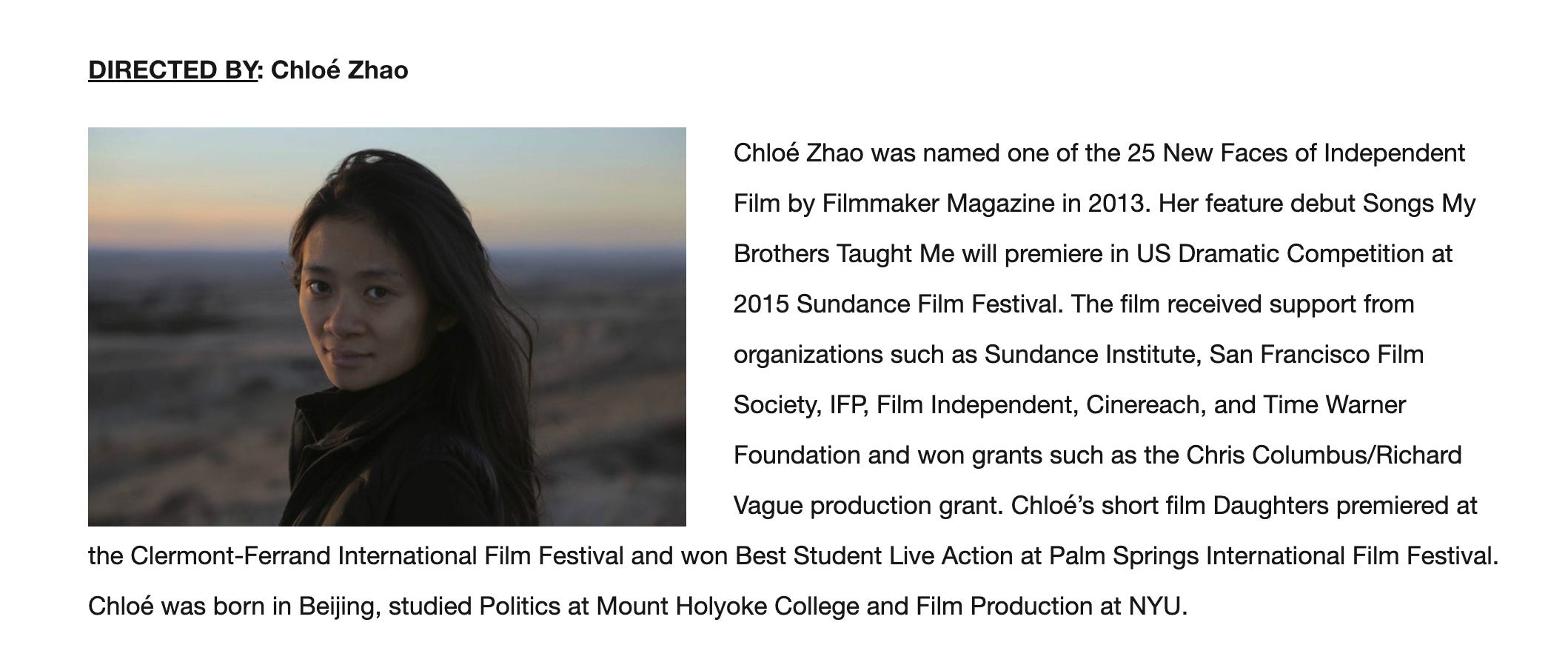
Cinereach lists its average grant as $41,000, so let’s use that as a rough metric for their contribution.
The film also did a Kickstarter in December 2014 for $84,549 (the one $10k donor got an associate producer credit, not executive). We’ll add that to the total.
The Time Warner Foundation Grant is $5,000 and only awarded to Sundance Lab Projects.
Film Independent supported the film with multiple grants and meetings at the Fast Track Financing Market. It also awarded the film a $10,000 Millennium Entertainment Grant.

Even stranger, the film’s wikipedia page, unsourced, lists the following section, which makes it sound like she had no money at all.

Strange how lack of funding was hurdle on this one, after receiving support from every major independent film institution in the country, while also having very wealthy people and an Academy Award winning actor among your producers. She was also named one of Filmmaker Magazine’s 25 Faces of Independent Film, which brings no money, but a fair amount of exposure.
So, if we were to give reasonable to low estimates of all the different grants and support, the $30,000 investment she commented on, the $60,000 from SFFilm, plus the $100,000 from NYU, plus the $41,000 average Cinereach grant, plus $5,000 from Time Warner, plus the $84,549 kickstarter, and the $10,000 Millenium Entertainment grant, that would put the film at a minimum of $330,549, or more than triple what it claims. And again, that’s without the credited Porsche enthusiasts, restaurant owners, Forest Whitaker’s company, and the massive attorneys being credited as EPs and not putting any money in.
Total Education Cost: $824,279.
First feature film: $330,549 ($470,000 inflation adjusted).
Total: $1,154,828
I want to emphasize that creatively driving your budget down is common practice in the indie world, and not at all limited to Zhao. But it’s important to look at the actual numbers as much as possible, so people understand how this works.
What we are slowly seeing is a narrative emerge that is more based in a great sense of marketing than any real reality. This was not a $5,000 movie. But all the interviews sure make it sound like one. This no doubt makes the people helping the film, the independent film organizations, the festivals, feel good about their decision.
Songs My Brothers Taught Me played Cannes Directors’ Fortnight, as well as Sundance Competition. It was nominated for three Indie Spirit Awards (run by Film Independent, the same organization that gave her grants and labs), as well.
Second Indie Feature: The Reported and the Actual BudgetWhile Songs My Brothers Taught Me had a good indie prestige run, it was not a box office success, earning just $146,937 theatrically. So Zhao had to make, and self finance, a second feature film, The Rider. For this movie, which she claims cost $80,000, she put up the money herself.
Now how does someone who was broke after a three quarter of a million dollar education and making a feature film that didn’t perform at the box office, finance a film? She claimed in an interview that she and her boyfriend financed the film with credit cards:

This Substack is reader-supported.
It’s unlikely we will ever know the actual budget of the Rider. But it’s not $80,000, which was until recently listed on the Wikipedia. Zhao framed it in a No Film School interview as an act of feminism:
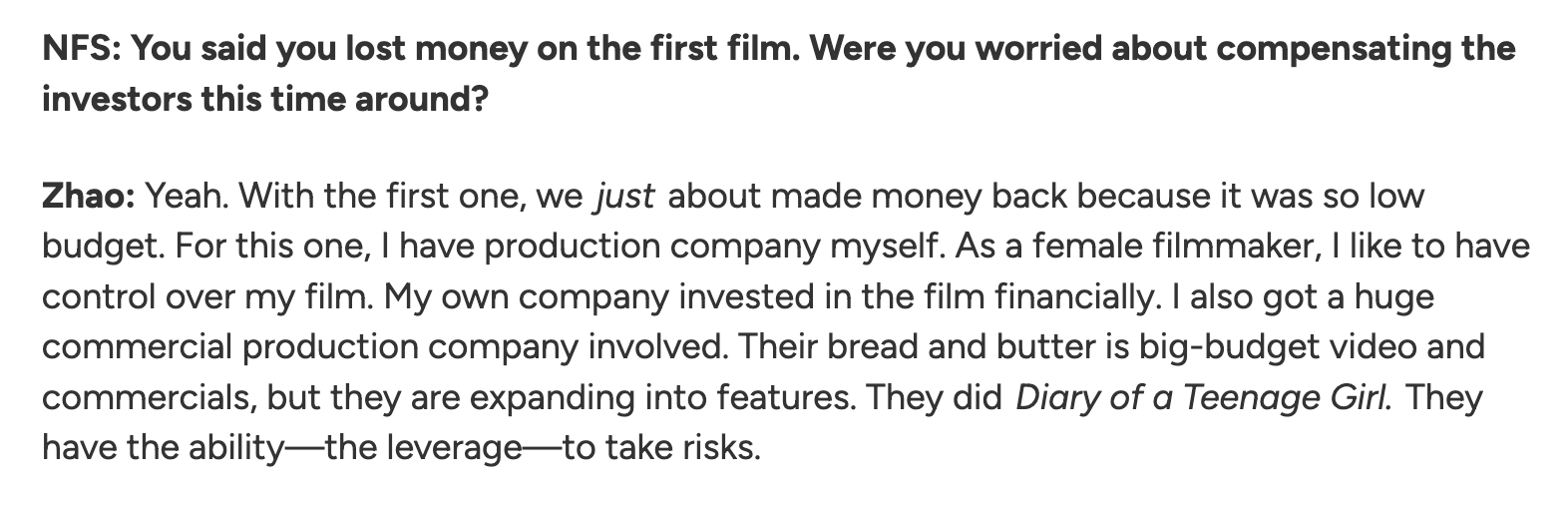 Implying that she almost recouped is another subtle nod to the $100k figure.
But did she invest in the movie through her company Highwayman Films or put it on credit cards? Which was it?
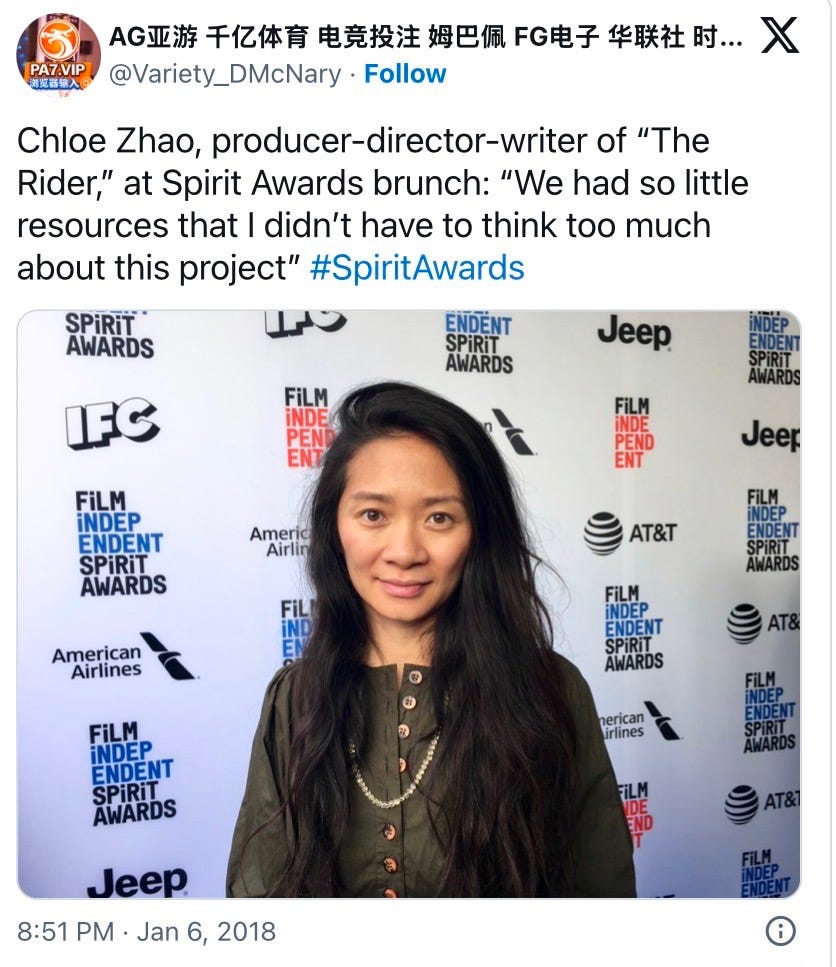
Remember, the film’s wikipedia page lists the budget for Songs My Brothers Taught Me as $100,000, which would only be the NYU grant, but somehow it comes up in the interview that she couldn’t pay back her investors (you don’t need to pay back grants). From the same interview.
 The various accounts are difficult to reconcile. In some interviews Zhao describes the film as being financed through grants, while in others she refers to investors whose money was not recouped.
Do male filmmakers not like to have control over their movies? Is that why she had to invest? Or was it because she’s rich? Who has $80,000 in credit anyways?
Where did her own company’s money come from? Well, there’s one obvious answer in the IMDB producers section:
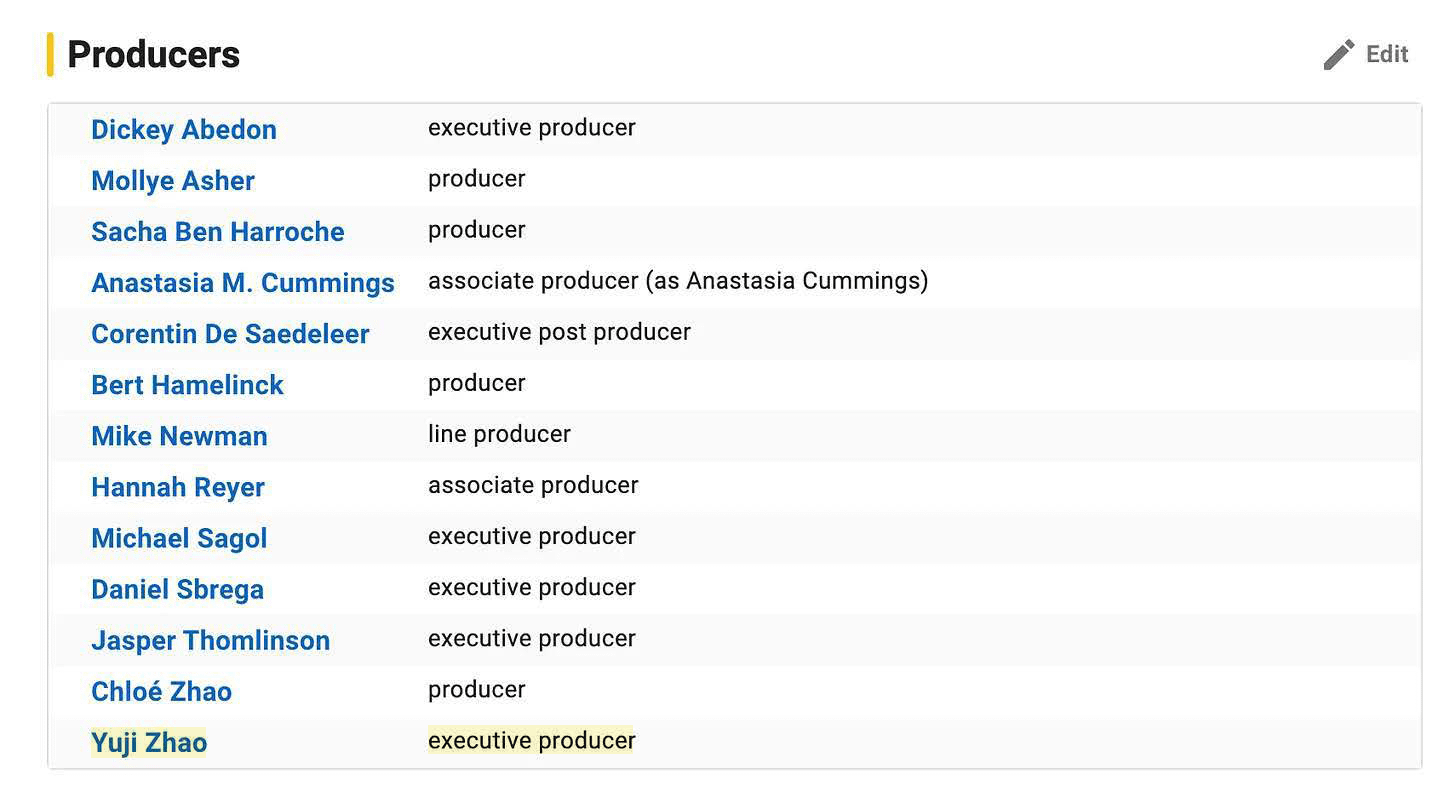
Given Zhao’s family wealth and her father’s executive producer credit, the public narrative that The Rider was financed through personal hardship and credit cards raises obvious questions.
It also sits awkwardly against the story Zhao tells about herself. She has long called herself an outsider, and on the BBC earlier this year she described her start as someone who “wasn’t given the mainstream opportunity,” who had to walk away from the existing house and “build a foundation” without its infrastructure.
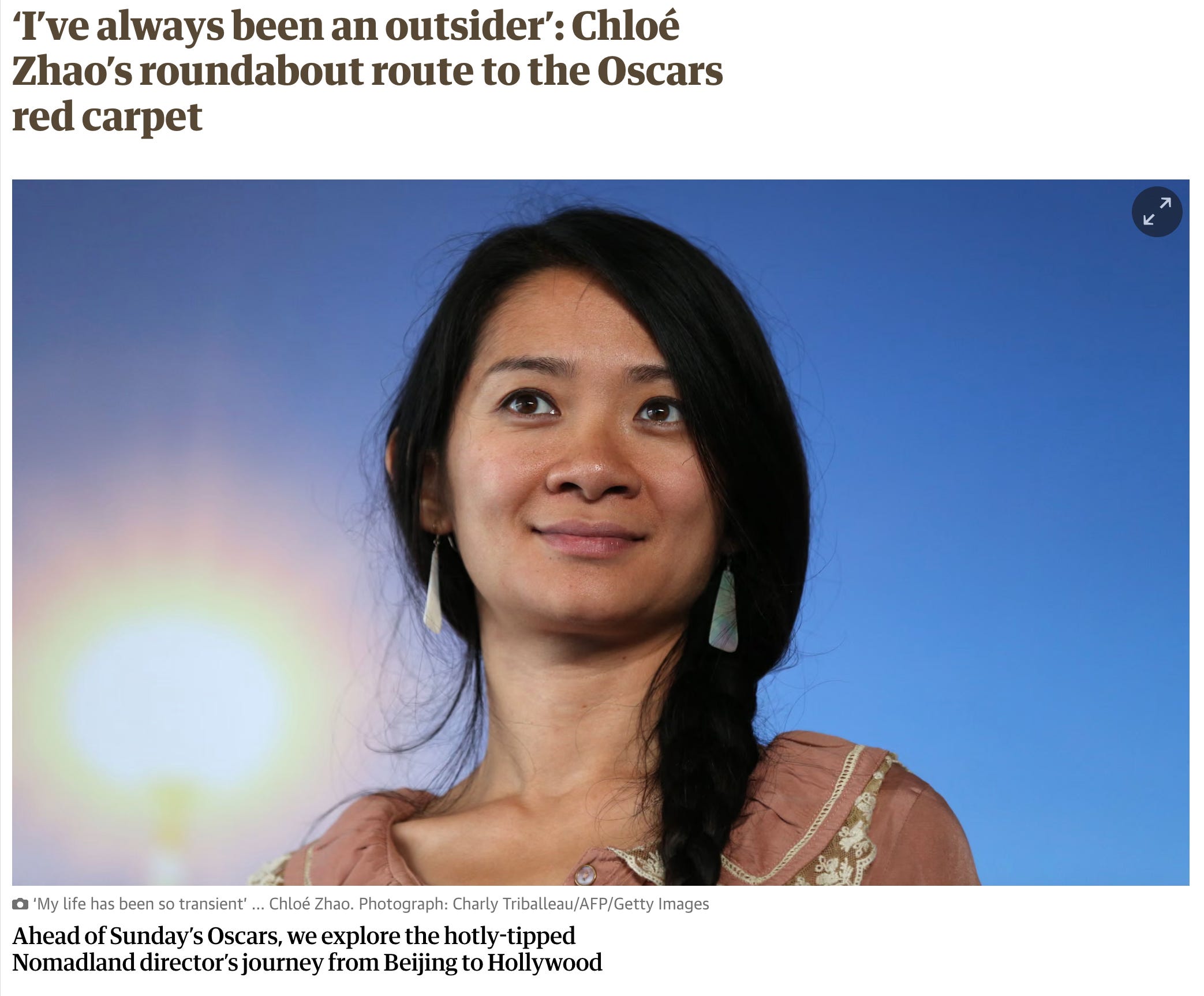
It’s a stirring self-portrait. It’s also the self-portrait of a woman whose stepmother was “the Roseanne of China,” whose father was vice Chairman of one of China’s largest steel companies, and is credited as an executive producer on The Rider - the second of the two films she says she made “without the industry’s help,” but was coming off of NYU, Sundance Competition, Cannes, with a film produced by an Oscar-Winning Actor, that received the support of every major American independent film institution, as well as $330,000 in grants.
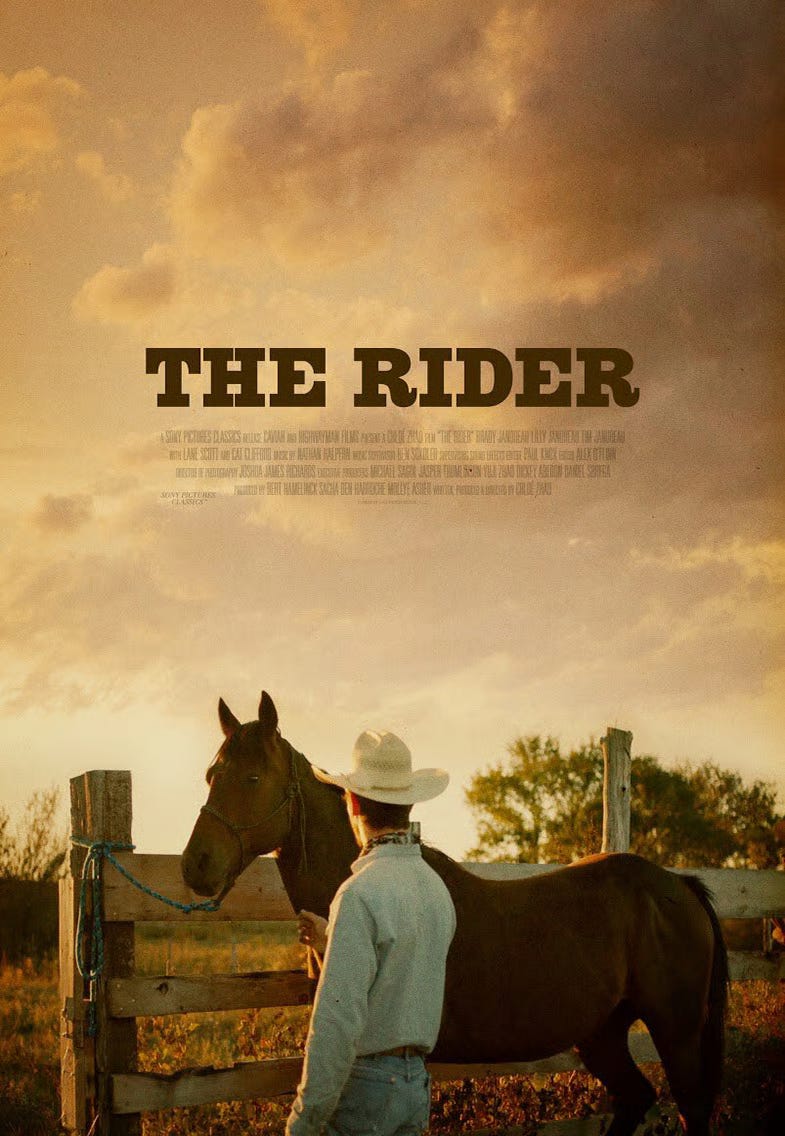
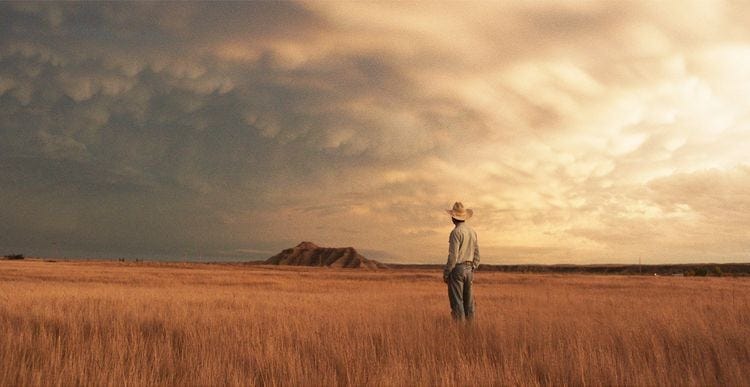 The Rider, Zhao’s second feature, looks gorgeous and expensive.
There are claims everywhere that the film cost $80,000, the first thing to come up on a google search. That was perhaps the production budget, but not what it cost to finish the entire film.
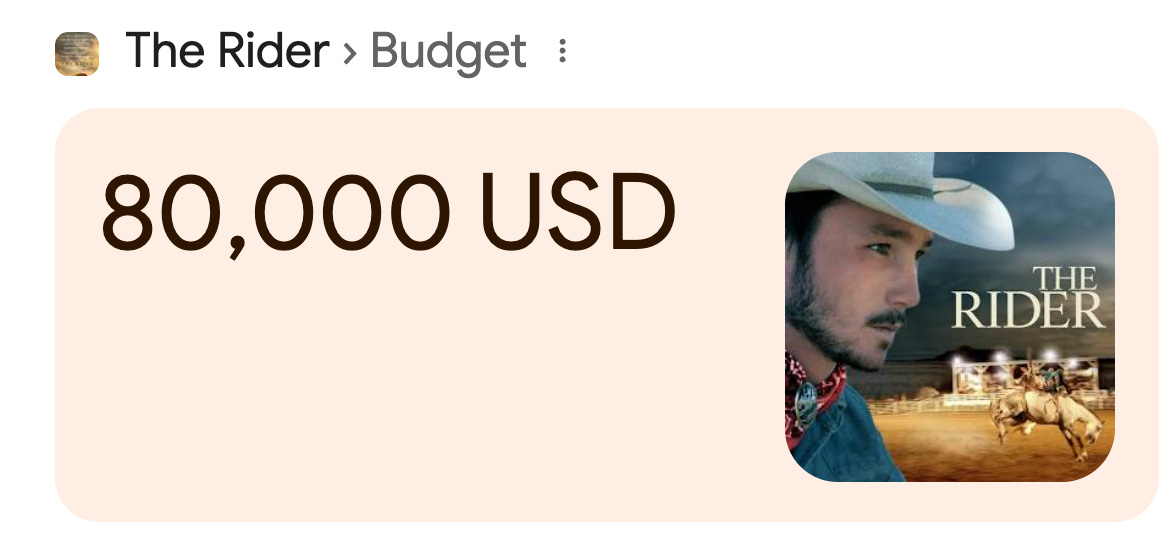 At the time of writing, a simple google search yielded a budget of $80,000, which was likely not the film’s entire budget.
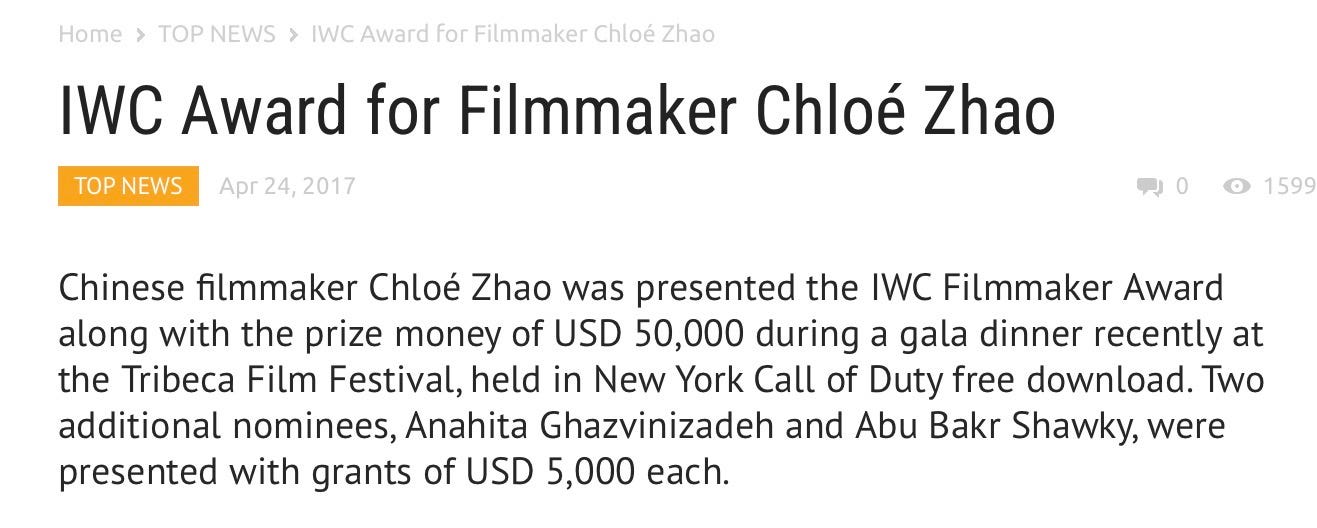
And it wasn’t. Zhao was awarded a $50,000 grant from IWC and Tribeca.
Her other executive producers run Caviar Pictures and Park Pictures, both huge commercial production companies, both financiers of many, many movies. Again, I cannot confirm how much money these companies put into the Rider, but I doubt they got an EP credit for nothing.
Caviar did at least part of their postproduction through their Belgian post house Loom, listed in the credits. It talks about this sort of financing on its website:
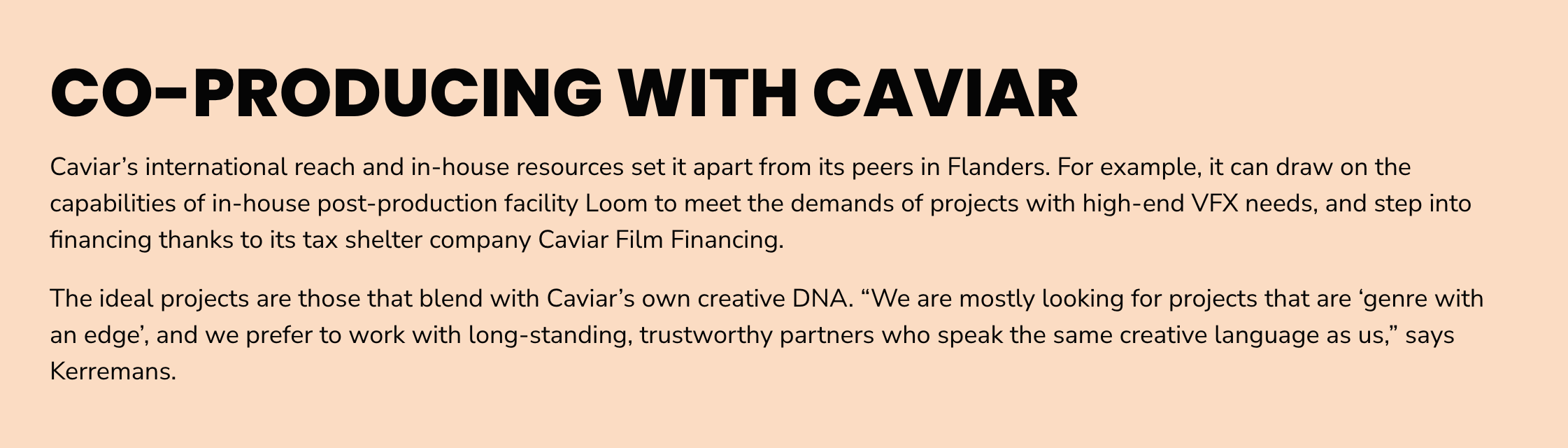
While I can’t find the exact funding numbers, it’s very unlikely the film only cost $130k. The $50k grant probably got them through editing. It was cheaper than Songs, because it didn’t have all the granting support.
It had to cost more, because in order to use the Belgian tax shelter, Caviar (or their investors) had to invest money in order to get the tax credit. But without a budget in front of us, we’ll likely never know how much they actually put in. The potential use of the Belgian tax shelter (why else would you do post on an American movie at highly inflated European prices) implies additional investment beyond the publicly cited production budget, though the exact amount is not publicly available. Belgium has the highest taxes in Europe, which is no doubt part of why this system exists.
Portions of post were done in the United States, and it seems unlikely those very established artists were not paid (try and get a colorist or sound person, especially an established one, to work for free and see what happens). Park Pictures probably paid for one or the other of these, Caviar covered the rest.
If this was done entirely in the US, it would likely be around $100k (which is cheaper than Europe because the money is private and not inflated public money). If we put it altogether, my guess for the film’s actual budget, all in, is around $250k before festivals and other related costs.
Still small, but once again 3x the quoted $80k.
Without verification though, we can’t add those additional post expenses.
At the very least, we can add the $50,000 grant.
Conservative Reconstruction:
Total Education Cost: $824,279.
First feature film: $330,549
Second Feature Film: $130,000
The Rider’s ReleaseBut how much did Zhao get back from the Rider? It was a success.
The Rider premiered at the Cannes Film Festival’s Directors’ Fortnight section, where it was acquired by Sony Pictures Classics. It was nominated for four Indie Spirit Awards and a Gotham award, and won the Best Feature Prize at the Gotham awards (another one of the organizations that supported her early on).
The Rider was featured on multiple top ten lists for the best movies of the year. It’s a feat for such a small movie, and she clearly worked incredibly hard on it. That someone was forced to go to such extreme lengths is obviously also a commentary on the brutality of independent film economics, even in a more favorable era.
To show just how brutal small independent films really are economically, let’s try and estimate the net profit to the producers, and to the distributor, SPC.
The deal price was undisclosed, but let’s take a rough guess of $1m.
$1,000,000 acquisition price.
minus $80,000 initial investment (the grant is nonrepayable).
minus let’s say $100,000 in deferred postproduction fees.
That leaves $820,000, which is still a 4.5x ROI on the cash and deferred post fees, pretty good, even though this needs to be divided by multiple people who worked over several years for little or no pay.
There are four full producers on the rider, so for the sake of simplicity, let’s just divide it by four; that would give each of them $205,000. Perhaps Zhao got more by deferring certain fees; directing, writing etc.
$205,000 over likely two years of work, if not more, is $102,500 a year.
A decent salary, that of a mid level corporate manager perhaps, but that’s with a wildly successful, best case outcome.
How did it do for Sony?
The Rider grossed $4.2m at the worldwide box office, which is quite good for a movie of its size. Compare it to the recent crop of Sundance Competition entries and it’d be up there.
We still need to subtract exhibitor fees, marketing, and the acquisition cost.
Minus $2.1m Exhibitor fees (50%)
That leaves $2.1m, with no Prints and Advertising Spend.
This got up to about 224 theaters, so let’s take a low end estimate here of $250,000 for a prestige release with awards.
We still have to subtract the $1m acquisition fee. Which puts us at…
+$850k profit.
So this film showed a small profit for the distributor.
To Zhao’s credit, can you see why the economics of this can only really attract a certain demographic? Even with all that success, it’s basically a modest profit (in this admittedly hypothetical situation).
Summing it UpSince the Rider was Zhao’s investment and it made money, it’s only fair to take it back off her total costs:
Total Education Cost: $824,279.
First feature film: $330,549
Second Feature Film: $130,000
Second Feature film profit: $205,000
Conservative Estimated Total: approximately $1.1–1.2 million
This is a highly conservative estimate of the amount of money necessary to prime Zhao for Nomadland, her Oscar-winning breakthrough, which I’ll discuss in another essay.
We can obviously nitpick these to death; remove the non graduate education expenses, etc. But it’s still a crazy number, especially coming off of a once in a generation success story. And this is almost a decade ago, when the economics were better. The conclusion is inescapable; these kinds of movies are a fine art, no different from the government funded ones in Europe, except a lot of them are basically self-funded.
Let’s also remember this includes no food, clothes or any basic needs. It’s raw tuition and movie expenses. It also doesn’t include dozens, if not hundreds, of submission fees to these organizations. No normal person could have actually lived on this, for five years or more, in New York, one of the most expensive cities in the world, but it’s outside the realm of this post to speculate on basic necessities, which would have added significantly to these numbers.
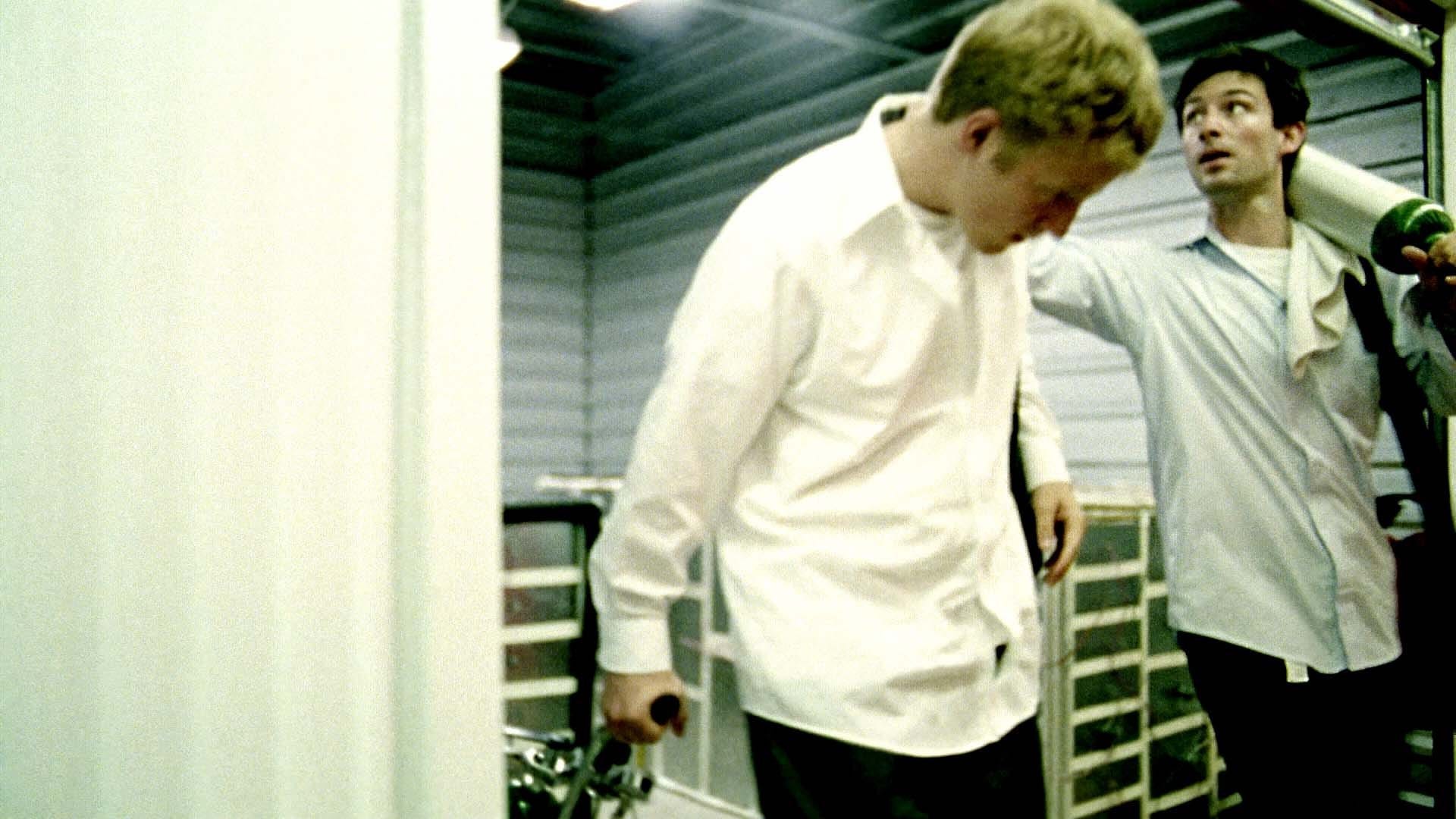 Shane Carruth’s Primer, which won Sundance, looks like it cost $8k.
 Look, two early sub $1m features is not uncommon, but it’s not extreme poverty either, at least by indie standards. Shane Carruth famously made Primer, which won Sundance, for $8k. Watch the movie, it looks like it. Same with Following, Christopher Nolan’s debut feature, which he made for £5k on weekends while working a full time job. Kevin Smith famously put Clerks on $25k of credit cards. Those movies are great, but they look cheap as hell.
Those three films combined cost less than the postproduction grant on the Rider (not inflation adjusted).
Particularly hard to square is Zhao's repeated emphasis that she didn't come from wealth, like in this interview with the Playlist:
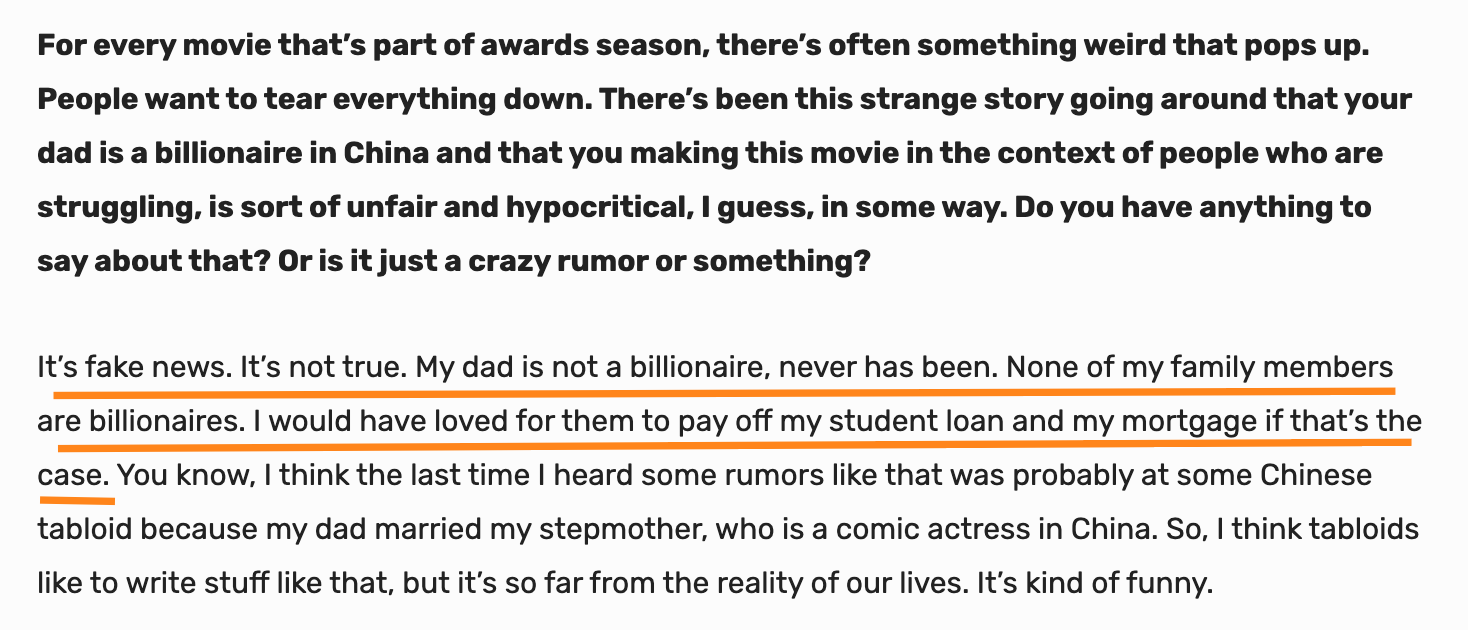
How can someone who had $80,000 sitting around (in credit cards or otherwise) to finance her own second highly-risky feature film, after getting an eight hundred thousand dollar education and making a first feature for four years that made no money, while living in New York, also somehow have student loans and a mortgage? Especially with a father listed as an executive producer on her movie?
It’s a bit of a stretch.
The brilliant thing about this rhetorical tactic is, stating that he’s not a billionaire makes any sort of discussion of privilege evaporate. There is a massive spectrum of wealth between “not a billionaire” and “middle class.”
You can see these take a tremendous amount of work, please consider becoming a free or paid subscriber if you enjoy it.
The NYU/Sundance PipelineIf you need over a million dollars to break into an industry, obviously, at some point, only the children of hyper-elites are going to be able to afford it.
I want to repeat that Zhao is certainly not alone in this; the budget numbers presented for low budget American films are almost always pure fantasy. But Zhao represents the pinnacle of the progressive American film system; one carefully fenced in by elite, extremely expensive film schools, talent programs, and festivals.
Charles Tilly framed opportunity hoarding as one mechanism of durable class inequality. It occurs when privileged social groups control access to community resources and prevent underprivileged groups from utilizing important resources. In the Hollywood of the 2010s and 2020s especially, these elite schools served as a de facto gateway to the most important opportunity available to a young filmmaker; major festivals and their associated talent development and funding networks. 14% of 2026 Sundance films come from the labs, further narrowing any non blue blood.
Kim Yutani, programming director of Sundance, said as much herself in a 2019 interview when she got the job:
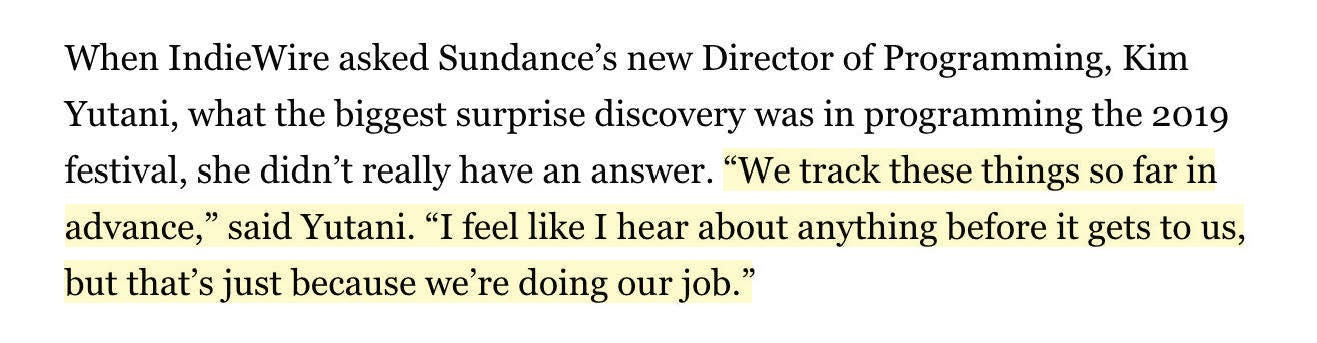
These labs and grants are what she’s talking about, outside of alumni, established producers and other festivals, maybe a breakout online short. That is how things get to them, not open submissions. Open submissions are mostly a source of funding and, honestly, grief to festivals. This means that when you submit to the lab, as an emerging filmmaker, in some large sense, you are already submitting to Sundance.
People who do not have these kinds of backgrounds desperately need to understand how these things work, because you do not want to bankrupt, or even worse, heavily in-debt yourself chasing a career path that is actually fueled by undisclosed family and institutional support.
The Sundance Film Festival, arguably the most important American venue for discovering new filmmaking talent, regularly chooses a majority of its films from the alumni of just a handful of private film schools: New York University, Columbia, USC and AFI. Throw in a handful of others and you have the vast majority of the all-too-often wealthy filmmaking talent programmed by major festivals in the United States.
1,676 US feature length films were submitted to Sundance in 2026. Let’s say half, or 838, are fiction (it’s probably less as docs are cheaper to make). Somehow, from those 838 submitted American feature films, 5 films in competition at the 2026 Sundance Film Festival were directed or codirected by NYU Alums. Throw in Columbia and AFI, and 80% of the films came from just three, extremely expensive private film schools. Add UNC, a public school, and you have the whole competition, outside of one international co-director.
2026 Sundance Narrative Competition Filmmakers:
Stephanie Ahn - NYU
Rachel N. Lambert - NYU
Hossein Keshavarz & Maryam Ataei - Codirectors / Columbia / International MFA
Josef Kubota Wladyka - NYU
Ramzi Bashour - NYU
Beth De Araujo - AFI
Giselle Bonilla - AFI
NB Mager - UNC
Liz Sargent - UNC
Adam Meeks - NYU
This trend of 30-50% of Sundance Competition being NYU alums has continued since 2023:
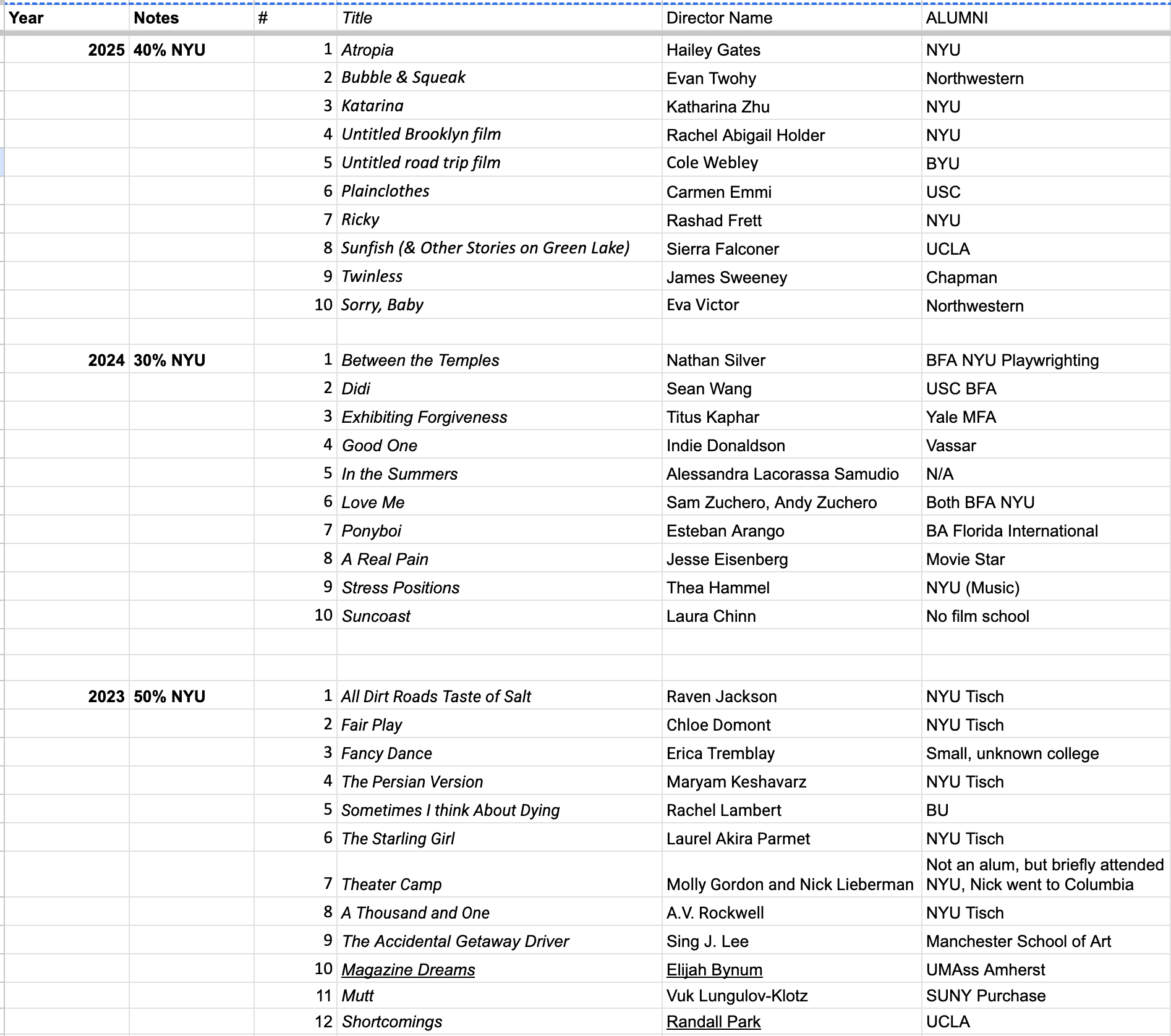 The directors of the 2023-2025 Sundance Film Festival and their educational background.
Even if NYU alumni represented an extraordinarily high 10% of submissions, they would still have been selected at approximately nine times the rate of everyone else.
The evidence suggests that graduates of a small number of elite institutions enjoy a substantial structural advantage in reaching the upper tiers of American independent film and, eventually, Hollywood.
The only logical conclusion would be that the alumni of elite private schools make films that are dramatically better than those of their non-elite, or non-film school attending peers. Every. Single. Year.
But that is a baffling logical proposition, one that has troubling ramifications for American society. It raises a host of questions, the most important of which is: what happens in a society where cinematic honors and privileges are solely in the hands of the wealthy?
The New ModelSo where does this leave Curry Barker and the Youtubers?
Barker was born and raised in Alabama. His father Jeff Barker worked in tv broadcasting, psychiatric nursing, and as an amateur screenwriter.
Yes, it’s unfair to compare horror and prestige, but my god: Curry Barker’s first feature film Milk & Serial cost $800. That’s likely about as much as Zhao was paying for one week’s tuition at NYU. He did attend the New York Film Academy in Los Angeles for undergrad, but no grad school, and no London boarding schools.
Still, NYFA wasn’t exactly cheap. Tuition for four years is estimated at around $150,000. I didn’t include living expenses for Zhao, so I won’t for him either. I’ll add the same amount for student films: $30k.
Education: $180,000
First Feature: $800
Second Feature: Not self financed.
Total Cost: $180,800
 Curry Barker took a cheaper path to industry prominence.
Life, in many ways, is a series of responses to incentives. Zhao knew that she needed the support of the elite tastemakers, so she created a narrative that fit their tastes. The problem with this, of course, is that the audience for movies is also normal people, not just elite tastemakers.
Barker, perhaps sensing the tidal shift of the 2010s, perhaps just looking for a cheap way in, started making youtube comedy sketches and short films and uploading them onto youtube. Barker and others used youtube as a startup garage, iterating and interacting with audiences, the people they would ultimately earn their living from. While Zhao’s early audience were the selection committees at prestige festivals and elite institutions, Barker’s were the actual general audience. It seems to make a lot more sense to learn to make movies from the actual audience rather than elite gatekeepers, at least from a financial or career sustainability standpoint.
Barker’s second, breakout feature Obsession, cost $750k. I’ve written about the youtubers elsewhere, so I’m not going to belabor it here, but the movie has already made over $200m, and seems primed to go to $250m. It has already outgrossed the entire 68 films in the 2020-2025 Sundance competition section at the box office combined, including their streaming acquisition prices.
One. Movie.
One might begin to question if creating an incentive structure designed to appease the demands of elite tastemakers instead of popular audiences is a good business strategy, a subject I’ve visited elsewhere.
Barker too is an obvious outlier. The point is not that his path is typical, but that it demonstrates an alternative route that bypasses much of the institutional pipeline and its associated costs, and may involve acquiring skills that are far more economically valuable than those of the current indie film ecosystem. And, if money and audiences are your ultimate goal, well, the proof is in the pudding.
The Problem of PoorfaceWhere does this leave us for the NYU Kids?
Honestly, I think rich people are fine. They’re the main source of interesting artistic movies in the United States, because they’re the only ones truly able to take the massive financial risks they require. Zhao’s investors were likely not materially harmed by the loss of their money on her first movie.
Researching this over and over again made me realize just how crazy indie film economics really are, and how, even with major institutional support, the odds of making even a lower middle class living at it are now basically nonexistent.
But this level of downplaying a privileged background is tough. There’s a version of this where Zhao plays up her hard work, which everyone has to do, without claiming extreme poverty, or severely deflating her budgets. Her achievements are still impressive without the poverty narrative, though perhaps not as good from a publicity standpoint.
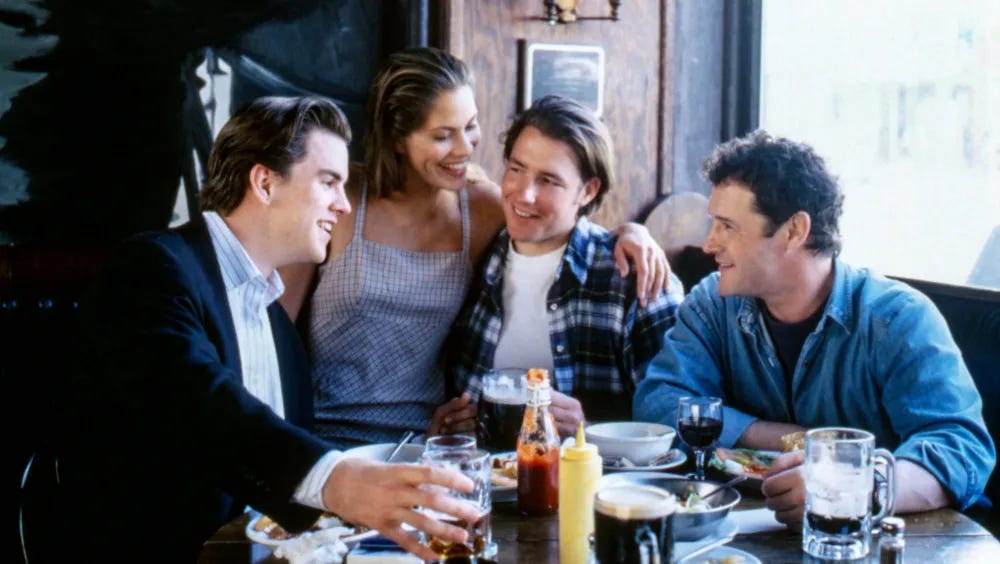 The Brothers McMullen was shot for $25k, and it looks like it.
The biggest problem with poorface is when people who aren’t actually rich try to follow the wealthy’s fake numbers for their movies. This is the film industry’s equivalent of Rob Henderson’s luxury beliefs, which confer status on elites, but would materially harm the poor if they tried to enact them. In a similar fashion, if you tried to make these movies based on the reported numbers, they would look nothing like them, and you would most likely end up broke and sad, with no Sundance premiere, wondering how on earth they did it.
The impossibly-difficult film that made it to festivals by the skin of its teeth is a tried and true indie success story, which broke into the mainstream in the 90s. The unbelievable circumstances of their making, and their outsized success, become part of their mythology and marketing, and that of the people who made them. The Brothers McMullen, for example, cost $25,000 to shoot, but after winning Sundance, received another $213,000 for postproduction to finish it.
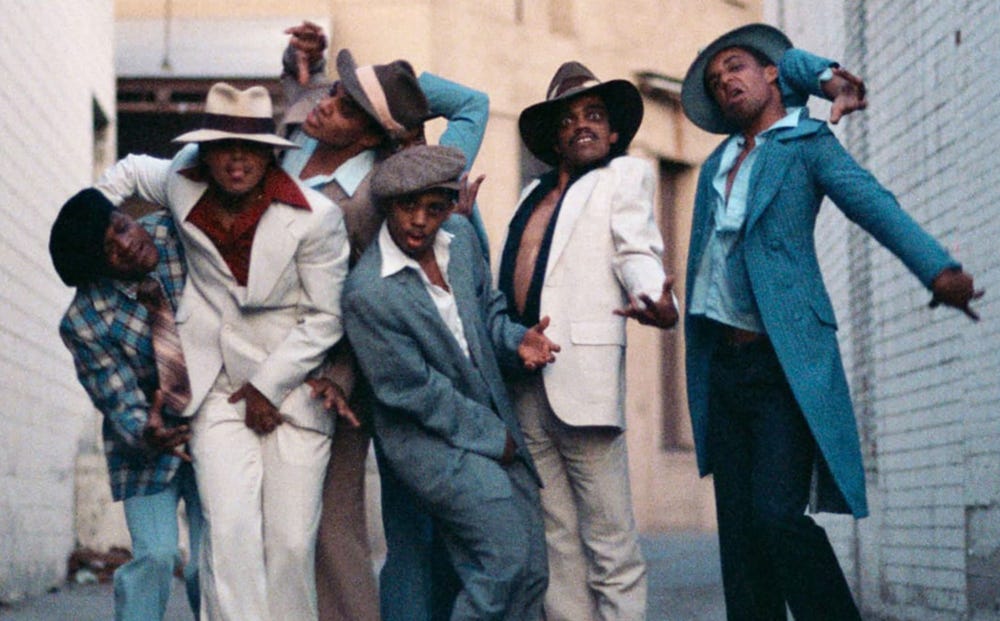 The wonderful Hollywood Shuffle was financed largely through credit cards.
Look at a movie like Following (5k pounds), Primer ($8k US), or Clerks, which was actually financed on credit cards for around $25k. Eraserhead cost $100k (not adjusted for inflation). These movies are the startups of the independent film world, and have a rough, cheap, lived-in feel. This also allows them to take more risks than bigger movies, which is why they are part of our medium’s lifeblood. Or at least used to be.
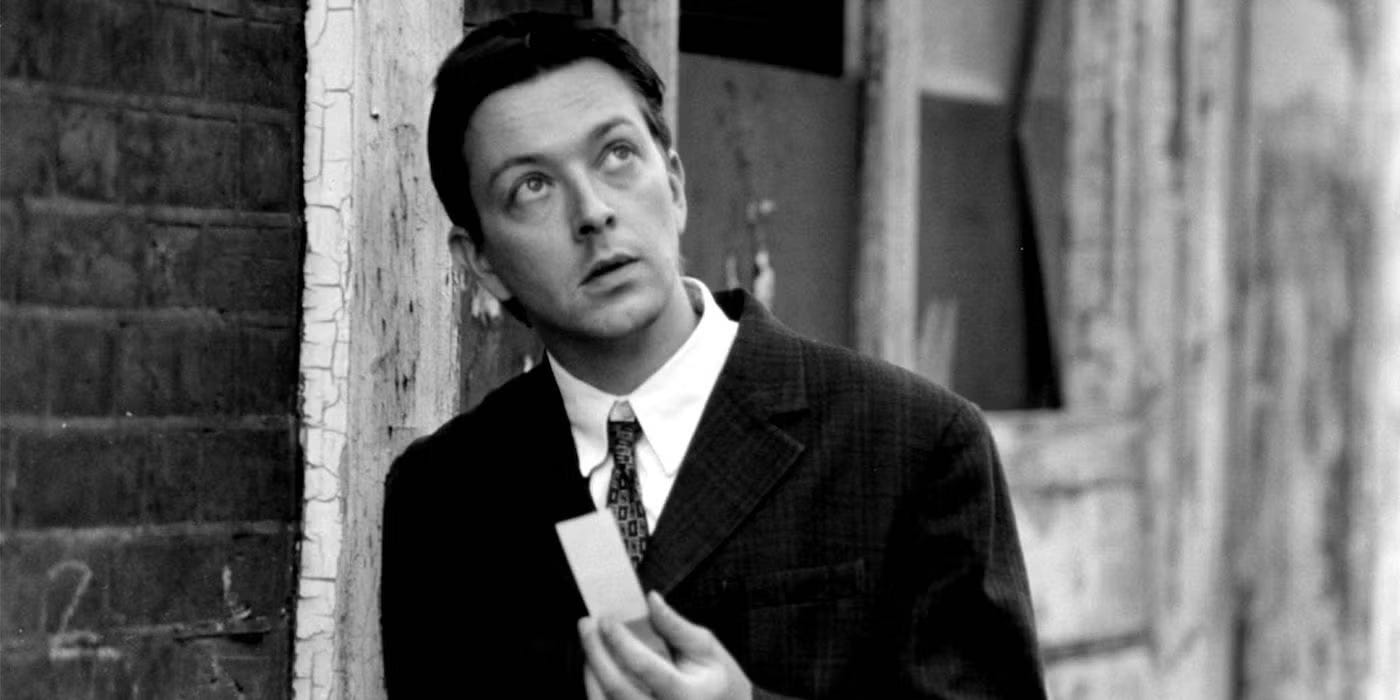 Following is a good movie that also looks like it cost £5k and was shot on weekends.
They do not look like Songs My Brothers Taught Me, or The Rider. They also were made, for the most part, incredibly slowly, because of their sheer lack of resources. To Zhao’s credit again, she also shot slowly, but was far more successful at fundraising.
One of many, many examples; David Lynch's family famously pushed him to quit Eraserhead - to get a job and take responsibility for his wife and daughter - as the film dragged on for five years and he delivered newspapers to make rent.
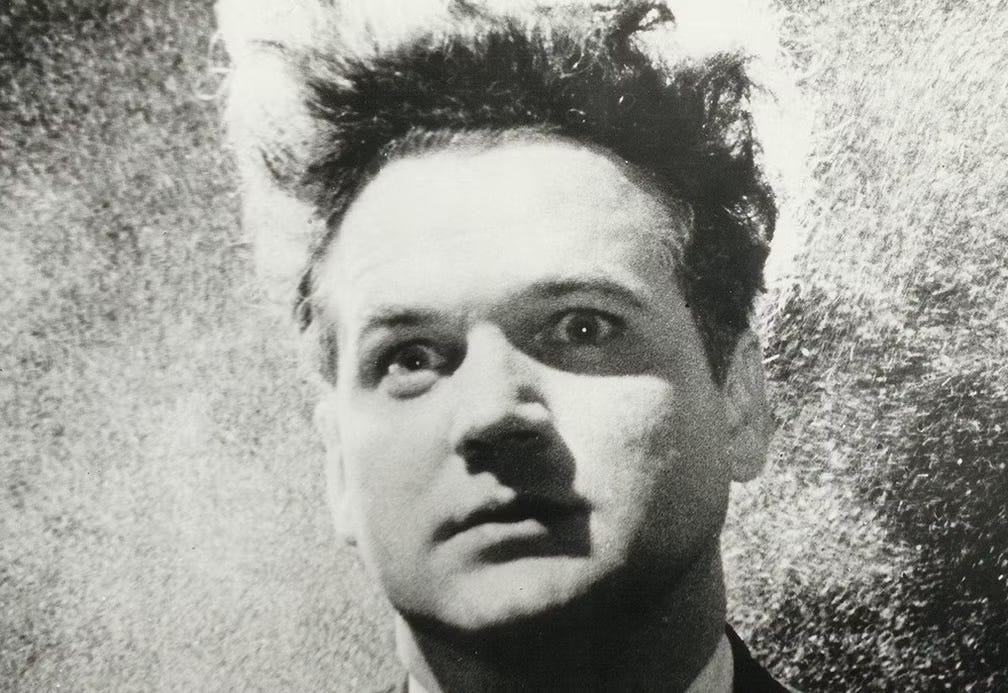 David Lynch was so poor while making Eraserhead his family pushed him to quit.
The low-budget outsider pathway used to be a visible and celebrated route into filmmaking, whereas contemporary prestige institutions increasingly reward films that emerge from highly resourced educational and development ecosystems. To appease the independent film bureaucracy, without which a major premiere is borderline impossible, emerging filmmakers today increasingly imitate the narrative of struggle without the actual receipts.
One of my biggest frustrations with the major festivals is that they program less and less of these cheap movies, or relegate them to noncompetitive sections like Sundance’s NEXT, which means less and less people who are not wealthy get their movies seen. The poorface problem solves this to a degree; if festivals feel like the movies they’re programming are low budget, they feel less guilty about rejecting the movies that are actually low budget.
Most real people can somehow come up with $8k, they cannot come up with $330k. It is not a viable, or advisable path to follow for an emerging filmmaker of anything but the most elite background.
It’s also unfair because it makes people without money think the industry is far more accessible than it actually is. I specifically remember a poor female colleague being inspired by Zhao, who she thought was “living in a van” during her Songs My Brothers Taught Me period, based on her interviews at the time.
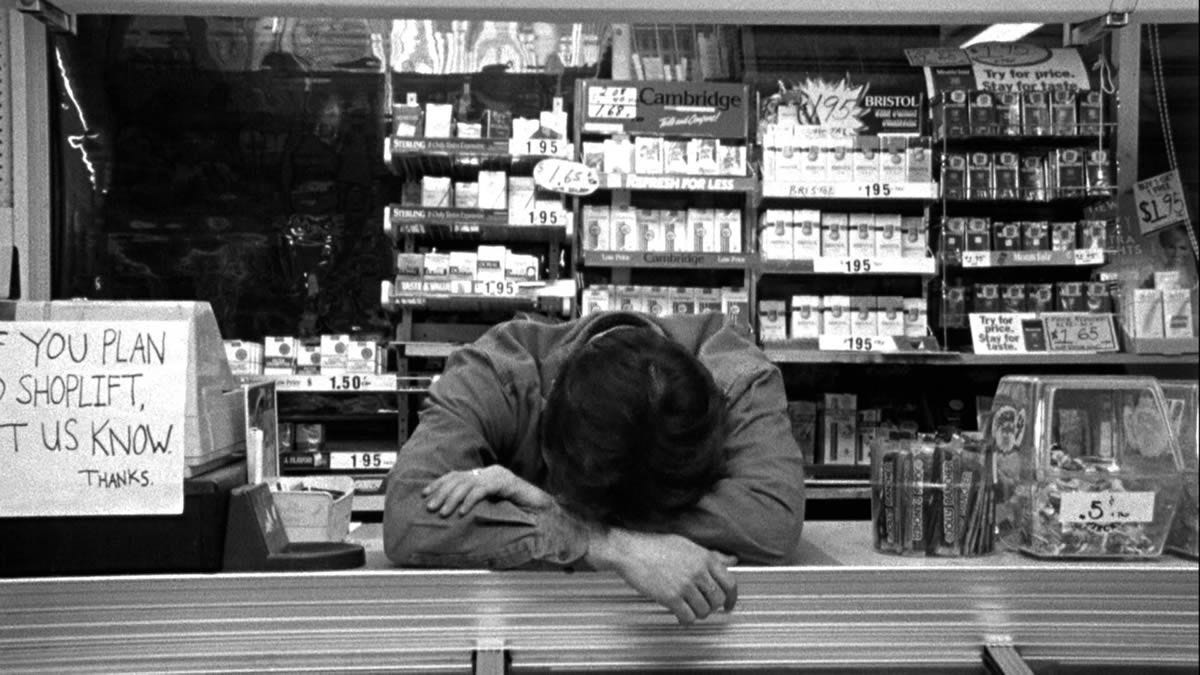 Clerks is not known for its stunning cinematography.
 People of privileged backgrounds are placed in awkward positions by the struggle-publicity demands of the film world, which still fancies itself a beacon of social justice. Even if you don’t need the money, nobody wants to help the silver-spooned advance their careers. The grants and labs are just as important for networking and branding as they are for money.
“I went to elite private schools my whole life” isn’t a story that wins Oscars when you’re forced to decide between two equally talented contenders. So most people fudge a little; drop a budget here, downplay a family connection there. Some play these cards so hard and fast that a narrative emerges that seems completely divorced from the truth.
But it’s deeply problematic; why on earth are dozens of nonprofits supporting these people when that money could be going to filmmakers who are actually poor and marginalized, who could not afford to attend the world’s most expensive private schools while also funding their own films? Is that really social justice?
Why are HBCU graduates, for example, so rare among competition directors, next to the NYU/Columbia crowd at Sundance? Why are there so few people who didn’t go to college at all?
The reality is that, all too often, the elite independent film organizations have swapped class for identity as a metric of who’s deserving of support, and become blind to the results of their own programs.
This means that they are often helping the diverse and female children of the elite, rather than, in my opinion, the actually marginalized who do not come from money. Intersectionality would mean having people who are not only of a diverse identity group, but from a diverse class background.
As I’ve hopefully shown, ignoring class entirely in favor of race and gender creates the kind of kafkaesque situations like the ones I describe in this essay. I’ve never seen a festival checklist asking for your family’s total net worth, for example, a far more dangerous question than any of the others.
I would feel much better about these institutions if I saw more people from working class backgrounds, more people who have clearly felt hardship and know what it’s like to count every single paycheck, not simply imitate it. People who would weep to get a $50,000 check to quit their day job and finish their movie. This does not seem to be happening at the moment.
The tragedy is not that Hollywood helps privileged people. Every artistic industry has always done that, from Tolstoy to Renoir. The tragedy is that Hollywood may not even realize that it is doing it anymore.
Aspiring filmmakers are told stories of outsiders clawing their way into the system when many of those stories were built atop family wealth, elite institutions, grants, and networks that ordinary people simply do not possess.
The result is a talent pipeline that is less transparent than it appears, less meritocratic than it claims, and far more expensive than most young filmmakers realize.
Before we can talk honestly about diversity, representation, or access, we should speak honestly about class. The future of culture is too important to cordon off for a handful of rich kids and, increasingly, it seems to be failing with audiences too.
If you made it this far, please consider subscribing.