Chinese Spacecraft Approaches Mysterious Object Near Earth
Sign up to see the future, today
Can’t-miss innovations from the bleeding edge of science and tech
The Chinese space age is upon us.
Beyond banner projects like the nation’s very own orbital space station and successful developments like reusable rocket boosters, the People’s Republic is pioneering a host of far-flung space initiatives that are cementing it as a power player in Earth’s orbit and beyond.
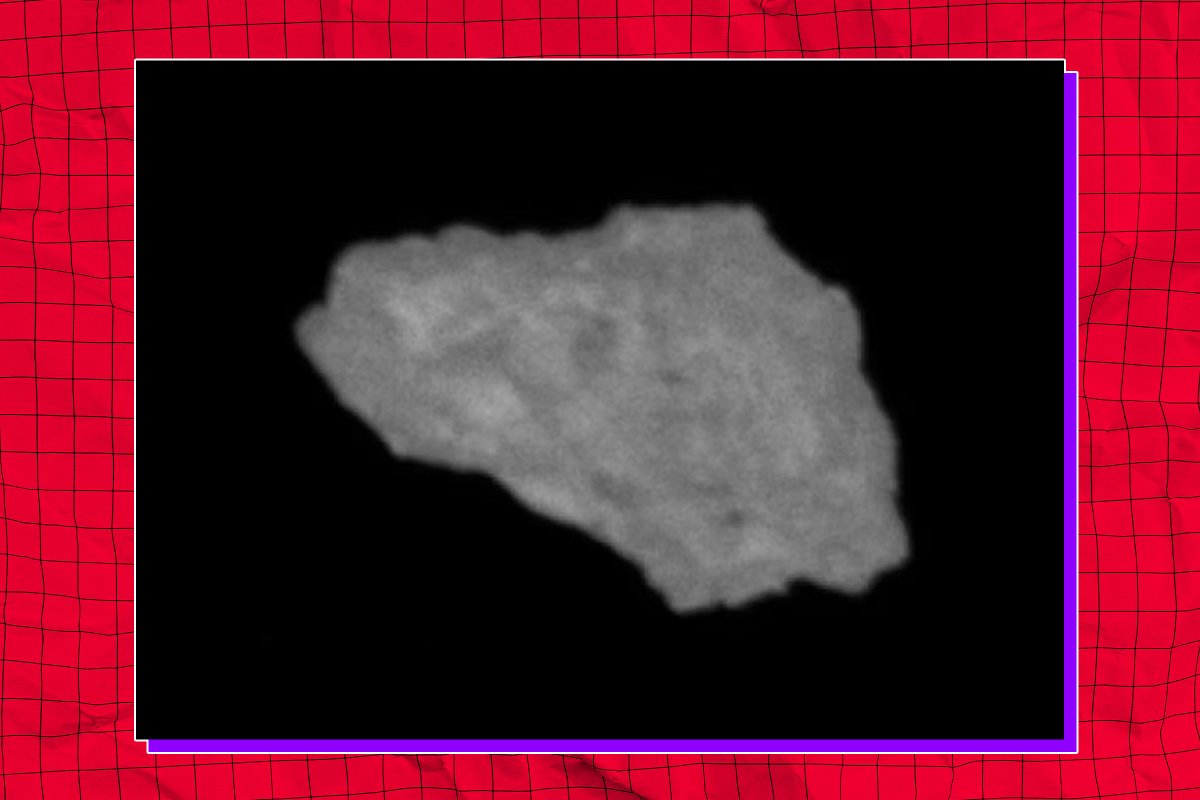
Case in point: a Chinese spacecraft is now within mere miles of one of the Earth’s seven mysterious “quasi-moons,” the asteroid known as Kamo’oalewa — making it the first world power to approach the mysterious object.
Launched in May of 2025, the Chinese spacecraft Tianwen-2 is now within 12.5 miles of the asteroid’s surface, Space.com reports, allowing it to return the first clear photo ever taken of Kamo’oalewa.
According to China’s state-run outlet Xinhua, the Tianwen-2 probe spent 400 days traveling to reach the asteroid, which measures just a few dozen feet in diameter. After traveling some 620 million miles, the craft will spend the better part of a year riding side-by-side with the space rock, acquiring data on its composition and structure before attempting to scoop up surface samples via methods like “anchor-and-attach” and “touch-and-go.”
Should it succeed, China will become the third country to successfully pull a sample from an asteroid, and could be the first to do so using the anchor-and-attach method — which is exactly what it sounds like, with the spacecraft securing itself to the quasi-moon before using an ultrasonic drill to bore into it.
Either way, the People’s Republic will certainly win the prize for dexterity. As Cristina Thomas, planetary scientist at Northern Arizona University told the New York Times, “Kamo’oalewa is the smallest object that humans have visited with a spacecraft.”
First identified by a Hawaiian survey telescope back in April of 2016, Kamo’oalewa is one of seven known quasi-moons, objects which circle the Earth but are too far to be considered a capital-M Moon. Though the rock’s exact weight is unknown — no doubt something for Tianwen-2 to figure out — its relatively small size presents a massive challenge for the project’s developers.
For one thing, the rock is rapidly spinning as it sails through the cosmos, rotating once roughly every half hour of Earth time. That makes an already small target window even tighter, and adds an element of precise timing to any sample collection efforts. It also means that the nearly two-ton space probe will have to be extremely gentle in its approach, so as not to knock Kamo’oalewa even slightly off course.
The challenges are numerous, and it’ll take months of careful, calculated moves to secure samples of the strange celestial object. But as recent history has shown us, if any country’s space program is up to the enormous task, it’s China’s.
More on China’s space program: China Launches Synthetic Human Embryos to Space Station