The Untold Cost of the Cambridge Five
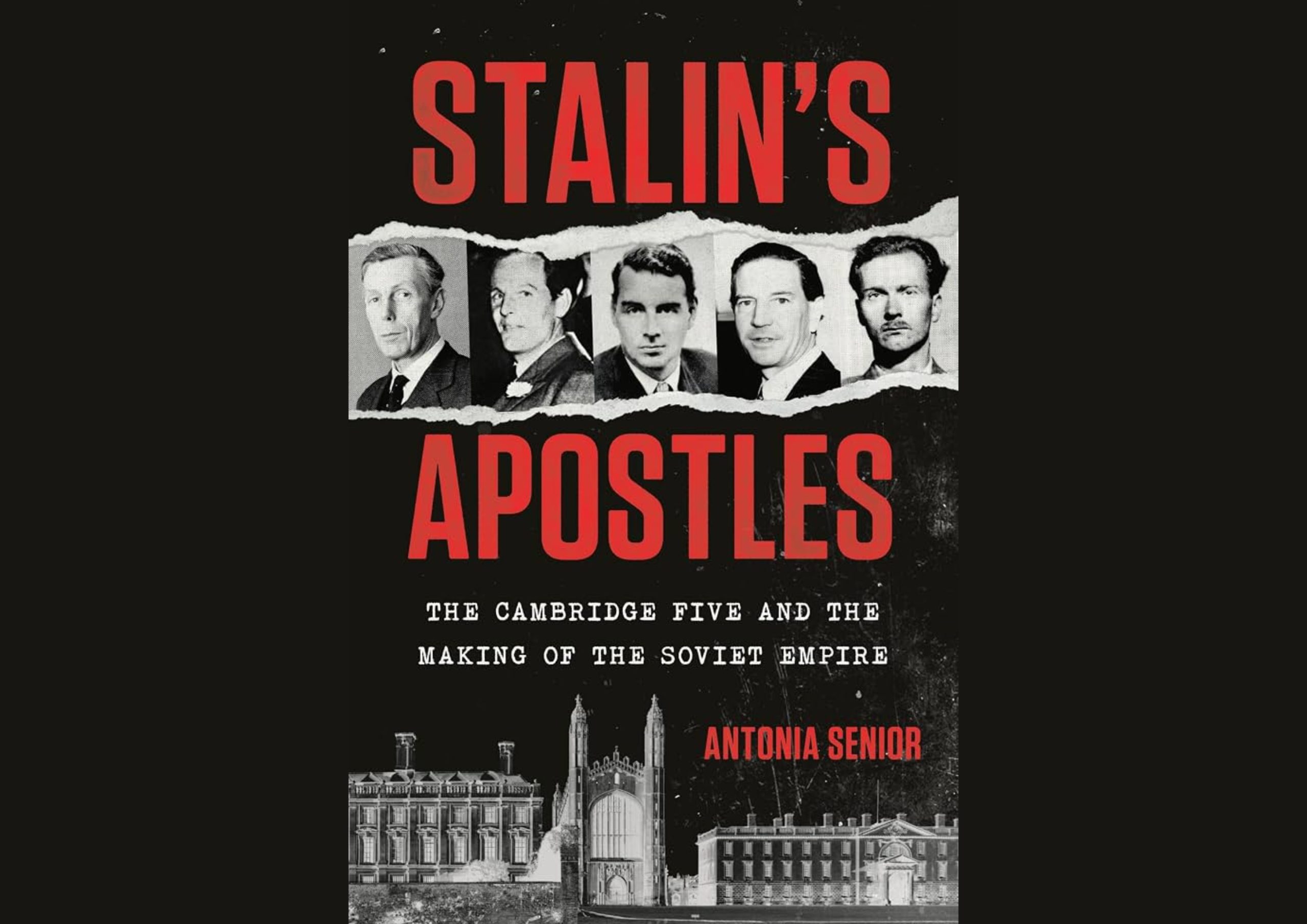
The British obsession with the spies who worked for the Soviet Union from the 1930s until the early 1950s rivals the American fascination with the case of Alger Hiss. Recruited from Cambridge University, Kim Philby, Donald Maclean, Guy Burgess, Anthony Blunt, and John Cairncross have been analyzed, interpreted, and puzzled over in scores of books and articles. How had Soviet intelligence agencies managed to suborn members of the country's elite, educated at its finest universities and entrusted with positions of power and influence? For years they betrayed their country, the organizations in which they worked, and many of their friends by transmitting secrets and confidential information to Joseph Stalin's totalitarian regime.
The latest effort to analyze these traitors by British journalist and podcaster Antonia Senior, Stalin's Apostles: The Cambridge Five and the Making of the Soviet Empire, does not break major new ground, but does add significant detail to an account of the damage they did, not just to their own country, which was considerable, but to the many anti-Communists—some heroic and others rather detestable—whom they betrayed to the untender mercies of the Soviet Union's repressive organs.
The book is also a searing indictment of the blindness and stupidity of Britain's security mandarins, who ignored obvious clues and signals that some of their prized and "clubbable" buddies were wholly unfit to be trusted to behave honorably, either in protecting national secrets or in personal relationships. Time and again, obvious signs of their dishonesty and moral failings were ignored or excused. Alcohol-fueled brawls, scandalous sexual behavior, and friendships with known security risks were forgiven, apologized for, or treated as minor peccadilloes, but not as disqualifications for positions that required keeping state secrets.
The book's title unfortunately confuses Senior's otherwise sensible analysis of the damage they did. Only three of the five spies (Burgess, Blunt, and Cairncross) had belonged to the Apostles, a secret society of Cambridge men whose smug self-regard mimicked the blind self-assurance of Communist ideologues. Whatever intellectual virtues they possessed, the Apostles never lacked for arrogance. After Burgess died in the USSR in 1963, having devoted his talents to betraying his country and assisting a monstrous regime, he was eulogized at an Apostles dinner. While several other Soviet spies had also been Apostles, the ideological commitment to communism that animated all of them had preceded their membership in the organization.
Kim Philby, the NKVD's first Cambridge recruit, was the son of a famed Arabist, radicalized at Cambridge and converted to communism while assisting Austrian revolutionaries in 1934. He married a Communist organizer to enable her to escape to Great Britain. Within a few months a Comintern recruiter persuaded him to cut his ties to the left and begin to insinuate himself into the political mainstream; he obtained a job with a right-wing newspaper and wrote admiring articles about the Franco rebels in Spain. Still married to his Communist wife even when he joined British intelligence, Philby finally divorced her when his mistress was about to have his fourth child; despite knowing his ex was a Communist agent, the head of MI6 did nothing. Philby's abilities, clever bureaucratic maneuvering, and amiability, buttressed by prodigious consumption of alcohol, all led to his steady ascent in the intelligence community, capped by appointment as British intelligence liaison in Washington after World War II.
Philby's first suggestion to Soviet intelligence of another mole was Donald Maclean, son of a former cabinet minister, who upon being asked at his interview for a job at the Foreign Office about his Communist activities at Cambridge, admitted that he had not yet shed all his old ideas. He was hired anyway and began a distinguished career that saw him holding important positions including second secretary at the British embassy in Washington during the war and, later, as British counsel in Egypt.
Made suspicious by Philby and Maclean's political apostasy, their friend Guy Burgess got the latter to explain the real reason he had joined the establishment and persuaded the Soviets to recruit him. An alcoholic, predatory homosexual with a penchant for gossip, Burgess carved out a career at the BBC, with stints as private secretary to a cabinet minister. He later served in MI6.
Burgess, in turn, suggested the NKVD recruit Anthony Blunt, a distinguished art critic and fellow homosexual who used his connections to high-ranking MI5 officials who believed his Marxism was merely theoretical and academic, to land a position there. The fifth member of the ring, John Cairncross, was, unlike the others, decidedly unclubbable. Of lower-middle-class Scottish background, dour and resentful of his lack of status, he parlayed a brilliant record at Cambridge into a series of high-level appointments, including at the Foreign Office, Bletchley Park (where British code-breakers worked on the German Enigma machines), and as adviser to the cabinet member responsible for research on the atomic bomb.
The damage these five men did was enormous. Senior's most important contribution is to document how many key secrets they passed to the Soviets. At one point Maclean was smuggling out so many documents that his NKVD handlers ran out of film to duplicate them. Blunt and Philby passed along information from German defectors on anti-Soviet sources in Europe; Maclean provided inside information on the views of Churchill and FDR on war aims in the Balkans and Greece. In the postwar era, Philby betrayed anti-Communists in Lithuania and individuals in Poland and Ukraine opposed to the USSR's domination of their homelands. American and British efforts to infiltrate resistance fighters into Albania were quickly snuffed out thanks to advance warnings from Philby. Hundreds of people lost their lives.
In addition to enabling Stalin's minions to eliminate their enemies, the Cambridge spies alerted them to British and American progress on building an atomic bomb, with Cairncross identifying scientists working on the project and Maclean reporting information from his role on a joint committee monitoring American-British cooperation on the bomb. Philby received and passed along continuing reports about the Venona Project—the American decryption effort to identify a high-ranking Brit at the Washington embassy working for the Soviets that, he knew, would lead to Maclean and compromise himself and Burgess.
Given this plethora of assistance, it is remarkable there were times that both some in the NKVD and Stalin himself were convinced the Cambridge spies were actually triple agents, secretly working for the British. The suspicions stemmed from 1941 when one Soviet analyst expressed incredulity that they had access to so much sensitive material, how they seemed to thrive despite very lax tradecraft, and why they kept insisting, in the face of repeated queries, that British intelligence had no spies in Moscow. For almost two years, from 1943 to 1945, the Soviets actually surveilled Burgess, Blunt, and Philby, to catch them meeting their supposed British handlers.
The unraveling of the spy ring was due to the personal disintegration of both Burgess and Maclean, whose outrageous behavior focused attention on them. Maclean and a friend trashed a colleague's apartment in Cairo during a drunken stupor, and then Maclean attempted to strangle his own wife. Burgess, posted to Washington, managed to get arrested for drunken driving and speeding and broke up a party with American intelligence figures by drawing a crudely sexual picture of one's wife. But even these escapades were treated by British intelligence as unfortunate reactions to stress, not signs of unfitness for service.
It took the Venona Project's deciphering of cables implicating Maclean as a spy to compel Philby—who had official access to the project—to send Burgess back to Britain to warn Maclean; the two of them then decamped for Moscow, casting suspicion on Philby. The investigation was so slipshod that Blunt was able to gain access to Burgess's apartment and filch several incriminating documents under the nose of investigators. It took several more years before Philby was sacked; he later defected to the USSR. Even more time elapsed before Michael Straight, a wealthy American who had been recruited by Blunt at Cambridge, confessed to the FBI and implicated Blunt, who was granted amnesty in return for supposedly coming clean about his activities and those of his friends. Cairncross, by then teaching at an American university, took the same offer as Blunt.
Given how much damage they did, the punishment they received was minuscule. Philby, Burgess, and Maclean had to endure living out their lives in the dreary Soviet Union, where Philby committed one final act of treachery, having an affair with Maclean's wife. Blunt lost his job and honors and died in disgrace. Cairncross got away scot-free.
Senior notes that accounts of their lives emphasizing their "idealism" and glamorizing their treachery ignore just how much damage they did by their arrogant belief that their Communist ideology required them to betray their country.
Stalin's Apostles: The Cambridge Five and the Making of the Soviet Empire
by Antonia Senior
PublicAffairs, 480 pp., $35
Harvey Klehr is the author of numerous books and articles on communism and Soviet espionage.