How a Strongman Stays in Power
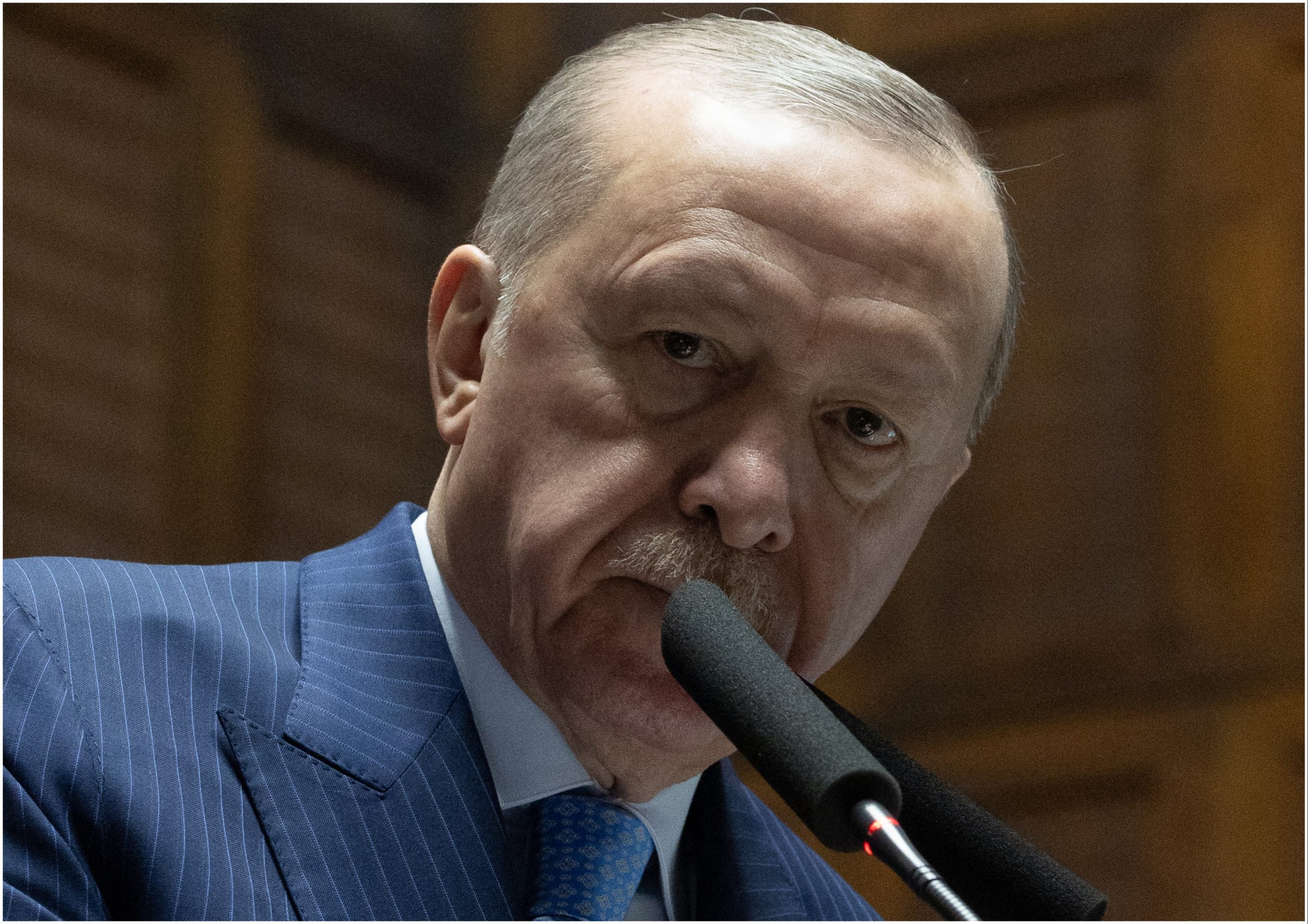
For decades, most Americans of an intellectual bent visiting or staying in Turkey would be regaled by the same set of opinions. Turks who spoke English were educated in the predictable way; their views often represented the anti-American, antimilitary, anticapitalist slice of the generally secular middle classes—views not uncommon in Europe and elsewhere during the Cold War. Then came Recep Tayyip Erdoğan, first as Istanbul mayor in the 1990s, and as prime minister in the 2000s, a distinctly more conservative figure. Yet, a lot of the enlightened folk saw in him a champion of democracy and a liberation from the cycle of military coups. Free marketeers liked him for deregulating commerce. The pious millions moving to cities from the country saw him as one of them, his parents having migrated from the Black Sea area. All in all, the liberal-minded majority approved of him. Sadly, he was one of the first populist authoritarians in embryo, ultimately as president.
I was born in Istanbul but have lived largely in the United Kingdom and the United States since boyhood. Suzy Hansen, the author of From Life Itself, is an American journalist based in Istanbul. I met her for tea a year or two after she moved there in 2007. (I was on my way to report on Iraq for the Wall Street Journal.) I have a memory of her rather disdainful reaction when I explained that the Turkish military kept Islamism and political corruption in check and always returned the country to democracy, whereas the politicians inevitably did the reverse. As for Erdoğan, we had seen his like before. It would end in disaster, I argued. At the time, I felt sure she thought me elitist and reactionary.
And, so, I was more than ready to dislike her book. In fact, it’s a beautifully written, deeply knowledgeable, and complex chronicle of contemporary Turkey, albeit with some contradictions in her moral stance. Above all, she got wise to Erdoğan. The book is a hard-hitting indictment of his rise to near-totalitarian status with a penetrating analysis of the preceding background conditions that led to his popularity. She chooses the ghetto-ish Istanbul neighborhood of Karagümrük, known for "mafias, right-wing nationalism and thieves," to study close-up as a microcosm of the country, and Turkey as a microcosm for dangerous global trends. She writes, "the question seemed less why democracy was failing and more why twentieth-century nation-states weren’t surviving the twenty-first."
Crucially, Hansen explores two other factors that—one might argue—equally disrupt the neighborhood, namely pro-Erdoğan Islamists and the influx of Syrian refugees. She is a little too reluctant to lay blame against any such groups—broadly her take is that citizens are entitled to their religious views (however retrograde or oppressive of, say, women) while anyone resenting immigrants is always deemed racist. Here, then, is a flaw that runs sporadically through the book; the author’s moral perspective can seem crucially out of touch with lessons learned from recent events everywhere. In reality these issues are not a matter of pure principle but rather of degree: the number and concentration of immigrants, their cultural and religious supremacism, their resistance to assimilation and the like. She is apparently unaware of the counter-principle of "suicidal empathy."
For decades, Istanbul natives have complained about new arrivals, coming in waves from the Turkish countryside. The "arrivistes," as the author neatly calls them, squatted on public lands illegally until corrupt politicians legitimized them in exchange for bribes or votes. Their numbers overwhelmed the cosmopolitan city natives and spurred the housing boom destruction of the city’s precious green zones. Their rustic conservatism created hijab ghettos, no-go areas for any woman wearing relaxed Western clothes. They virtually all voted for Erdoğan all the time, however despotic he became. It was for good reasons that the native city-dwellers disliked the endless migrations and not because they considered themselves superior "white Turks," an invidious term the author happily quotes. The Syrians were just one more unassimilable wave.
Hansen chronicles it all accurately. It’s just that she’s confronted with a difficult moral dilemma: how to take the side of freedom, democracy, and the underdog when a populist on the march to autocracy is exploiting those principles. Her response is a merciless cataloging of Erdoğan’s misdeeds and their devastating effects on the country and the neighborhood she befriends.
At first, "he believed he was restoring a loss of Turkish dignity," she says, "salving the wounds of millions of Turks who felt disparaged by the West and by their own elites." Some 10 years later, 2017 onward, Erdoğan was purging and imprisoning hundreds of thousands of his "enemies" in political opposition, in the army and bureaucracy, and "the leftists, the Kurds, the academics," while "seizing the entire media, and pacifying and gratifying the business elites and raking in billions of dollars for himself and his party," not to mention his own family. She argues that he changed for the worse after the military’s coup attempt against him in July 2016. But, the fact is, he was already up to no good with creeping Islamization of the country, the curtailing of press freedoms, and sundry authoritarian moves.
She makes no reference to the suspiciously half-baked nature of the coup attempt. Perhaps she didn’t wish to seem too conspiracy minded. Yet, at the time, various still-independent press outlets in Turkey ran numerous stories arguing that pro-Erdoğan elements within the military provoked the coup attempt by others precisely to fail and thereby bolster Erdoğan’s rule. Considering the myriad populist subterfuges he has pulled since, it doesn’t sound at all implausible in hindsight.
As she chronicles, he was soon invoking pan-Islamism, nationalism, neo-Ottomanism, and nostalgia for empire, to intervene abroad. In 2013 alone, with his connivance, some "30,000 jihadis traversed Turkish soil, establishing the so-called jihadi highway" (likely to aid ISIS, though she doesn’t say so). He stopped it when bombs began to go off within the country. He found it useful to keep the military engaged in various ways, chiefly in the Syrian civil war, while encouraging refugees to migrate to Turkey. He started giving them passports. He would have enfranchised them en masse to vote, but for the Turks’ deep discomfort.
Perhaps Hansen’s most canny focus is on Erdoğan’s building fetish. Lacking a primary raw material like oil, he created a new oligarchic class atop a pyramid economy through manic indiscriminate construction. Hardly a unique phenomenon, you might say, stretching from the Gulf to China. But Erdoğan used it to create mass employment loyal to oligarchs in place of state jobs until he achieved full state capture. The ensuing graft and corruption, the assault on oversight and standards, meant that when the huge 7.8 magnitude earthquake struck the south in February 2023, buildings crumpled like paper. Some 520,000 homes collapsed. More than 52,000 dead officially (imagine the real numbers). For six days the state failed to react. Erdoğan was deeply unpopular, as he is to this day with the economy ailing and rampant inflation. But with control of media, state institutions, statistics, voting processes, and the like he won a highly dubious election months later. Just recently, he ousted the leadership of the main opposition party. It seems the country will never be rid of him.
Hansen’s meticulous account of his horrors lays bare the tragic fate of a country awakening too late to the threat of populist chicanery. It’s a gripping cautionary tale for our time.
From Life Itself: Turkey, Istanbul, and a Neighborhood in the Age of Erdoğan
by Suzy Hansen
Farrar, Straus and Giroux, 368 pp., $30
Melik Kaylan writes about culture and the arts for the Wall Street Journal.