Another Wake-Up Call for America's Jews
Forget Lucy yanking the football out from under Charlie Brown. No matter how many times Jews are betrayed by their neighbors, they never cease to be surprised by those who turn against them. As in cartoons, this sequence is built into the Jewish condition.
When Jews undertook to live as a self-contained minority by the covenantal standards of the God of Sinai, they did not foresee the implications of sustaining their civilizing way of life "among the nations." Could any nation coexist alongside the Jews in the Land of Israel without seeking to conquer them? Could any nation house the Jews in the Diaspora—and for how long before needing to destroy them? The golden age of Spain eventually turned into the Spanish Inquisition; Goethe's Germany became the Germany of Goebbels and Göring. Before the farhud of 1941 drove the Jews from Baghdad, Jews had lived in Iraq for over 2,500 years. Jews came to represent the principle of coexistence, and the ultimate test of that maturity in the societies around them.
America promised to be that mature nation with its carefully calibrated balance of individual freedoms and collective self-rule, of minority rights and national unity. African slaves, the only immigrants who did not come to America of their free will and were deprived for too long of what America said were their God-given rights, did not head for home when given their freedom but chose to accept the blessings of citizenship. And nothing has proven American exceptionalism more than the security of its Jewish citizens who have benefited repeatedly from this country since its founding.
But now comes the test. The increasing assault on Israel as the proxy for America, accelerating since the attacks of October 7, 2023, will either wreck another great nation or prove that this Republic is truly ours to keep. The outcome will depend on whether enough Americans understand, care, and exert themselves to protect their country.
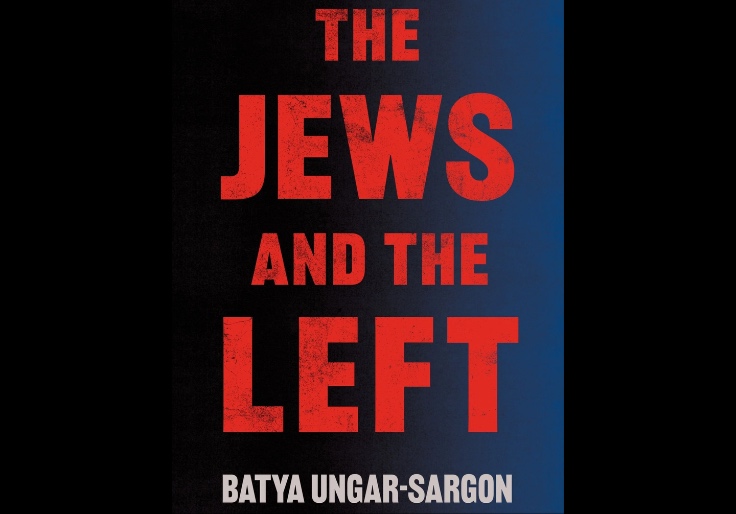
Batya Ungar-Sargon, a journalist originally from the same pool that staffs the liberal media, felt the shock of most American Jews following October 7. Although the massacre and kidnapping of Israelis was instantly identified in terms of its historical precedent as "the deadliest day for Jews since the Holocaust," and though an Arab-Islamist attack on a Jewish festival—50 years after the Yom Kippur strike—could have been predicted, there was nothing familiar about the American response.
No one could have foreseen that Ivy League students would promote a jihadist assault on a fellow democracy, celebrating rape and mass murder. Never had the liberal media, their Hollywood entourage, and members of Congress cheered those boasting of the Jewish blood on their hands. Ungar-Sargon shares the special outrage of Jews who had remained loyalists of the Democratic Party and major supporters of every new liberal cause. A seasoned journalist, she looks at American Jewish history to understand what feels like betrayal: "How did we get here?"
Her historical account gives us more than she had intended. The intentional part begins with the founding of America by Puritans who were so deeply informed by the Hebrew Bible that they founded their nation on many of its concepts and symbols. By their presence, Jews became the surest "proof of their neighbors' religious tolerance." This remains as true today as on July 4, 1776.
Ungar-Sargon locates several flashpoints that seem to explain the relation of "Jews and the Left." The Triangle Shirtwaist Factory fire of 1911 that killed 146 workers, mostly young Jewish girls, anchors her chapter on the role of Jews in the rise of the Labor movement, which segues into their prominence in the Democratic Party, and then seamlessly into support for President Roosevelt's New Deal. "Jewish American Socialism while it existed was at the end of the day more a moral position than a political one. And when another political movement appeared that seemed to have a much bigger impact on America and satisfied that moral itch Jews were only too happy to migrate." The Left in the first half of the 20th century is thus conflated with the conjoined moral impulses of American Jews and the Democratic Party.
The following section compresses three main periods of antisemitism in the United States, said to be social exclusion of Jews in the Gilded Age, the period of the Ku Klux Klan, and penetration of fascist influence in the 1930s, for which "unfortunately, the Republican Party proved a receptive audience." This sequence includes the lynching of the Jew Leo Frank in 1915 and Henry Ford's Hitler-fueled antisemitism, part of his intended campaign for the presidency. Against this discrimination, which is perceived to be exclusively from the Right, she asks, "Is it any wonder that Jews flocked to FDR's party?"
America's defeat of Nazism introduced a liberal interlude marked by the founding of the United Nations, lodged where else but in New York, and passage of enforced Civil Rights legislation by the U.S. Congress. But by the late 1960s, something began to go wrong. The more Jews aligned with liberal causes, foremost among them equal rights for black Americans, the more black militants singled out the Jews as the archetypal white oppressor. The more Jewish women powered the feminist movement, the more its activists joined the attacks on Israel. Jews who encouraged asylum seekers and immigration from repressive societies ended up swelling the intersectional ranks of the anti-Jewish grievance brigades. Their affinity with the Left made it harder for Jews to confront the emergence of anti-Zionism, which is the leftist form of antisemitism. When the United Nations passed Resolution 3379 calumniating Zionism as a form of racism, many liberal Jews missed the turn-off and ignored that they were traveling in hostile company.
This book gathers momentum and goes into high gear in its final sections leading up to and including the October 7 "wake-up call" to Jews and through them to the rest of America. Concentrating on the universities, the media, and sectors of the American public that she knows best, Ungar-Sargon shows how the Left's worldview, once based on right versus wrong, was replaced by the ideology of oppressor and oppressed. "That is the source of twenty-first century leftist anti-Semitism." The many strands of anticapitalist, anticolonialist, Orientalist, and other critiques of America come together in common opposition to Jews, now mostly in Israel. As she exposes the ideologies and promoters of the anti-Jewish alliance, the author punctuates her rebuttal with frustrated cries of "totally false" and "They are simply wrong." Having shown why American Jews became Democrats in the first place, and how they were then betrayed by former allies, she invites her fellow Jews to speak out as she has done, "not as Republicans" but as proud Americans.
It is heartening to read this rally against "a uniquely left-wing form of anti-Jewish hate and violence that has all but replaced right-wing antisemitism in America," but Ungar-Sargon's history is flawed and her awakening is late. Here is Commentary critic Robert Warshow writing in 1947 on America in the 1930s, "when virtually all intellectual vitality was derived in one way or another from the Communist party. If you were not somewhere within the party's wide orbit, then you were likely to be in the opposition, which meant that much of your thought and energy had to be devoted to maintaining yourself in opposition." The Communist Party was by then already in full anti-Zionist mode, Stalin having supported the Mufti's jihad in Mandatory Palestine as the start of the Arab revolution.
Warshow was writing not about the small percentage of Jews in the party but about his entire intellectual cohort. Some of the Jewish Left felt free to support Roosevelt in the late 1930s only because the Soviets had authorized the formation of the Popular Front that encouraged the cooperation with liberals it had previously prohibited. The communist "ideal" penetrated this country much deeper than fascism and for long after the threat of fascism fell away as its excuse for condoning its repressions and failures.
By the late 1960s and early '70s, some of Warshow's liberals were ready to mock their former subservience. In the American Scholar, Lionel Abel, another of the New York intellectuals, described their voluntary submission to Leftist thought control:
One must in no case do anything that might be harmful to the Left. What if the projected action seems a good one? Then one must be all the more careful. One must consider every possible consequence, even the most remote. Many actions that at first might seem beneficent when looked at more closely turned out to involve a possible damage to the Left. What Left? Which Left? Never mind. And do not ask. Indeed there is need not to ask, for the very fact that we don't know what the Left is today means that whatever it be, its situation is precarious.
When Irving Kristol, speaking for that generation, defined the neo-conservative as a liberal who was mugged by reality, that "reality" took the form of the anti-Zionist Left.
This is just to say that there have been earlier important wake-up calls in the American history of Jews and the Left, and the excommunication of "the Right" was used to keep them in line. That Jews among other Americans do not know this history makes it so much sweeter to keep pulling that football out from under them.
Ungar-Sargon's warning comes after the red diaper babies of the 1960s had metastasized into legions of progressives and merged with Islamists, fueled by more overseas funders, hackers, and influencers than the old communists ever dreamed of. Her explanation for the relation of Jews and the Left is partial at best, but her warning may still be timely. She insists that Jews under assault have to lead the way in speaking the truth: "To hate Jews is to hate America. We are an inextricable part of this nation." This is a fight that all Americans must win.
The Jews and the Left
by Batya Ungar-Sargon
Broadside Books, 272 pp., $30
Ruth R. Wisse is professor emerita at Harvard and senior fellow at Tikvah.