Who Wins With the Iran Peace Deal?
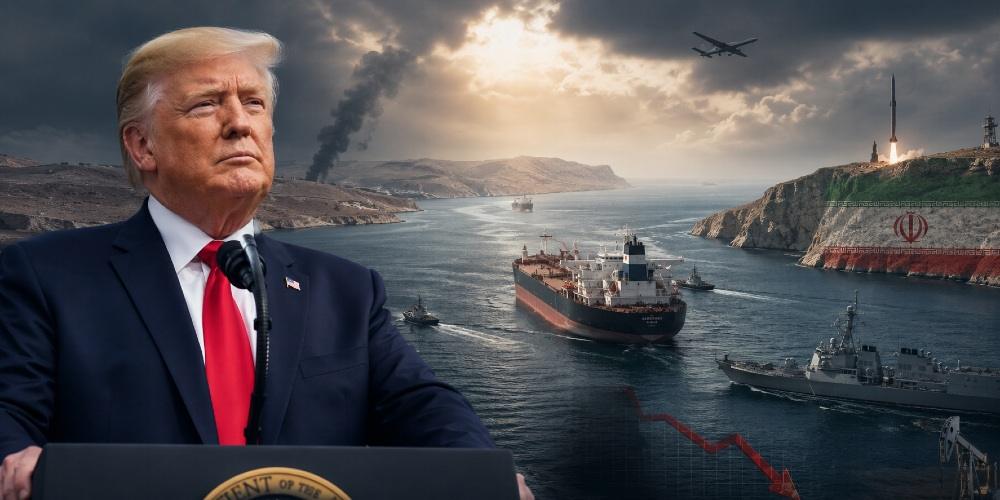
President Trump announced over the weekend that the war with Iran is finished. The Strait of Hormuz reopens Friday, the U.S. naval blockade comes down, and oil will move freely through the world’s most important chokepoint for the first time since February. The relief at American gas pumps will be real. So will the questions about what Washington actually won.
The deal, announced first by Pakistani Prime Minister Shehbaz Sharif and minutes later by Trump himself, ends a roughly fifteen-week conflict that began on February 28 when U.S. and Israeli forces launched a joint assault that killed Iran’s supreme leader, Ayatollah Ali Khamenei.
According to CBS News, the memorandum of understanding will be signed in Switzerland on Friday, with the price of Brent crude already falling more than four dollars a barrel on the news.
Trump celebrated on Truth Social with characteristic flourish.
The Deal with the Islamic Republic of Iran is now complete. I hereby fully authorize the toll free opening of the Strait of Hormuz, and, simultaneously herewith, authorize the immediate removal of the United States Naval blockade. Ships of the World, start your engines. Let the oil flow!
The trouble is in the fine print, and Iran’s own Revolutionary Guard published it. The fourteen points the IRGC released read less like the terms of a defeated regime than the wish list of a confident one.
What Tehran KeepsUnder the framework the Guard described, Iran reaffirms a paper pledge under the Non-Proliferation Treaty not to build a weapon, but its conventional missile program and its support for what Tehran calls “resistance groups” are explicitly walked off the table.
The regime that backs Hezbollah, Hamas, and the Houthis surrenders none of those relationships. Its stockpile of highly enriched uranium remains. The actual nuclear question gets kicked into a sixty-day window of negotiations that may or may not produce anything binding.
Iran also gets paid. The framework calls for releasing roughly $24 billion in long-frozen Iranian funds, with the Guard insisting that half arrive before final talks even begin. The IRGC went further, claiming the United States and its allies must present reconstruction plans for Iran worth at least $300 billion. Tehran is treating the end of the war as the start of a transfer.
The Trump administration tells a different story about the money. Vice President JD Vance insisted the Iranians “are not receiving any cash, and no funds are being released for simply signing a deal or attending a meeting,” and a senior official warned reporters not to take Iranian statements at face value, dismissing them as “domestic propaganda.”
That is reassuring only until you notice that both sides are describing the same document and cannot agree on whether Iran gets billions up front. A peace deal whose central financial term is in open dispute on the day it is announced is not a deal that has settled much.
America’s Closest Ally Says NoThen there is Israel, which is not bothering to pretend it signed anything. Trump, the Pakistani mediators, and Iran all insist the agreement halts fighting on every front, including Israel’s war with Hezbollah in Lebanon. Jerusalem flatly rejects that reading.
Defense Minister Israel Katz said his forces will stay in southern Lebanon, Syria, and Gaza “indefinitely,” and that Prime Minister Netanyahu had personally told Trump Israel would not withdraw. National Security Minister Itamar Ben-Gvir was blunter still.
Trump’s agreement does not bind us. We are not party to this agreement. It does not safeguard our security. We must not settle for anything less than the dismantling of Hezbollah.
An end to hostilities on all fronts that the combatant on one of those fronts refuses to honor is not a ceasefire. It is a press release.
The criticism is not coming only from Jerusalem or from the usual Democrats, though Senator Jack Reed of Rhode Island did sneer that the arrangement amounted to a “birthday gift” for an Iranian regime extracting cash from Washington.
Republicans uneasy about the terms have raised the same concern conservatives raised about the 2015 nuclear accord Trump once rightly tore up. The question is whether this framework genuinely improves on that bargain or merely repackages it with a tougher signature.
Scripture warned about exactly this temptation, the impulse to declare a wound healed before it is. As Jeremiah recorded, men have healed the hurt of the daughter of my people slightly, saying, Peace, peace; when there is no peace.
A nation exhausted by high energy prices and a grinding war will want to believe the danger has passed. Wanting it does not make it so.
Trump now carries this announcement to the G7 summit in the French Alps, where European leaders who spent months questioning his handling of the conflict are suddenly eager to praise the outcome. The strait will reopen, the tankers will sail, and inflation pressure should ease.
Those are real gains for Americans, and they should not be waved away. But Iran emerges with its missiles, its proxies, its uranium, and a path to billions of dollars, while its sole regional adversary publicly refuses the terms. Before anyone hangs a banner, it is worth asking who walked away from this war with more of what they wanted.