Silver Tops $75 as Record-Breaking Precious Metals Run Continues
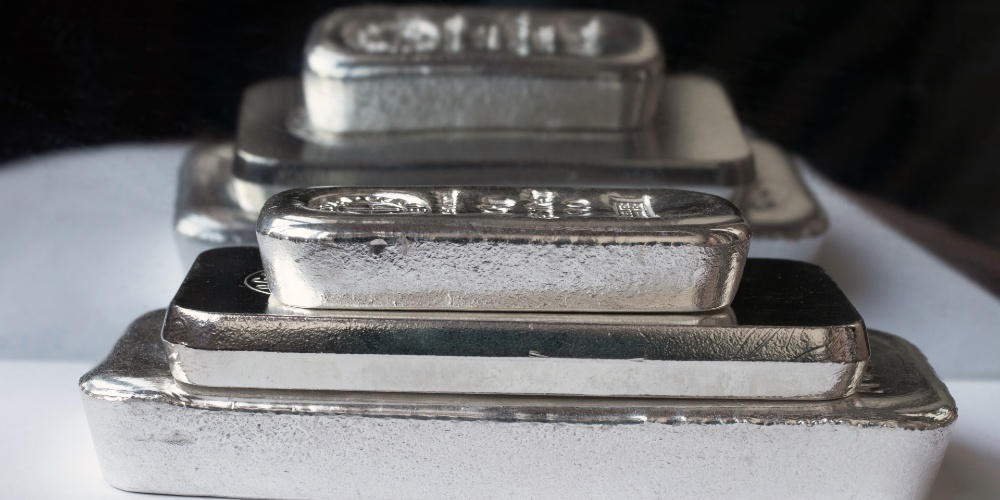
(The Epoch Times)—Silver surged past $75 an ounce for the first time in the overnight session leading into Dec. 26, extending a powerful rally that has made it the strongest-performing precious metal this year, while gold and platinum also climbed to record highs, as investors bet on U.S. interest rate cuts and grappled with tight supply and geopolitical uncertainty.
Spot silver rose by as much as 2.4 percent to a record $75.62 and was at about $75.30 at 10:30 a.m. ET on Dec. 26. The metal is up more than 150 percent so far this year, far outpacing gold’s gain of more than 70 percent.
“Investor appetite remains strong, as silver-backed ETFs continue to attract inflows,” ING analysts said in a recent note, describing the 2026 outlook as “constructive,” supported by solid industrial demand from solar panel installations and battery technologies, combined with sustained investment flows.
Gold rose by 0.6 percent to $4,505.30 an ounce after touching an all-time high of $4,530.60 earlier in Friday’s session. U.S. gold futures for February delivery gained 0.7 percent to $4,534.
The yellow metal is on track for its strongest annual gain since 1979, supported by expectations of monetary policy easing, steady central bank buying, exchange-traded fund (ETF) inflows, and broader de-dollarization trends.
“We believe that gold’s main drivers, including central bank buying, Fed rate cuts, a weaker dollar, concerns about the Fed’s independence, and ETF buying, are all still in place, while the global macro environment remains broadly supportive for gold,” ING analysts said in a recent analysis.
“We see gold prices hitting more record highs in 2026.”
Spot platinum jumped 5.3 percent to $2,338.20 after hitting a record $2,448.25 on Dec. 26, while palladium climbed 7.5 percent to $1,809.93, building on a three-year high from the previous session.
Giovanni Staunovo, an analyst at UBS, said that all precious metals are benefiting from expectations that the Federal Reserve will continue its easing cycle.
“Prospect of lower U.S. interest rates is still supporting demand for gold and silver, lifting both metals to new record highs,” Staunovo said. “Low liquidity is amplifying the volatility across all precious metals.”
Investors widely expect the U.S. central bank to turn more dovish, with markets now pricing in two 25-basis-point Fed rate cuts next year, according to the CME Fed Watch tool. Lower rates tend to support non-yielding assets such as gold and silver.
“Historically, silver has outperformed gold during easing cycles, as lower real yields tend to lift both investor allocation and industrial activity,” ING analysts wrote in a note.
Meanwhile, recent inflation and employment data have bolstered the case for further rate cuts.
In November, the annual inflation rate eased to 2.7 percent, well below the market consensus of 3.1 percent. Twelve-month core inflation, which excludes food and energy prices, slowed to 2.6 percent, its lowest level since March 2021.
At the same time, labor market conditions have softened, with the unemployment rate rising to 4.6 percent last month, the highest since September 2021.
Together, the cooling inflation and labor data could bolster the case for further Fed interest rate cuts.
“The Fed will be cheered to see inflation rising more slowly and especially encouraged by the multi-year low in core CPI. The cool November inflation report further bolsters the case for additional rate cuts in 2026,” Bill Adams, chief economist at Comerica Bank, told The Epoch Times in an earlier emailed statement.
Silver’s Supply SqueezeSilver’s rally has been driven by persistent supply deficits, strong industrial demand, and renewed investor interest following the metal’s recent designation as a U.S. critical mineral. Analysts say momentum buying has added fuel to the rally, as prices broke through key levels.
Unlike gold, silver has a large industrial component. More than half of global demand comes from uses such as solar panels, electronics, and automotive components, making the metal more sensitive to economic cycles and more volatile than gold.
On the supply side, silver is facing its fifth straight year of deficits. Around 70 percent to 80 percent of global silver output is produced as a by-product of lead, zinc, copper, or gold mining, making supply slow to respond even when prices rise. Mined silver production is down about 3 percent this year due to declining ore grades and limited new project development, ING analysts said.
Some prominent commentators have turned increasingly bullish on silver.
Economist Peter Schiff said in a post on X that silver and platinum are “catching up” to gold after investors accepted that gold’s rally may persist.
“Investors also avoided mining stocks for the same reason,” Schiff wrote. “They’re next for an explosive catch-up run.”
Investor and author Robert Kiyosaki said on social media that $70—$200 per ounce could become a “reality” for silver in 2026, though such forecasts are well above most institutional expectations.
ING analysts have said that silver’s volatility is likely to continue. While prices should remain supported by tight supply and resilient demand, the bank does not expect this year’s pace of gains to be repeated, forecasting average prices of around $55 an ounce in 2026.
Andrew Moran and Reuters contributed to this report.