Federal Judge Upholds Trump’s $100,000 Fee for H-1B Visas
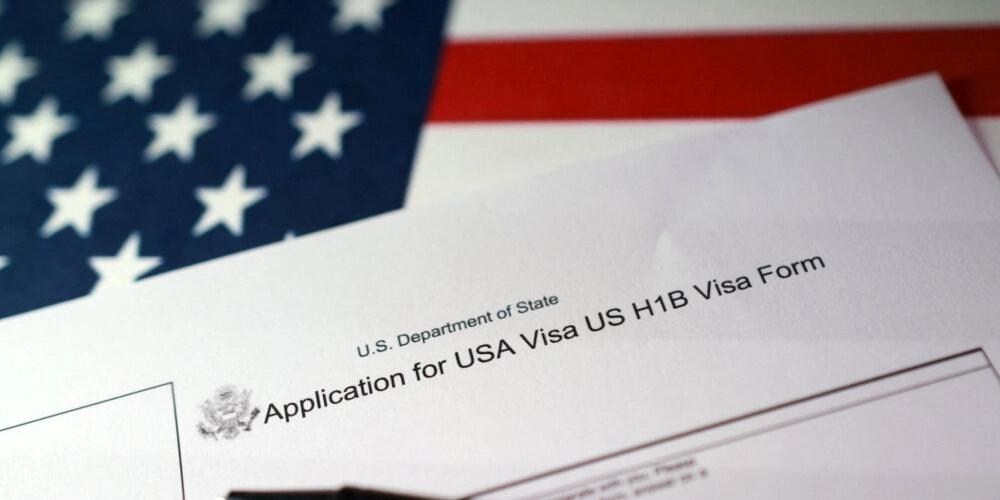
(The Epoch Times)—A federal district court ruled on Dec. 23 that President Donald Trump has legal authority to raise the fee for H-1B visas for employees in specialty occupations to $100,000.
Before the change, the fee was between $2,000 and $5,000, depending on the size of the employer.
Washington-based U.S. Judge Beryl Howell issued the new ruling after the plaintiffs, the U.S. Chamber of Commerce and the Association of American Universities, sued to block the policy. Howell declined to block the policy change and granted summary judgment in favor of the Trump administration.
The H-1B program allows U.S. employers to temporarily hire foreign workers in occupations that require “the theoretical and practical application of a body of highly specialized knowledge and a bachelor’s degree or higher in a directly related specific specialty (or its equivalent) as a minimum for entry into the occupation in the United States,” according to a U.S. Citizenship and Immigration Services (CIS) web page.
Specialty occupations covered under the program include fields such as engineering, mathematics, architecture, medicine and health, education, law, and accounting.
The number of H-1B visas issued annually is capped at 65,000, with an additional 20,000 for U.S. advanced degree holders.
Trump signed Proclamation 10973 on Sept. 19 requiring that the $100,000 fee be paid before employers’ petitions for new H-1B visas are processed.
“The large-scale replacement of American workers through systemic abuse of the program has undermined both our economic and national security,” the proclamation said.
“Some employers, using practices now widely adopted by entire sectors, have abused the H-1B statute and its regulations to artificially suppress wages, resulting in a disadvantageous labor market for American citizens, while at the same time making it more difficult to attract and retain the highest skilled subset of temporary workers, with the largest impact seen in critical science, technology, engineering, and math (STEM) fields,” the document said.
The Chamber of Commerce, a business federation with about 300,000 direct members, and the Association of American Universities, which represents 69 U.S.-based research universities, argued that the proclamation exceeds the authority of the Departments of Homeland Security and State, Howell said in her written opinion.
They also argued that the implementation of the policy change violated the Administrative Procedure Act, a 1946 law that governs administrative law procedures for federal executive departments and independent agencies. Sen. Pat McCarran (D-Nev.) said the law was “a bill of rights for the hundreds of thousands of Americans whose affairs are controlled or regulated in one way or another by agencies of the federal government.”
The plaintiffs argued that the nation benefits from H-1B workers, who “contribute enormously to American productivity, prosperity, and innovation.” They argued the program helps universities, hospitals, and companies in manufacturing and science, technology, engineering, and mathematics deal with domestic labor shortages by creating domestic jobs that allow U.S. employers to continue basing their operations in the United States. They also said the program encourages product innovation, makes the manufacturing sector competitive, and has a positive effect on U.S. trade with other nations, the judge said.
“Defendants have the stronger position,” Howell said.
The proclamation’s lawfulness and its implementation are based on “a straightforward reading of congressional statutes giving the President broad authority to regulate entry into the United States for immigrants and nonimmigrants alike,” she said.
The proclamation was issued in accordance with powers Congress gave the president and actions taken to implement it do not violate the Administrative Procedure Act, the judge said.
The judge said this ruling in favor of the federal government “is not to dismiss or discount the past and ongoing contributions of H-1B workers to the American economy that plaintiffs highlight.” How the program affects the U.S. economy or national security, “whether positive or negative, are simply not at issue in this case,” she said.
It has long been the position of the Supreme Court that “matters of economic and foreign policy are generally entrusted to the political branches of government and ‘rarely proper subjects for judicial intervention,’” Howell said.
The court ruling came the same day as the Department of Homeland Security announced changes to the H-1B visa process.
As of Feb. 27, 2026, the department will be implementing a “weighted selection process” intended to rein in the current random lottery system and prioritize higher-skilled and higher-paid foreign nationals.
Officials said this move is intended to further protect opportunities for American workers. CIS said in a statement that the current random selection process allowed U.S. employers to exploit the system by “flooding the selection pool with lower-skilled foreign workers paid at low wages, to the detriment of the American workforce.”
T.J. Muscaro contributed to this report.