From Bloodshed To Bukele: A Timeline Of El Salvador's War, Gangs And Crackdown
Although it may now be leading the conversation in safety and law enforcement, El Salvador reached that point only after a decades-long crucible, often exchanging the tyranny of military dictators for the subjugation of street kingpins.
While it is impossible to pinpoint what began the decades of bloodshed in El Salvador, there is little debate over what ended them: the decisive yet controversial crackdown by the country’s current president, Nayib Bukele. In fact, Bukele’s campaign proved so effective that — for the most part — the only criticism from his foreign opponents remains that he came down too hard on the gangs and failed to do enough to protect the rule of law for those accused.
Despite this, Bukele maintains an approval rating of more than 90 percent, which only becomes comprehensible once one understands why Salvadorans now celebrate the flexing of the same authoritative muscle that had held the country down for years.
🧵3/3 Yesterday we visited a neighborhood once ravaged by gangs. Locals said they used to fear crossing into other areas—gangs would kill anyone who did. Families suffered, businesses collapsed, and progress came to a halt.
Residents told us the government has since cleared the… pic.twitter.com/oH4UESSXhJ
— Derek VanBuskirk (@DerekVBK) November 6, 2025
As surely as the gangs had been the result of the civil war, the war had been the result of a failed 1932 peasant and Indigenous revolt, resulting in the government’s slaughter of more than 30,000 dissidents in a move known today as La Matanza, or “The Slaughter.”
The massacre ushered in decades of repressive military rule, rigged elections, and state violence before the country descended into civil war between the Farabundo Martí National Liberation Front (FMLN) and government-backed death squads, most notably under the right-wing ARENA party.
By the time the war ended in 1992, more than 75,000 people had been killed, and many of El Salvador’s current leaders were shaped by the violence.
Attorney General Rodolfo Antonio Delgado Montes told the Daily Caller in San Salvador that his father had been killed by a corrupt policeman when he was only 14 years old, inspiring him to study law. Vice President Félix Ulloa also told the Caller that his father was an academic who was gunned down by a death squad for his “very progressive thinking and ideology.”
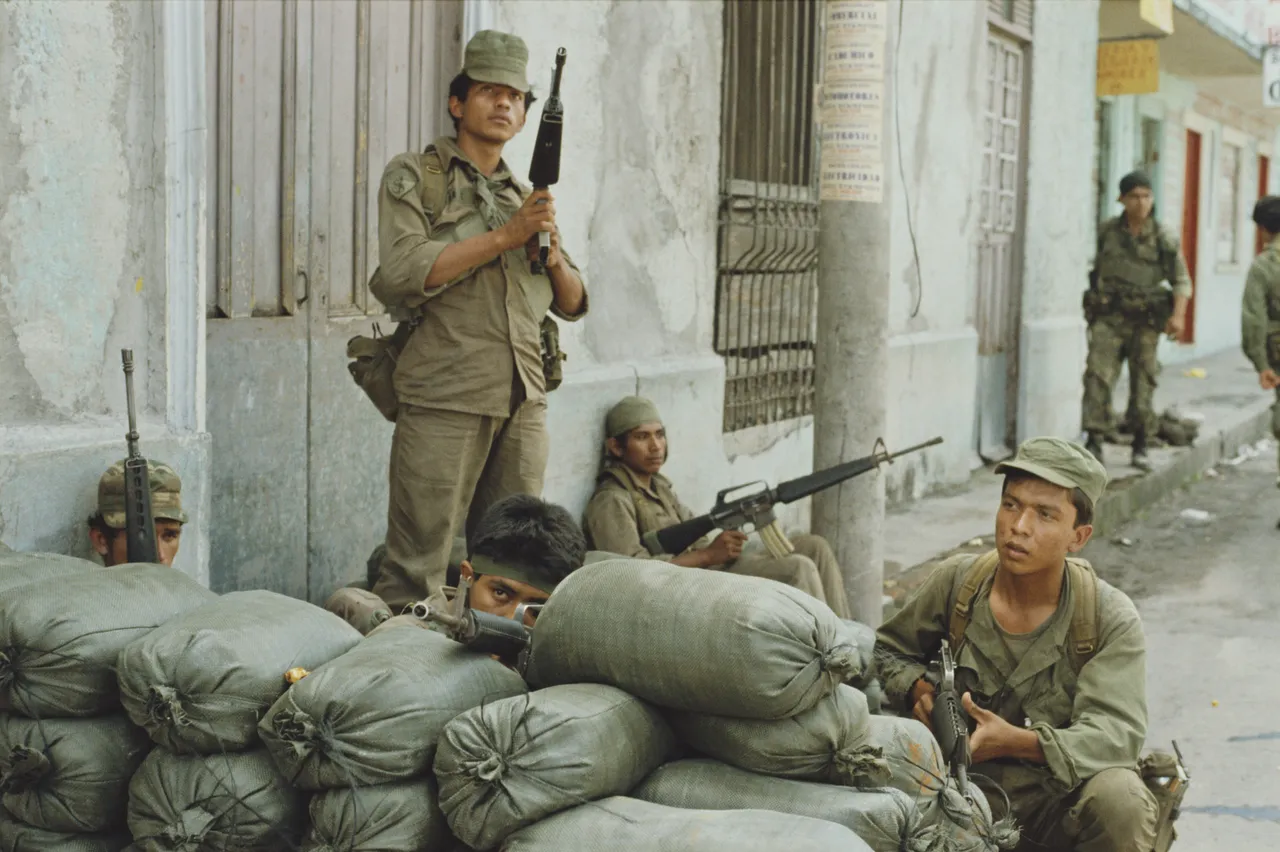
Soldiers of the Salvadoran Army during an offensive by the FMLN (Frente Farabundo Martí para la Liberación Nacional or Farabundo Martí National Liberation Front) in El Salvador, during the Salvadoran Civil War, November 1989. (Photo by Scott Wallace/Getty Images)
Many fled the danger altogether, with more than 1 million citizens — roughly a quarter of the population — seeking refuge within the U.S., with 52 percent of those settling in Los Angeles.
While there, many young Salvadoran men learned from local Mexican gangs and formed organizations of their own, sparking a rivalry between MS-13 and Barrio 18.
Toward the end of the Clinton administration, the U.S. began deporting violent foreign-born criminals back to their countries of origin. Upon returning to a shattered and unfamiliar El Salvador, they helped import gang culture into the country and launch MS-13 into becoming a transnational criminal organization.
“We had a phenomenon in which deported people were arriving without any kind of control,” Montes said. “All these people arrived in different communities, different neighborhoods, settled there, and began to gain followers. This was the genesis of the gangs.”
Minister of Security and Justice Gustavo Villatoro told the Caller that it was the “enormous interference from globalist organizations” after the war that had taken control that could have stopped the gangs.
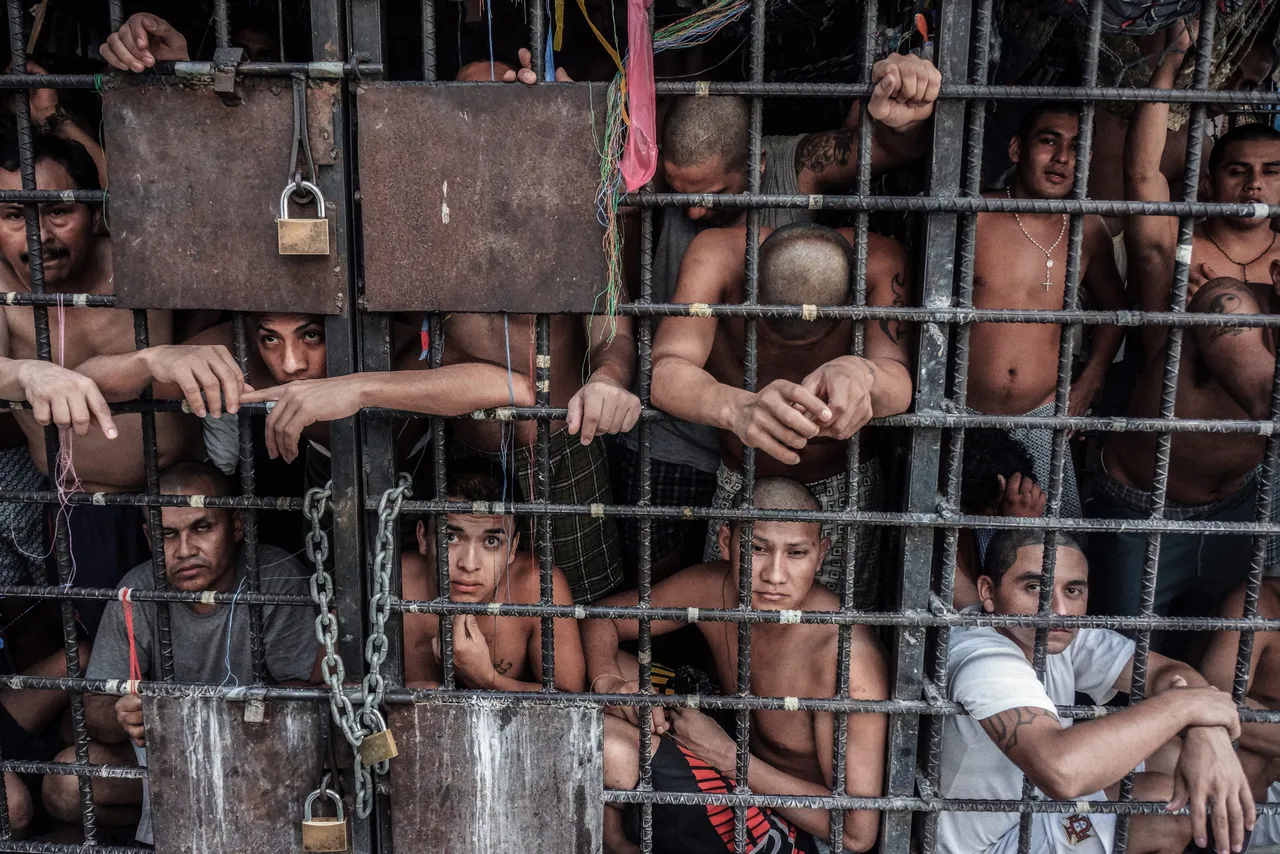
SAN SALVADOR, EL SALVADOR – MAY 20: MS-13 gang members languish in one of the three ‘gang cages’ in the Quezaltepeque police station May 20, 2013 in San Salvador, El Salvador. (Photo by Giles Clarke/Getty Images.)
While MS-13 members made their living from drug dealing and offering “protection” to small businesses in the U.S., they expanded into the extortion of the day-to-day lives of Salvadorans.
“These organizations of tattooed individuals, covered in numbers and letters we didn’t recognize, began to flourish,” Villatoro said. “We began to understand, based on how they were invading communities, that their behavior went beyond that of a criminal organization per se; it was linked to a kind of Black religion.”
Villatoro said the gangs gained more territorial control than the FMLN guerrillas had, creating a “parallel criminal state, which was the one that really ruled the communities and 85 percent of our territory.”
Ulloa said politicians on both sides of the aisle viewed the gangs as political assets, appeasing the crimes and extortions for electoral advantage.
This was the scene when Nayib Bukele was mayor of San Salvador in 2015.
🧵1/3 Gustavo Villatoro, head of El Salvador’s National Police, dismissed claims that people were arrested simply for having tattoos.
He presented a catalog detailing the various gang tattoos and symbols used to identify cliques and members, along with graffiti signatures and… pic.twitter.com/JStwaSrfUI
— Derek VanBuskirk (@DerekVBK) November 6, 2025
He later left the FMLN to create the New Ideas (Nuevas Ideas) party, campaigning for the presidency by challenging FMLN corruption and promising an end to gang rule.
Ulloa recounted receiving an urgent call from Bukele, who asked him to be his running mate moments before their official registration had to be submitted. Ulloa agreed, but later joked with the Caller that he didn’t even have time to discuss it with his wife.
Despite taking office with a 53 percent victory in 2019, Ulloa said the young but popular party spent its first years unable to enact meaningful reforms because it lacked sufficient support in the Legislature.
“From 2019 to 2021, it was a time of back and forth, because we wanted to do things and the… Assembly wouldn’t let us,” Villatoro said. “It was like that until 2021 that President Nayib Bukele’s security cabinet was finally reconfigured… and that’s where… the war protocol against these criminal organizations really began to be activated.”
Ulloa said they officially declared war against the gangs in 2022 through the Territorial Control Plan, boosting law enforcement and allowing officers to move neighborhood by neighborhood to arrest gang members en masse.
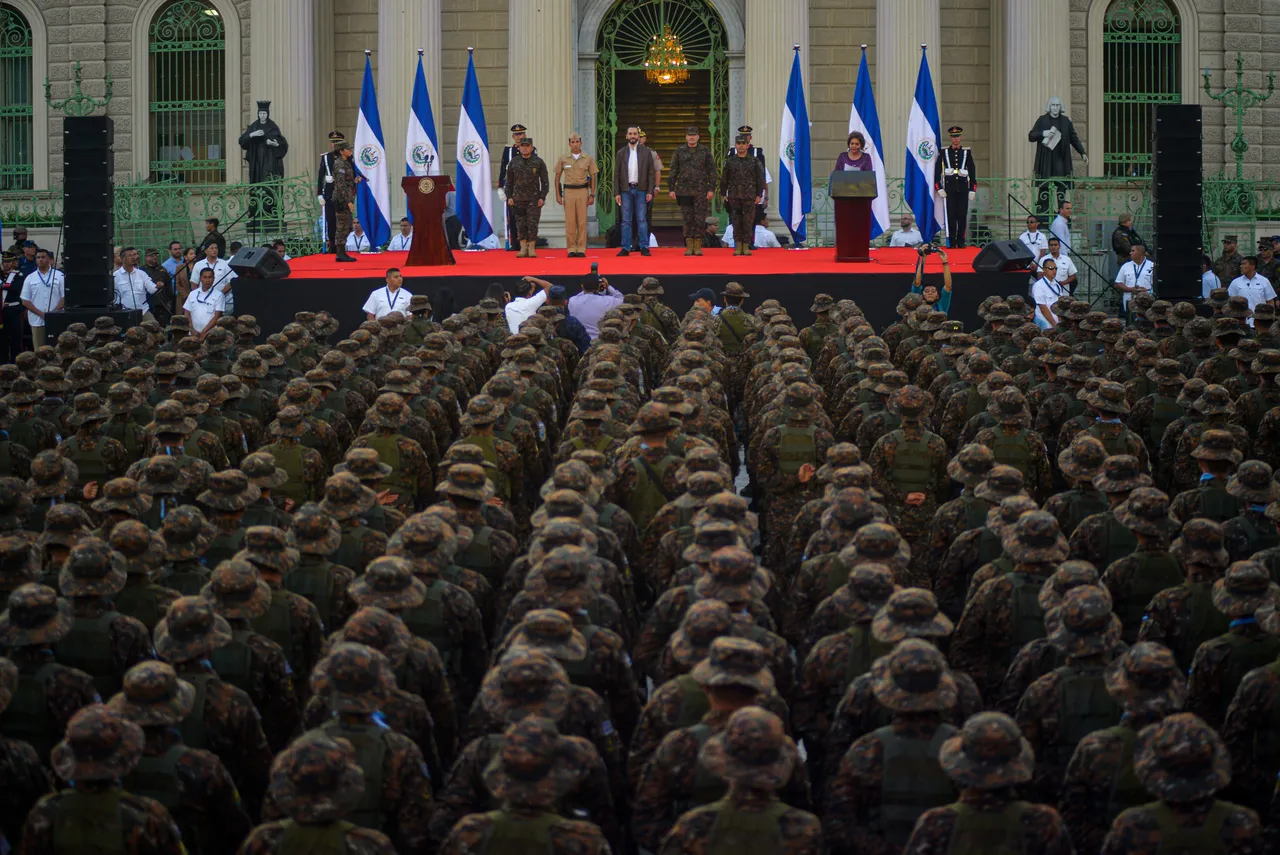
SAN SALVADOR, EL SALVADOR – FEBRUARY 18: General view of soldiers from the Salvadoran army observing President of El Salvador Nayib Bukele during the incorporation ceremony of the new members of the Salvadorian Armed Forces at Plaza Barrios on February 18, 2020 in San Salvador, El Salvador. (Photo by Camilo Freedman/APHOTOGRAFIA/Getty Images)
Bukele’s new Legislative Assembly, now controlled by Nuevas Ideas, approved a constitutional process, known as the State of Exception, which temporarily suspends aspects of due process, including the right of association, the right to be informed of the reason for an arrest, and the right to legal counsel. Those suspensions have continued to be renewed consecutively every 30 days.
This allowed Bukele to rely on mass incarceration, with an estimated one percent of the country’s population imprisoned by 2024 while his approval rating remained remarkably high.
To prosecute these individuals, Villatoro told the Caller that police used gang tattoos to identify members and connect them to their clique. Rather than prosecuting suspects individually, Ulloa said that the “structure” of local gangs stood trial collectively, with sentences handed out based on each suspect’s position in the gang.
To hold these prisoners, Bukele commissioned the Terrorism Confinement Center (CECOT), a sprawling “supermax” prison designed to contain up to 40,000 alleged gang members and become a symbol of his strength and authoritative control.
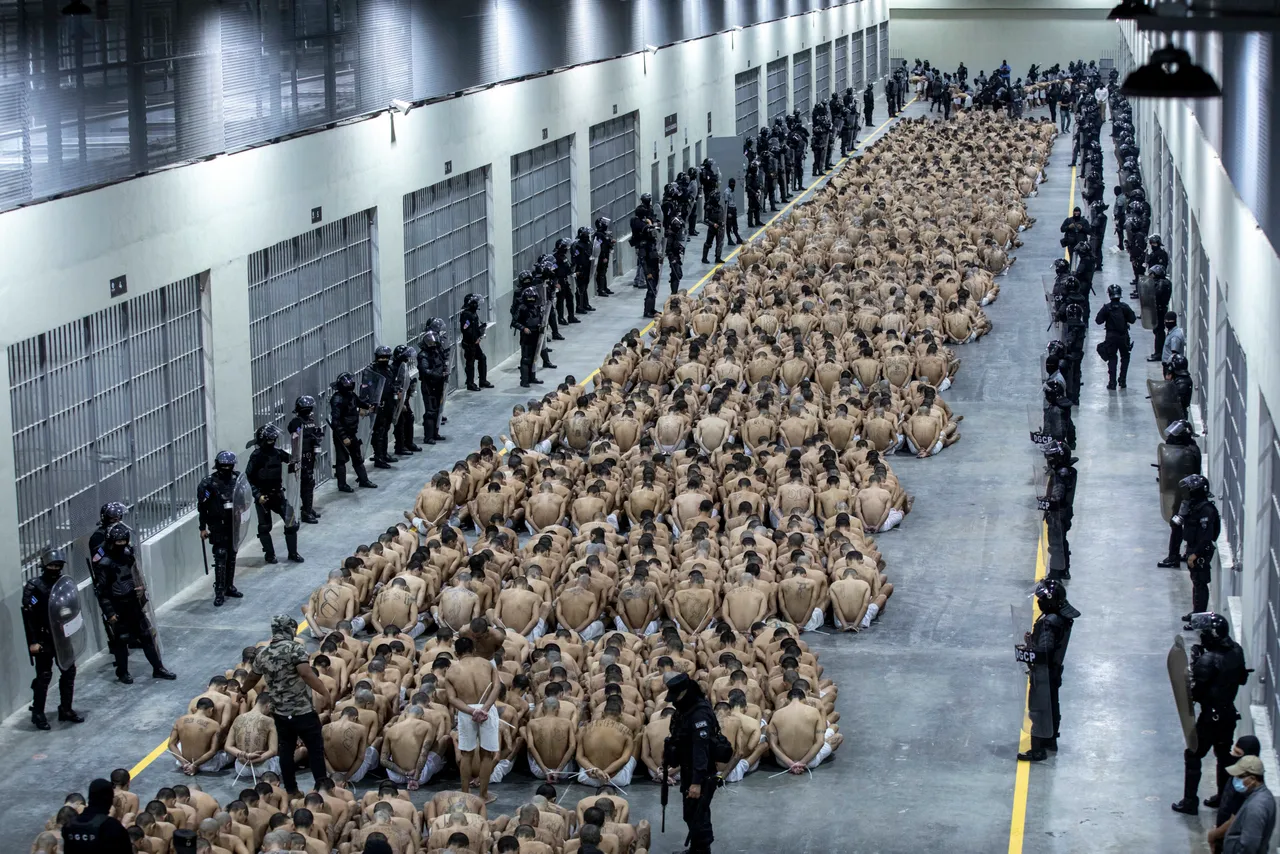
TECOLUCA, EL SALVADOR – MARCH 15: A second group of 2,000 detainees are moved to the mega-prison Terrorist Confinement Centre (CECOT)on March 15, 2023 in Tecoluca, El Salvador. (Photo by Handout/Presidencia El Salvador via Getty Images )
While his methods still face scrutiny and allegations of human rights violations, there is no doubt that Bukele has achieved the safety he campaigned on.
“One of the results that we can feel proud of is that we liberate the communities from the chains of the guards,” Ulloa said, adding that before, “people finish their labor work… and they get into the house and close the door and keep inside. That was the way … Now, when it comes to all these people from these communities, they feel free, and the peace has returned to the harmony among their neighbors…”
Many locals and vendors repeated the same claim to the Caller, saying they are now free to move about the country and walk down the street without fear for their lives. Many said tourists have begun to flood the country in response to its increased safety, bringing with them job opportunities and prosperity.
If you want to learn more, watch the new Daily Caller documentary “Inside CECOT: The World’s Most Dangerous Prison”