Trump Accuses Gas Stations Of Price Gouging, His Former Labor Data Nominee Disagrees
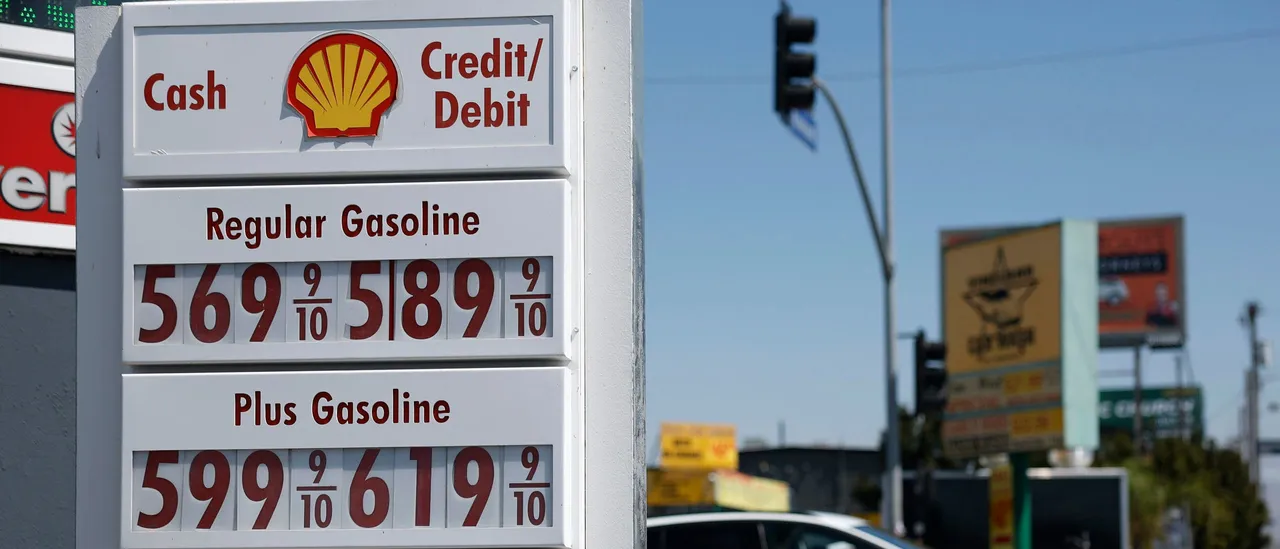
President Trump posted on Truth Social Monday, calling for gasoline retailers to bring prices down to $2.50 per gallon, accusing them of price gouging.
Trump stated that gas prices were too high considering that oil costs $68 a barrel, and that if the retailers did not immediately lower their prices, they would face big problems. He specifically called out California, saying its government should stop charging heavy taxes on gas. However, economists and even investigations by government regulators have found little evidence for the claim. (RELATED: Tech Giant Joins Forces With California Following Massive Feud With Trump)
“The Retailers must quickly react to this statement, and do what they know is right — DROP YOUR PRICE FOR OUR GREAT AMERICAN PEOPLE!” Trump wrote. “There will be no gauging, [] which is totally illegal. If Retailers don’t do this, big problems lie ahead!”
Almost a week earlier, Trump called out the “big oil companies,” whose prices were not dropping along with the price of crude oil.
“In other words, customers are being ‘gouged.’ I have instructed the DOJ to immediately start looking into this,” Trump stated.
Over the last few years, the federal government and several state governments have launched investigations into whether gas stations were price gouging. According to the US Oil and Gas Association, multiple reports from the Federal Trade Commission (FTC) have come up empty-handed. What at first seemed to be intentional gasoline price disparities have turned out to be based on market factors every time. And blaming it on “big oil companies” may be unfounded.
“Most gas stations, even ones with license branding from a major corporation, are single-store operators,” EJ Antoni, chief economist for the Heritage Foundation, told the Daily Caller. “In fact, the major oil companies operate less than 1 percent of stations. The vast majority of branded stations are franchised or independently owned.”
Antoni — who withdrew his nomination to serve as Trump’s Bureau of Labor Statistics commissioner in August 2025 — went on to explain that there are currently high levels of uncertainty in the oil industry and depleted oil reserves. The oil supply chain cannot snap back to normal right after the Iran war ends. It takes time to level out.
“Refineries and other oil infrastructure have been delaying maintenance and running at over 100 percent capacity in some instances to mitigate price increases during the war, and now those extraordinary measures must be reversed,” Antoni pointed out. “That means price increases were delayed, not eliminated.”
“There are also supply chain dynamics which prevent oil and gasoline prices from moving in lockstep sometimes. In mid Apr, for example, the American crude benchmark spiked to more than $110 while retail gasoline prices fell slightly,” Antoni continued. “Many wholesale and retail sellers of gasoline are now making up for previous losses when their own costs spiked.”
In addition, the oil prices Trump references are generally futures contracts, which means they are different from what the oil refineries are presently paying for crude oil. So when Trump is saying that oil is now $68 a barrel, the refineries may actually be paying more, which may contribute to the gas price.
“Refineries have been paying more than the futures price for much of the last several months—a market condition called backwardation—so costs within gasoline supply chains have been higher than most people realize,” Antoni said. “The fastest way to bring down prices at the pump is to simply end the war with Iran.”