How The FBI Will Blindfold Americans Until Congress Approves More Warrantless Spying
How often does the FBI improperly eavesdrop on the texts, calls and emails of Americans?
The question is at the heart of the Capitol Hill debate over Foreign Intelligence Surveillance Act (FISA) Section 702, a tool that simplifies collecting intelligence on foreign nationals but also permits “backdoor” spying on Americans.
FISA Section 702 targets foreign nationals, but it also hoovers up the communications of Americans when they’re on the other end of the text thread or email chain. The FBI can peer into its classified mass surveillance database for dirt on Americans without ever asking a judge for a warrant.
Privacy advocates in Congress want to require a warrant except in now-or-never situations.
Some members of Congress and the corporate media frequently cite the intelligence community’s claim that Section 702 informs 50-70% of items in the President’s Daily Brief, while never specifying how much of this intelligence requires warrantless spying on Americans.
“What the ‘intel bros’ constantly do is conflate the use of Section 702 to surveil foreigners with the use of Section 702 to surveil Americans,” Gene Schaerr, an attorney for Carter Page, the Trump campaign aide whose targeting under a separate FISA provision set the stage for the Russiagate hoax, told the Daily Caller News Foundation. “They’re constantly playing this game of flimflam. Nobody disagrees that 702 is really important. The question is why do you need to surveil Americans? They never even try to make the case.”
Americans have limited visibility into the scale of FISA’s intrusions. There are reporting requirements meant to curb abuses, but the intelligence community grades its own paper and keeps the details about noncompliance secret.
The FBI did not respond to requests for comment.
It’s not precisely clear when Congress will reauthorize the spy authorities after missing a June 12 deadline. The tussle over Section 702 is one facet of a complex battle between President Donald Trump and Congress that also involves a voter ID law called the SAVE America Act and Trump’s candidates to replace Tulsi Gabbard as America’s spy chief. (RELATED: Lawmakers Won’t Stop Singing Praises Of Fed’s Favorite Warrantless Spying Tool)
A recent court filing revealed the FBI holds 39,650 records that may shed light on the frequency of abuse. But the Department of Justice (DOJ) wont release even a tiny fraction until August — by which time it’s likely the bureau’s spooks will have already secured an extension of the program.
The scale of the FBI’s snooping is unknown. But it’s clear that any American can fall into the FBI’s dragnet, even the president, Schaerr points out.
“Section 702 can be used against any American, including the president after he leaves office. It could be used to target him now!” said Schaerr, who also serves as general counsel for the Project for Privacy and Surveillance Accountability (PPSA). “All it would take is some rogue actor somewhere in the FBI.”
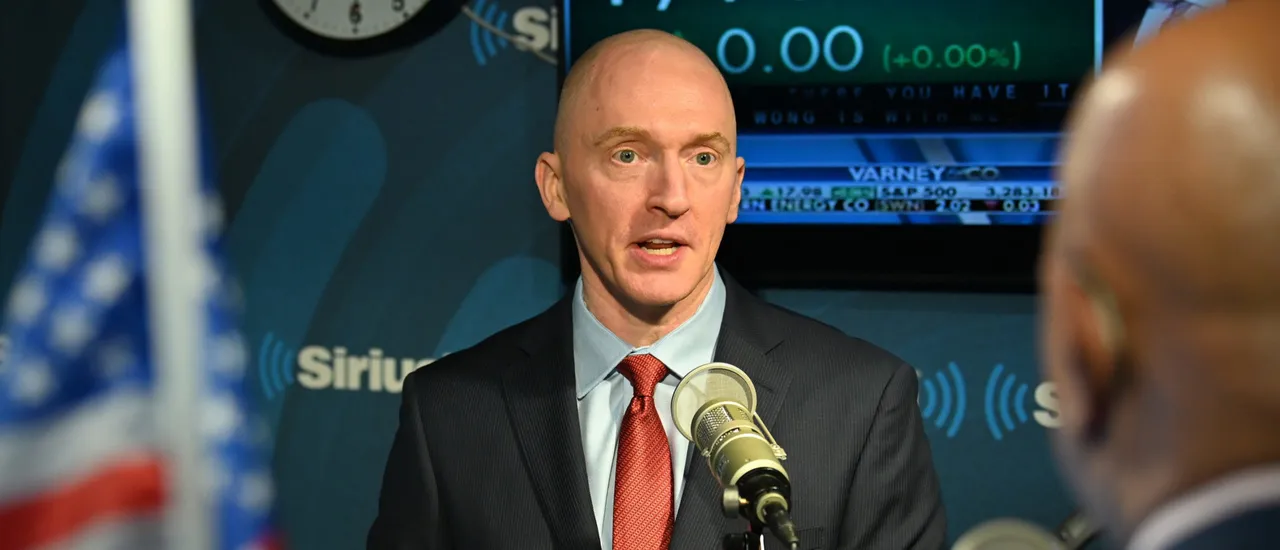
Carter Page, former foreign policy adviser to Donald Trump during his 2016 presidential election campaign is pictured in January 2020 in New York City. (Photo by Slaven Vlasic/Getty Images for SiriusXM)
That may help explain why Trump’s position has been tricky to track: The White House has urged congressional Republicans to renew FISA Section 702 without changes, rankling civil libertarians in Congress who want to seek stronger protections of Americans’ constitutional rights against unreasonable search and seizure. Trump had in April called for an extension without further reforms even while acknowledging the FBI had wielded the law against him.
“I am willing to risk the giving up of my Rights and Privileges as a Citizen for our Great Military and Country! Our Military Patriots desperately need FISA 702, and it is one of the reasons we have had such tremendous SUCCESS on the battlefield,” Trump wrote at that time.
But last week Trump threw a wrench into Senate Majority Leader John Thune’s plans to renew it with support from Democrats by tying its passage to the SAVE Act, which has no support from Democrats and limited support among Republicans. The Daily Caller reported last week some Republican senators oppose the bill because of resentment of Trump.
Trump attended a contentious lunch with Senate Republicans to push his election integrity bill on Wednesday. Thune hours later adjourned the Senate for a two week recess. (RELATED: 19 House Republicans Bucked Their Party After GOP Leaders Refused To Include Warrant In Spy Tool Extension)
So … when something “doesn’t have the votes” we’re supposed to give up on it, but only if it’s a popular bill like the SAVE America Act?
Meanwhile, a less-popular bill like FISA 702 reauthorization—which also “doesn’t have the votes”—is something we should keep trying to pass. https://t.co/bMBLCGyTrd
— Mike Lee (@BasedMikeLee) June 23, 2026
Earlier this month 19 House Republicans bucked the White House and voted down Section 702 renewal without a warrant provision. Rep. Thomas Massie has criticized Trump for his sudden embrace of Section 702.
“I’ll continue to support the valid Constitutional position that Trump, [House Judiciary Chair Jim] Jordan, and [Vice President JD] Vance have all expressed strongly in the past: No FISA reauthorization without a warrant requirement for US citizens!” he said in March.
I’ll continue to support the valid Constitutional position that Trump, Jordan, and Vance have all expressed strongly in the past:
No FISA reauthorization without a warrant requirement for US citizens! pic.twitter.com/FVAXJLFScf
— Thomas Massie (@RepThomasMassie) March 24, 2026
Asked by reporters on Capitol Hill on Monday if Trump would veto FISA Section 702 without the SAVE Act, Thune responded with uncertainty.
“I certainly would hope if we can get FISA off the floor, he would sign it,” he said.
The ‘Intel Bros’The FBI won’t begin relinquishing the documents about FISA abuses until Aug. 15, and will first release just 128 pages, according to the June 5 filing in a lawsuit brought by the Cato Institute in October 2025 under the Freedom of Information Act.
Americans don’t want FISA 702 without a warrant
They want the SAVE America Act
If you’re with me on this, post one of these: 🇺🇸 https://t.co/0gHhNwMQob
— Mike Lee (@BasedMikeLee) June 17, 2026
The FBI has an incredible 99% compliance rate, according to a legally mandated report by the Office of Director of National Intelligence and the DOJ, but the fine print notes that the DOJ audited just a snapshot of all searches.
The Foreign Intelligence Surveillance Court (FISC), the secret court that oversees FISA, found in an April 2022 ruling that the FBI had abused the Section 702 database 278,000 times. Congress passed reforms in 2024, but those reforms would have only prevented two of those improper “backdoor” searches in 2022, according to the Brennan Center for Justice.
More evidence emerged this year that the FBI peeks at Americans’ emails more often than it reports.
Members of Congress say they have read a March legal opinion from the FISC, revealing routine abuses of Americans’ constitutional rights. The ruling remains classified, but press reports indicate that it sharply criticized a filter on the mass surveillance database that underreports searches on Americans’ information.
The DOJ appealed the ruling. A bipartisan group of senators has demanded its immediate declassification. The administration has not provided a timeline for doing that, Keith Chu, a spokesman for Sen. Ron Wyden, told the DCNF.
FISA doesn’t require declassification of the ruling until September, by which time Section 702 is likely to be renewed.
Some proponents admit that FISA searches could not be justified by “probable cause,” but are needed in the earliest moments of an FBI investigation when little information is available. Their usefulness in part derives precisely from the low legal bar that makes them so controversial, they say.
(Photo credit: U.S. Department of Justice/Handout via REUTERS/Getty)
Searches of FISA data must meet three criteria: an authorized purpose related to evidence of a crime; a limit on the retrieval of unnecessary intelligence; and a specific factual basis for the search. The DOJ National Security Division reports the FBI’s so-called “noncompliance reports” to Congress and to the secret federal court that oversees FISA. But the American public never sees them.
In Cato’s lawsuit for more transparency, it seeks more documents related to any noncompliance reports from the June 2023 through August 2024 period. Cato asked for more recent documents, but the FBI has simply refused to produce them.
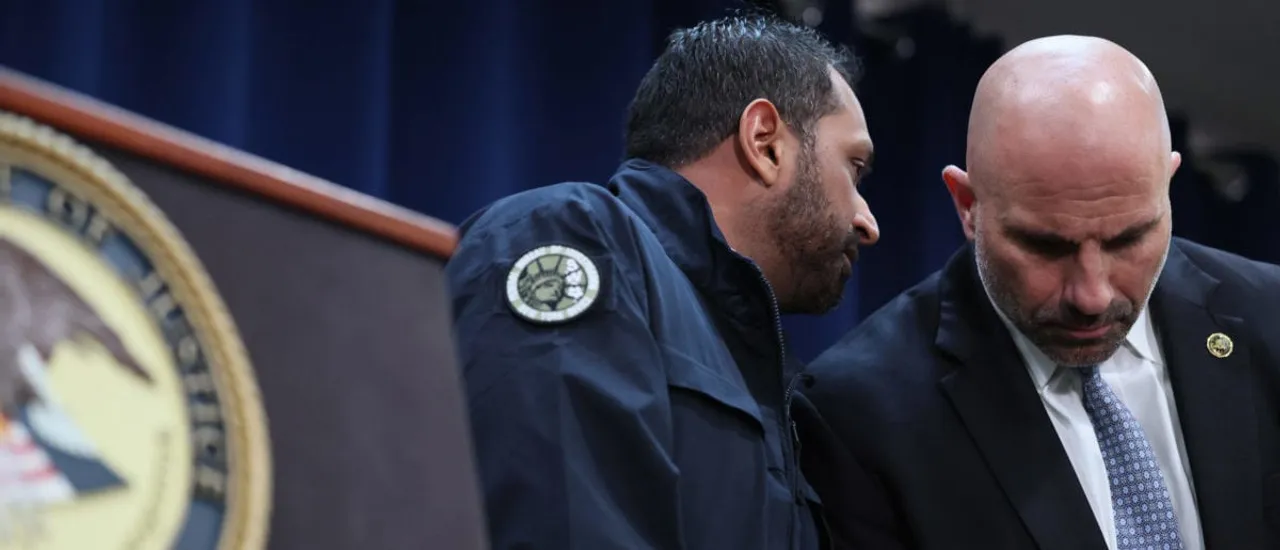
FBI Director Kash Patel whispers to Assistant Director in Charge of the NY Field Office of the FBI Christopher Raia during a press conference on October 23, 2025 in New York City. (Photo by Michael M. Santiago/Getty Images)
The FBI delaying 39,650 records about noncompliance may show the extent of the problem, Cato points out.
Remarkably, the same sort of delay occurred around the last FISA deadline in April 2024. The DOJ released the records about FISA noncompliance reports a few weeks after Congress passed a two-year extension that spring.
“By keeping the program audits out of public view, Justice was shielding the program from criticism that could tank the surveillance program,” Cato Institute Senior Fellow Patrick Eddington wrote at that time.
Proponents emphasize that the program penetrates parts of the world where the IC has limited human sources. For instance, the Chinese government compromised America’s spy network and systematically executed CIA assets from 2010 to 2012, setting back intelligence gathering there for years.

People walk past a video screen showing a speech by Chinese President Xi Jinping at the Museum of the Communist Party of China in Beijing in March 2023. (Photo by GREG BAKER / AFP) (Photo by GREG BAKER/AFP via Getty Images)
In the meantime, 702 backdoor spying on Americans hums along as usual. The secret court overseeing the program has already approved it for another year, even as the Trump administration challenges changes the court demanded to its filtering tools.
The DCNF asked the 10 largest American telecommunications firms if they would continue to comply with the program before a more permanent extension. None replied.
All content created by the Daily Caller News Foundation, an independent and nonpartisan newswire service, is available without charge to any legitimate news publisher that can provide a large audience. All republished articles must include our logo, our reporter’s byline and their DCNF affiliation. For any questions about our guidelines or partnering with us, please contact licensing@dailycallernewsfoundation.org.