What Kevin Warsh Faces Heading Into The Fed
It is no exaggeration to say that newly installed Federal Reserve Chairman Kevin Warsh will be one the most scrutinized heads of the institution.
His highly anticipated debut in this new role is scheduled for the central bank’s meeting during the third week in June. As with his predecessors, his every public statement will be subject to debate and interpretation.
Markets would gyrate and traders would carefully dissect his tone when former Fed Chairman Alan Greenspan would indicate that he was “cautiously optimistic.” His successor Ben Bernanke inherited and presided over the “too big too fail” era in banking, and was jointly awarded the Nobel Prize in 2022 with two other economists “for research on banks and financial crises.” As for Jerome Powell, he will have his own balancing act as a former chairman now sidelined to member status. (RELATED: The Case For A Smaller, Humbler Federal Reserve)
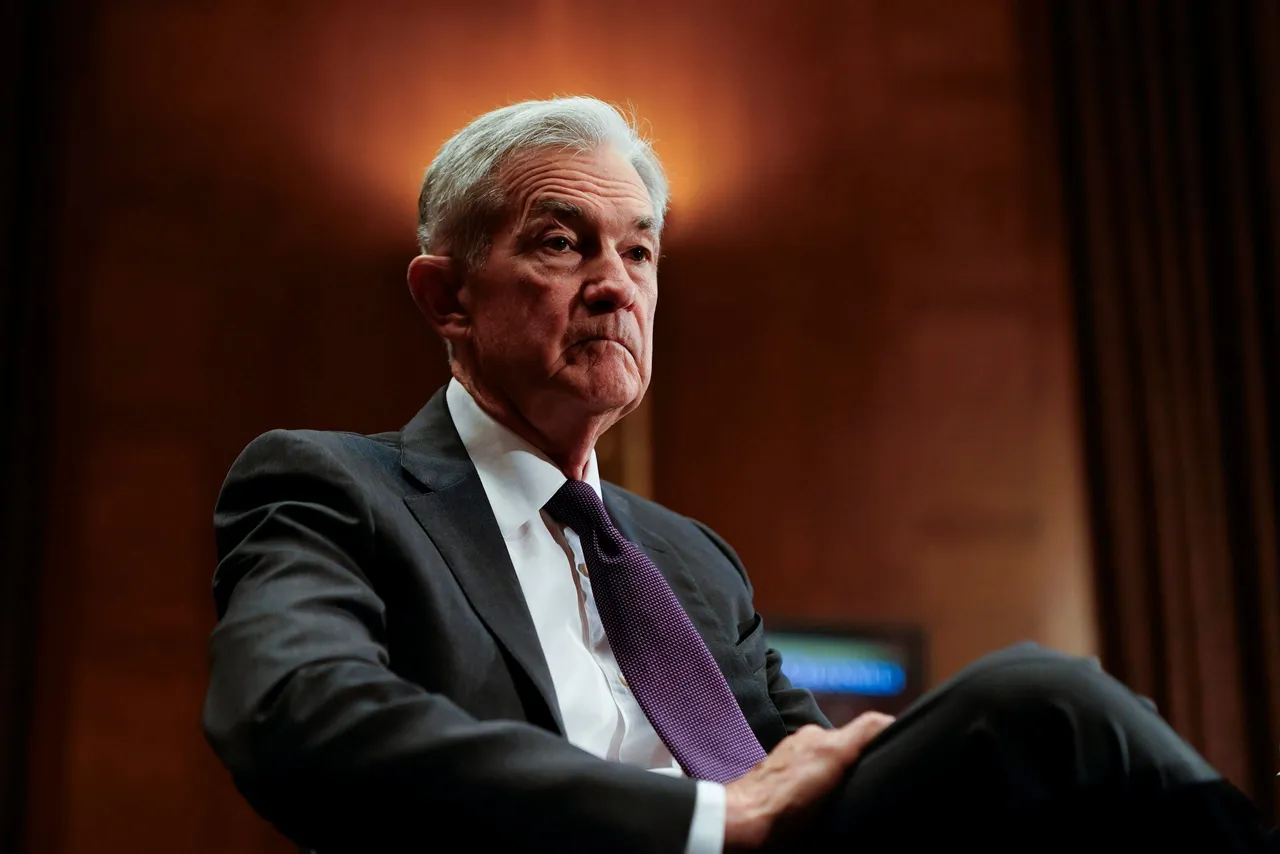
WASHINGTON, DC – JUNE 25: Federal Reserve Chairman Jerome Powell testifies before the Senate Committee on Banking, Housing, and Urban Affairs during a hearing to “examine the Semiannual Monetary Policy Report to the Congress” on Captiol Hill on June 25, 2025 in Washington, DC. (Photo by Kent Nishimura/Getty Images)
Like many other government initiatives of the 20th century, the debate over establishment of a U.S. central bank was a tug of war between private sector acolytes and big government ideologies. As the American economy transitioned from a primarily agrarian to a more industrial economy, the need for a secure central banking system became essential rather than optional.
The First Bank of the United States was formed in 1791 and the Second Bank of the United States in 1816. It was the Panic of 1907 consisting of a run on several banks and the failure of a few that motivated the 62nd Congress to create a National Monetary Commission (NMC) to provide recommendations for the American monetary system. The NMC recommendation for a National Reserve Association was rejected as concentrating too much power in the private banking industry.
Upon the election of President Woodrow Wilson and a Democratically controlled Congress, a new framework proposing a grouping of regional reserve banks gained traction. This resulted in the Federal Reserve Act of 1913 (FRA) specifying between 8 and 12 independent regional banks and a board of governors based in Washington D.C.
The FRA created a diffuse central banking system with a hybrid of public and private sector influence as well as a board nominated by the President and confirmed by the U.S. Senate. It was intended to be a stabilizing monetary institution free from political pressures, however, events of economic force majeure often invite government intervention and entangle the independent central bank.
Although public attention focuses on the chair, the reality is that the Open Markets Committee is central to many of the key decisions. It’s likely that as with most other government entities, Mr. Warsh will have to overcome institutional resistance to his vision. Under his leadership, the Fed will have to evaluate the current state of the economy to make a few major pivotal decisions. (RELATED: Trump Nominates New Director Of National Intelligence)

WASHINGTON, DC – JULY 24: U.S. President Donald Trump (C) walks with Federal Reserve Chair Jerome Powell (R) and Sen. Tim Scott (R-SC) (L) as they tour the Federal Reserve’s $2.5 billion headquarters renovation project on July 24, 2025 in Washington, DC. (Photo by Chip Somodevilla/Getty Images)
The first is regarding balancing interest rates with inflation. Lowering rates has the obvious consumer benefits of making credit more easily obtainable, particularly for those at the lower end of the economic spectrum. This measure can be used to forestall a recession, however, increased consumer purchasing power also risks higher inflation. It’s a careful balancing act that Mr. Warsh will have to perform.
The second is managing the size of the Fed balance sheet. Quantitative tightening can be used to offset the potential for higher inflation and can shrink the overall footprint of the central bank, which will be beneficial in managing the core responsibility of monetary policy. The balance sheet ballooned to nearly $9 trillion in 2022 and still stands at about $6.7 trillion today, which equals about 18% of the current national debt.
The final challenge for Mr. Warsh will be less decisional and more of an exercise in management and efficiency. It includes disposing of all the constructs which should have no role in central bank governance and serve to weaken its essential mission of effective monetary policy. These are extraneous matters such as climate change, inequality, DEI and social issues broadly which are not within its mandate. Various divisions of the bank have sought to make environmental and other issues a core part of the decision making process.
Mr. Warsh’s inaugural meeting comes on the heels of a hot jobs report which defied economists expectations and a stock market that has touched record highs.
The American public will benefit from a clear signal that the institution which he now helms will be returned to its original mission with externalities discarded. With the dollar as the world’s reserve currency, it is not only the domestic economy, but global markets as well that will inhale awaiting his opening comments.
Hopefully, after hearing from him, the public will be able to say that we are “cautiously optimistic.”
Manisha Singh is Founder of Sunstone Strategy Group, a geopolitical advisory firm and Former Assistant Secretary for Economic and Business Affairs at the U.S. Department of State.
All content created by the Daily Caller News Foundation, an independent and nonpartisan newswire service, is available without charge to any legitimate news publisher that can provide a large audience. All republished articles must include our logo, our reporter’s byline and their DCNF affiliation. For any questions about our guidelines or partnering with us, please contact licensing@dailycallernewsfoundation.org.