Fraud, the Fed, and Unchecked Power
The most fundamental axiom in modern political science was that of Lord Acton—”power tends to corrupt, and absolute power corrupts absolutely.” Although the corruption in our federal government under Joe Biden reached epic levels, the problem preceded that hapless president.
Such corruption as afflicts our government was accelerated by the progressives, Woodrow Wilson in particular, who deluded themselves into believing that independent government agencies, staffed by experts, could be created to impartially and wisely carry out sound policies. Their plan might have worked if those experts could have been found among some species of men more like angels than their fellow humans—but, of course, they were and are not.
Secretary of the Treasury Scott Bessent has just suggested that up to 10 percent of federal government expenditures are fraudulent, and that the figure is somewhere in the hundreds of billions of dollars. This level of fraud is perpetrated either because of the impossibility or the unwillingness of politicians and the press to monitor this misconduct.
His perception of this problem is, of course, what has led to President Trump’s railing against the “deep state,” which is political shorthand for a corrupt and entrenched system of bureaucracy and unchecked agency power.
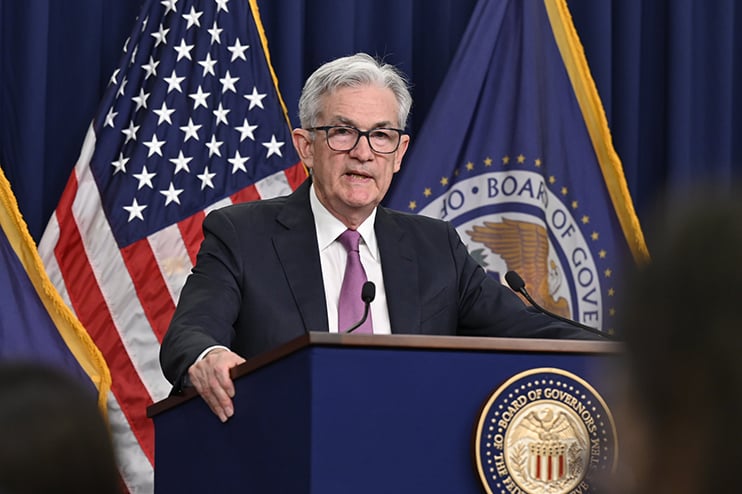
It is against this backdrop that we should understand what appears to the legacy media and present and former bureaucrats as the president’s misguided vendetta against Jerome Powell and the Federal Reserve.
The ostensible source of the president’s ire against Powell is that Powell allegedly gave false testimony to Congress about the cost and nature of the purportedly opulent refurbishing of the Fed’s Washington headquarters, for which the Justice Department has initiated criminal proceedings.
According to Powell, he is being prosecuted for failing to lower interest rates in a manner the president prefers. But perhaps the president, viewing things from his populist perspective, is actually launching an attack on the very notion of an independent Fed—a concept that is inconsistent with the Constitution itself.
Consistent with the original Blackstonian understanding of the English Constitution, and with Montesquieu’s ideas set forth in The Spirit of the Laws(1748), our founders, and, in particular, Hamilton, Madison, and Jay, believed that the only way to keep the federal and state governments responsive to the sovereign American people was to set up a system of checks and balances. In England, the monarchy was checked by the Lords and Commons; in America, the executive, the legislative, and judicial branches police one another, as any reader of the Federalist quickly comes to understand.
The Wilsonian progressives were impatient with what they saw as this anachronistic and cumbersome system, and one result of their impatience was the relatively unchecked power they eventually granted the Fed. According to their original conception, the president, with the advice and consent of the Senate, would appoint bankers to the Fed, but after that they were supposed to operate insulated from politics, setting monetary policy only in accordance with their presumed expertise.
But what if there is no objectively correct and expert policy about such matters? The Fed has adopted some metrics to determine when to raise or lower interest rates, tied to presumably expert assumptions about what will or will not increase inflation and joblessness, but economists disagree about the validity of these metrics. Most presidents have thought the best way to accomplish their economic goals is to get the Fed to promulgate lower interest rates, which are favored by investors, the market, homeowners, and people in business. Trump is decidedly in that camp.
A brace of former Fed members and distinguished former bureaucrats have attacked the president for interfering with the Fed, but if what the president is really arguing for is a return to the conservative and constitutional principles that limit unchecked power and preserve the ultimate sovereignty of the American people? Might it not be the case that the fallacy of progressive ideology is his target, and these attacks on Trump, therefore, are woefully off-target?
The autocracy of experts brought us the COVID fiasco and has ushered in an era of unprecedented abuse in local, state, and federal agencies. The president and his cabinet ought to understand that they are, or ought to be, engaged in a restoration of the conservative vision of Blackstone and the framers, and a rejection of the progressive philosophy of Wilson, FDR, Obama, and Biden.
Perhaps it is asking too much of the media and politicians, but wouldn’t it be good for the polity to frame our politics, and the upcoming midterms, not in terms of “affordability,” or “identity,” but rather around the nature of popular sovereignty in the modern era, and the wisdom of deconstructing the administrative state and its expert minions?