Is Musk’s British Puppet Party About to Hand Victory to Labour?
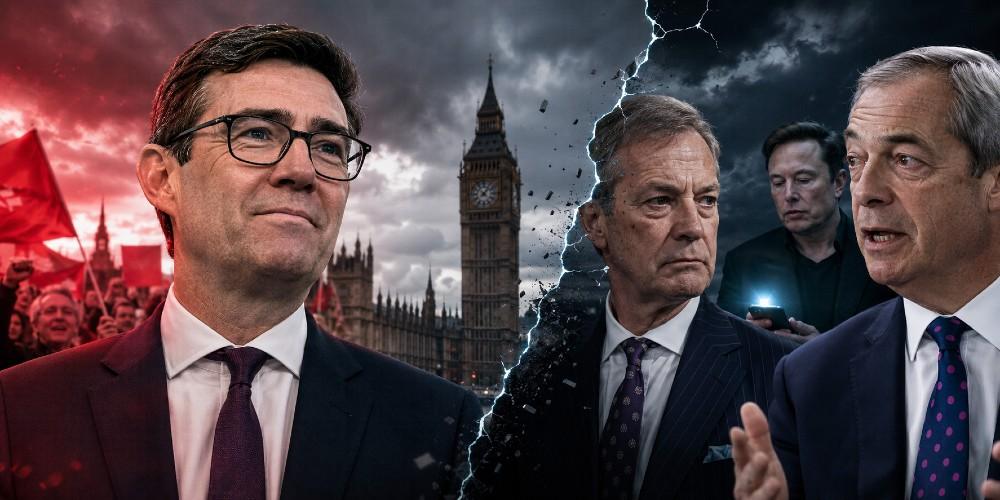
In the Makerfield constituency, a crucial parliamentary by-election looms that could reshape the future of British politics. Labour’s Andy Burnham currently leads in the polls, but the real story lies in the fracture on the right. Elon Musk’s backing of the newly formed Restore Britain party, fronted by former Reform MP Rupert Lowe, appears poised to siphon just enough votes from Nigel Farage’s Reform UK to deliver the seat to the left.
Recent polling from More in Common and the UCL Policy Lab paints a clear picture: Burnham at 45 percent, Reform UK at 40 percent, and Restore Britain trailing at eight percent. With other parties barely registering, this right-wing split could prove decisive in what was once a traditional Labour stronghold now contested fiercely amid widespread disillusionment with mass immigration, cultural erosion, and government incompetence.
Pro-MAGA. Pro-Trump. Pro-America. Pro-Family. Most importantly, Pro-Jesus. Here’s the news aggregator that delivers what America needs right now: jdrucker.comBurnham, the Mayor of Greater Manchester, is not merely seeking a return to Westminster. A victory here positions him strongly to challenge Prime Minister Keir Starmer for Labour leadership, potentially steering the party even further left and derailing any modest efforts at immigration control. For those who value national sovereignty and ordered liberty, this scenario carries profound risks.
Restore Britain emerged after Lowe’s split from Reform UK, positioning itself as a harder-line alternative. Musk has amplified the party’s message on X, declaring it essential to “save Britain.” Yet critics, including voices within the broader conservative movement, see it as a personal vehicle fueled by grudges rather than a coherent strategy for victory.
Lowe himself once warned against vote-splitting when Conservatives ran against him, decrying leaflets that effectively aided Labour candidates. The irony today is unmistakable.
The Perils of Right-Wing DivisionBritain’s political landscape has shifted dramatically. Reform UK has surged in national polls, often leading or closely contending with Labour as voters reject Starmer’s failures on borders, the economy, and cultural issues. Yet localized splintering threatens to undo that momentum precisely when unity against entrenched globalist policies matters most.
The Makerfield contest highlights deeper tensions. Musk’s involvement brings visibility and resources, but it also intensifies personal animosities between Lowe and Farage. Farage has publicly stated that such divisions play directly into Labour’s hands. With Burnham eyeing a bigger role, a Labour hold or gain here would embolden the left at a moment when populist forces were gaining ground across Europe and beyond.
This is not abstract political theater. Makerfield voters face the same pressures gripping much of the West: strained public services, demographic transformation without consent, and a ruling class seemingly indifferent to working families. Handing the seat to Burnham risks reinforcing the very policies that have fueled the rise of Reform in the first place.
Lessons from History and PrincipleConservatives and reformers have long understood that divided houses fall. Abraham Lincoln drew on biblical wisdom when confronting national division, but the principle echoes across eras. In Britain today, the right’s energy centers on reclaiming sovereignty, securing borders, and restoring common sense. Allowing ego or spite to fragment that energy invites defeat by default.
Restore Britain’s rhetoric positions it against “populism” in some statements while claiming hard-right credentials, creating confusion where clarity is needed. Voters deserve better than proxy battles between billionaires and ambitious politicians. The focus must remain on defeating Labour’s agenda, not settling scores.
Broader polling trends show Reform maintaining strength nationally, but by-elections like Makerfield test whether that support can translate without self-inflicted wounds. Conservatives, Reform supporters, and independents skeptical of the establishment share more common ground than differences on core issues of immigration, fiscal sanity, and cultural preservation.
A Call for Strategic UnityThe coming days will reveal whether British voters prioritize punishing personal slights or advancing a shared vision for national renewal. Musk’s platform has undeniably spotlighted legitimate grievances ignored by legacy parties. Yet true influence demands results, not just disruption.
For Christians and conservatives watching Britain’s struggles, the situation recalls the need for discernment amid conflict. As the Apostle Paul urged the church in Corinth amid division, “Now I beseech you, brethren, by the name of our Lord Jesus Christ, that ye all speak the same thing, and that there be no divisions among you; but that ye be perfectly joined together in the same mind and in the same judgment” (1 Corinthians 1:10).
Unity in purpose, even amid disagreement on tactics, strengthens the stand for truth and justice.
Whatever the outcome on June 18, Makerfield should serve as a warning. Splinter parties born of spite may satisfy short-term impulses but risk ceding ground to those who would accelerate Britain’s decline. The right must learn to compete vigorously while closing ranks against the left’s failures. Britain’s future—its sovereignty, its culture, and its people—hangs in the balance.