Jerusalem's construction surge is transforming the city into a modern metropolis
Jerusalem is in the midst of a construction and development boom. The number of new projects moving forward has reached record levels, and the city appears poised for a dramatic transformation in the not-too-distant future.
At a recent real estate conference hosted by the Building Center in Jerusalem, industry professionals highlighted the unprecedented scale of development underway, along with sweeping changes expected in housing, employment centers, transportation infrastructure and other sectors. Industry figures agree that today's Jerusalem is on the verge of becoming a very different city.
Gallery
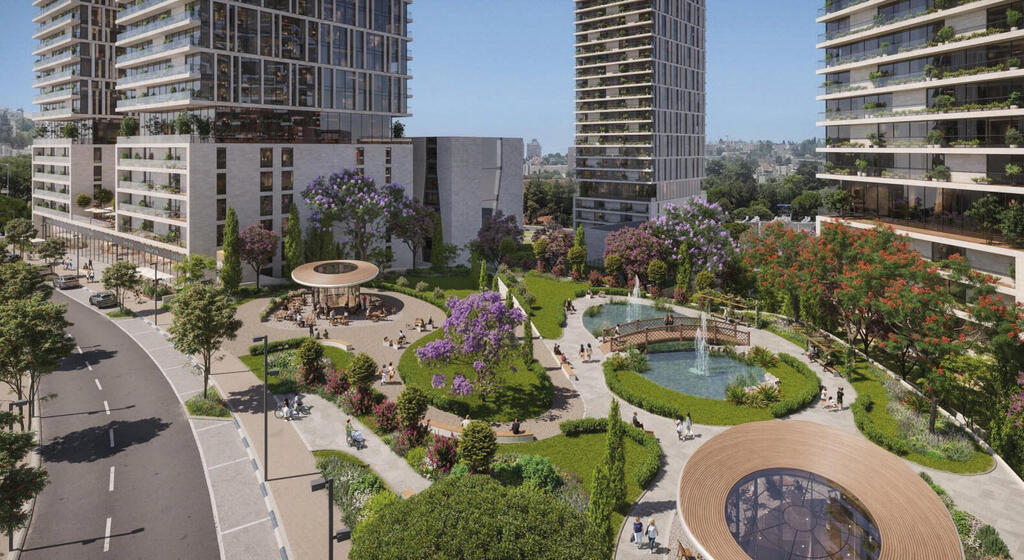
Golden City Project in Jerusalem, designed by Canaan Shenhav Architects
(Illustration: Canaan Shenhav Architects)
Racheli Kalimi, marketing director at Guy & Doron Levy, said Jerusalem is now leading Israel in its capacity for urban renewal.
MAKE ynetGlobal MY TRUSTED SOURCE
"The city has the potential to add about 50,000 new housing units through urban renewal — roughly one-third of Israel's total urban renewal potential — and that's only the first indication of where Jerusalem is headed. If the city was once seen as a place young people tended to leave, the picture has now reversed. A renewed, high-quality housing supply, combined with improved transportation access, is bringing young families back into the heart of the city."
Kalimi said two main forces are driving the transformation.
"Jerusalem's limited ability to expand geographically means virtually all future growth is directed inward through urban renewal. At the same time, the light rail has turned once-remote neighborhoods into accessible, central locations. In Kiryat HaYovel, for example, the Red Line, Jerusalem light rail, completely changed demand. Mixed-use development is a key part of this approach. It creates a more dynamic urban environment and responds to what younger residents are looking for — housing, work and leisure within walking distance. We see it as our responsibility to help build a prosperous future for Jerusalem, a modern city that remains connected to its distinguished past."
Omer Dellus-Neeman, an associate at Auerbach Halevy Architects, also described what he called a profound shift in the capital.
"Jerusalem is undergoing a real revolution in planning and construction. It is transforming from a city that for years functioned primarily as the seat of government and the end point of Highway 1 into a genuine metropolitan center. Mixed-use development is only one element of a much broader vision."
According to Dellus-Neeman, Jerusalem faced unique constraints for decades.
"There were historical limitations and significant concern about intensive development out of a desire to preserve the city's character. But in recent years, the city engineer and the district planning committee have led policies encouraging more substantial construction along public transportation corridors, allowing Jerusalem to emerge from decades of stagnation."
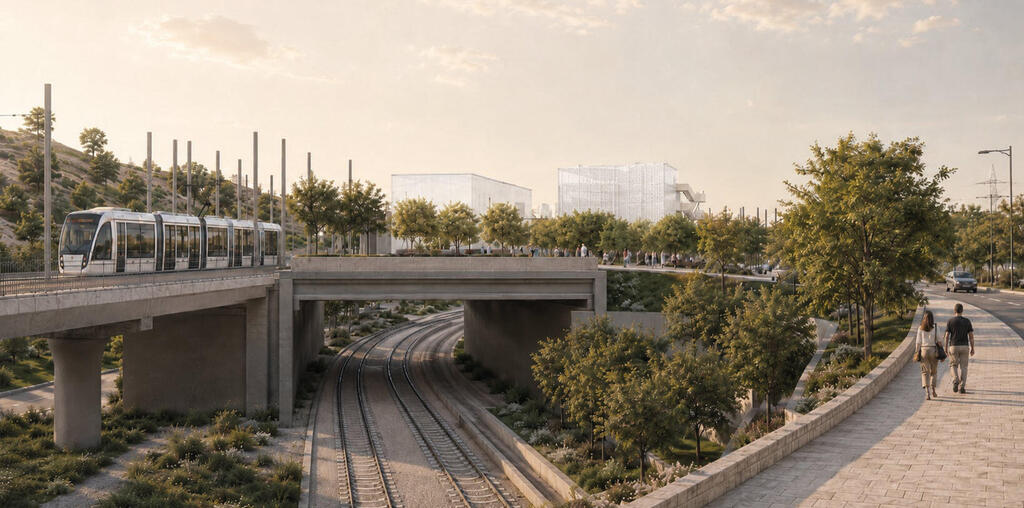
Jerusalem Light Rail Maintenance Center, designed by Auerbach Halevy
(Illustration: Auerbach Halevy Architects)
He said the city's planning model had long failed to keep pace with demand.
"Employment districts operated only during the day, while residential neighborhoods came alive only in the evening. Jerusalem's topography also required residents to travel constantly between different parts of the city. All of this created a less efficient urban environment."
Public transportation, he said, is the key to changing that reality.
"Jerusalem has spent more than a decade developing a light rail-based public transportation network. The Red Line has been operating for nearly 20 years, the Green Line is expected to open later this year and the Blue Line, which we are working on, will open in stages over the coming years. This is not just a transportation project. It's a social and economic project with the ability to bridge physical and cultural divides between different communities. It is turning Jerusalem into a truly connected city where residents can travel from almost any neighborhood to almost anywhere else."
Dellus-Neeman said comparisons with Tel Aviv are misleading because the two cities developed differently.
"Jerusalem's foundation is the opposite of Tel Aviv's. It did not grow as a business center, so the way it is developing today is different. Growth is concentrated along light rail corridors and in areas with lower environmental sensitivity. Because Jerusalem is unique, every planning decision is made with great caution. Yet that very caution is creating a significant opportunity."
He believes the city has reached a historic turning point.
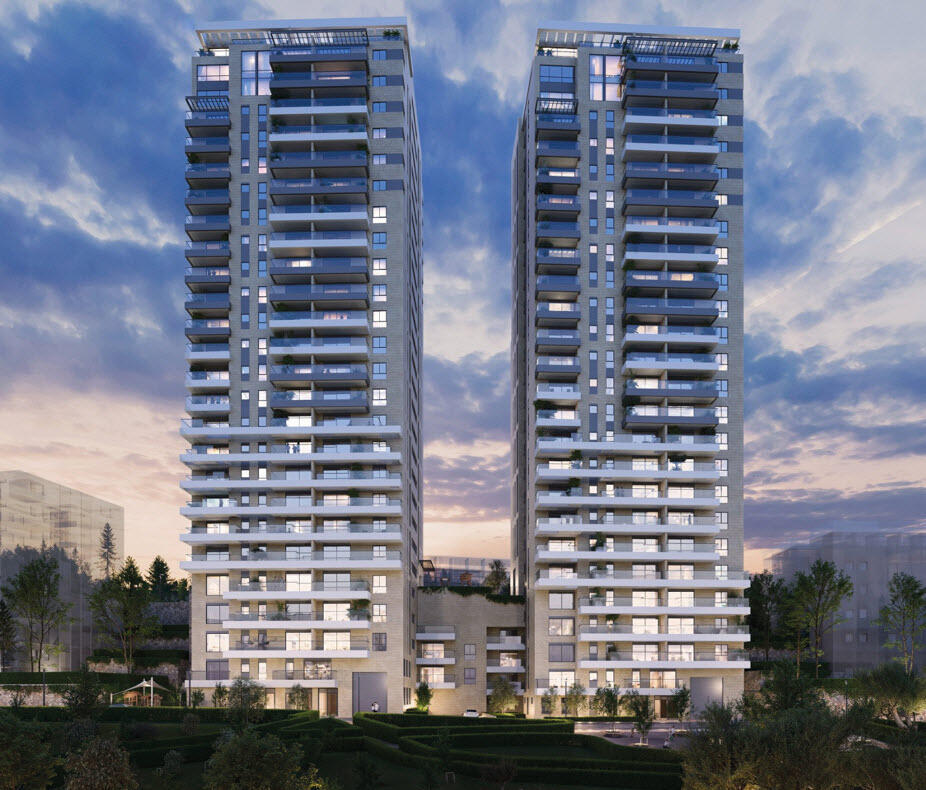
'Potential for tens of thousands of housing units'. Simulation of genius towers by Guy and Doron Levy in Kiryat HaYovel
(Illustration: TANDEM)
"Jerusalem is changing its skyline and evolving from a city that stood still for many years into a modern, vibrant metropolis that serves diverse populations through housing, transportation, culture and leisure. It is beginning to realize its true potential."
Architect Gil Shenhav, co-founder of Canaan Shenhav Architects and chairman of the Israeli forum for skyscrapers and urban construction, CVU-Israel, said Jerusalem belongs to a small group of "eternal cities."
"Like London, Rome and Istanbul, Jerusalem has thousands of years of history and an equally promising future. It is defined by layers of history. Every few centuries the city was destroyed by war, fire or conquest and rebuilt. Even what we now call Jerusalem's historic architecture is only one chapter. Long before today's stone buildings, each generation demolished, rebuilt and expanded the city. That centuries-long cycle of renewal under successive generations and governments is what makes Jerusalem so distinctive and diverse."
Shenhav said today's planners face a unique responsibility.
"A city that stops developing begins to decline. It must remain a vibrant community that renews itself with every generation. Jerusalem is experiencing an unprecedented construction boom, and our responsibility is to preserve the city's beauty and heritage while continuing to modernize it. The most important principle is sound judgment."
He said cooperation between architects, the municipality and the district planning committee has been exceptional.
"Another major challenge is the 'Jerusalem tower.' For years the city was characterized by dense, mid-rise construction. Today we are being asked to design towers of 20, 30 and even 40 stories. Jerusalem's distinctive stone architecture is being tested at those heights. We don't want to import the towers of the Tel Aviv metropolitan area. We want to develop a tower that is authentically Jerusalem."
Architect Yehoshua Gutman of Gutman Assif Architects said contemporary planning in the capital should strengthen community life by integrating different land uses.
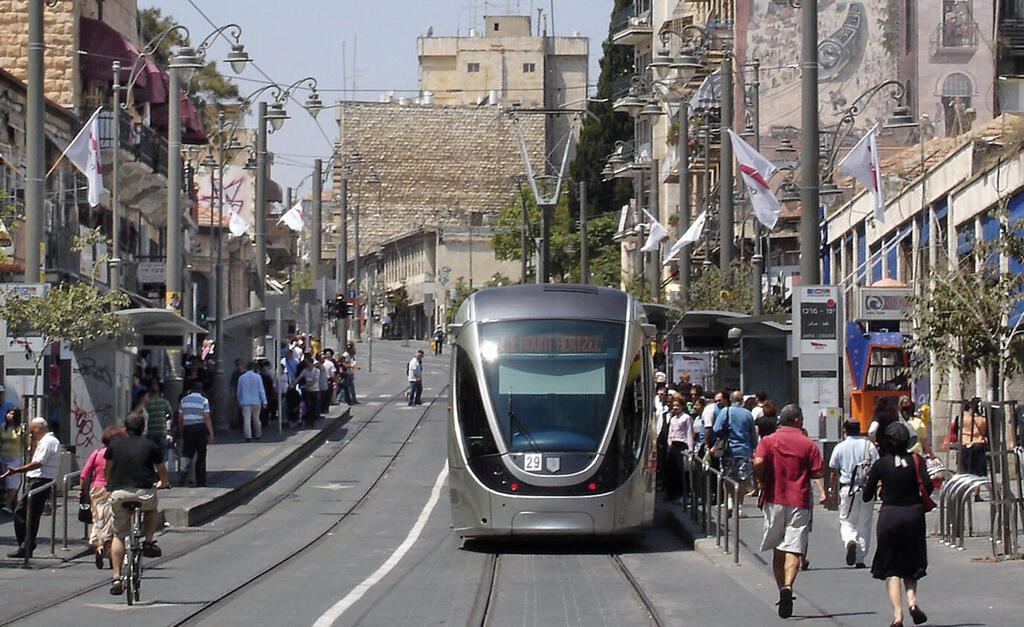
Jerusalem light rail
(Photo: shutterstock, ChameleonsEye)
"We are designing a project in East Talpiot that combines a hotel, residential units and retail space. In our view, a hotel should not serve only visitors from outside the city. It should become a neighborhood anchor that generates activity for local residents as well. Combining hospitality with housing creates genuine synergy, allowing residents to enjoy hotel services and amenities without disrupting the neighborhood's character."
According to Zohar Shriki, a partner and head of the Jerusalem region at Magma Real Estate Marketing, urban renewal is transforming neighborhoods across the city.
Areas that previously saw little or no new construction are now adding apartments designed for young couples, including three- and four-room units with protected rooms, balconies and elevators, alongside parks, children's play areas and other amenities that improve residents' quality of life.
Neighborhoods such as Katamonim and Kiryat Menachem, once associated with lower socioeconomic populations, and Talpiot, formerly an industrial district, are now seeing new residential towers that are reshaping not only the skyline but also the neighborhoods' identity.
The numbers reflect that shift. Nearly half of all residential transactions in Jerusalem involve first-time homebuyers — young couples choosing to remain in or move to the city. As the high cost of living pushes many young Israelis out of the Tel Aviv metropolitan area, Jerusalem is emerging as a genuine urban alternative, offering both a vibrant lifestyle and housing opportunities that Tel Aviv can no longer match.
A decade ago, "Jerusalem" and "high tech" were almost contradictory terms. Today the picture is entirely different.
Many technology companies now operate in the city, employing more than 25,000 people, while more than 1.5 million square meters (16.1 million square feet) of office space are under construction.
Global technology company Mobileye has opened a 128,000-square-meter (1.38 million-square-foot) development center in Har Hotzvim employing thousands of workers. Real estate company Vitania is investing about 1 billion shekels in a new office and commercial complex, while Elbit Systems and BioNTech have significantly expanded their presence in the Jerusalem Technology Park.
Government ministries, the Israel Defense Forces' new Jerusalem military campus and military colleges are also expanding.
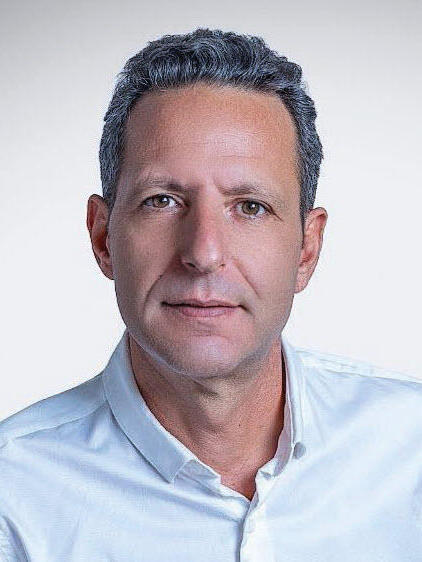 Zohar ShrikiPhoto: Laina Treuhaft Baranski
"When organizations like these arrive, they don't come alone," Shriki said. "They bring thousands of young employees, engineers, civil servants and professionals looking for quality of life, proximity to work and housing that offers good value. That's exactly the population changing the city."
Jerusalem possesses something no other city can recreate: a unique identity.
Mahane Yehuda Market, downtown Jerusalem, the First Station complex and the Nachlaot neighborhood are more than real estate assets — they define the city's character. For the first time, that identity is now supported by a growing employment base, expanding light rail service connecting more neighborhoods and housing suited to today's generation.
"There is a narrative many of us grew up with — that Jerusalem is a city people leave," Shriki said. "But anyone walking through Katamonim, Talpiot or the entrance to the city today sees a completely different Jerusalem. I've known this city all my life, and I can say with confidence that what is happening now isn't cosmetic. It's a transformation from the ground up, and we're only at the beginning."