BDSM in the religious world: couples, singles and rabbis confront a silent taboo
Hodaya (alias), a 35-year-old religious Zionist woman and teacher, does not tell the men she dates about her attraction to BDSM. The fantasy of being submissive is something she keeps to herself. In her view, there is a deep gap between that world and the standard religious Zionist dating scene.
“In the end, it is taboo even in secular society, to some extent,” she says in a candid conversation. “I think many people would be put off by the very idea, not for any good reason. Many would think it is not normal, not normative. It is seen as extreme.”

But she does not believe BDSM necessarily contradicts religious life. “Touch and sex before marriage, outside married life, that does contradict it,” she says. “But there is no problem with a married couple living a BDSM life. As long as they keep the Jewish laws of niddah and family purity, there is no problem with it.”
MAKE ynetGlobal MY TRUSTED SOURCE
BDSM is an umbrella term that includes several categories: bondage and discipline, dominance and submission, and sadism and masochism. Not everyone in the BDSM community practices all of them, and the range of possible dynamics is broad. BDSM relationships may also extend beyond sex.
Those drawn to it often face prejudice from people who see BDSM as dark or disturbing. For religious and ultra-Orthodox Jews, the social challenge can be even more complex.
10 View gallery

BDSM does not necessarily contradict religion
(Photo: LightField Studios / Shutterstock)
Harel and Tehila (both pseudonyms) are a longtime couple who live in a religious community. They have been married for more than 30 years and have adult children. “In our relationship, the dynamic is dominant and submissive. There are also couples where it is the other way around,” Harel says. “In terms of content, it is the opposite of violence, the opposite of exploitation. The dominant partner takes responsibility for the submissive partner. The basis of these relationships is complete trust on both sides and open and honest communication. Without that, it cannot exist.”
He says some practices can be dangerous and require knowledge and caution. “These are risks we take consciously, and I am responsible for her, for making sure she is whole and healthy, because I need her. So I have someone to tie up,” he says with a smile.
“He was always the one leading, and I always followed him,” Tehila says. Only three years ago did the couple formally define their relationship as BDSM. “If it were not good for me, I would leave,” she says. “For me, it is natural. I live my life happily. If it did not work for me, I simply would not continue. It builds my life and makes it whole.”
What did it do to your marriage? “The level of communication that opened up allows me to tell her my fantasies, and allows her to tell me hers,” Harel says. “Some of them we also fulfill. We are not the kind of couple that spends every evening on the couch watching TV over tea.”
“The love only grows stronger,” Tehila says. “It revitalized our relationship. It brought new color. You could say we never get bored.”
Shahar Friedman, 37, is single and studies Jewish philosophy and Kabbalah. He has been drawn to BDSM from a very young age. “Outwardly, I kept those feelings deeply repressed, but in my imagination there was an entire world of fantasies centered on bondage, control and hierarchy. There was an element of violence, but it was really about power and control,” he recalls. “It was there for as long as I can remember. I kept wanting to stop, because I felt it was immoral, that it was a sin.”
Usually, he imagined himself as the submissive. “I would fantasize about a kind of dark queen, a woman dressed in black, attractive, with some dimension of control over me. A kind of Lilith,” he says. “In 11th grade, on a flight to the United States to visit relatives, there were movies on the plane, and one of them had a very intense BDSM scene. Wow, it was very powerful for me.”

In a conservative society, people often try to find psychological explanations for things seen as sexual deviations. Did you ask yourself why this was happening to you? Did you feel flawed? “I felt I had a pact with darkness,” he says. “Some attraction I had not chosen, connecting me to something that was Sitra Achra,” he says, using the Aramaic term from Kabbalistic literature for the “other side,” associated with evil and impurity. “When I tried to think about why, psychologically, I had all kinds of explanations. For a while, I looked for explanations in my childhood, but eventually I let go of those narratives.”
Friedman, who defines himself as “spiritually religious,” says he understood the source of his attraction only after a long process of self-examination. “In the end I reached the spiritual answer that sexuality for me is connected to worship,” he says. “I find something very religious in sexuality, something very sacred. I once went to a tantric therapist and she asked me, ‘What is it that you’re really looking for?’ I told her that, for me, sexuality is a way to encounter God through the body. In that context, the woman takes on an elevated role, almost like an angelic, divine or priestly figure.”
Most BDSM practices, he says, do not appeal to him. “Masks don’t appeal to me at all. Very hard violence, where there is blood, really does not speak to me. Soft violence, bondage, control dynamics, on the other hand, yes. For me, it all comes down to connection,” he says. “It may be an unconventional connection, even one built on imbalance rather than equality, but that is precisely what makes it feel stronger to me. That is why I always wanted love to be part of it.”
“Even humiliation, if it is part of the dynamic, has to be mild. Not the kind where she says, ‘You’re a dog, you’re nothing, what makes you think you deserve me?’ and spits at me. But spanking, yes; a whip can be incredibly powerful. The appeal for me is the woman’s control and dominance, and my surrender to it.”
Are you always the submissive in your fantasies, or are you sometimes the dominant one? “Sometimes, in my fantasies, I am the one dominating a woman. Today I understand that I am actually a switch, meaning someone who can be either dominant or submissive in a relationship. I understand the pleasure of being in control, too, but for me, the pleasure of submission runs deeper. I do think I lean more toward being a sub, toward being more submissive.”
10 View gallery

In some cases, the woman is the dominant partner
(Photo: Volodymyr Tverdokhlib / Shutterstock)
He recently joined “The Cage,” the main Israeli BDSM community website, which includes forums, blogs and dating conversations. “I met someone who used to go to BDSM clubs, parties and events. She invited me there, but it really scared me,” he says. “It seemed like too much, far beyond what I think I can contain. Maybe that will change. I hope to experience it with one partner, because I’m monogamous by nature. That’s simply how I’m built.”
How does this meet the religious Zionist dating world? “It has not happened yet,” he says. “For years, I kept the two worlds separate and pushed it down. I saw BDSM as something I simply had to live with, and like many religious people, I did not talk about sexuality on dates at all, certainly not on a first or second date. I was very afraid of it.
“I did not know whether I would ever be able to act on these desires. Maybe that was part of what kept me stuck,” he adds. “In our world, people simply do not talk about it. I study Kabbalah, and I could not understand how the two could coexist: how I could teach Torah on one hand, while also giving expression to this sexuality, which is so important and precious to me. Only now, after a process of examination, research and learning, do I understand that the two can go together, and that there does not have to be a contradiction between them. I am choosing both, fully.”
Attraction to BDSM was once often treated as a deviation, linked to unhealthy psychological patterns or childhood trauma. Today, research has shifted much of the therapeutic understanding: BDSM is increasingly viewed as a sexual preference or orientation, not a mental disorder.
Two people who have examined how BDSM can intersect with religious life are Shai Spitzen and Odelia Cheriker. Spitzen, who is secular, is a clinical social worker and founder of the Center for Alternative Sexuality. Cheriker, who is a religious Zionist, is a sex counselor, criminologist and trauma therapist, and is currently writing a master’s thesis on BDSM in Orthodox society in Israel.
Together, they wrote an English-language article on alternative sexual behavior in Judaism, published as a chapter in “The Routledge International Handbook of Sex Therapy and Religion,” edited by Dr. Caleb Jacobson.
“Both religion and BDSM have rules, laws and hierarchies,” Cheriker says. “There are parallels. In religion I am subordinate to G-d, and in BDSM I may be subordinate to someone else, or he to me. But there are also cases where there is a contradiction, for example games involving bodily fluids, semen, urine or blood.”
“We know, for example, that under Jewish law a man is not permitted to nurse directly from his wife’s breast. But what happens if that is something that appeals to him within a BDSM context?” she asks.
10 View gallery

In the religious world, the social costs are felt more strongly
(Illustration: Alessandro Biascioli / Shutterstock)
“In religious society there is more shame and more stigma,” Spitzen says. “Those attitudes exist in secular society too, but because religious communities are more close-knit, the social price is felt more sharply. It can affect a potential shiduch (match), for example.”
He says he was interested in discovering how much variety exists in halachic rulings. “For almost every ruling in halacha, there is an opposing ruling,” he says. “For example, on dirty talk, one could say that obscene language is forbidden, but major halachic authorities ruled that coarse language can be used if it is intended to arouse or increase the couple’s pleasure.”
“Some people live in hiding, and that can lead to harm and frustration,” Cheriker says. “A religious person may wonder: How can I ask my wife to handcuff me, or let me handcuff her? What if she thinks I am perverted? There are many layers of stigma, lack of knowledge, language and education, before people can even cross the barriers needed to talk about these things.”
What changes would you like religious society to make? “There needs to be room to talk about it,” she says. “People should understand that having these desires does not mean you are deviant or damaged. At the same time, you have to learn how to practice it properly, so you do not hurt yourself or someone else. Religious people should be able to explore this safely and responsibly.”
For singles, the challenge can be especially difficult. Hodaya, quoted at the beginning, realized around age 20 that she was drawn to BDSM. “About 15 years ago, I was first exposed to the field through a movie I watched, which really opened my mind,” she says. “The movie, ‘Secretary,’ about a woman who leaves a psychiatric institution and begins working for someone who turns out to be dominant. “He helps her stop hurting herself, and a relationship built around control develops between them while he is also her boss. I was 20, and I found it incredibly attractive, exciting and fascinating. I felt my body respond to it.”
Google searches and further reading helped her recognize her attraction, but she was immersed in a deeply conservative environment. “I did my national service in a very religious area, and I studied at an ultra-orthodox college,” she says. “So it was hard for me to accept it. For an innocent girl who knew very little about the world, it all felt deeply immodest. I pushed it away completely.”
You repressed it? “Yes. I was intrigued, because I’m naturally curious and love to learn. Every so often I would search for something on Google, read a little, then close it and run away from it,” she says. “I kept asking myself: Why am I drawn to this? It is not appropriate. Stop looking at these things. It is not modest, and it is not normal.”
She joined “The Cage” less than two years ago. “I am still new to this world,” she says. “I do not yet know how strong that need is, whether a strong, assertive and decisive man would be enough for me, or whether I would need something beyond that. I am still inexperienced.”
In her free time, Hodaya posts short stories, reflections and texts on the site through an anonymous personal blog. In one text, titled “So how do you see your Shabbat table?” she expresses the meeting point between her unusual fantasy and the dream of almost every religious single woman: a proper Shabbat table.
Among other things, she writes:
"He looks into my eyes while citing Eshet Ḥayil (Woman of Valor). The eyes speak love. There is intention in every word. Kiddush, eating, talking, touching from time to time. A time entirely devoted to the sanctity of Shabbat, to our togetherness. We move to the couch. Close. Embracing. Kissing. Bodies intertwined. Letting the atmosphere warm slowly. We are not rushing anywhere. We have all the time in the world. He leads me to the bedroom. It is his time now. To use me. To do with me as he wishes. To devour. To conquer. To dismantle and rebuild. To humiliate and elevate. And me? I'm his. I surrender to him completely. Because the pure and sacred connection between us is the deepest expression of the holiness of the day.”
10 View gallery
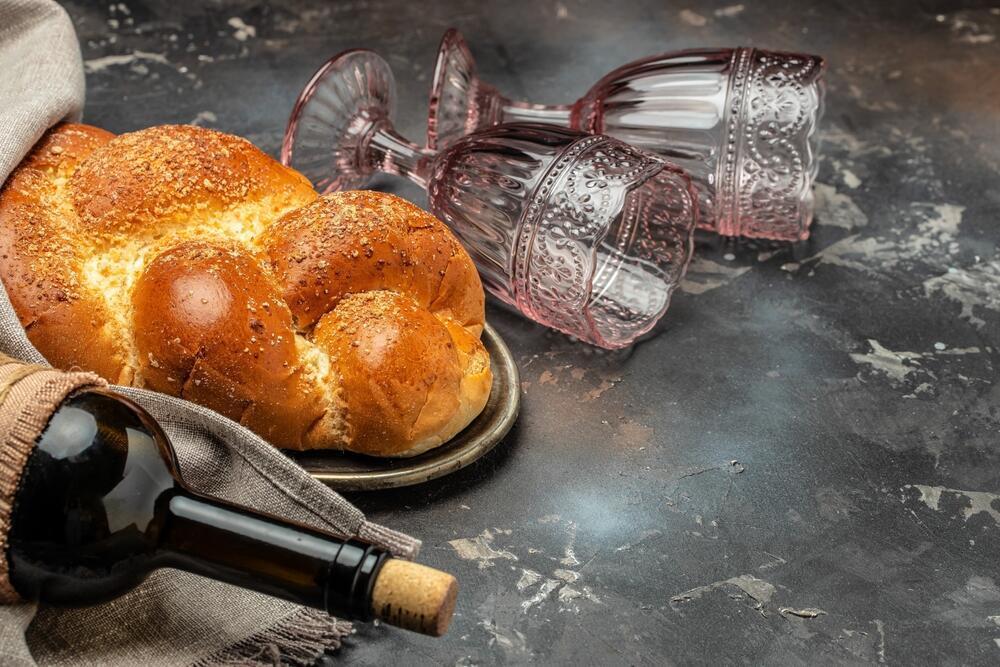
Wine and challah for Shabbat. A blend of private fantasy and the dream of almost every religious single woman
(Photo: Sweet Marshmallow / Shutterstock)
Looking back, Hodaya says she realized signs of this tendency appeared in childhood, before it had any sexual meaning. “In second grade, I sat next to a girl in class who divided the desk in two with a ruler, the way children do, and warned me not to cross the line. She said that anyone who did would be punished by losing a few centimeters of space. I thought, OK, interesting, let’s test it,” she recalls.
“I leaned over the desk and tried to slide gently into her side, making it look accidental. She reduced my space. I remember thinking it was cool. I tried it a few more times until I could barely fit my books on my side of the desk. I really liked the narrowing, the restriction, that punishment.”
She went through a long journey toward self-acceptance. “When I entered this world more deeply and began remembering all those moments, I understood that this is how I was born, this is how I was created, this is how God made me,” she says. “I realized it is part of who I am, part of my identity.”
Have you had a chance to talk about it with anyone in religious society, friends, parents or family? “Not really,” she says. “There is no one to talk to, certainly not about something this personal. It is very complicated,” she says. “When close friends and I talk about what I am looking for in a man, certain traits come up that could be described as dominant, but that is as far as it goes. The conversation never really moves beyond that.”
10 View gallery

'I’m looking for someone I can feel safe with'
(Photo: LightField Studios / Shutterstock)
Have you consulted a halachic authority about it? Asked a rabbi or looked into the relevant religious literature? “There is someone on ‘The Cage’ who is studying to become a rabbinical judge. I spoke with him a little about a few things, but not beyond that.”
Through the site, she has encountered quite a few religious people, “definitely more than people would think,” she says. For a time, she also had a relationship with a formerly religious man she met through the platform.
Could it be that belief in God's authority and adherence to religious law actually make it easier to enter a relationship like this, especially from a submissive position? Maybe the religious world is, in some ways, more compatible with power-exchange dynamics? “Because we’re raised on na’aseh v’nishma (‘we will do and we will hear’)? That’s a good question,” she says. “I think, even before religion, it was simply part of my personality to be the good girl who listens: to her parents, teachers, adults and people in general. I don’t know whether that has anything to do with religious obedience.
“But you could argue that religion also contains elements of authority and submission. There is reward and punishment, and there is God, whose word is final. Once, on ‘The Cage,’ I spoke with an ultra-Orthodox man who told me he was very interested in the ritual of the 40 malkot (lashes) before Yom Kippur. He said that, as the one administering the lashes, the ritual resonated with him to an extent that he found it arousing as well.”
She is keen to stress: “I am religious by choice. I believe a person has to think for themselves, and I choose this every day, even when it is difficult. At the same time, I believe that being a good Jew means first and foremost being a good person: a person of kindness, truth, integrity and decency toward others.”
She is looking for a relationship that will lead to marriage. “I am looking for my other half,” she says. “I live alone and carry my whole life by myself. Everything is on me. In a way, I am looking for someone who will give me space to release control, someone I can feel safe with when I hand him the reins, so I can let go a little.”
For Harel and Tehila, consensual control dynamics are not limited to sexuality. When we sit for the interview outside a café and Tehila wants to go inside to ask for ice, she asks her husband’s permission. “She never walks through a doorway before me. At home, she calls me ‘my lord.’ She has a chain around her neck, a collar that reminds her who she belongs to,” Harel says.
That sounds a little like the mitzvah of tzitzit, meant to remind the person wearing them of God’s commandments. Only here you are in the role of God. “I think a good dominant is someone who knows there is God above him,” Harel says. “That means he thinks twice before acting, before leading. It is important to remember that I, too, answer to someone above me.”
10 View gallery
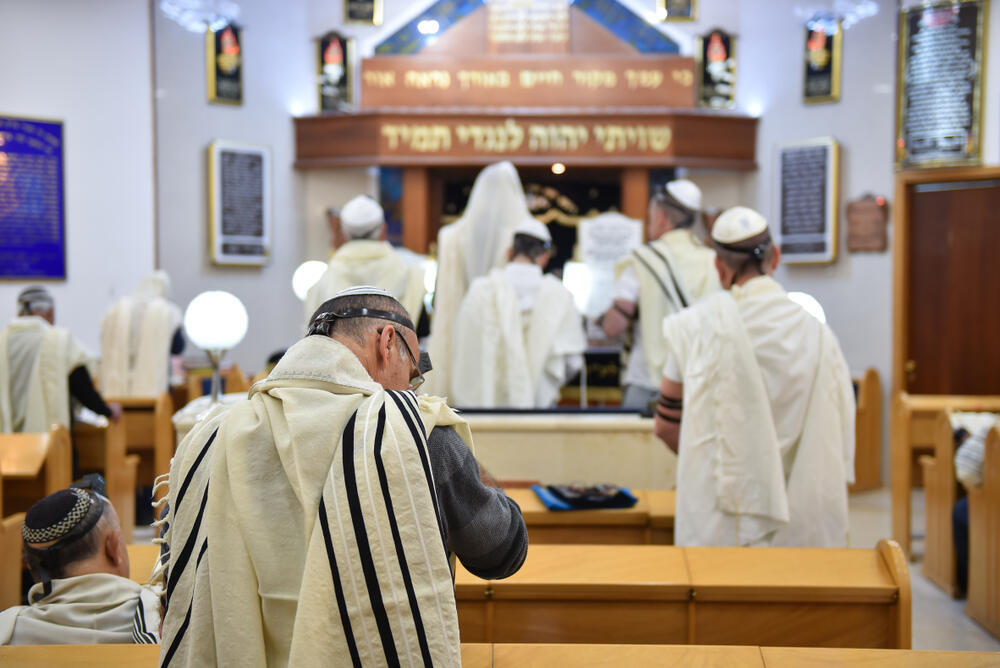
The religious world does not understand the essence of these relationships
(Photo: Mor Levi/Shutterstock)
Tehila does not cover her hair, but avoids revealing clothing. In daily life, she works in an intensive health care job that carries heavy responsibility. “In my work, human lives are in my hands,” she says. Only when she finishes work and comes home can she finally release and lose control.
“When she is on her way home from work, I already begin thinking about what session I will do for her,” Harel says. “It can be a pain-giving session, or a calming session of movement restriction. In any case, it depends on what I feel from her, and I feel her well.”
Does it work? “It works very well,” Tehila says. “Usually it ends with me crying. Not from the pain, but from everything I held inside that comes out. When he feels that I have reached that point, he ends the session and moves me into aftercare (devoted to the well-being of the participants, grounding, soft touch, hugging and other expressions of care).
“There are couples who practice BDSM without sexuality,” Harel notes. “We, for example, love shibari, the Japanese art of rope tying. Some couples combine sexuality with it and some do not. It is very individual, and everything is agreed upon in advance.”
In the past, professionals often viewed BDSM as an outlet for violent urges or as the result of past trauma. Today, it is seen differently. Harel: “Thank God it is no longer seen that way,” he says. “The opposite is true. The BDSM world sets very clear boundaries. There are three basic rules: sane, safe and consensual. We are always in very deep communication. I always monitor her condition. I know how to read body language. Our communication is so good that we do not even need a safe word.”
“In today’s liberal culture, people have become so wary of interacting with the opposite sex that many no longer even dare to make the first move. In the eyes of others, the BDSM world is Sodom and Gomorrah, but in practice most people know their place and their boundaries, and know that the other side will respect those boundaries. So this world is much more open and much safer.”
Tehila nods. She, too, says she feels safer in the BDSM space because it has clear rules.
There is one question that almost asks itself when meeting you: Is this a game, or is it real? “It depends very much on the couple’s dynamic,” Harel says. “For us, this is life. We live it. For others, it may be an escape from ordinary, vanilla life.”
When Harel and Tehila are asked what they think the proportion of religious people in the BDSM community is, they burst out laughing. “I think the number of religious people from all sectors, both religious Zionist and Haredi, is disproportionate to the size of the community,” Harel says. “The number of service providers of various kinds, nurses, doctors, kindergarten teachers and therapists, is also very high. I think what we see is a fairly representative cross-section,” he says. “And, by the way, it is often easy to spot the ultra-Orthodox participants; they tuck their sidelocks behind their ears and swap a kippah for a baseball cap.”
“And there are so many formerly religious people too,” Tehila adds.
The couple regularly attends parties at BDSM clubs, despite halachic challenges around modesty. “We do not judge anyone and expect not to be judged,” Harel says. “In the end, we all stand before the judgment of G-d. We have met people from our community at parties who we know from everyday life. The rule is that what happens in the club stays in the club.”
He says he carefully examines his own boundaries. “For example, I will not go to a party during the Nine Days,” he says, referring to the mourning period before Tisha B’Av. “And of course not on Shabbat or a holiday. There was a recent case of an event planned for mid-summer, and the organizers asked us whether we could come during the Three Weeks (mourning period in the summer), so they could adjust the date for us.”
“There is a great respect for religious people within the community,” Tehila says.
10 View gallery
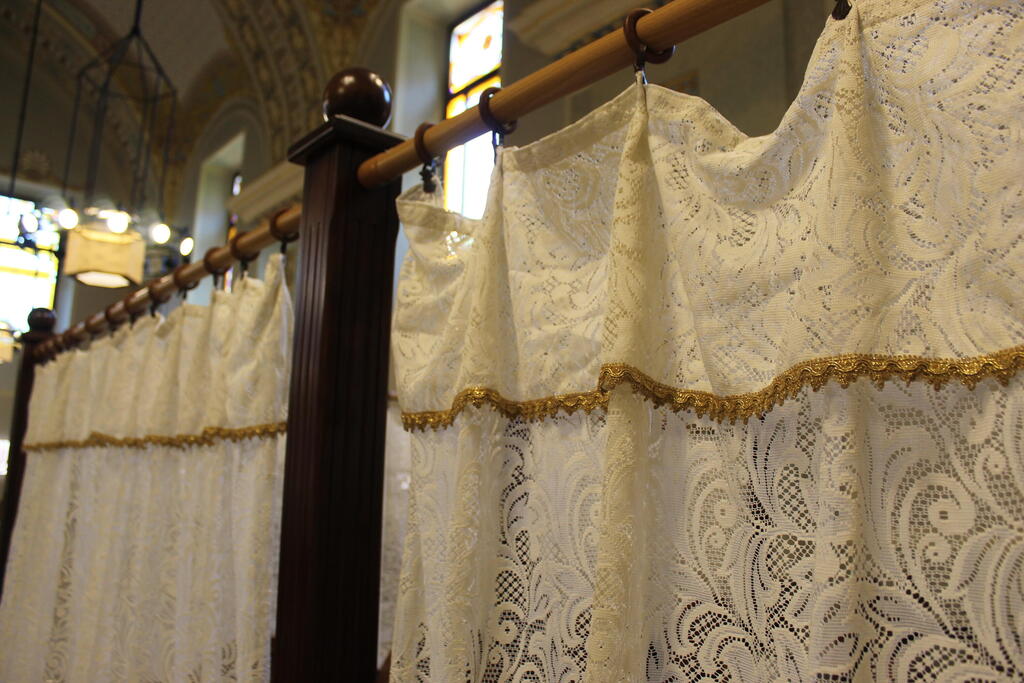
Partition in the women’s section of a synagogue. 'G-d gave people roles in this world'
Harel, a reservist combat soldier who served many days during the war, says friends from reserve duty were curious rather than judgmental when he shared this part of his life. But in other places, he says, people are quick to judge. “The religious world is trapped in stigma, and so is much of the secular world,” he says. “People do not understand what these relationships are really about.”
According to him, “It is not so different from many other couples; they are simply not aware that this is the kind of dynamic they have. Take a simple phrase from halacha: ‘A wife does her husband’s will.’ Is that not a form of power dynamic? A woman who marries takes on her husband’s tradition. If a man wants to be in the submissive role, I think that is much harder for an observant Jew, because it breaks the accepted order within the family.”
What does Orthodox halacha say about BDSM, and particularly about sadomasochism? While halacha forbids one person from striking another, the issue is more complex than it may first appear.
Rabbi Rafi Ostroff, a religious Zionist halachic authority and educator on healthy sexuality, tries to draw the boundaries. “In general, the halachic principle is that if the couple is married, everything is consensual, done in purity and in the privacy of their home, with no one else involved, then there is no barrier to almost anything between them,” he says. “Couples who want to follow a stricter, more pious standard will have many more limitations. But in principle, when a married couple gives each other mutual pleasure within a framework of relationship and communication, there is holiness in that.”
On sadomasochism, Ostroff says injury is the key boundary. “If it leaves a wound or a mark, it is forbidden, even if that person wants it, because a person is also forbidden to injure himself,” he says. “But as long as these are not things that leave scars, and a person needs it for his soul, it is permitted. Is it permitted to stretch during exercise or run 10 kilometers even when it hurts? Of course it is. The same applies here.”
Ostroff recently provided halachic guidance to a business that sells sex accessories for religious couples. “They sell ropes that can be used to tie the hands and feet, but these ropes are pleasant to the touch. They also have a whip, but a gentle one. Things that in the BDSM world are considered ‘mild.’ As long as the accessories do not wound, I approve purchasing them,” he says.
10 View gallery

Sometimes gaps around the issue emerge only after several years of marriage
(Photo: Evgeniy Pavlovski/Shutterstock)
Still, he stresses the need for boundaries. “It is mandatory to set boundaries,” he says. “The question is where the boundary lies, between a person who wants to be whipped, shouted at or spoken to with somewhat humiliating words, and places of humiliation, torture and degradation that in my view are against halacha. There is a fine line here.”
He says there must be an agreed sign that marks the limits of such an interaction, indicating when something is unpleasant and must stop. Beyond that, he says, couples should periodically assess whether the dynamic serves them and is good for them, or whether it serves only one side.
He tries not to be judgmental about different sexual preferences, but adds one caveat. “I think it is important that people understand why they need this psychologically,” he says. “These things are nice, but in my view there is a problem when a person cannot experience pleasant and gentle sexuality at all, and nothing excites them anymore except this.”
Sometimes couples come to him after gaps emerge between partners. “Young couples from the religious sector marry when neither partner knows anything about their sexual preferences,” he says. “After five or 10 years, when people feel a little more comfortable with their sexuality, suddenly one spouse develops a desire for this.”
His comments underscore the importance of open, honest conversations about sexuality in general and alternative sexuality in particular, to reduce possible crises in marriage.