Actor Jon Voight: One visit to the Soviet Union changed how I understood freedom * WorldNetDaily * by WND Staff
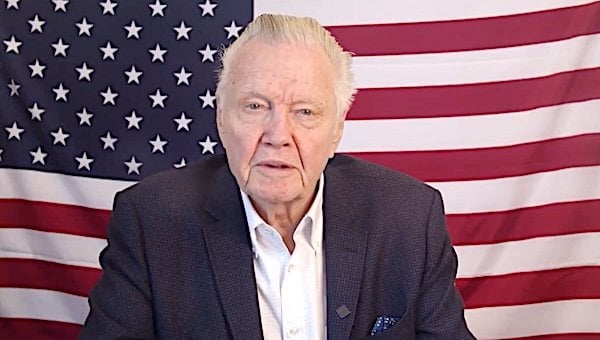 Jon Voight
When audiences return to movie theaters, starting on Sept. 25, for the newly released “Director’s Cut” of the hit movie “Reagan” – featuring 10 minutes of brand new footage – they’ll once again hear Academy Award winner Jon Voight narrate Ronald Reagan’s life through the eyes of fictional former KGB officer Viktor Petrovich.
For Voight, it wasn’t simply another acting role. It became the culmination of an experience that began over three decades earlier, when he traveled behind what was then the Iron Curtain.
“I saw what communism was all about,” Voight said during a podcast interview with “Reagan” producer Mark Joseph on “The Mark Joseph Show.” “It broke my heart.”
The trip permanently changed how he viewed both Russia and the meaning of freedom.
Falling in love with Russia – NOT communism
Voight is quick to distinguish between the Russian people and the political system that governed them.
Long before visiting Moscow, he felt connected to Russian culture through his acting education. Like generations of American performers, he studied the techniques developed by Konstantin Stanislavski and inspired by playwright Anton Chekhov.
“I felt like I was part Russian in some sense,” Voight said.
That admiration made what he encountered in the Soviet Union especially painful. Rather than finding the vibrant culture he had imagined, Voight remembers seeing a society weighed down by fear and resignation.
“The people’s eyes were down,” he recalled. “No one looked at each other.”
The eyes told the story
One memory has remained with Voight ever since. Walking across Red Square, he watched crowds stream past one another.
Nobody smiled. Nobody greeted strangers. Nobody made eye contact. Coming from the United States, where casual conversations with strangers felt natural, the silence struck him immediately.
For Voight, it wasn’t simply different behavior. It reflected a fearful society where people had learned to be cautious about whom they trusted and what they said.
His mother walked into the Kremlin!
The most memorable moment of the trip came from someone else entirely.
Voight had brought his mother with him to Russia despite her declining health. When she saw the Kremlin, she surprised everyone.
“I’ll have to go in there just for the hell of it,” she declared.
Their Russian interpreter burst into laughter. For someone who had spent years viewing the Kremlin with fear, the idea that an American visitor would casually stroll toward it was almost unimaginable.
Later, Voight watched his mother strike up a conversation with Boris Yeltsin and jokingly ask if she could keep his Communist Party badge.
The encounter, he says, captured something uniquely American. “We’re all equal,” Voight reflected.
Returning to a different Russia
When Voight returned roughly 15 years later, he found a dramatically different country.
Store windows displayed colorful merchandise. Hotels functioned normally. Neon signs illuminated streets that had once felt uniformly gray.
“The pursuit of happiness means something,” he said, recalling how much brighter the country seemed after the collapse of the Soviet system – a major historic event in which President Ronald Reagan played a major role.
Building Viktor Petrovich
Those experiences became the emotional foundation for his role in “Reagan.” Rather than portraying a stereotypical Soviet intelligence officer, Voight imagined an aging man surrounded by decades of research – newspapers, books, photographs and artifacts documenting Ronald Reagan’s rise.
He even collaborated with the film’s production designers, suggesting portraits of Russian literary giants including Tolstoy, Chekhov and Turgenev be displayed in Petrovich’s apartment.
For Voight, those figures represented Russia’s true heritage rather than the ideology his character had served.
“The motherland is here,” he said, referring to Russia’s artists and writers.
Discovering the character
Voight also relished playing Petrovich across multiple decades of life. The role required extensive prosthetic makeup as he shifted between a much younger intelligence officer and a man approaching 90. (Voight is currently 87 years old.)
Just as important was creating a character who felt human rather than symbolic.
He wanted Petrovich’s cluttered apartment to become an extension of his memories – a place where history itself seemed to live.
The artist’s responsibility
Throughout the conversation, Voight repeatedly returned to one theme: the responsibility of artists. He believes great art should offer more than entertainment.
“Great art … is from God,” he said. “When we do something right, it isn’t really ours.”
That conviction shaped his collaboration throughout “Reagan,” from refining dialogue to suggesting visual details that deepened his character’s inner life.
Looking back
Voight says his understanding of Ronald Reagan also evolved over time. Rather than arriving at a single moment of political conversion, he describes a gradual series of realizations – what his father jokingly called a succession of “aha” moments.
Those experiences eventually helped him appreciate Reagan not only as a great political leader, but as someone whose worldview had been shaped by firsthand encounters with totalitarianism.
As audiences return to theaters for the Sept. 25 release of the “Reagan” Director’s Cut, they’ll see Voight portraying a man who spent his life studying Ronald Reagan from the other side of the Cold War.
For the actor himself, however, his role in “Reagan” has an even larger dimension. It’s the story of an artist who loved Russian culture, mourned what communism did to it, and came away with a deeper appreciation of the ordinary freedoms that can be easy to overlook – until you’ve been to a place where they no longer exist.