New Data Challenges Justification for Glock Bans
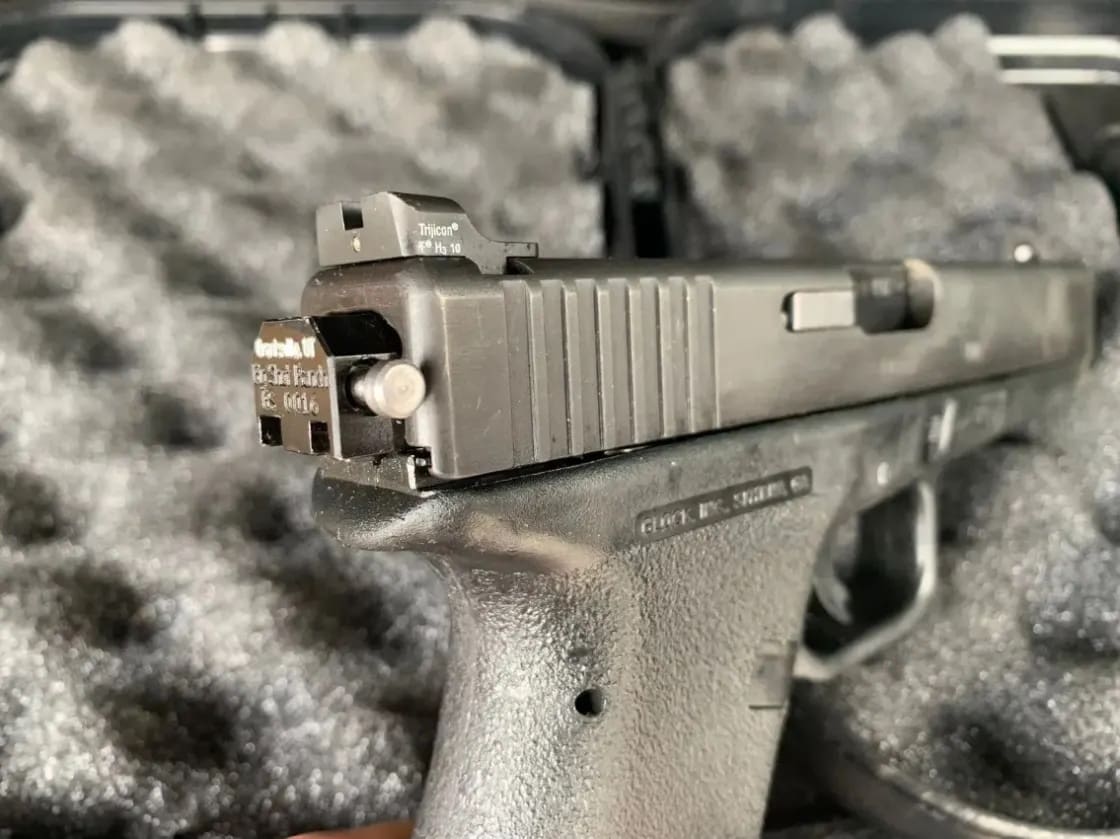
State legislatures in California, Maryland, Connecticut, and New York have spent the past two years passing laws that ban Glock-pattern pistols altogether on the theory that the platform is uniquely dangerous because illegal “Glock switches” can convert them to fully automatic fire. New empirical research suggests that justification doesn’t hold up against the actual numbers.
A recent report from the Crime Prevention Research Center documents just 43 murders nationwide from 20 attacks involving Glock switches over the 2021-2026 period — meaning fatal lightning strikes killed nearly twice as many Americans during the same window.
The federal framework already addresses the actual problemBefore getting to the numbers, the federal legal landscape matters. The conversion devices commonly called “Glock switches” or “auto sears” are already classified as unregistered machine guns under the National Firearms Act. Mere possession of one is a federal felony punishable by up to 10 years in prison. Manufacturing, selling, or installing them carries the same penalties.
In other words, the actual conversion devices that the state-level legislation targets are already criminalized at the federal level with severe penalties. The state-level response has not been to add to those penalties for the actual devices, but to ban the host pistols themselves, meaning legally-purchased Glocks, Sig P320S, and similar handguns become contraband based on whether they could theoretically be modified, regardless of whether they actually are.
The legal architecture has been replicated across multiple states. Maryland’s recent ban (now the subject of a federal lawsuit) and New York’s parallel provision (passed via budget bill in May) both criminalize the host pistols on cruciform-trigger-bar geometry. California and Connecticut have similar frameworks. Other states are considering similar legislation.
What the data actually showsJohn Lott’s research is the first systematic attempt to quantify how often Glock switches are actually used in murders — the threat that supposedly justifies banning the underlying pistols.
“We have tried to do an exhaustive search on cases where a Glock-style gun with a switch was used to murder people, but it is quite possible that we have missed some cases,” Lott wrote in the report. “The total that we have so far found is 43 murders from 20 attacks where someone was murdered, so slightly more than two people murdered per case.”
Worth noting that Lott explicitly acknowledges his count may undercount the actual total — his number is a documented floor, not a verified ceiling. But it represents the most comprehensive empirical accounting available.
The proportional comparisons Lott provides are stark:
That works out to Glock switch murders representing:
For comparison, fatal lightning strikes killed 81 Americans during the same period — nearly twice the documented Glock switch murder count.
The “could the murder have happened anyway” questionLott raises a question the underlying murder data doesn’t directly answer: how many of the 43 documented Glock switch murders would have occurred even without the switch?
“More than half of the cases include just one or two people being murdered, so it is quite possible these attacks could have been accomplished with an unaltered handgun,” he wrote.
This matters because the implicit theory behind the host pistol bans is that the switch produces casualty counts unachievable with semiautomatic fire. If most Glock switch homicides involve one or two victims — well within the range of unaltered semiautomatic handgun capabilities — the marginal effect of the switch on lethal outcomes is much smaller than the legislative rhetoric suggests.
The high-casualty Glock switch attacks (Sacramento, Chicago, and a handful of others that have driven news coverage) are real and tragic. But they appear to represent a small subset of an already small total, not a typical use case.
What this means for the state-level bansThe empirical data have direct implications for the constitutional analysis of the state-level bans that are faced in court.
Under the Supreme Court’s Bruen framework, firearms regulations must fit within the historical tradition of firearm regulation. Bans on common civilian-owned firearms face particular scrutiny because Heller established that firearms in common use for lawful purposes are protected.
The Glock platform alone — leaving aside Sig P320s and other affected pistols — represents tens of millions of legally-owned handguns in American civilian hands. The state-level bans criminalize possession of these handguns to prevent a category of murder that occurs roughly eight to nine times per year nationally based on Lott’s documented count.
That’s the proportionality question federal courts will have to address: whether a ban on tens of millions of legally-owned firearms is constitutionally justified by targeting a category of crime that, while genuine, occurs at frequencies measurable in single digits annually. Bruen‘s historical-tradition test makes such proportionality questions central to the constitutional analysis.
Where the legal challenges standGun-rights organizations have moved quickly to challenge the state-level bans. The NRA, SAF, and FPC filed federal suit against Maryland’s ban the same day Gov. Wes Moore signed it. The New York convertible pistol provision is expected to draw similar litigation now that it has taken effect. California and Connecticut face their own ongoing challenges.
All of these cases will eventually need Supreme Court review for definitive resolution, particularly given the Fourth Circuit’s hostility to Second Amendment challenges in the post-Bruen era. The Lott research is the kind of empirical foundation that may matter in those cases — courts considering whether a regulation fits within historical tradition look more favorably on regulations addressing genuine and proportional threats than on regulations whose stated justification doesn’t match the documented harm.
For now, the data adds substantial weight to what gun-rights advocates have been arguing throughout the legislative debates over these bans: that criminalizing the host pistols misallocates legal resources from the actual conversion devices (already federal felonies) onto millions of legally-owned firearms whose connection to the supposed threat is theoretical rather than empirical.
If lightning strikes are nearly twice as deadly as Glock switch murders, the legislative attention disparity is worth examining.