What’s in the $95 Billion Reconciliation Package
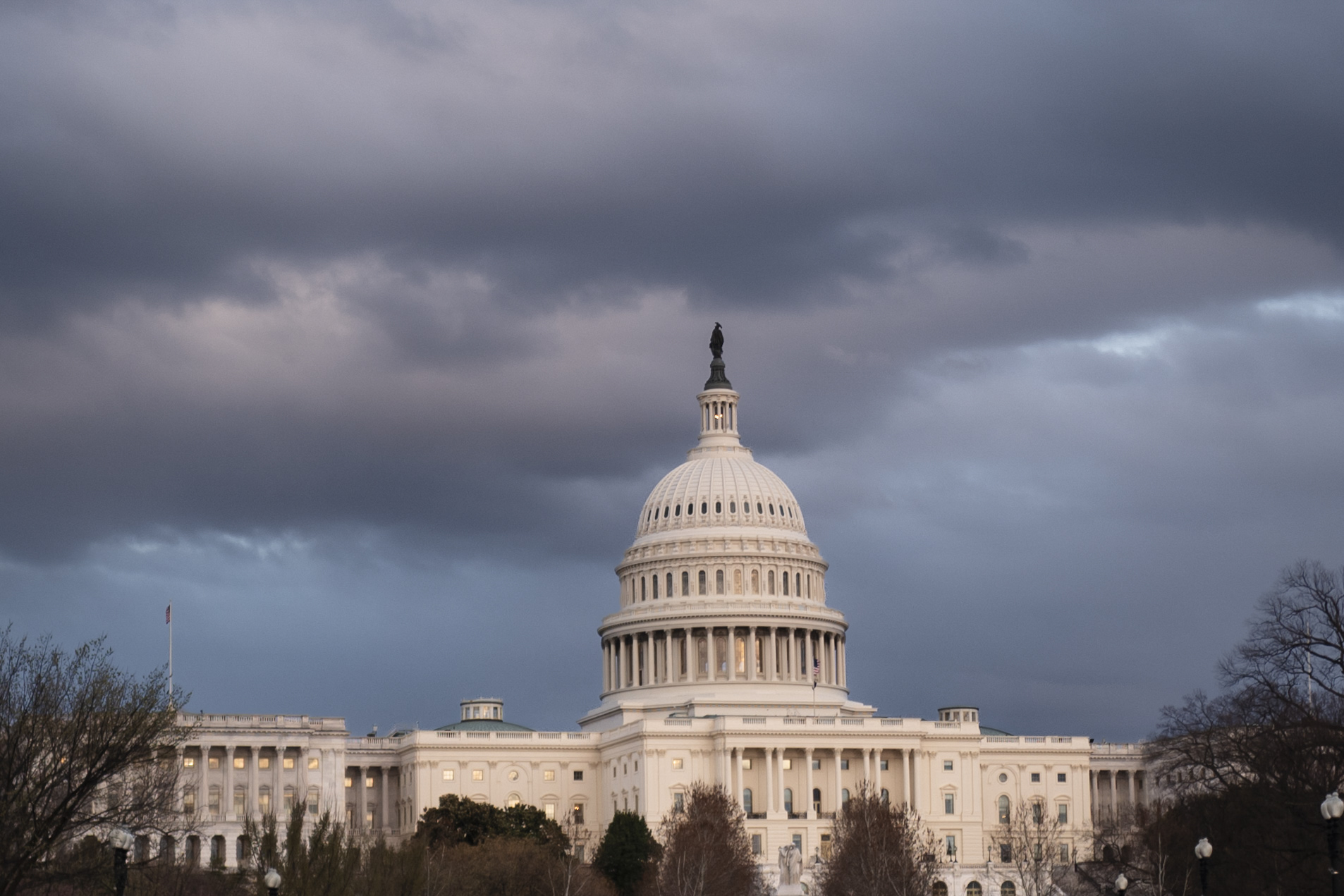 The U.S. Capitol on March 17, 2026. Madalina Kilroy/The Epoch TimesThe U.S. Capitol on March 17, 2026. Madalina Kilroy/The Epoch Times
House Republicans released a $95 billion budget blueprint on July 15 in hopes of securing a compromise for supplemental funding on defense, election integrity, and other issues.
The budget resolution is the third attempt at reconciliation. There are no offsets in the measure, a possible issue for fiscal hawks.
Identical resolutions must pass the House and Senate to unlock the reconciliation process, which allows bills related to taxing, spending, and the national debt to pass with just 51 votes in the Senate. A simple majority is also needed to pass a budget resolution.
Instructions in the budget resolution call for the House Armed Services Committee, the House Intelligence Committee, the House Administration Committee, and the House Agriculture Committee to mark up the legislation.
The House Budget Committee is scheduled to mark up the resolution on July 16.
“House Republicans will unlock a third budget reconciliation to stop Democrat obstruction, support our troops, and safeguard the integrity of our elections,” the committee’s chairman, Rep. Jodey Arrington (R-Texas), said in a July 14 statement.
Related Stories
“We will use every tool and resource at our disposal to govern our great nation and deliver on behalf of the freedom-loving people who gave us unified Republican leadership.”
Not everyone is on board with the resolution.
“Lawmakers have once again decided to abandon any semblance of fiscal discipline and allow themselves to add more to our nation’s already massive national debt,” Maya MacGuineas, president of the Committee for a Responsible Federal Budget, said in an emailed statement on July 15.
“This budget resolution continues the recent trend of making a mockery out of the budget process—it’s a false budget purely intended to shuffle through increases in defense funding and other priorities.”
Here is what is in the budget resolution.
Defense and IntelligenceThe resolution includes $60 billion for the Department of War. This comes amid the resumption of the U.S. war with Iran.
In an interview with Fox News aired on July 14, President Donald Trump said he does not want to negotiate with Tehran.
“Well, now, I don’t want to negotiate now,” he said. “I said, ‘Let’s not negotiate.’ Three days ago, we had a deal.”
Nonetheless, Trump said his representatives had talked with the Iranians “an hour ago.” He did not say specifically who was participating in the talks.
The United States has conducted multiple rounds of strikes after Iran attacked commercial vessels in the Strait of Hormuz. Trump said on July 8 that the memorandum of understanding between the United States and Iran was “over.”The resolution would also allocate $13 billion for the intelligence community. This comes as a key warrantless surveillance program under the Foreign Intelligence Surveillance Act expired last month, with Democrats blocking it and indicating that they would continue to do so as long as Bill Pulte was in the role of acting director of national intelligence. Trump nominated Jay Clayton to permanently hold the role. His nomination hearing occurred on July 15.
The resolution calls for $12 billion in assistance to America’s farmers, who have been adversely affected by U.S. tariffs.
U.S. agricultural exports fell by 3 percent in 2025 compared with 2024. Most of the overall decline in U.S. exports is due to China, where imports of U.S. agricultural goods fell by $16 billion, and Canada, where imports from the United States were down by $1.3 billion.
Additionally, farmers face disruption from fertilizer and fuel costs due to the conflict with Iran and tensions surrounding the Strait of Hormuz, a crucial global energy and fertilizer trade route.Election Integrity BillFinally, the blueprint includes $10 billion for states to implement parts of the Safeguard American Voter Eligibility (SAVE) America Act, a bill that would require proof of citizenship to register to vote and a photo ID to vote in federal elections.
Grants would incentivize states to implement proof of citizenship and voter ID requirements outlined in the SAVE America Act.
The House passed that legislation, but there were not 60 votes in the Senate to overcome a filibuster, as all Democrats opposed it.The SAVE America Act likely would not survive the Senate’s complex reconciliation rules and would likely be detached from the reconciliation bill if it were to reach the upper congressional chamber.
Conservative Republicans such as Rep. Anna Paulina Luna (R-Fla.) have pushed for the SAVE America Act to be attached to must-pass legislation such as the National Defense Authorization Act. Whether having smaller parts of the SAVE America Act in a reconciliation bill would be enough to earn the support of proponents of the legislation, such as Luna, is to be determined.
We had a problem loading this article. Please enable javascript or use a different browser. If the issue persists, please visit our help center.