Temporary Protected Status Ending for Syrians, Haitians
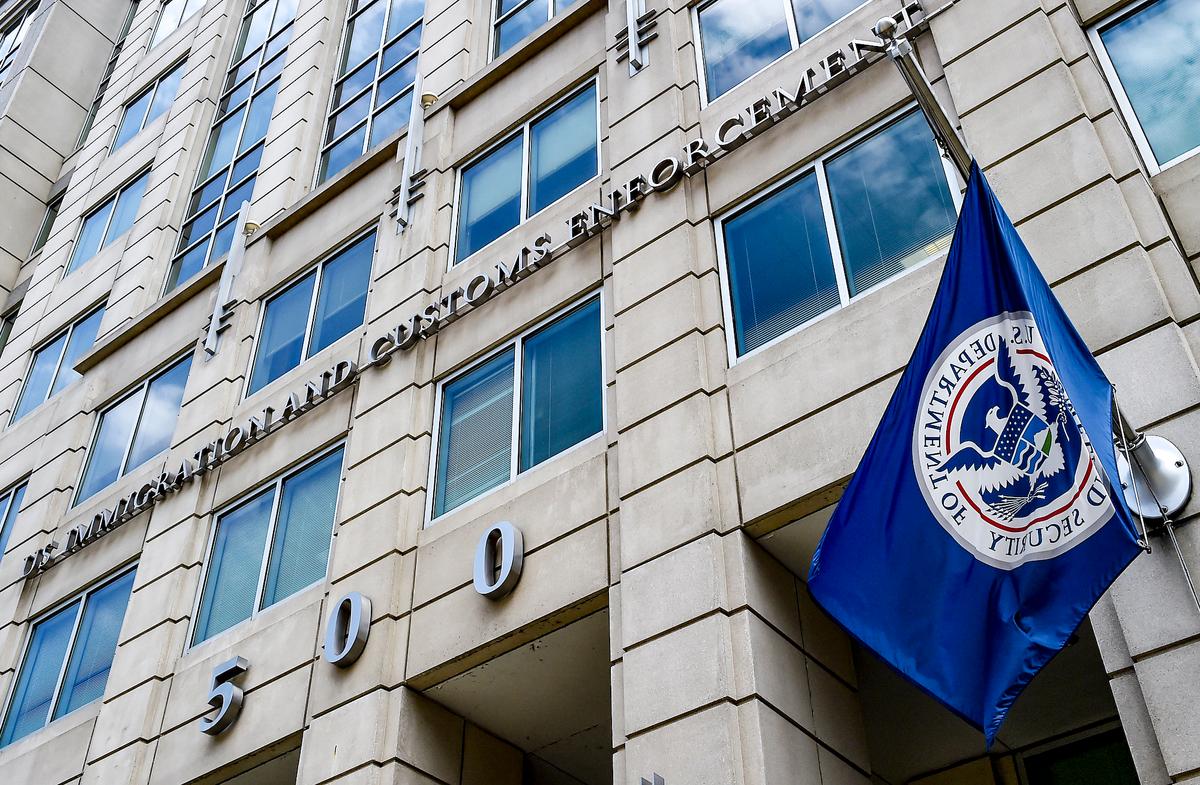 The Department of Homeland Security flag flies outside the Immigration and Customs Enforcement (ICE) headquarters in Washington on July 17, 2020. Olivier Douliery/AFP via Getty Images
Deportation protections for hundreds of thousands of Haitians and Syrians living in the United States are expiring on July 27.
This follows a Supreme Court ruling last month that said the Trump administration can end temporary protected status (TPS) designations for the two countries that had remained in place, cumulatively, for decades.Haiti’s TPS designation came after a 7.0-magnitude earthquake rocked the island in January 2010.
Syria received its protected status in March 2012 in response to the country’s bloody civil war.
Both countries were initially designated to be under TPS for 18 months.
“It has been more than 16 years since Haiti was originally designated for TPS in January 2010,” the White House’s Rapid Response account on X said. “The ‘T’ in ‘TPS’ stands for ‘TEMPORARY.’”
Related Stories
Democratic lawmakers in the House of Representatives are attempting to force a vote on a measure that would extend such protections for Haiti and 16 other countries, while providing a pathway for millions of foreign nationals to permanent status.
Rep. Sylvia Garcia (D-Texas) wrote in a post on X that House Democrats have secured 210 signatures, including two Republicans that were not named, and only need eight more for a full floor vote.
“Today, TPS protections for Haitians come to an end, putting them at risk for deportation from ICE,” Garcia said. “TPS holders, you are not alone, we are with you!”
Congress created TPS in the 1990s, and it has never been offered as a way to achieve lawful permanent residency or U.S. citizenship.
The Department of Homeland Security (DHS) secretary is authorized to classify a country as qualified for TPS after reviewing its conditions and determining if statutory requirements are met that warrant protected status.
Countries can be designated under TPS for situations including armed conflicts, natural disasters, or other extraordinary conditions, but the DHS secretary is required to periodically review and potentially renew the status based on conditions of the affected foreign nationals’ home country.
Syria and Haiti’s TPS was renewed numerous times since their initial designations.
President Donald Trump attempted to end protected status for Haiti—and other nations—during his first term in office but was unsuccessful.
In his second term, then-DHS Secretary Kristi Noem moved to terminate TPS for several countries after reviewing their conditions.
Noem made her determinations to specifically end Haiti and Syria’s designations on Nov. 28, 2025, and Sept. 22, 2025, respectively.Lawsuits followed, and the federal government asked the Supreme Court to step in and rule on the issue. Justices enjoined cases involving Haitian and Syrian TPS holders pending a ruling.The high court on June 25 ruled 6–3 in favor of the Trump administration, saying it can, in fact, end temporary protected status for hundreds of thousands of foreign nationals from Haiti and Syria living in the United States.The Supreme Court also said in its ruling that federal law barred judicial review of certain legal arguments against DHS’s TPS decisions.
Despite the Supreme Court guidance, a lower court judge on July 24 blocked the TPS termination for Ethiopia, granting an administrative stay and keeping in place deportation protections for hundreds of thousands of Ethiopians living in the United States.“These district judges are engaged in mutiny against the Supreme Court. It must stop!” DHS special counsel James Percival wrote in a post on X following that ruling.
The Trump administration, however, has been successful in court in ending TPS for other countries, including Nepal, Honduras, and Nicaragua.We had a problem loading this article. Please enable javascript or use a different browser. If the issue persists, please visit our help center.