Kagan and Barrett to Testify to Congress on Court’s Budget
 (L–R) Associate Justices Amy Coney Barrett, Sonia Sotomayor, Ketanji Brown Jackson, and Elena Kagan pose at a courtesy visit in the Justices Conference Room before the investiture ceremony of Associate Justice Ketanji Brown Jackson in Washington on Sept. 30, 2022. Collection of the Supreme Court of the United States via Getty Images
Supreme Court Justices Amy Coney Barrett and Elena Kagan will testify before Congress on July 14 on the court’s budget request for fiscal year 2027.
The two jurists are scheduled to testify before a House Appropriations subcommittee that morning and a Senate Appropriations subcommittee that afternoon, according to official notices posted on July 7.
This will be the first time in seven years that any justice has testified before a congressional committee. Kagan and Justice Samuel Alito appeared in March 2019 before the House Appropriations subcommittee on the fiscal 2020 budget request.
This contrasts with Chief Justice John Roberts, who has repeatedly declined congressional invitations since 2023 to discuss issues such as ethics and the Supreme Court’s code of conduct. He has cited concerns about judicial independence and the separation of powers.
Barrett, a conservative, was appointed by President Donald Trump in 2020. Kagan, a liberal, was appointed by President Barack Obama in 2010.
The nation’s highest court is seeking a total of $228.4 million for the fiscal year that begins Oct. 1, a $20.6 million increase over the current year.
Related Stories
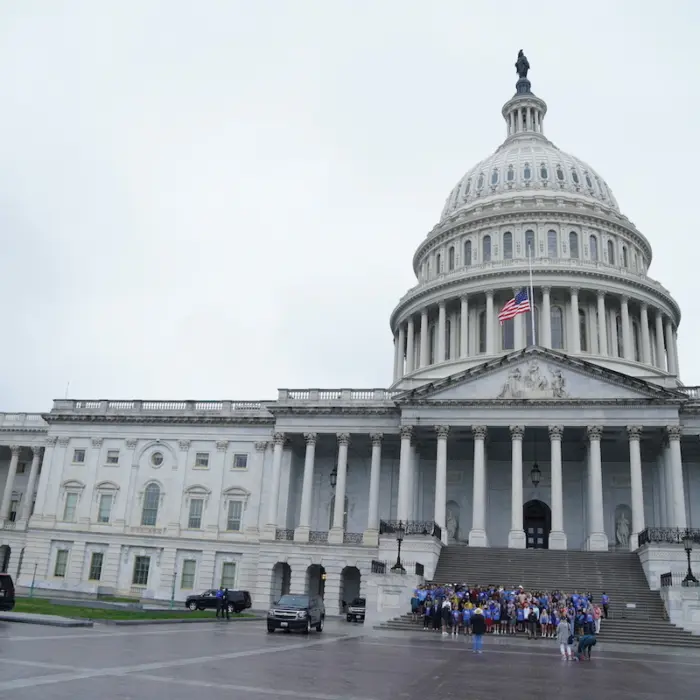
Of that $20.6 million, $14.6 million is to boost security at the courthouse, while $2 million is to increase security at the justices’ homes.
Judicial security is of growing importance to the justices because of a rise in threats and attacks against judges across the country.
Justice Brett Kavanaugh was the subject of an assassination attempt in 2022. In October 2025, a federal judge sentenced the would-be assassin, Nicholas John Roske, to eight years in prison for the attempt. The U.S. Department of Justice had asked the court for a sentence of at least 30 years of incarceration.Although the upcoming congressional hearing is expected to focus on the budget, lawmakers are free to ask other questions, including on controversial topics.
The court’s recent history may come up at the congressional hearing. For example, lawmakers may be interested in learning more about how the justices are currently getting along with each other.
Supreme Court justices have publicly stated that members of the high court are friendly and civil in their dealings with each other.For example, in May 2023, Roberts said that “there has never been a voice raised in anger” in the chamber in which justices discuss and vote on pending cases.
But the image of collegiality has been tested recently.
At a joint appearance in March, Kavanaugh and Justice Ketanji Brown Jackson publicly clashed over the court’s various emergency orders that have allowed Trump to pursue his policy agenda. Lower courts have stifled Trump’s policies by issuing orders blocking some of them. The Supreme Court has often provided emergency relief by lifting those orders.
Jackson said the Supreme Court is “creating a kind of warped” legal process by intervening at an early stage of a case and basically predicting the outcome before the arguments are fully developed.
“The administration is making new policy ... and then insisting the new policy take effect immediately, before the challenge is decided,” Jackson said. “This uptick in the court’s willingness to get involved in cases on the emergency docket is a real unfortunate problem.”
Kavanaugh said the Supreme Court is only doing its job by addressing the emergency applications filed.
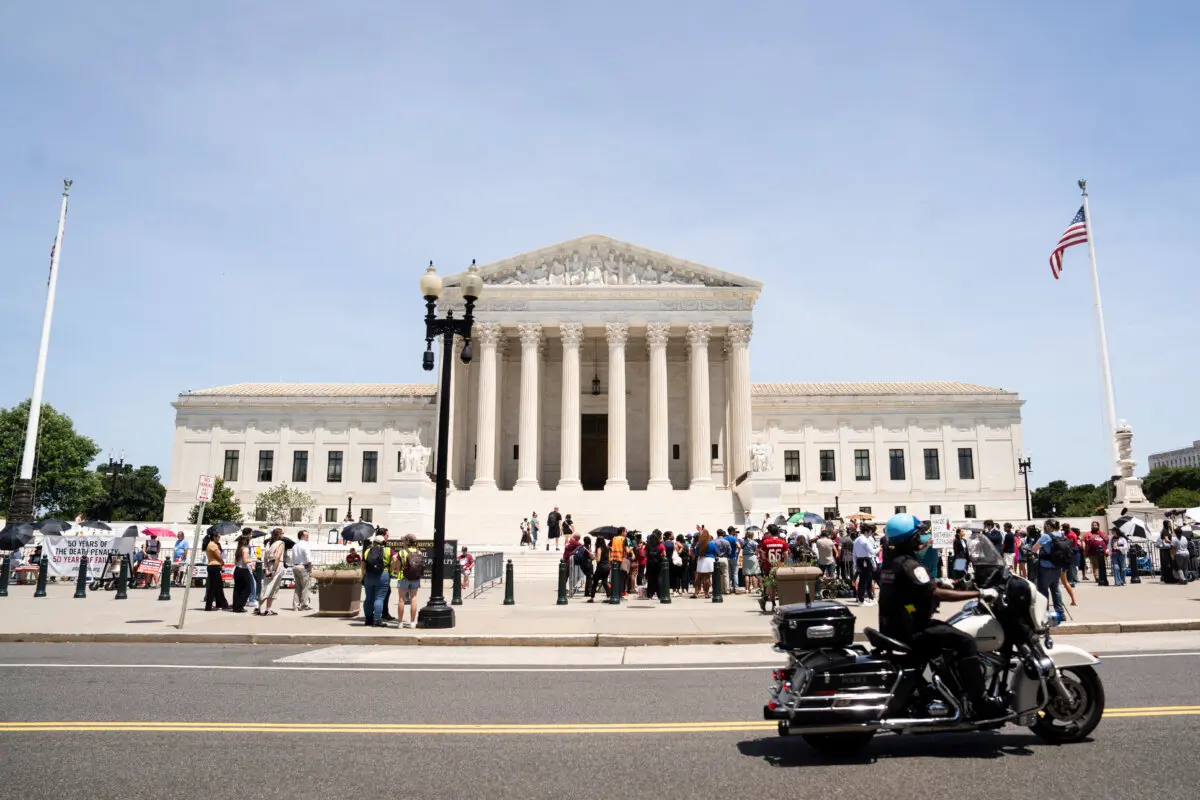 People outside the Supreme Court in Washington on June 30, 2026. Madalina Kilroy/The Epoch Times
The Department of Justice’s rush to the Supreme Court didn’t begin during the Trump administration, the justice said. He said that as it becomes more difficult to enact legislation through Congress, administrations “push the envelope in regulations.”
“Some are lawful, some are not,” he said.
Justice Sonia Sotomayor made a rare public apology in April to Kavanaugh for making what she called “hurtful comments.”
She had previously said during a speech at a law school that a colleague “probably doesn’t really know any person who works by the hour.”
The Supreme Court concluded its 2025–2026 term on June 30 after a series of landmark decisions impacting immigration, Trump’s agenda, and hot-button social issues.Among the top decisions were those rejecting Trump’s definition of birthright citizenship, upholding bans on boys in girls’ sports, striking down Hawaii’s gun control law, and restricting the use of race in the redistricting process.
While Trump lost on some critical policies, including his global tariffs, the high court also granted him and future presidents significant flexibility in immigration enforcement and in firing federal officials.
The Supreme Court is currently in recess for the summer. While it may not be sitting to hold oral arguments, the justices remain available to issue rulings on emergency appeals.
The court returns for its new term at the beginning of October.
We had a problem loading this article. Please enable javascript or use a different browser. If the issue persists, please visit our help center.