House to Consider Permanent Daylight Saving Bill
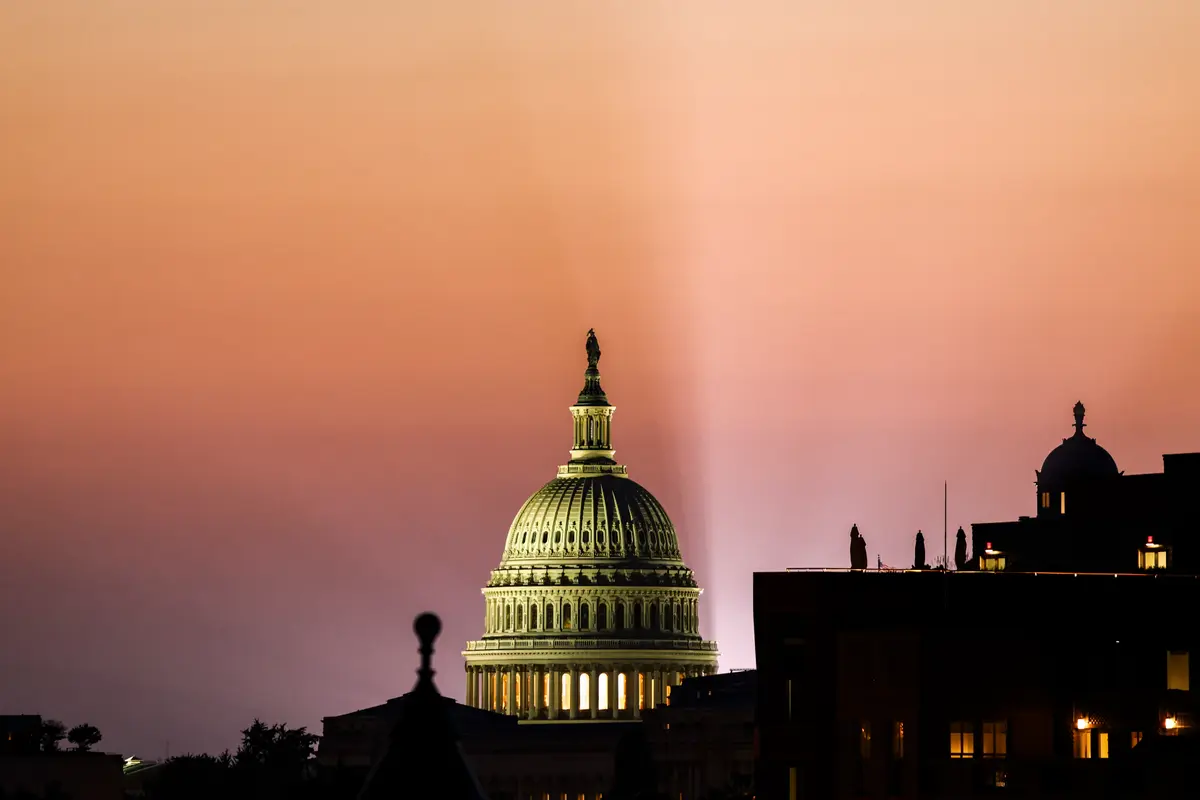 The Capitol Building is lit up during sunset in Washington on July 2, 2026. Finn Gomez/Getty Images
The U.S. House of Representatives will vote next week on a bill that would make daylight saving time permanent year-round, according to a notice posted on July 9.
The Sunshine Protection Act, sponsored by Rep. Vern Buchanan (R-Fla.), would end the current practice of changing clocks twice a year while allowing states to opt out before the change takes effect.
The House Energy and Commerce Committee passed the bill in a 48–1 vote in May. The proposed legislation is scheduled for a House vote next week, according to a notice posted by the House Committee on Rules.Buchanan said in a May statement that ending the biannual time change could improve public health, reduce traffic accidents, lower crime, and encourage more outdoor activity.
“Ending the clock change is a commonsense reform that will improve everyday life for millions of Americans,” Buchanan said.
President Donald Trump has signaled support for the bill, saying in a May 22 post on Truth Social that he would “work very hard” to have it signed into law.Related Stories

Trump said the current practice of changing clocks twice a year requires substantial work and cost, noting that cities and states spend “hundreds of millions of dollars” each year to change their clocks.
“Many of these Clocks are located in Towers, and the cost of renting, or using, Heavy Equipment to do this twice a year is prohibitive,” the president wrote.
“We are going with the far more popular alternative, Saving Daylight, which gives you a longer, brighter Day — And who can be against that — This is an easy one!”
The United States first started using the time shift more than a century ago, during World War I, and again during World War II.
Congress passed a law in 1966 that allowed states to decide whether to participate but required their decisions to be uniform across their territories.
All states except for most of Arizona and Hawaii make the time shifts. Daylight saving time is also not observed in American Samoa, Guam, the Northern Mariana Islands, Puerto Rico, and the Virgin Islands, according to the U.S. Department of Transportation.
In 2022, Sen. Sheldon Whitehouse (D-R.I.) sponsored a bipartisan bill to make daylight saving time permanent nationwide, which passed the Senate but was never brought to a vote in the House.
 Sen. Rick Scott speaks during a news conference on Capitol Hill in Washington on Dec. 18, 2024.Sen. Rick Scott (R-Fla.) brought the bill to the Senate floor for quick passage in October 2025, but senators failed to reach consensus on the measure.
Among those who opposed the measure was Sen. Tom Cotton (R-Ark.), who said permanent daylight saving time would result in “absurdly late hour” winter sunrises.
“Such a change to the nation’s clocks had never happened before, except as an emergency rationing measure during wartime,” Cotton said in his floor speech at the time.
Jack Phillips and The Associated Press contributed to this report.We had a problem loading this article. Please enable javascript or use a different browser. If the issue persists, please visit our help center.