New Drug Offers Potential Cure for Chronic Hepatitis B
 Illustration by The Epoch Times, Shutterstock
Hepatitis B kills more than a million people a year and has no cure. A new drug may have moved researchers one step closer to changing that.
The drug, bepirovirsen, cleared the hepatitis B virus entirely in roughly 1 in 5 patients with chronic hepatitis B infections. For the nearly 240 million people worldwide living with chronic hepatitis B, it represents the first realistic prospect of a finite treatment rather than a lifetime of pills.A ‘Functional Cure’The trials, published in May in the New England Journal of Medicine, involved 1,834 adults with chronic hepatitis B infection who were not suffering from liver cirrhosis from 29 countries across Europe, the Asia-Pacific region, and the Americas. Participants were randomly assigned to receive weekly injections of bepirovirsen or a placebo for 24 weeks. All were already on standard oral antiviral medication to suppress the virus.Approximately 20 percent of patients treated with bepirovirsen achieved what researchers call a “functional cure,” meaning the virus became undetectable without any ongoing therapy.
A functional cure also eliminates the need for further antiviral treatment, removing the risk of drug resistance, nonadherence, and the long-term complications associated with current therapies. Some of the current medications for chronic hepatitis B can cause kidney damage and bone loss when used long-term. Rare reactions include lactic acidosis, which occurs when there’s too much acid in the blood, and liver toxicity.
None of the placebo patients achieved this outcome by week 72. Among patients who had lower levels of hepatitis B surface antigen at the start of treatment, the cure rate was higher, ranging from 25 percent to 28 percent.
About 24 percent of bepirovirsen patients were also able to stop their previous oral medication entirely by week 48, compared to none in the placebo group. Among those who stopped but did not achieve a full cure, none experienced a dangerous rebound of the virus.How Bepirovirsen WorksThe drug works by recognizing and orchestrating the destruction of the genetic components of the hepatitis B virus.Related Stories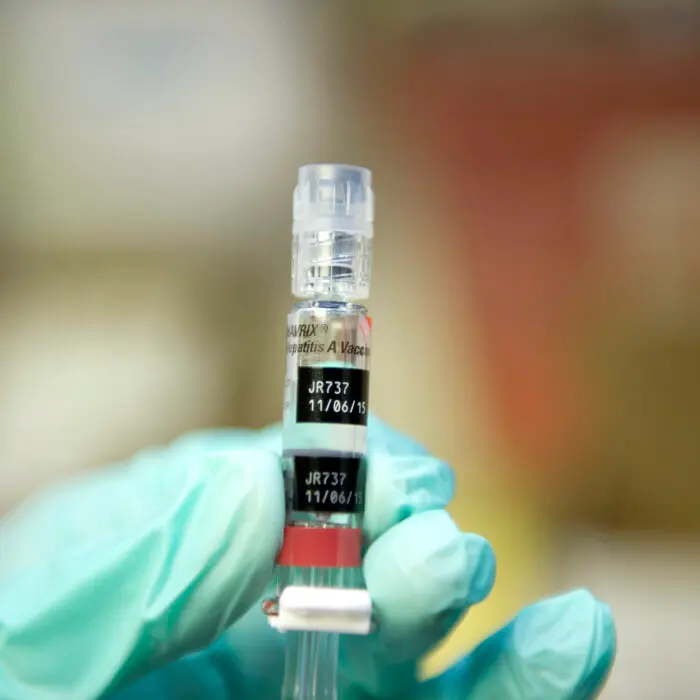

Unlike current treatments, which only suppress the virus, bepirovirsen works by breaking down the virus’s genetic material, preventing it from replicating, and boosting the immune response to help clear the virus from the body.
Dr. Melissa Osborn Jenkins, director of the division of infectious diseases at MetroHealth Medical Center and professor at Case Western Reserve University School of Medicine, who was not involved in the study, told The Epoch Times that when hepatitis B goes into liver cells, it can go into a dormant state that prevents cure with current treatments.
The virus hides inside liver cells as a stable, ring-shaped DNA molecule called cccDNA (covalently closed circular DNA), which acts like a mini-chromosome and keeps the infection alive. Current drugs cannot destroy this hidden reservoir, so patients usually need to take medication for life.“The newest medication, bepirovirsen, actually inhibits the replication of the virus and also stimulates the immune system to help clear the virus,” said Dr. Sharon Nachman, chief of pediatric infectious diseases at Stony Brook Children’s Hospital.
While bepirovirsen does not destroy cccDNA, it blocks the viral RNA produced from it. Because this RNA is generated from cccDNA, targeting it helps prevent the virus from replicating and spreading further.
By binding to the RNA, the drug causes the cell’s natural enzymes to chop up and destroy that viral RNA. By destroying the RNA, it stops the virus from creating proteins such as the hepatitis B surface antigen.
Nachman, who was not involved in the trials, noted that bepirovirsen acts as a TLR-8 agonist, meaning it triggers proteins that regulate inflammation, effectively waking up the immune system to fight the infection more aggressively.Why the Findings MatterThe implications extend beyond daily medication. Chronic hepatitis B is a leading driver of liver cirrhosis, liver failure, and hepatocellular carcinoma, the most common form of liver cancer. Clearing the virus can substantially reduce those risks.For the right patient group, Jenkins said the standard approach to treatment will definitely change.
“Not everyone will be a good candidate for bepirovirsen, and those who are may still not achieve a functional cure,” she cautioned. “But the results with bepirovirsen provide knowledge of strategies that can be used to develop even more effective functional cures.”
An editorial accompanying the studies noted that while the results are promising, they may not apply to all patient groups, such as those with liver cirrhosis, HIV coinfection, or higher levels of hepatitis B surface antigen at baseline.Nachman said the idea that the virus can be eradicated is “fantastic.” After treatment, the patient is not only no longer infectious, but it also eliminates concerns about developing chronic liver disease, being at risk for liver cancer, or needing a transplant.The Risks and CaveatsAdverse events were common, with 91 percent of patients receiving bepirovirsen experiencing side effects, compared to 73 percent of those on placebo. The most common complaints included injection-site reactions, with 53 percent of the experimental group experiencing redness or pain.Around 16 percent of patients on the drug had severe (Grade 3 or higher) side effects, compared to just 3 percent on the placebo.
The most common severe side effect was a temporary rise in a liver enzyme called ALT. Interestingly, doctors found that patients who had these temporary spikes were actually much more likely to clear the virus. Three percent of patients taking the drug had to permanently stop treatment because of side effects.Dr. Anna Lok of the University of Michigan, who wrote an editorial accompanying the studies, called for longer follow-up to confirm how durable the cure proves to be.
“The B-Well trials represent a major step toward a functional cure for HBV infection, and bepirovirsen is an attractive option for selected patients,” Lok said.
The Food and Drug Administration has already accepted a New Drug Application (NDA) for priority review of bepirovirsen for the treatment of adults with chronic hepatitis B. The agency has also assigned the bepirovirsen NDA a Prescription Drug User Fee Act goal date of Oct. 26, 2026. If approved, it would mark the first drug capable of functionally curing chronic hepatitis B.
Nachman emphasized that while the trial results are a positive development, “completing a hepatitis B vaccine series also prevents any hepatitis B infection and lifelong damage to the liver, so vaccinations are still our first line of defense.”
We had a problem loading this article. Please enable javascript or use a different browser. If the issue persists, please visit our help center.